Puerta de Santiago
The Puerta de Santiago, meaning "Gate of Saint James" in Spanish, is a significant medieval city gate located in Segovia, within the Castile and León region of Spain. This gate is a prominent element of the city's extensive medieval fortifications that once protected Segovia from invaders. It stands as a well-preserved example of military architecture from the late medieval period, reflecting the strategic importance of Segovia during the Middle Ages.
Historical context and significance
Segovia was a key urban center in medieval Spain, and its defensive walls, including the Puerta de Santiago, were essential to safeguard the city against various military threats. The gate was part of a larger system of fortifications that encircled Segovia, constructed primarily between the 12th and 15th centuries. The name "Puerta de Santiago" is derived from the nearby church dedicated to Saint James, a figure of great religious and cultural importance in Spain.
The gate played a crucial role in controlling access to the city from the west and served as a checkpoint for travelers and merchants. Its design was influenced by the need to withstand sieges and attacks, incorporating features typical of bastioned fortresses, such as thick walls and defensive towers.
Architectural features and construction details
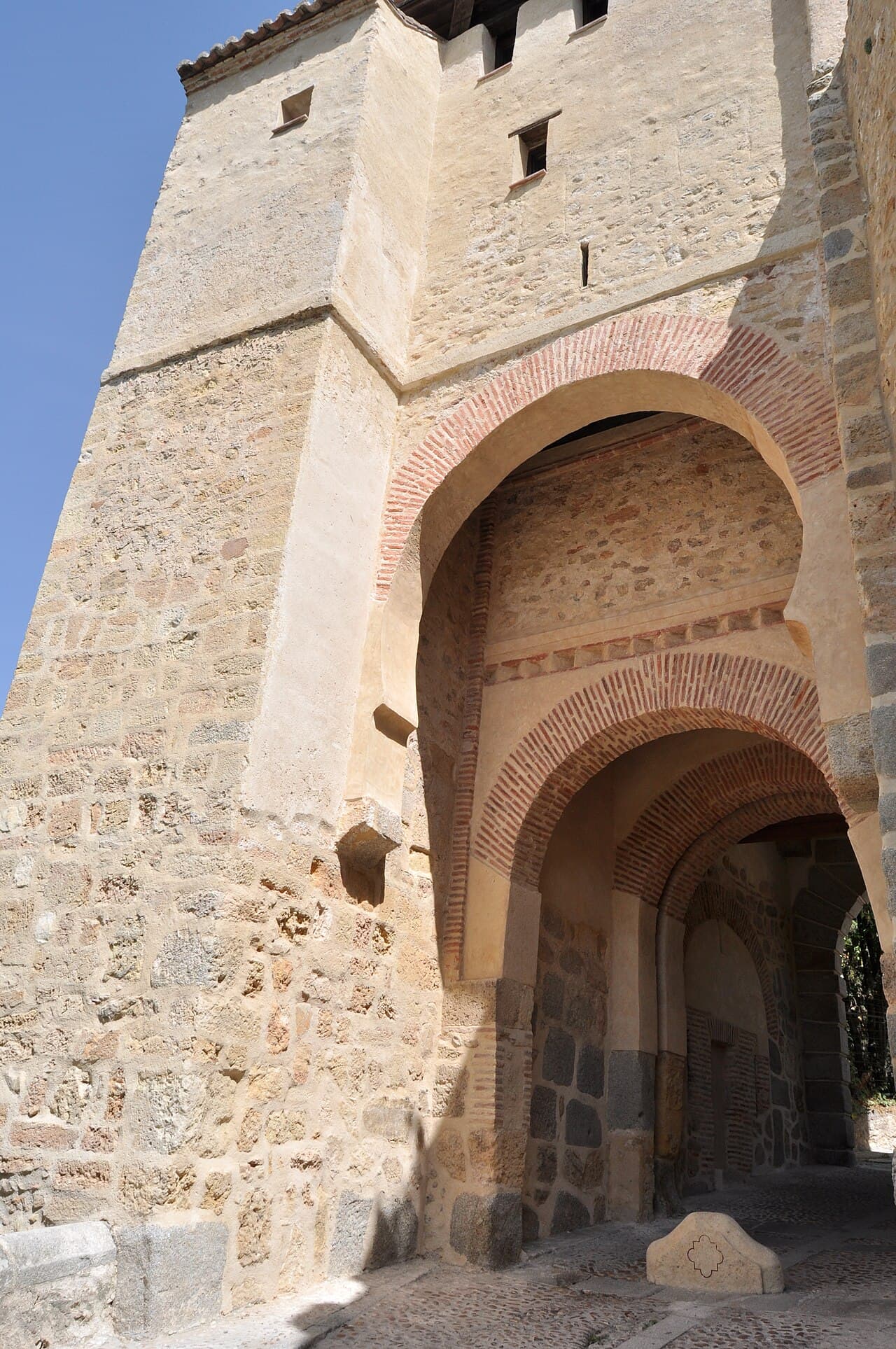
The Puerta de Santiago is characterized by its robust bastioned fortress design, which includes a combination of defensive elements aimed at repelling attackers. The structure features a large arched entrance flanked by towers that provided vantage points for guards and archers. These towers were integrated into the city walls, allowing defenders to monitor and defend the approaches to the gate effectively.
The gate's walls are constructed from local stone, typical of Segovia's fortifications, providing both durability and imposing presence. The use of bastions around the gate enhanced its defensive capabilities by allowing flanking fire against enemies attempting to breach the entrance.
Architecturally, the gate reflects the transition from purely military fortifications to more complex designs that incorporated elements of Gothic style, evident in the pointed arches and decorative stonework around the entrance. This combination of functionality and style marks the Puerta de Santiago as an important example of late medieval military architecture in Spain.
Role in Segovia's urban fabric and cultural heritage
Today, the Puerta de Santiago remains an iconic landmark within Segovia's historic center, which is recognized as a UNESCO World Heritage Site. The gate not only symbolizes the city's medieval past but also contributes to its cultural identity and tourism appeal.
Visitors to Segovia can appreciate the gate's imposing structure and imagine the historical context in which it operated as a vital defensive and administrative point. Its preservation allows for a tangible connection to the city's heritage and medieval urban planning.
Preservation and current condition
The Puerta de Santiago is well preserved, maintaining much of its original structure and defensive features. Efforts to conserve the gate and the surrounding city walls have ensured that this medieval fortress remains a significant historical monument. Its condition allows for public access and educational opportunities, providing insight into medieval military architecture and the history of Segovia.
Visiting information
The gate is accessible to visitors year-round as part of Segovia's historic district. It is often included in walking tours that explore the city's medieval walls, aqueduct, and other landmarks. While the gate itself is an outdoor monument, nearby museums and cultural centers offer additional context about Segovia's history and fortifications.
Frequently asked questions (FAQ)
- What is the historical significance of Puerta de Santiago?
- Puerta de Santiago is a remarkable example of medieval architecture in Segovia, Spain, built in the 12th century as part of the city’s fortifications. It served as a gateway for pilgrims traveling to Santiago de Compostela, making it an important landmark in the region's history.
- When was Puerta de Santiago constructed?
- The construction of Puerta de Santiago dates back to the 12th century, specifically around the year 1180. This places it in the Romanesque period, reflecting the architectural style and defensive needs of the time.
- Can I visit Puerta de Santiago?
- Yes, Puerta de Santiago is open to visitors who wish to explore its historical significance and architectural beauty. While the site does not have a dedicated visitor center, you can enjoy the exterior and take photographs as part of your exploration of Segovia.
- What are the opening hours for Puerta de Santiago?
- Puerta de Santiago is accessible year-round, allowing visitors to enjoy this historical site at any time of the day. However, it is recommended to visit during daylight hours to fully appreciate the details of its architecture.
- Is it possible to access Puerta de Santiago with a wheelchair?
- While the surrounding area is generally accessible, the historic nature of Puerta de Santiago may present some challenges for wheelchair users. Visitors should be prepared for uneven surfaces and limited accessibility around the castle.
- When is the best time to visit Puerta de Santiago?
- The best time to visit Puerta de Santiago is during the spring and fall months when the weather is mild and pleasant. These seasons also see fewer tourists, allowing for a more enjoyable experience while exploring Segovia's rich history.
- What nearby attractions can I visit when at Puerta de Santiago?
- When visiting Puerta de Santiago, you can also explore other nearby attractions such as the Alcázar of Segovia and the Roman Aqueduct. These sites are within walking distance and provide a deeper insight into the city’s historical significance.
- What are the ticket prices for visiting Puerta de Santiago?
- There is no entry fee to visit Puerta de Santiago, making it an accessible attraction for all visitors. You can freely explore its exterior and enjoy the surrounding historical context without any cost.
Photo gallery

Information
Loading map...
Visitor reviews
No reviews yet. Been here? Write the first review and help other travelers!
Write the first reviewVisited this castle? Share your experience
Your review helps other travelers and adds first-hand knowledge to our encyclopedia.