Tower of London
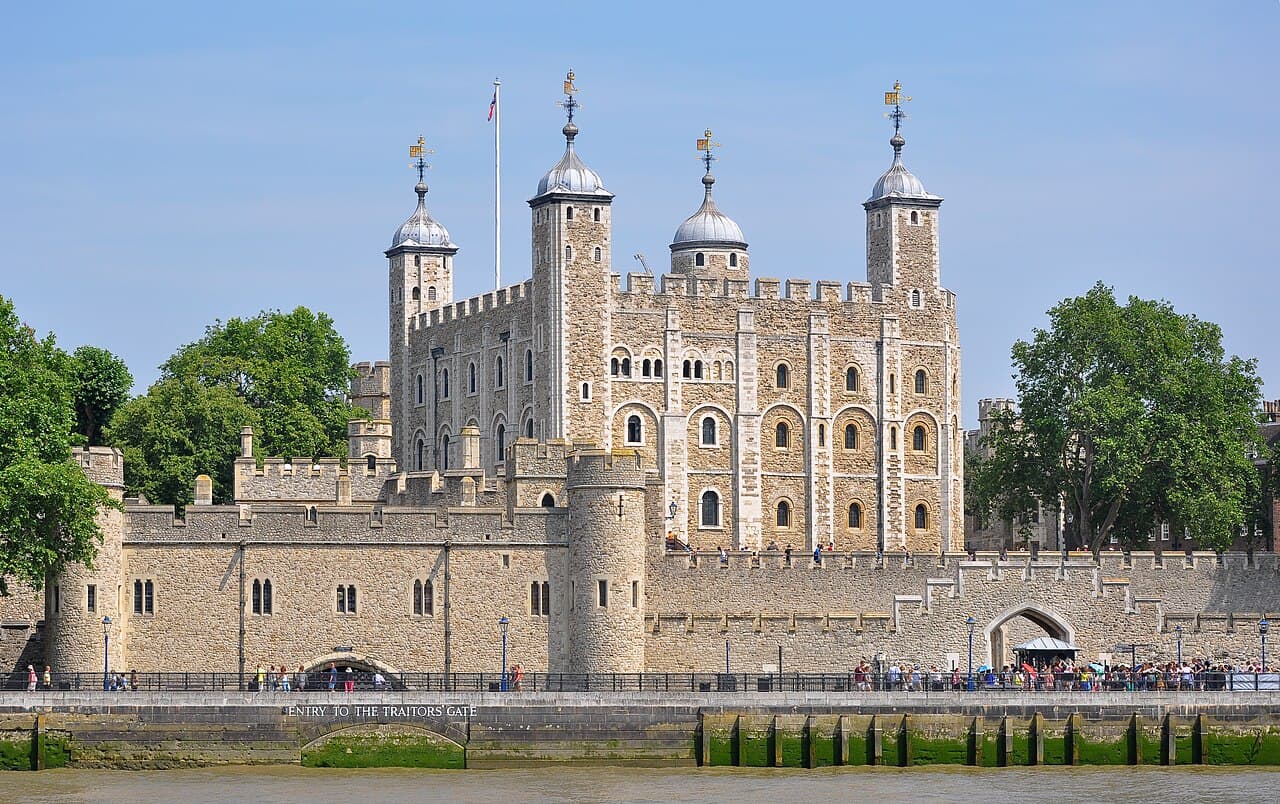
The Tower of London stands as one of England's most iconic and historically significant castles, located on the north bank of the River Thames in central London. Founded in the 11th century by William the Conqueror, the Tower has served multiple roles throughout its long history, including a royal palace, a formidable fortress, a prison, a treasury, the home of the Royal Mint, and the secure repository for the Crown Jewels of England. Its central structure, the White Tower, is an outstanding example of medieval military architecture and remains the most complete 11th-century fortress palace in Europe.
Architectural evolution and medieval military design
The White Tower, constructed beginning in 1078, was designed to assert Norman dominance over London and England. Built primarily from Kentish ragstone with Caen stone detailing, it rises approximately 27 meters high with walls up to 4.5 meters thick. The tower originally contained three floors, each divided into multiple chambers, including a chapel dedicated to St John the Evangelist. Its defensive features include square and rounded corner towers, latrines built into the walls, and fireplaces, with the main entrance located on the first floor accessed by a removable wooden staircase to enhance security.
Over the 12th and 13th centuries, monarchs such as Richard the Lionheart, Henry III, and Edward I expanded the complex extensively. These expansions transformed the Tower into a concentric castle with two curtain walls enclosing the White Tower. The inner curtain wall features 13 towers, including notable ones like the Beauchamp Tower, Bell Tower, Bowyer Tower, and the infamous Bloody Tower. The outer curtain wall is surrounded by a moat, originally fed by the Thames but drained in the 19th century.
The Outer Ward was developed under Edward I, enclosing the entire complex with additional walls and defensive structures such as Legge's Mount and Brass Mount bastions. The Traitors' Gate, constructed between 1275 and 1279, served as a water gate entrance from the Thames, famously used to bring prisoners accused of treason into the Tower by boat. This gate is a unique architectural feature comparable only to the former Louvre water gate in Paris.
Historical significance and royal functions
Originally intended as a royal residence and symbol of Norman power, the Tower's role evolved over centuries. It was a royal palace where kings such as Stephen (1135-1154) and James I (1603-1625) lived. The Tower was central to many historical events, including the imprisonment and execution of high-profile prisoners such as three English queens and the mysterious disappearance of the Princes in the Tower. It was also the site where the Magna Carta was enforced, after barons seized the Tower in 1215 to compel King John to sign the charter.
The Tower housed the Royal Mint from the 13th century until the 19th century, producing coinage for the kingdom. It also contained the armory, treasury, and a royal menagerie that once housed exotic animals like lions, polar bears, and an elephant. The menagerie was eventually closed in the 19th century, with animals moved to London Zoo.
The Crown Jewels have been kept at the Tower since the 17th century, symbolizing the monarchy’s continuity and authority. The Jewel House, now located in the Waterloo Barracks, is a major attraction for visitors worldwide.
The tower as a prison and site of execution
Though not originally designed as a prison, the Tower became infamous for detaining high-profile prisoners, including nobles, clergy, and political dissenters. Its cells ranged from relatively comfortable chambers to damp, dark dungeons near the river level, where prisoners sometimes suffered from flooding. Notable prisoners included Elizabeth I before her accession, Anne Boleyn, Catherine Howard, Lady Jane Grey, and Guy Fawkes.
Executions were rare inside the Tower itself, with only seven recorded, but many high-profile executions took place on Tower Hill just outside the fortress walls. The Tower's grim reputation was furthered by tales of torture and intrigue, often amplified by later historical narratives and popular culture.
Ceremonial and cultural roles
The Tower remains under the ceremonial charge of the Constable of the Tower, a prestigious position historically held by prominent nobles. It is guarded by the Yeoman Warders, popularly known as "Beefeaters," who also serve as guides and custodians of the Tower’s history. The presence of at least six ravens at the Tower is maintained due to the legend that the kingdom will fall if they ever leave.
Today, the Tower of London is a UNESCO World Heritage Site and one of the most visited historic sites in the United Kingdom. It attracts millions of visitors annually who come to explore its rich history, architecture, and the Crown Jewels.
Preservation and restoration efforts
Throughout its history, the Tower has undergone various restorations, particularly in the 19th century under architects like Anthony Salvin and John Taylor, who aimed to restore its medieval character by removing later additions. The Tower sustained damage during the Blitz in World War II but was repaired and preserved as a symbol of British heritage.
Its current condition is well preserved, allowing visitors to experience a remarkable medieval fortress complex that spans nearly a millennium of English history.
Notable architectural features
- White Tower: Central keep, Norman architecture, with defensive and residential functions.
- Inner and outer curtain walls: Concentric defensive walls with multiple towers.
- Traitors' Gate: Water gate used for prisoner entry, fortified with arrow slits and portcullis.
- Beauchamp Tower: Early brick tower used for imprisonment and inscriptions by prisoners.
- Chapel of St Peter ad Vincula: Tudor-era chapel housing tombs of executed prisoners.
- Moat: Originally filled with water from the Thames, now drained.
- Jewel House: Secure repository for the Crown Jewels.
- Yeoman Warders (Beefeaters): Historic guardians and tour guides of the Tower.
Ghosts and legends
The Tower is reputedly haunted by several historical figures, including Anne Boleyn, Lady Jane Grey, and the Princes in the Tower. Numerous ghost sightings have been reported by guards and visitors, adding to the Tower's mystique and allure as a historic site.
Frequently asked questions (FAQ)
- How do I get to the Tower of London?
- The Tower of London is easily accessible by public transport. The nearest Tube station is Tower Hill, which is just a short walk away. Several bus routes also service the area, making it convenient for visitors from various parts of London.
- What is the historical significance of the Tower of London?
- The Tower of London has a rich history dating back to its construction in 1066. It has served various roles throughout the centuries, including as a royal palace, fortress, prison, and treasury. Today, it is recognized as a UNESCO World Heritage Site and a symbol of British history.
- When was the Tower of London built?
- The Tower of London was founded by William the Conqueror in 1066 as part of the Norman Conquest of England. The White Tower, its central structure, was completed in 1100 and has stood the test of time, showcasing Norman military architecture.
- Can I take a guided tour of the Tower of London?
- Yes, guided tours are available and highly recommended for an in-depth experience. Knowledgeable Yeoman Warders lead the tours, sharing captivating stories and historical insights. Tours typically run throughout the day and are included with your admission ticket.
- Why is the Tower of London famous for its ravens?
- The Tower of London is famous for its resident ravens, as legend has it that if the ravens ever leave, the kingdom will fall. Currently, at least six ravens are kept at the tower, and they are cared for by the Ravenmaster. This unique tradition adds to the allure and mystique of the castle.
- Is it possible to visit the Crown Jewels at the Tower of London?
- Yes, the Crown Jewels are on display at the Tower of London and are a must-see for visitors. The collection includes the Imperial State Crown, scepters, and other ceremonial items used in royal functions. The jewels are housed in a secure and specially designed exhibition space, allowing guests to view them up close.
- What are the opening hours of the Tower of London?
- The Tower of London generally opens at 10:00 AM and closes at 5:30 PM, although hours may vary seasonally. It is advisable to check the official website for the most current opening times before your visit to plan accordingly.
- What are the ticket prices for the Tower of London?
- Ticket prices for the Tower of London vary depending on age and whether you book in advance. Generally, adults pay around £29.90, while discounts are available for children, seniors, and families. Booking online in advance can also save you money and time.
- What is the best time to visit the Tower of London?
- The best time to visit the Tower of London is during the shoulder seasons of spring (March to May) and autumn (September to November). These months typically see fewer crowds and milder weather, enhancing your experience. Early morning visits right when the tower opens can also help you avoid the busiest times.
- Are there any nearby attractions to the Tower of London?
- Yes, the Tower of London is surrounded by several notable attractions. Just a short walk away, you can explore Tower Bridge, the historic Borough Market, and the scenic River Thames. The area also features the famous Shard, offering stunning views of the city.
Photo gallery

Information
Website
Visit websiteFeatured in
Articles on the Castlopedia blog that feature Tower of London.
Sources & official resources
Verify the information above using these authoritative references.
Loading map...
Visitor reviews
No reviews yet. Been here? Write the first review and help other travelers!
Write the first reviewVisited this castle? Share your experience
Your review helps other travelers and adds first-hand knowledge to our encyclopedia.