Savoy Palace
Savoy Palace stood as one of the most magnificent noble residences in medieval London, renowned as the grandest townhouse of its time. Constructed in the 13th century on land granted to Peter II, Count of Savoy, the palace occupied a strategic location between the Strand and the River Thames. Its site was part of a larger estate that came under the control of the Duchy of Lancaster in the following century, linking it to the royal family through John of Gaunt, who used it as his principal London residence.
The origins and architectural significance
The palace's origins trace back to the mid-13th century when the land was granted to the Savoy family, a noble house with close ties to the English crown. The estate was developed into a grand fortified townhouse, reflecting the architectural trends of the High Medieval period. Although no substantial above-ground remains survive today, historical records and archaeological excavations reveal that the palace featured extensive stone walls, gatehouses, and a complex of buildings designed for both residential and administrative purposes.
Layout and defensive features
The palace was enclosed by a fortified wall and likely included a moat fed by the nearby Thames, enhancing its defensive capabilities. The complex comprised multiple courtyards, halls, chambers, and service buildings. The presence of a chapel within the palace grounds underscored its status as a noble residence with religious functions. The architectural style, while primarily medieval, would have included elements typical of noble townhouses, such as large windows, vaulted chambers, and intricately decorated stonework.
Historical importance and notable events
John of Gaunt, Duke of Lancaster and one of the most powerful figures of 14th-century England, made Savoy Palace his London home. The palace was not only a residence but also a center for political and social gatherings of the English nobility. It gained further historical significance as the place where John II of France died in 1364 during his "honourable captivity" after being captured in the Hundred Years' War.
The Peasants' Revolt and destruction
The palace met its demise during the Peasants' Revolt of 1381, a major uprising against the ruling classes in England. Rioters targeted the palace as a symbol of noble privilege and royal authority. It was set ablaze and largely destroyed, leaving only ruins behind. The destruction marked the end of Savoy Palace as a noble residence, and the site underwent various changes in subsequent centuries.
The legacy and modern usage of the site
Today, the original palace no longer stands, but its legacy persists through several landmarks bearing the Savoy name. The Tudor-era Savoy Chapel was built on part of the former palace grounds and remains a notable historic and religious site. Additionally, the Savoy Theatre and Savoy Hotel, located nearby, continue to carry the name, linking modern London to its medieval past.
Liberty of the Savoy
The area surrounding the palace was historically governed by a special jurisdiction known as the Liberty of the Savoy. This separate legal district was distinct from the rest of Middlesex county and had its own administrative and judicial systems, reflecting the unique status of the palace and its estate within London's governance.
Archaeological findings and preservation
Although the palace itself lies in ruins, archaeological investigations have uncovered foundations and artifacts that provide insight into its scale and function. These findings contribute to understanding medieval noble residences in London and the social history of the period. The site is classified as archaeological ruins, with limited above-ground structures remaining, emphasizing the importance of preservation and study of what remains.
Importance for medieval architecture studies
Savoy Palace serves as a key example of a high medieval fortified townhouse in an urban setting. Its combination of residential comfort and defensive features illustrates the architectural responses to the social and political climate of 13th and 14th-century England. The palace's destruction and subsequent transformation of the site reflect broader historical changes from medieval to Tudor London.
Frequently asked questions (FAQ)
- When was Savoy Palace built and by whom?
- Savoy Palace was built in the 13th century on land granted to Peter II, Count of Savoy. It later became the residence of John of Gaunt in the 14th century.
- What led to the destruction of Savoy Palace?
- The palace was destroyed during the Peasants' Revolt of 1381 when rioters targeted it as a symbol of noble privilege and set it on fire.
- Is anything left of Savoy Palace to visit today?
- Savoy Palace exists now only as archaeological ruins with no significant above-ground remains, but nearby landmarks like the Savoy Chapel and Savoy Theatre carry its legacy.
- What was the Liberty of the Savoy?
- The Liberty of the Savoy was a special jurisdiction around the palace area with its own administrative and legal system, separate from Middlesex county.
- Who was John II of France and what is his connection to Savoy Palace?
- John II of France died at Savoy Palace during his honorable captivity after being captured in the Hundred Years' War, highlighting the palace's role in international history.
Photo gallery

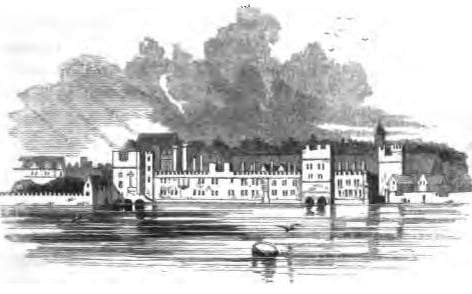
Photo by Engraving by Charles Thurston Thompson; after a drawing of his own or by John Wykeham Archer (information in the book)•Public domain
Information
Loading map...
Visitor reviews
No reviews yet. Been here? Write the first review and help other travelers!
Write the first reviewVisited this castle? Share your experience
Your review helps other travelers and adds first-hand knowledge to our encyclopedia.