
Russian Federation
Castle heritage of the russian federation
The rich tapestry of the castle heritage in the Russian Federation reflects centuries of complex history, diverse cultural influences, and evolving military strategies. Unlike Western Europe, where medieval castles primarily served as noble residences and feudal strongholds, Russian fortifications often combined military, administrative, and religious functions. The vast landscapes and geopolitical challenges shaped the construction and design of these structures, resulting in a unique architectural legacy.
From the early medieval period through the Tsardom of Russia and into the imperial eras, the development of fortifications adapted to changing threats and technologies. This heritage includes a variety of structures such as kremlins (citadels), fortified monasteries, stone fortresses, and defensive walls. Many of these constructions stand as iconic symbols of Russian history and culture today.
Exploring Russia’s historical fortifications offers insight into the country’s military history, architectural innovation, and cultural significance, with sites like the Moscow Kremlin and the Nizhny Novgorod Kremlin illustrating the grandeur and strategic importance of these edifices.
Continue reading below — scroll for the full article.
Castles in Russian Federation
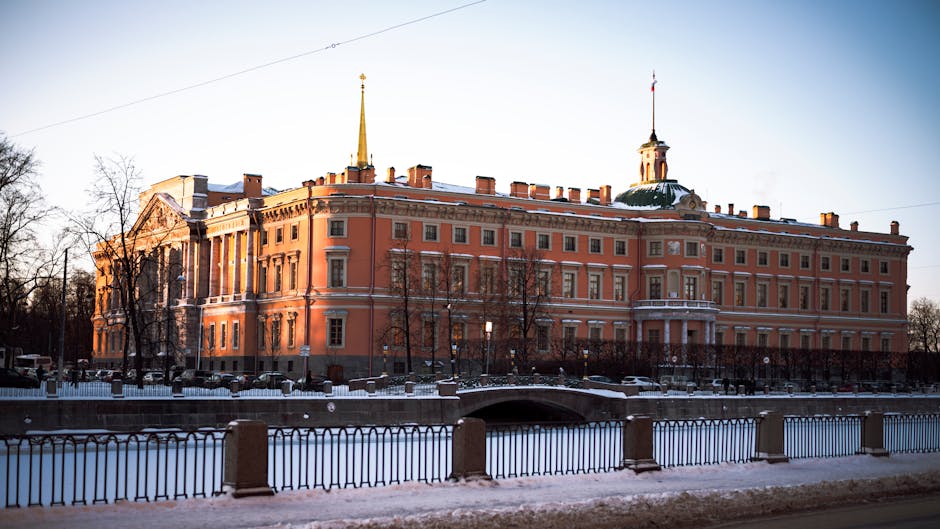
Discover 5 magnificent castles across the country





Historical background and medieval period
The roots of Russian fortifications trace back to the early medieval period, when the region was inhabited by East Slavic tribes facing frequent invasions from nomadic groups such as the Pechenegs and Mongols. To defend their settlements, early wooden fortresses known as detinets or kremlins were constructed, often situated on elevated ground near rivers.
During the 12th and 13th centuries, the influence of the Mongol invasion profoundly affected the course of Russian castle architecture and military strategies. The devastation prompted the shift from wooden to more durable stone fortifications. The rise of principalities, especially the Grand Duchy of Moscow, led to the construction of large kremlins serving both as military bastions and political centers.
One of the earliest stone fortifications was the Moscow Kremlin, rebuilt in the late 15th century under the supervision of Italian architects. This period also saw the emergence of fortified monasteries, which combined religious functions with defensive capabilities, reflecting the inseparable nature of church and state in medieval Russia.
Types of fortifications in russia
Kremlins and citadels
Kremlins are perhaps the most emblematic Russian fortifications, serving as fortified central complexes that housed princes, administrators, and religious leaders. These structures typically include walls, towers, palaces, and cathedrals within their boundaries. The Moscow Kremlin is the most famous example, but other cities like Novgorod, Kazan, and Nizhny Novgorod also boast well-preserved kremlins.
Fortresses and defensive walls
In addition to kremlins, the Russian landscape is dotted with standalone fortresses and extensive defensive walls built to protect strategic locations. The Peter and Paul Fortress in Saint Petersburg, constructed in the early 18th century, represents a later evolution of fortress design incorporating European bastion fort principles. Earlier fortresses, such as those in the Golden Ring towns, often combined traditional Russian and Byzantine elements.
Fortified monasteries
Monastic complexes often doubled as fortifications, with walls and towers designed to repel invaders while providing refuge for religious communities. The Solovetsky Monastery in the White Sea region exemplifies this dual role, with its massive stone walls and bastions built during the 15th and 16th centuries.
Architectural styles and influences
The architecture of Russian fortifications is characterized by a blend of indigenous Slavic traditions, Byzantine influences, and later Western European elements. Early wooden kremlins reflected vernacular building techniques, using timber and earthworks suited to local materials and climate.
By the late 15th century, the influence of Italian Renaissance architects became prominent, especially in Moscow. The Kremlin’s walls and towers were rebuilt under architects like Aristotle Fioravanti and Aloisio the New, incorporating Italianate bastions and elegant stonework while preserving traditional Russian design elements such as onion-domed towers and ornamental details.
In the 17th century, Russian fortifications began to show Baroque and Neoclassical influences, especially in urban fortresses and palatial complexes. The Peter and Paul Fortress in Saint Petersburg, designed by Domenico Trezzini, is a prime example of this synthesis, combining Western military engineering with Russian symbolism.
Regional variations in russian fortifications
Russia’s vast territory has produced diverse regional styles in castle and fortress construction, reflecting local materials, climatic conditions, and historical circumstances. The central regions around Moscow favored stone kremlins with high walls and decorative towers. In the northern parts, wooden fortresses and palisades were more common due to abundant forests and harsher weather.
In the Volga region, the blend of Russian and Tatar influences is evident in kremlins like Kazan, which feature robust stone walls combined with Islamic architectural motifs. Similarly, the Caucasus region’s fortifications often show a mix of Russian military engineering and local mountain fortress traditions.
The far eastern territories, being more recently incorporated into the Russian state, include fortifications built with a focus on frontier defense, often less monumental but strategically positioned.
Notable periods of castle construction
Medieval and early renaissance era
The 12th to 15th centuries were crucial for the emergence of Russian fortifications. This era saw the transition from wooden forts to stone kremlins, driven by the need for stronger defense against invasions. The rebuilding of the Moscow Kremlin under Ivan III marked a significant milestone in fortress architecture.
The 17th century and the time of troubles
The turbulent period known as the Time of Troubles (early 17th century) prompted extensive reinforcement and construction of fortresses across Russia. Many towns reinforced their kremlins and walls to withstand sieges, with enhancements in artillery defenses becoming a priority.
18th century modernization
The reign of Peter the Great ushered in a new phase of fortress construction, aligning Russian military architecture with Western European standards. The establishment of Saint Petersburg necessitated the creation of modern bastion fortresses like the Peter and Paul Fortress, marking a shift toward more sophisticated defensive designs.
Preservation and current state of russian fortifications
Many of Russia’s historical fortifications have survived through centuries of warfare, neglect, and modernization. Major kremlins such as those in Moscow, Novgorod, and Kazan are well-preserved and protected as UNESCO World Heritage sites or national monuments. These sites have undergone extensive restoration efforts to maintain their structural integrity and historical authenticity.
However, numerous smaller fortresses and wooden structures have deteriorated or disappeared, often due to natural decay and urban development. Preservation challenges include balancing modern urban needs with heritage conservation and securing funding for ongoing maintenance.
Organizations dedicated to cultural heritage in Russia continue to promote the conservation of fortifications, emphasizing their importance for national identity and historical education.
Castle tourism and accessibility
Russian fortifications attract millions of visitors annually, offering insights into the country’s past and architectural grandeur. The Moscow Kremlin is a top tourist destination, hosting museums, cathedrals, and government buildings within its walls. Similarly, the Nizhny Novgorod Kremlin offers panoramic views and historical exhibitions.
Regional kremlins and fortresses are increasingly integrated into cultural tourism routes, with guided tours, festivals, and reenactments designed to engage visitors. Many sites provide multilingual information and facilities, enhancing accessibility for international tourists.
While some remote fortresses require special arrangements to visit, the most significant sites are well-connected by road and rail, supported by growing tourism infrastructure.
Cultural significance and heritage
The fortifications of Russia are more than military relics; they are potent symbols of the nation’s resilience, sovereignty, and artistic achievement. Kremlins and fortresses have played central roles in shaping Russian political power, religious life, and cultural identity throughout history.
The Moscow Kremlin, as the seat of power for centuries, embodies the continuity of Russian statehood. Fortified monasteries reflect the close relationship between church and defense, while regional kremlins illustrate the diversity within the federation.
These structures continue to inspire literature, art, and public memory, underscoring their enduring place in Russian heritage. Their preservation and celebration contribute to a deeper understanding of Russia’s historical narrative and architectural innovation.
Castle Locations in Russian Federation
Explore all castle locations on an interactive map
Loading castle locations...