
France
The historical background and medieval period
France boasts one of the richest legacies of castle heritage in Europe, reflecting centuries of political power, territorial defense, and social evolution. The country's medieval period, spanning roughly from the 9th to the 15th centuries, saw the widespread construction of castles and fortifications as feudal lords and monarchs sought to consolidate power and protect their lands. These structures were pivotal in shaping the medieval landscape and played crucial roles in numerous historical conflicts, including the Hundred Years' War.
The earliest fortifications in France often evolved from Roman military sites or early medieval strongholds. As feudalism developed, the need for private fortified residences grew, leading to the proliferation of castles across the French countryside. By the High Middle Ages, the castle had become both a military bastion and a symbol of aristocratic status. This period laid the groundwork for the diverse architectural and defensive innovations seen in French castles.
Continue reading below — scroll for the full article.
Castles in France
Discover 574 magnificent castles across the country






Types of fortifications in france
France's castle heritage encompasses a broad range of fortifications designed for defense, residence, and control. These include traditional castles, fortified manors, city walls, and military fortresses. Each type served distinct purposes and reflected the strategic needs of their time.
Castles and châteaux
Medieval castles, or châteaux forts, were primarily military structures designed to withstand sieges. They featured thick walls, moats, towers, gatehouses, and keeps. Many later evolved into more comfortable residences, blending defensive features with Renaissance architectural elements. The Château de Vincennes near Paris exemplifies this evolution, initially built as a fortress in the 14th century and later expanded to accommodate royal residence functions.
Defensive walls and city fortifications
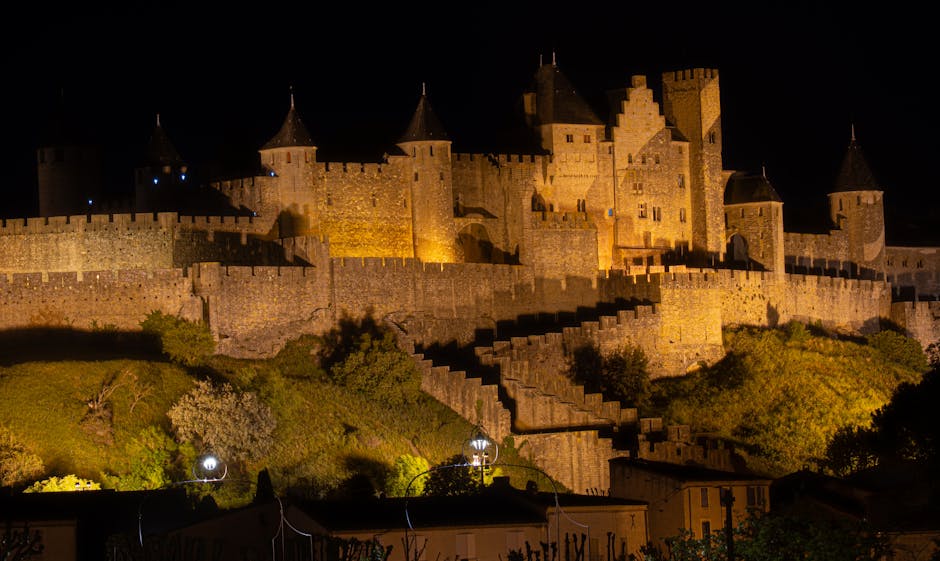
Beyond standalone castles, many French towns and cities were protected by defensive walls. The ramparts of Carcassonne remain one of the best-preserved examples, showcasing double-walled fortifications with numerous towers and barbicans. These fortifications were vital in controlling trade routes and defending against invasions.
Military fortresses
In later periods, particularly from the Renaissance onwards, military fortifications adapted to new artillery technologies. Fortresses such as the Citadel of Lille illustrate the star-shaped design optimized for cannon defense. These constructions mark a shift from medieval castle architecture to early modern military engineering.
Architectural styles and influences
The architecture of French castles reflects a complex interplay of styles and innovations spanning centuries. From the robust Romanesque features of thick walls and rounded arches to the soaring Gothic elements of pointed arches and intricate stonework, French castle architecture evolved alongside broader European trends.
Roman and romanesque elements
Early medieval fortifications often incorporated Roman construction techniques, including the use of stone and brick masonry. The Romanesque style, prevalent in the 10th and 11th centuries, emphasized solidity, with massive walls and small windows. The keep of the Château de Falaise, birthplace of William the Conqueror, is a fine example of this style with its austere and functional design.
Gothic and late medieval innovations
During the 12th to 15th centuries, Gothic architecture introduced greater verticality and decorative complexity. Castles began to feature taller towers, larger windows with tracery, and more elaborate gatehouses. The Château de Pierrefonds, rebuilt in the 19th century but based on medieval Gothic principles, demonstrates the dramatic vertical emphasis and ornamental stonework typical of this style.
Renaissance and classical influences
The Renaissance brought a transformation as castles shifted from purely defensive structures to luxurious residences. Italian influences introduced symmetry, classical columns, and expansive gardens. The Château de Chambord embodies this transition, combining medieval defensive elements with Renaissance aesthetics and grand scale, including its famous double-helix staircase.
Regional variations in castle architecture
France's diverse geography and historical regions produced distinctive regional variations in castle construction and style. Local materials, cultural influences, and historical circumstances contributed to these differences.
Normandy and the north
In Normandy and northern France, castles often featured robust stone keeps and thick curtain walls due to frequent conflicts with England. Timber was also used extensively in earlier phases. The Château Gaillard, built by Richard the Lionheart, is notable for its innovative concentric design and strategic hilltop location.
Loire valley and central france
The Loire Valley is renowned for its concentration of Renaissance châteaux that prioritize elegance and comfort over defense. These castles often integrate elements of both medieval and Renaissance architecture, with expansive parks and ornamental gardens. Besides Chambord, other prominent Loire castles such as Château de Chenonceau showcase graceful arches and water features.
Southern france and occitanie
In the south, fortifications reflect the region's turbulent history, including the Albigensian Crusade. Castles like the fortified city of Carcassonne exhibit massive walls adapted to the rugged terrain and strategic requirements of border defense.
Notable periods of castle construction
Castle building in France occurred in several waves, each linked to specific historical contexts and technological advancements.
Early medieval fortifications (9th–11th centuries)
Following the Carolingian era, early medieval fortifications often reused Roman sites or natural outcrops. Motte-and-bailey castles became common, using earthworks and timber before transitioning to stone. Their primary function was local defense during a time of fragmented political authority.
High and late medieval expansion (12th–14th centuries)
The height of castle construction coincided with the feudal age and the Hundred Years' War. Stone keeps, curtain walls, and concentric designs were developed to resist siege engines and archery. The Château de Vincennes, with its imposing donjon, is a prime example of this period's military architecture.
Renaissance transformation (15th–17th centuries)
After the decline of feudal warfare, castles increasingly served as stately homes. The integration of Renaissance art and classical architecture reflected a shift towards comfort and display. Many medieval castles were remodeled or replaced with grand châteaux during this time, marking a cultural and architectural evolution.
Preservation and current state
France has prioritized the preservation of its castle heritage through government programs, private initiatives, and heritage organizations. Many castles are protected as national monuments, ensuring their conservation for future generations. Structures like the Château de Chambord and the fortified city of Carcassonne have undergone extensive restoration to maintain their historical integrity.
Despite these efforts, some castles remain in ruins due to centuries of decay, war damage, or neglect. Nonetheless, even ruins like those of Château de Falaise offer valuable insights into medieval construction techniques and feudal history. Preservation efforts continue to balance the challenges of maintaining authenticity with public accessibility.
Castle tourism and accessibility
France's castles are major attractions for tourists interested in history, architecture, and culture. Many sites are open to the public, offering guided tours, educational programs, and cultural events. The Château de Versailles, while more a palace than a fortress, exemplifies how castle heritage can attract millions annually and contribute to local economies.
The Loire Valley châteaux form a popular tourist circuit, accessible by road and river cruises, showcasing a variety of styles and historical periods. Similarly, the medieval city of Carcassonne draws visitors with its dramatic fortifications and lively cultural scene. Efforts to improve accessibility and interpretive signage have enhanced visitor experiences while promoting heritage awareness.
Cultural significance and heritage
Castles in France are emblematic of the nation's complex history and identity. They symbolize feudal power, royal authority, and regional autonomy. Beyond their military origins, many castles have become cultural icons, inspiring literature, art, and national pride.
The conservation of castles also reflects France's commitment to preserving its cultural heritage. These monuments provide tangible links to the past, enabling contemporary society to engage with historical narratives. Educational initiatives and heritage festivals continue to celebrate the enduring legacy of France's castles and fortifications.
Castle Locations in France
Explore all castle locations on an interactive map
Loading castle locations...