Zhenhai Tower — China castle

Zhenhai Tower

Zhenhai Tower in Guangzhou, China
Guangzhou, Guangdong, China
Late Medieval (14th–15th c.)
Well Preserved

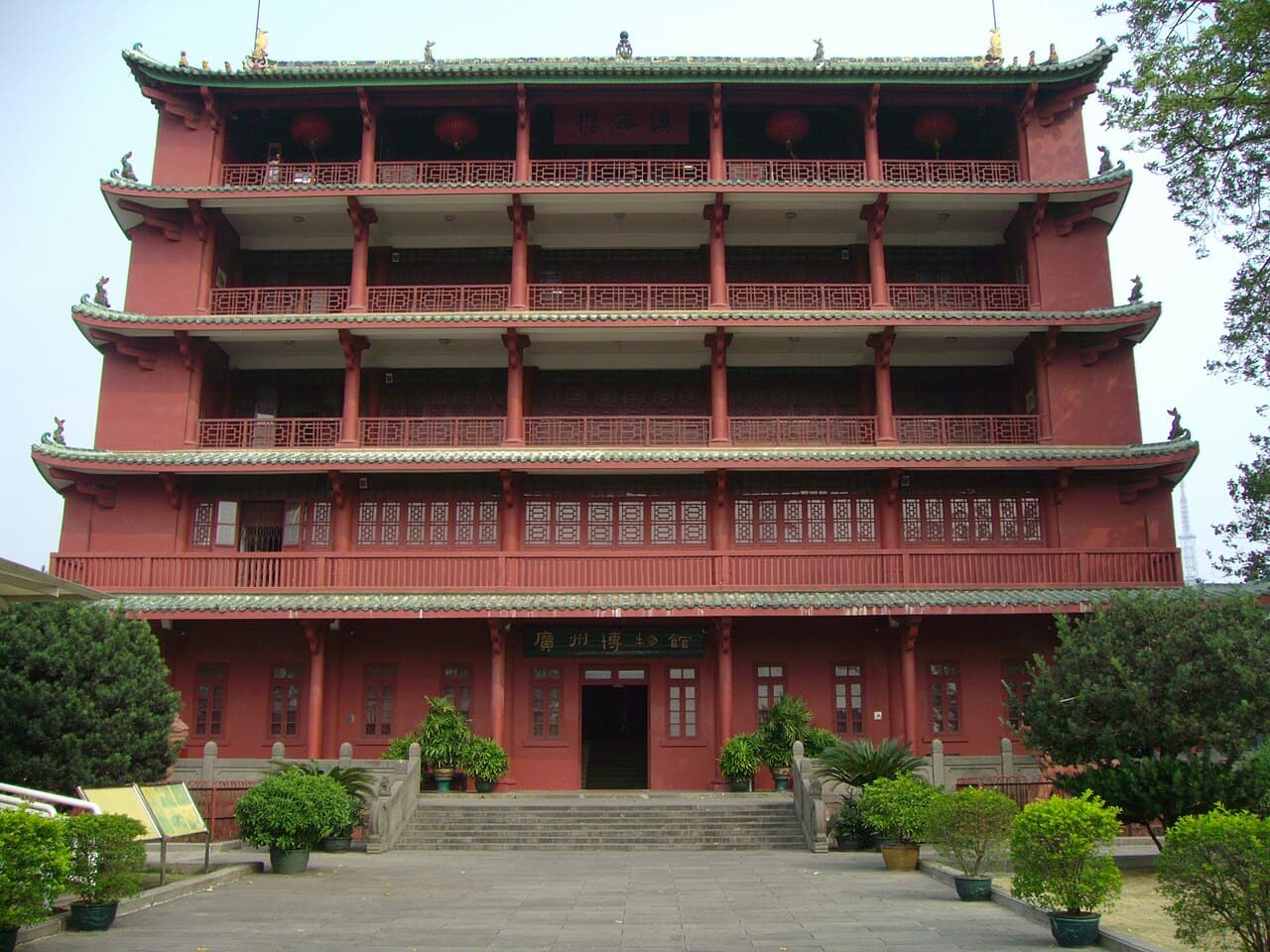
The Zhenhai Tower, also known as the Five-Story Pagoda, is a historic tower located in Yuexiu Park in the heart of Guangzhou, Guangdong Province, China. Constructed in the 14th century during the late medieval period, this tower is a prominent example of traditional Chinese architectural design and has played a significant role in the city's cultural and defensive history.

Architectural features and design

The tower is a five-story structure characterized by its pagoda-style architecture, a style commonly associated with religious and cultural buildings in China. Each level of the tower features upturned eaves and ornate wooden brackets that support the roofs, typical of ancient Chinese construction techniques. The building's height and layered design provide a commanding view of the surrounding area, which historically served strategic purposes.

The tower's construction utilizes traditional timber framing combined with stone and brick bases, providing both durability and aesthetic appeal. The exterior walls are adorned with decorative tiles and carved motifs that reflect cultural symbolism and artistic craftsmanship of the era.

Historical context and significance

Originally built as a bastioned fortress to defend the city from invaders, the Zhenhai Tower was part of Guangzhou's extensive fortifications. Its elevated position allowed guards to monitor the surrounding landscape and the Pearl River, which was a vital trade and military route. The tower's strategic importance was heightened during times of conflict, serving as a lookout and signal tower.

Over the centuries, the tower has witnessed numerous historical events, including military confrontations and changes in governance. Its preservation offers valuable insights into the military architecture and urban defense mechanisms of late medieval China.

Transition to cultural landmark and museum

In modern times, the Zhenhai Tower has transitioned from a defensive structure to a cultural symbol. It now houses the Guangzhou Museum, which showcases the city's rich history, including artifacts from ancient times to the contemporary era. The museum's exhibits provide context for the tower's original purpose and its evolution alongside Guangzhou's development.

The tower's location within Yuexiu Park, a popular recreational area, makes it accessible to visitors interested in both natural beauty and historical architecture. The park and tower together offer a unique blend of cultural heritage and public space.

Preservation and current condition

The Zhenhai Tower is well preserved, maintaining much of its original structure and architectural details. Restoration efforts have focused on retaining the tower's historical integrity while adapting it for public use as a museum. The building stands as a testament to the enduring legacy of Chinese medieval architecture and urban fortification design.

Visiting information and cultural experience

Visitors to the Zhenhai Tower can explore its multiple levels, enjoying panoramic views of Guangzhou city and the surrounding landscape. The museum inside offers educational resources and exhibits that deepen understanding of the region's history. The tower is a favored destination for tourists and locals alike, combining architectural beauty with historical education.

Frequently asked questions (FAQ)

What is Zhenhai Tower?
Zhenhai Tower, also known as the Five-Storey Pagoda, is a historic tower located in Guangzhou, China. Built in the 14th century during the Ming Dynasty, it served as a military defense structure and offers a panoramic view of the city and Pearl River.
When was Zhenhai Tower constructed?
Zhenhai Tower was originally constructed in 1380 during the Ming Dynasty. It has undergone several renovations over the centuries, preserving its architectural significance and historical value.
Can I enter Zhenhai Tower?
Yes, visitors can enter Zhenhai Tower to explore its interior and enjoy the exhibits that detail its historical significance. Climbing to the top of the tower rewards visitors with stunning views of Guangzhou.
What are the opening hours for Zhenhai Tower?
Zhenhai Tower is typically open to visitors from 8:30 AM to 5:30 PM daily. It is advisable to check for any seasonal changes or special holiday hours before planning your visit.
What is the ticket price for Zhenhai Tower?
The entrance fee for Zhenhai Tower is usually around 10 RMB for adults, with discounts available for students and seniors. It's best to confirm the pricing at the entrance as fees may change.
Is Zhenhai Tower accessible for visitors with disabilities?
Zhenhai Tower has made efforts to improve accessibility, including ramps for wheelchair users. However, the interior staircase may pose challenges for those with mobility issues, so it's advisable to plan accordingly.
When is the best time to visit Zhenhai Tower?
The best time to visit Zhenhai Tower is during the spring (March to May) and autumn (September to November) when the weather is mild and pleasant. These seasons also tend to attract fewer tourists, allowing for a more enjoyable experience.
Are there any nearby attractions to visit?
Yes, Zhenhai Tower is located near several other attractions in Guangzhou, including the Pearl River, the Sun Yat-sen Memorial Hall, and the Chen Clan Ancestral Hall. Combining these visits can enhance your experience of the city's rich culture and history.

Photo gallery

Zhenhai Tower
Click to view

Photo by Chintunglee•CC BY-SA 4.0

1 photo • Click any image to view in full screen

Information

Bastioned Fortress

Loading map...

Visitor reviews

No reviews yet. Been here? Write the first review and help other travelers!

Write the first review

Visited this castle? Share your experience

Your review helps other travelers and adds first-hand knowledge to our encyclopedia.
Write a review

(5/5)

0/2000 characters

Your review will be visible after admin approval

Nearby castles

53 km
Weiyuan Fort — China castle

Weiyuan Fort

Dongguan, China

Weiyuan Fort (Chinese: 威远炮台) is a significant 19th-century coastal defense fort located in Humen, Dongguan city, Guangdong province, China. Constructed in 1835, this fort played a crucial role during the First Opium War as part of the defensive network protecting the Pearl River Delta against British naval forces. The fort's strategic placement immediately beneath the modern Humen Bridge underscores its historical importance in guarding one of the key maritime gateways to the interior of southern China.Historical context and military significanceThe construction of Weiyuan Fort was part of the Qing dynasty's efforts to bolster coastal defenses amid increasing foreign threats in the early 19th century. The fort was designed to protect the vital shipping lanes and prevent foreign naval incursions into the Pearl River estuary. Its involvement in the Opium Wars marked it as a frontline defense installation against British forces seeking to enforce trade demands.During the conflict, the fort was armed with a total of 44 cannons, including 40 dark artillery pieces positioned within enclosed casemates and four open fort cannons. This arrangement provided a combination of protected and exposed firing positions, enabling the garrison to engage enemy ships effectively while minimizing vulnerability.Architectural features and layoutWeiyuan Fort extends approximately 360 meters in length, featuring a linear design optimized for broad coverage of the river approach. The fort's walls and bastions were constructed using local materials typical of the period, designed to withstand bombardment and provide strategic firing angles for its artillery.The fortifications included thick masonry walls, embrasures for cannons, and defensive parapets. The interior likely housed barracks, ammunition storage, and command facilities, although much of this has been lost to time and subsequent deterioration.Defensive capabilitiesThe combination of dark artillery casemates and open gun placements allowed the fort to engage targets at varying ranges and angles. The casemates provided protection for gun crews against enemy fire and weather, while the open guns offered greater firing arcs. This dual arrangement was typical of coastal forts of the era, balancing protection and offensive reach.Current condition and preservationToday, Weiyuan Fort stands as ruins, with much of its original structure partially collapsed or eroded. Despite this, key sections of the walls and artillery platforms remain visible, providing valuable insights into Qing dynasty military architecture and coastal defense strategies.The fort is accessible to the public, located beneath the modern infrastructure of the Humen Bridge. Admission is free with valid identification documents, allowing visitors to explore the historic site and appreciate its role in China's 19th-century military history.Visitor information and significanceAs a cultural relic, Weiyuan Fort offers a tangible connection to the turbulent period of the Opium Wars and the Qing dynasty's defensive efforts. The site attracts historians, military enthusiasts, and tourists interested in China's coastal fortifications and maritime history.Its proximity to the bustling city of Dongguan and the scenic Pearl River Delta makes it an accessible destination for educational visits and historical tours. While the ruins require careful preservation, they remain an important monument to China's resistance against foreign naval powers in the 19th century.

Modern (19th–20th c.)
Details
83 km
City Walls of Zhaoqing — China castle

City Walls of Zhaoqing

Zhaoqing, China

The city walls of Zhaoqing represent a significant example of ancient Chinese military architecture, serving as a bastioned fortress designed to protect the city from invasions and attacks. These walls are part of a comprehensive defensive system that reflects the strategic importance of Zhaoqing throughout Chinese history. The fortifications include thick stone walls, bastions, and gates that were constructed to withstand sieges and to control access to the city. Historical background and significance Zhaoqing, located in the Guangdong province of southern China, has been a critical military and administrative center for centuries. The construction of the city walls dates back to the Ming dynasty (1368–1644), a period marked by extensive fortification efforts across China to defend against both internal rebellions and external threats such as pirates and invading armies. The walls were built to enclose the city, providing a secure perimeter that allowed the inhabitants to thrive while maintaining control over the surrounding region. The strategic placement of the walls along natural geographic features enhanced their defensive capabilities, integrating the city’s terrain into the overall military design. Architectural features and construction Bastioned fortress design The city walls of Zhaoqing exemplify the bastioned fortress style, characterized by angular bastions projecting from the main curtain walls. These bastions allowed defenders to cover adjacent wall sections with crossfire, eliminating blind spots and enhancing the city’s defense against attackers. Materials and techniques The walls were constructed primarily from locally sourced stone and bricks, bonded with traditional mortar techniques. The thickness of the walls varies but is generally substantial enough to resist artillery bombardment of the period. The battlements atop the walls provided protection for archers and soldiers stationed along the ramparts. Gates and watchtowers Several gates punctuate the walls, serving as controlled entry points into the city. These gates were fortified with heavy wooden doors reinforced with iron, and often featured gatehouses and watchtowers for surveillance and defense. The watchtowers offered elevated vantage points to monitor approaching threats and coordinate defensive responses. Military and cultural importance The fortifications of Zhaoqing played a crucial role in the city’s defense during various conflicts, including regional skirmishes and larger military campaigns. The walls not only provided physical security but also symbolized the city’s strength and resilience. Today, the city walls stand as a cultural heritage site, reflecting the ingenuity of ancient Chinese military engineering and the historical significance of Zhaoqing as a fortified urban center. Preservation efforts aim to maintain the structural integrity of the walls while allowing visitors to appreciate their historical context. Visiting the city walls of zhaoqing Visitors to Zhaoqing can explore sections of the city walls that remain well-preserved, gaining insight into the architectural and military techniques of the Ming dynasty. The site offers opportunities for walking tours along the ramparts, with views of the surrounding city and landscape. Interpretive signage and guided tours provide historical context, enhancing the educational experience. The walls are accessible year-round, with the best times to visit being spring and autumn when the weather is mild. Related heritage and nearby attractions Zhaoqing is also known for its scenic natural surroundings, including the famous Seven Star Crags and Dinghu Mountain. These landmarks complement a visit to the city walls by offering a broader understanding of the region’s cultural and natural heritage. The combination of historic fortifications and natural beauty makes Zhaoqing a compelling destination for those interested in history, architecture, and outdoor exploration.

Late Medieval (14th–15th c.)
Details
98.3 km
Chiwan Left Fort — China castle

Chiwan Left Fort

, China

Chiwan Left Fort is a significant example of a bastioned fortress located in China, designed primarily for coastal defense. Its strategic position along the coastline enabled it to serve as a military stronghold protecting the surrounding region from naval threats. This fortification exemplifies the integration of traditional Chinese military architecture with Western bastion design principles, which were adopted to improve defense capabilities against artillery attacks. Historical context and strategic importance The construction of Chiwan Left Fort dates back to a period when coastal defense was critical due to increasing foreign naval incursions and piracy. The fort was part of a broader network of fortifications established to safeguard key maritime routes and ports. Its location was carefully chosen to command views of the adjacent waters, allowing early detection of enemy ships and providing a platform for artillery deployment. Role in regional defense Throughout its operational history, Chiwan Left Fort played a crucial role in regional military defense. The fort's bastioned design allowed defenders to cover all approaches with overlapping fields of fire, significantly enhancing its defensive effectiveness. This design was particularly important during the 19th century, when advances in artillery technology necessitated stronger, more resilient fortifications. Architectural features and design The fort's architecture reflects the principles of bastioned fortification, characterized by angular bastions projecting outward from the main walls. These bastions enabled defenders to fire upon attackers from multiple angles and minimized blind spots. The walls were constructed using robust materials capable of withstanding cannon fire, and the layout included ramparts, moats, and gun emplacements. Integration of Chinese and Western military architecture Chiwan Left Fort illustrates a fusion of traditional Chinese defensive elements with Western bastion fort design. While the underlying concept of bastioned defense originated in Europe during the Renaissance, Chinese military engineers adapted these ideas to local conditions and construction techniques. This hybrid approach is evident in the fort's structural details and spatial organization. Preservation and current condition Today, Chiwan Left Fort stands as a partially preserved military heritage site. Although some sections have suffered damage or degradation over time, efforts have been made to maintain and restore key features to allow public access and education. The fort serves as a tangible reminder of the region's military history and the evolution of coastal fortifications in China. Visitor experience Visitors to Chiwan Left Fort can explore the remaining bastions, walls, and artillery positions, gaining insight into the strategic design and historical context of the fortress. Interpretive signage and guided tours provide additional information about the fort's role in maritime defense and its architectural significance. Significance in military architecture Chiwan Left Fort represents an important example of bastioned fortress design in East Asia, demonstrating the adaptation of European military engineering concepts to Chinese defensive needs. Its preservation contributes to the understanding of cross-cultural influences in fortification design and the historical challenges of coastal defense.

Details