Weiyuan Fort
Weiyuan Fort (Chinese: 威远炮台) is a significant 19th-century coastal defense fort located in Humen, Dongguan city, Guangdong province, China. Constructed in 1835, this fort played a crucial role during the First Opium War as part of the defensive network protecting the Pearl River Delta against British naval forces. The fort's strategic placement immediately beneath the modern Humen Bridge underscores its historical importance in guarding one of the key maritime gateways to the interior of southern China.
Historical context and military significance
The construction of Weiyuan Fort was part of the Qing dynasty's efforts to bolster coastal defenses amid increasing foreign threats in the early 19th century. The fort was designed to protect the vital shipping lanes and prevent foreign naval incursions into the Pearl River estuary. Its involvement in the Opium Wars marked it as a frontline defense installation against British forces seeking to enforce trade demands.
During the conflict, the fort was armed with a total of 44 cannons, including 40 dark artillery pieces positioned within enclosed casemates and four open fort cannons. This arrangement provided a combination of protected and exposed firing positions, enabling the garrison to engage enemy ships effectively while minimizing vulnerability.
Architectural features and layout
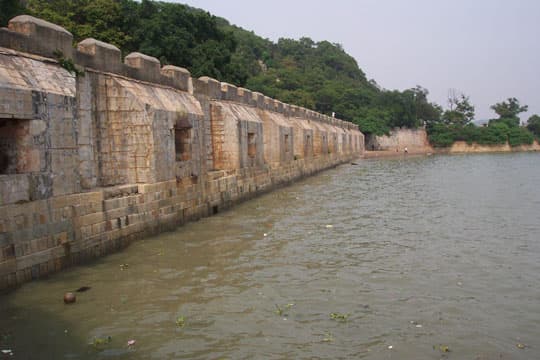
Weiyuan Fort extends approximately 360 meters in length, featuring a linear design optimized for broad coverage of the river approach. The fort's walls and bastions were constructed using local materials typical of the period, designed to withstand bombardment and provide strategic firing angles for its artillery.
The fortifications included thick masonry walls, embrasures for cannons, and defensive parapets. The interior likely housed barracks, ammunition storage, and command facilities, although much of this has been lost to time and subsequent deterioration.
Defensive capabilities
The combination of dark artillery casemates and open gun placements allowed the fort to engage targets at varying ranges and angles. The casemates provided protection for gun crews against enemy fire and weather, while the open guns offered greater firing arcs. This dual arrangement was typical of coastal forts of the era, balancing protection and offensive reach.
Current condition and preservation
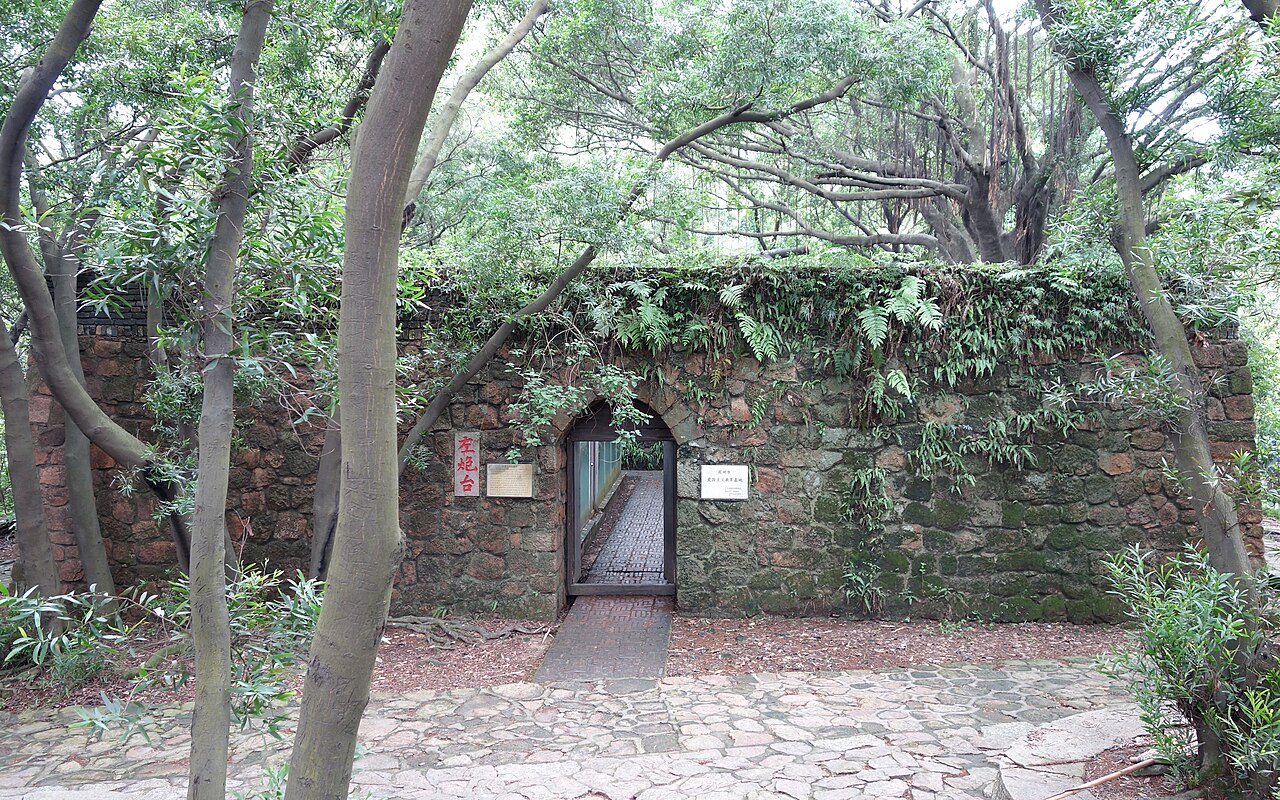
Today, Weiyuan Fort stands as ruins, with much of its original structure partially collapsed or eroded. Despite this, key sections of the walls and artillery platforms remain visible, providing valuable insights into Qing dynasty military architecture and coastal defense strategies.
The fort is accessible to the public, located beneath the modern infrastructure of the Humen Bridge. Admission is free with valid identification documents, allowing visitors to explore the historic site and appreciate its role in China's 19th-century military history.
Visitor information and significance
As a cultural relic, Weiyuan Fort offers a tangible connection to the turbulent period of the Opium Wars and the Qing dynasty's defensive efforts. The site attracts historians, military enthusiasts, and tourists interested in China's coastal fortifications and maritime history.
Its proximity to the bustling city of Dongguan and the scenic Pearl River Delta makes it an accessible destination for educational visits and historical tours. While the ruins require careful preservation, they remain an important monument to China's resistance against foreign naval powers in the 19th century.
Frequently asked questions (FAQ)
- When was Weiyuan Fort built and what was its purpose?
- Weiyuan Fort was built in 1835 as a coastal defense fort to protect the Pearl River Delta from British naval attacks during the Opium Wars.
- What remains of Weiyuan Fort can visitors see today?
- Visitors can see the ruins of the fort's walls and artillery platforms, which provide insight into Qing dynasty coastal defense architecture.
- Is there an admission fee to visit Weiyuan Fort?
- Admission to Weiyuan Fort is free, but visitors must present valid identification documents to enter the site.
- Where is Weiyuan Fort located in relation to modern landmarks?
- The fort is situated immediately beneath the Humen Bridge in Dongguan city, Guangdong province, making it easy to locate.
- What types of artillery were installed at Weiyuan Fort?
- The fort was equipped with 44 cannons, including 40 dark artillery pieces housed in casemates and four open fort cannons for broad firing coverage.

Information
Ticket prices
Free with valid documents
Loading map...
Visitor reviews
No reviews yet. Been here? Write the first review and help other travelers!
Write the first reviewVisited this castle? Share your experience
Your review helps other travelers and adds first-hand knowledge to our encyclopedia.