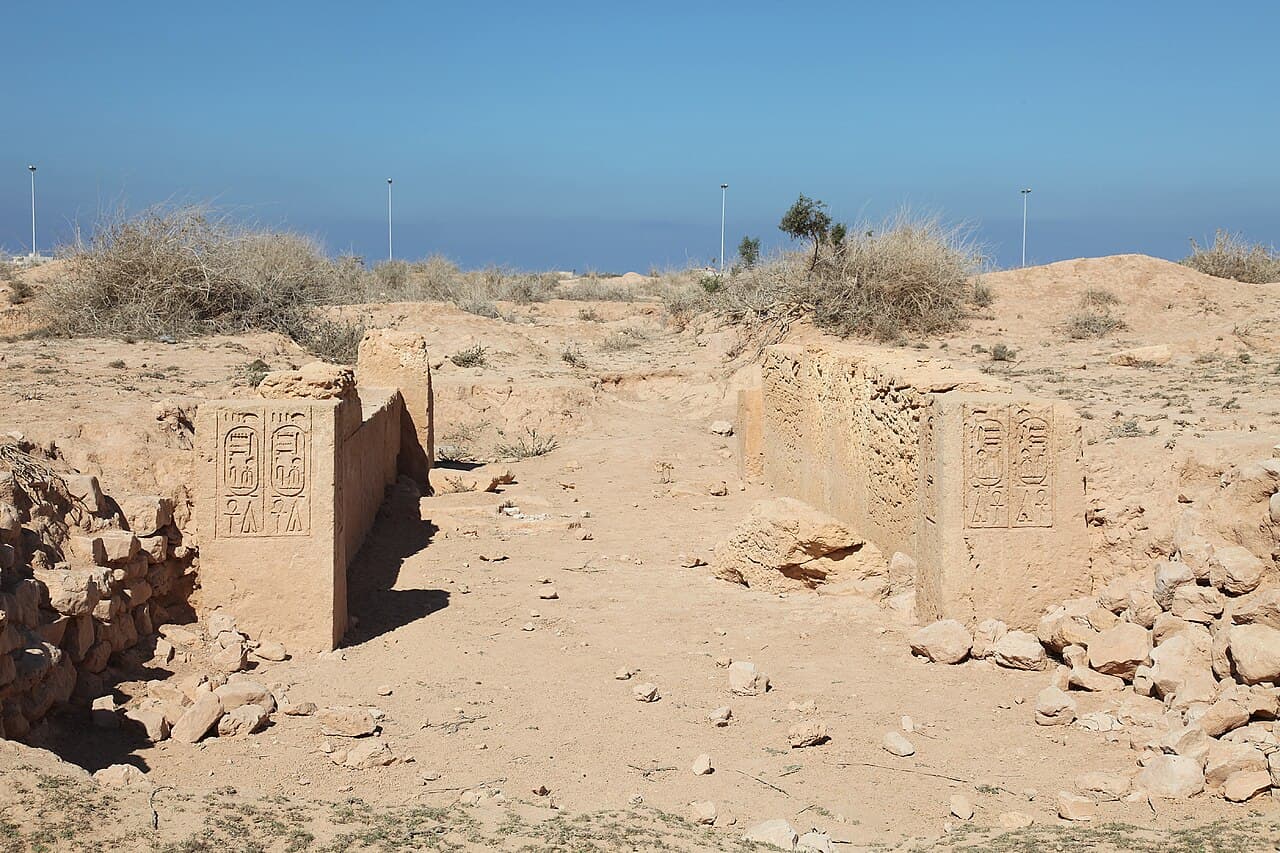
Zawiyet Umm el-Rakham (Egyptian Arabic: زاوية أم الرخم, meaning "the resthouse of the mother of vultures") is a significant archaeological site situated on the north coast of Egypt, approximately 20 kilometers west of Marsa Matruh and about 300 kilometers west of Alexandria. This site represents the remains of a fortress-town that played a crucial role during the New Kingdom period, particularly under the reign of Ramesses II in the 13th century BCE.
Historical context and strategic importance
Constructed during the 19th Dynasty of Ancient Egypt, Zawiyet Umm el-Rakham was established as a military and administrative outpost marking the westernmost extent of direct Egyptian influence in the region. Its location on the Mediterranean coast made it a vital point for controlling access to the western desert and the Libyan territories beyond. The fortress was built on what ancient texts describe as "Libyan land", highlighting its role as a frontier post to monitor and manage relations with western nomadic tribes and to secure important water resources in the arid environment.
Archaeological discovery and excavations
The site was first discovered in 1948 and has since been the subject of various archaeological investigations. Early sporadic examinations were conducted by notable Egyptologists Alan Rowe and Labib Habachi. From 1994 onwards, extensive excavations have been carried out by a team from the University of Liverpool under the direction of Steven Snape, revealing detailed insights into the fortress's layout, construction techniques, and historical usage.
Architectural features and layout
Zawiyet Umm el-Rakham was designed as a fortified settlement with robust defensive structures typical of Egyptian frontier fortresses of the New Kingdom. The remains include massive mudbrick walls and towers arranged to provide a strong defensive perimeter. The fortress complex likely included administrative buildings, storage facilities, and living quarters for soldiers and officials. Its design reflects a combination of military functionality and the need to sustain a permanent garrison in a remote location.
Defensive structures
The fortress walls were constructed to withstand attacks from desert tribes and potential invaders. The positioning of towers allowed for surveillance over the surrounding landscape, including the crucial water sources that the Egyptians sought to control. The strategic placement of the fortress on the coast also enabled monitoring of maritime routes along the Mediterranean.
Water resource management
Control of water was a key factor in the fortress's location and operation. The arid environment meant that access to wells and springs was vital for sustaining the garrison and any associated settlements. Textual evidence from the site emphasizes the importance of managing these water resources, which were essential for both military and civilian survival in this frontier region.
Cultural and historical significance
Zawiyet Umm el-Rakham represents a tangible example of Egypt's imperial reach during the New Kingdom and its efforts to secure and administer distant frontiers. The fortress illustrates the military and administrative strategies employed by Ramesses II to maintain control over border regions and manage relations with neighboring peoples, particularly the Libyans. The site also provides valuable archaeological data on frontier life, military architecture, and resource management in a challenging environment.
Role under Ramesses II
During the reign of Ramesses II (circa 1279–1213 BCE), one of Egypt's most powerful pharaohs, the fortress-town at Zawiyet Umm el-Rakham was a key element in asserting Egyptian dominance westward. It likely served as a base for military expeditions and a symbol of Egyptian presence in the region, helping to deter incursions and facilitate trade and diplomacy.
Legacy and modern research
The ongoing excavations have contributed substantially to the understanding of Egypt's western frontier defenses. The findings at Zawiyet Umm el-Rakham have enriched knowledge about New Kingdom military architecture and frontier policy. As a well-preserved archaeological ruin, it continues to attract scholarly interest and offers potential for further discoveries about Egypt's imperial history and interactions with neighboring cultures.
Frequently asked questions (FAQ)
- What is Zawiyet Umm el-Rakham known for?
- Zawiyet Umm el-Rakham is significant as an ancient Egyptian site that dates back to the Middle Kingdom. It is renowned for its unique architectural features and the well-preserved remains of various structures, including temples and burial sites that offer insights into the funerary practices of that era.
- When was Zawiyet Umm el-Rakham constructed?
- The construction of Zawiyet Umm el-Rakham is believed to have occurred around the 12th Dynasty of the Middle Kingdom, approximately 1991 to 1803 BCE. This period is marked by significant advancements in art and architecture in ancient Egypt, making the site historically important.
- How do I get to Zawiyet Umm el-Rakham?
- Zawiyet Umm el-Rakham is located near the city of Cairo, making it accessible by car or organized tours. Visitors can take a taxi or rent a car for a more direct approach, as public transport options may be limited and less convenient.
- What are the opening hours for Zawiyet Umm el-Rakham?
- Zawiyet Umm el-Rakham is typically open to visitors from 8:00 AM to 5:00 PM daily. However, it is advisable to check local listings or official websites for any changes in hours or special holiday schedules before planning your visit.
- Can I take photographs at Zawiyet Umm el-Rakham?
- Yes, visitors are generally allowed to take photographs at Zawiyet Umm el-Rakham, but certain restrictions may apply, particularly inside specific structures or during special events. It is best to respect any posted signs and guidelines to ensure a pleasant experience for everyone.
- Is it possible to access Zawiyet Umm el-Rakham with mobility aids?
- While Zawiyet Umm el-Rakham has some pathways for visitor access, the site may present challenges for those using mobility aids due to uneven terrain and ancient structures. It is recommended to contact the site management in advance for information on accessibility options.
- What is the best time to visit Zawiyet Umm el-Rakham?
- The best time to visit Zawiyet Umm el-Rakham is during the cooler months from October to March. During this period, temperatures are more comfortable for exploring the site without the heat of the summer sun.
- Are there any nearby attractions to visit while at Zawiyet Umm el-Rakham?
- Yes, visitors can explore nearby attractions such as the Giza Pyramids, Saqqara, and the Sphinx. These famous historical sites provide a comprehensive understanding of ancient Egyptian civilization and are often included in tour packages.
- What are the ticket prices for Zawiyet Umm el-Rakham?
- Ticket prices for Zawiyet Umm el-Rakham can vary based on visitor nationality and any applicable discounts. Generally, entrance fees are affordable, but it’s advisable to check current prices online or at the entrance to avoid any surprises.
Photo gallery

Information
Loading map...
Visitor reviews
No reviews yet. Been here? Write the first review and help other travelers!
Write the first reviewVisited this castle? Share your experience
Your review helps other travelers and adds first-hand knowledge to our encyclopedia.