Citadel of Qaitbay
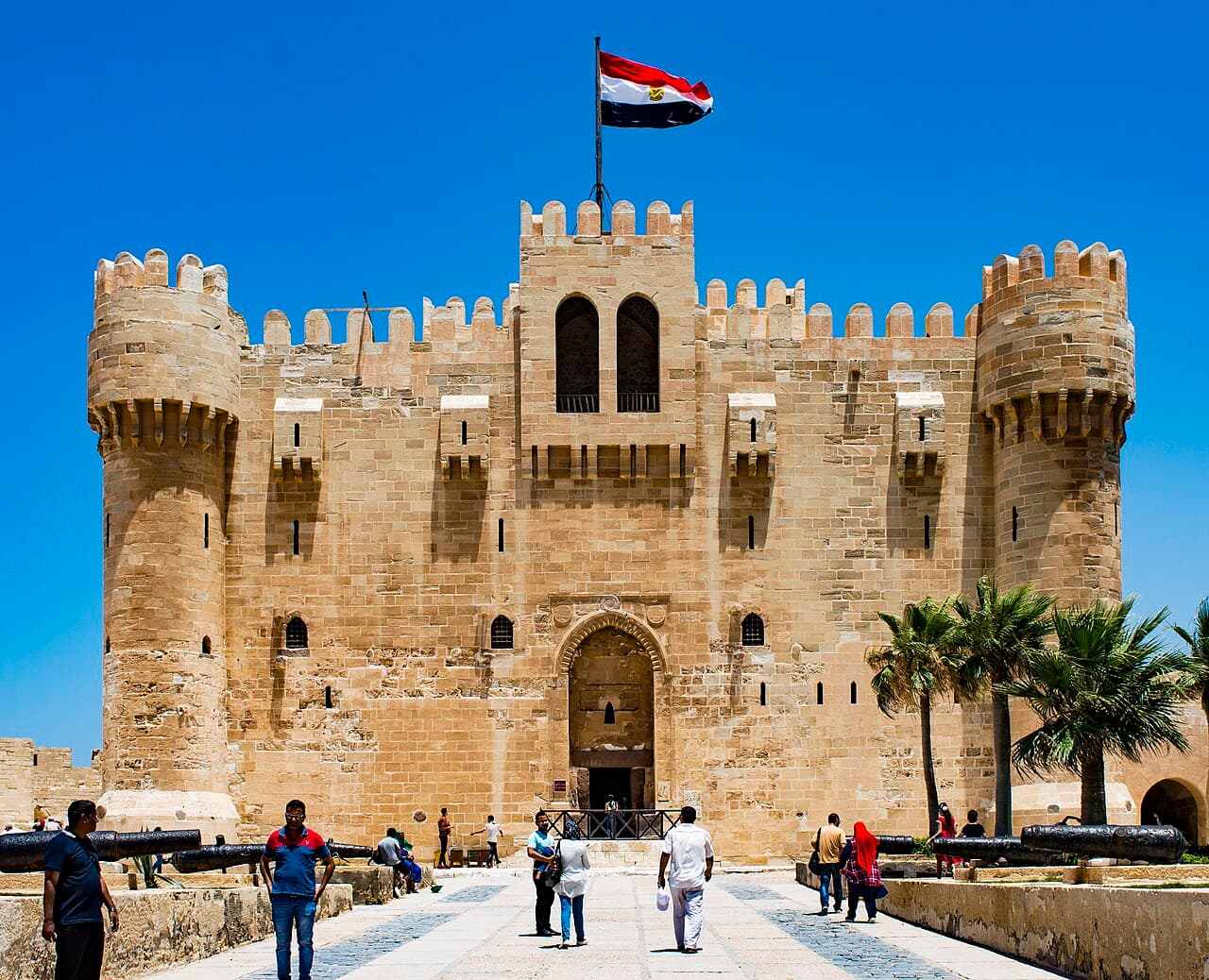
The Citadel of Qaitbay stands as one of the most significant medieval fortresses on the Mediterranean coast and a prominent symbol of Egypt's rich defensive heritage. Constructed in the 15th century AD by Sultan Al Ashraf Abou Seif Al Nasr Eldin Qaitbay Al Zahiry, this fortress was strategically built to protect the vital eastern harbor of Alexandria. It occupies the eastern tip of the historic Pharos Island, the very site where the legendary Lighthouse of Alexandria once towered as one of the Seven Wonders of the Ancient World.
The lighthouse, originally reaching an estimated height of 125 meters, was a marvel of ancient engineering. It featured approximately three hundred rooms at its base, constructed to house the workers who maintained the structure. A remarkable double spiral ramp ran through its core, allowing for the transportation of fuel to the top by means of a hydraulic mechanism. The design of the lantern at the summit remains a subject of historical debate; some scholars suggest it housed a polished steel mirror to reflect sunlight by day and fire by night, while others propose it was made of transparent glass.
The lighthouse suffered significant damage over the centuries. Reports indicate that the lantern and the first two stories collapsed around 700 AD, and the remaining structure was ultimately destroyed by an earthquake around 1100 AD. Following the lighthouse's demise, a mosque was constructed on the site, which itself was damaged by an earthquake in the 14th century. The citadel's entrance features an imposing gateway made from red Aswan granite, showcasing the use of durable and locally sourced materials.
Architectural features and fortifications
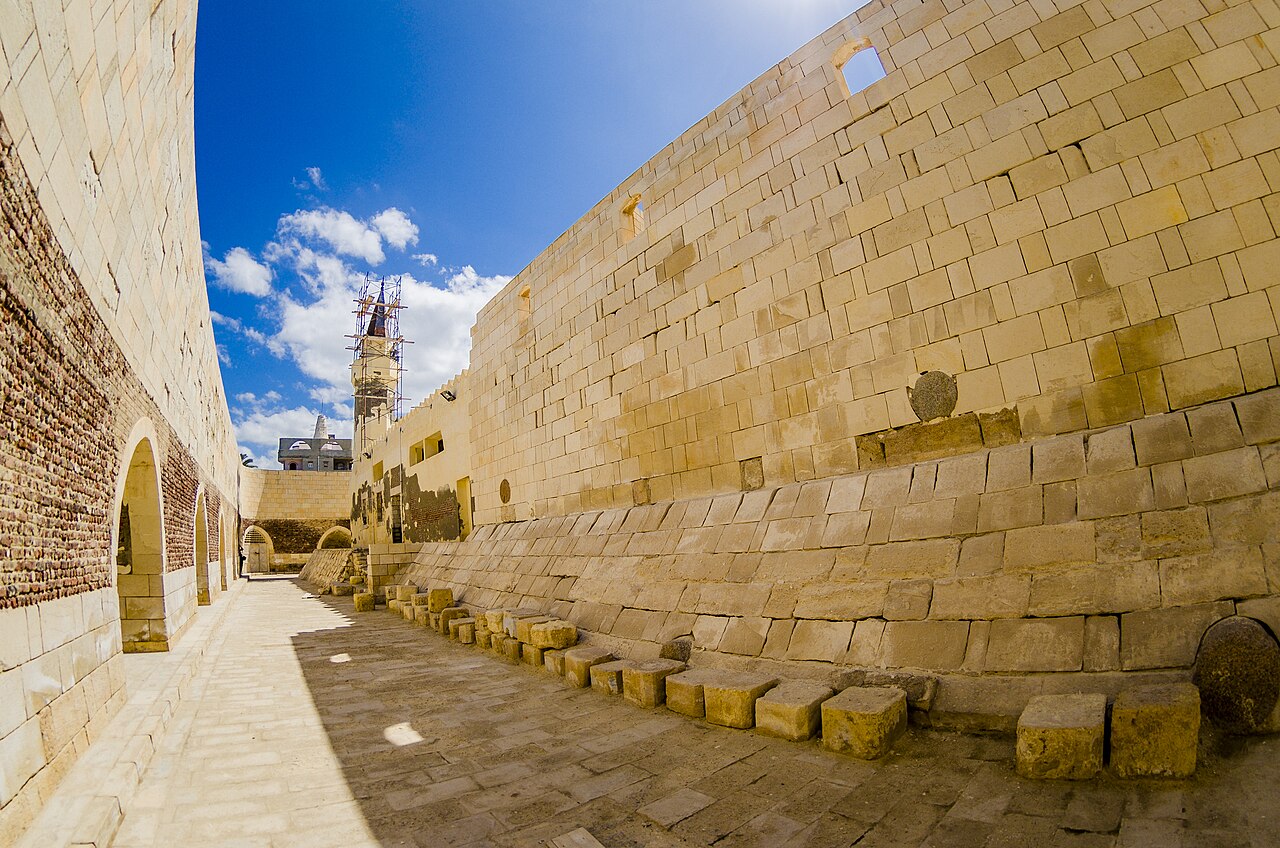
The citadel's architecture reflects the military engineering advancements of the late medieval Islamic period. Its robust stone walls and were designed to withstand both naval and land assaults. The fortress includes a cistern within its walls, an essential feature that stored water to sustain the garrison during prolonged sieges. This highlights the strategic foresight in its design, ensuring operational resilience in times of conflict.
Inside the citadel, visitors can explore the Naval Museum, which houses artifacts and exhibits related to Roman and Napoleonic naval battles. This museum enriches the historical narrative of Alexandria's maritime significance and the citadel's enduring role in coastal defense.
Historical context and significance
The Citadel of Qaitbay was part of a comprehensive fortification system established to protect Alexandria from the increasing threats posed by Ottoman expansion and European naval powers during the late medieval period. Sultan Qaitbay, a Mamluk ruler, commissioned the fortress in 1477 AD to reinforce Egypt's northern defenses. Its location on Pharos Island was vital, as it guarded the entrance to the city's harbor, a crucial point for trade and military control.
Over the centuries, the citadel has witnessed numerous historical events, including sieges and naval engagements, reflecting the turbulent history of the Mediterranean region. Its survival and continued prominence underscore its strategic importance and the skill of its builders.
Preservation and current status
Today, the Citadel of Qaitbay is well preserved and serves as both a cultural landmark and a tourist attraction in Alexandria. Restoration efforts have maintained its structural integrity, allowing visitors to appreciate its architectural grandeur and historical significance. The site offers panoramic views of the Mediterranean Sea and the city, connecting modern visitors with Alexandria's illustrious past.
The citadel's blend of historical layers—from the ancient lighthouse foundations to the medieval fortifications—provides a unique window into the evolution of military architecture and urban development in this historic port city.
Frequently asked questions (FAQ)
- When was the Citadel of Qaitbay built?
- The Citadel of Qaitbay was constructed in 1477 AD by Sultan Qaitbay to protect Alexandria's eastern harbor.
- What was the original purpose of the site where the citadel stands?
- The citadel is built on the site of the ancient Lighthouse of Alexandria, one of the Seven Wonders of the Ancient World.
- Can visitors see remains of the Lighthouse of Alexandria at the citadel?
- Yes, parts of the ancient lighthouse's foundations and stones are incorporated into the citadel's structure, visible to visitors.
- What architectural features make the citadel significant?
- The citadel features robust stone walls, battlements, a red Aswan granite gateway, and a cistern for water storage during sieges.
- Is there a museum inside the Citadel of Qaitbay?
- Yes, the Naval Museum inside the citadel displays artifacts from Roman and Napoleonic naval battles.
- What is the current condition of the Citadel of Qaitbay?
- The citadel is well preserved and open to visitors, showcasing its historical and architectural heritage.
Photo gallery

Information
Loading map...
Visitor reviews
No reviews yet. Been here? Write the first review and help other travelers!
Write the first reviewVisited this castle? Share your experience
Your review helps other travelers and adds first-hand knowledge to our encyclopedia.