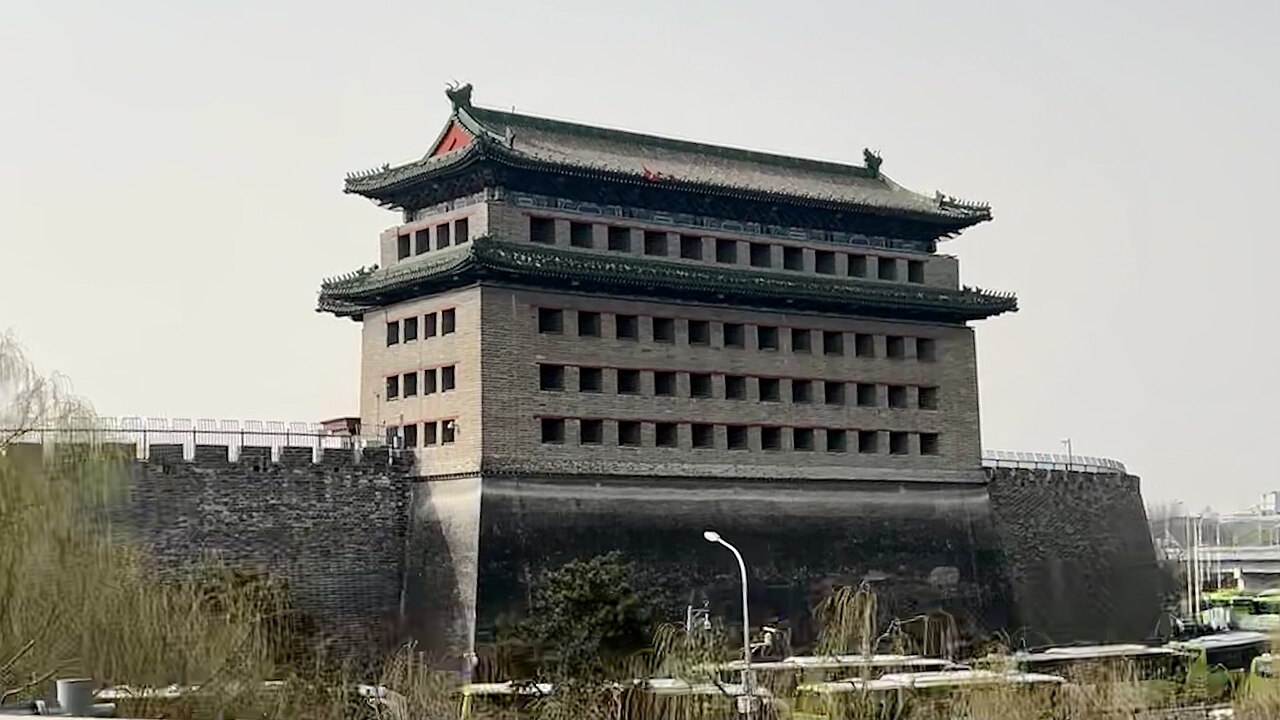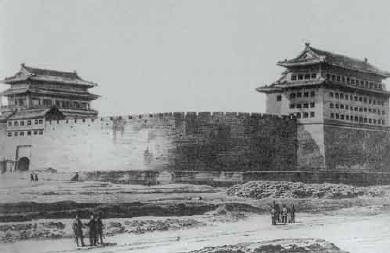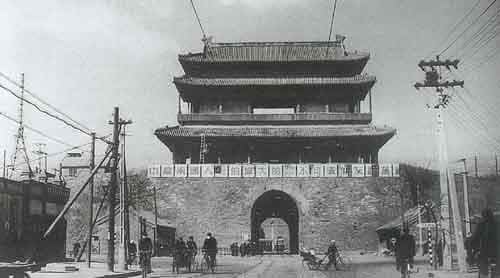
Xizhimen (Chinese: 西直门; pinyin: Xīzhímén) was a significant gate in the ancient Beijing city wall, serving both defensive and practical functions during its existence. Located in what is now a major transportation hub in Beijing, this gate played a crucial role in the city's historical urban fabric. It was notably the point of entry for the imperial drinking water supply, which originated from the Jade Spring Hills to the west of Beijing. This connection highlights the gate's importance beyond mere defense, linking it to the essential daily needs of the Emperor and the imperial court.
The gate was part of the extensive fortifications that surrounded Beijing, which were constructed and expanded during various dynasties to protect the capital. Xizhimen was strategically positioned as one of the western gates of the city wall, facilitating controlled access and trade. The architecture of the gate, typical of Chinese city gates, would have included defensive features such as gate towers, watchtowers, and possibly barbicans to strengthen its fortification. However, detailed architectural records of Xizhimen's structure are limited due to its demolition and the passage of time.
Historical significance and role in beijing's defenses
The Beijing city wall was an imposing structure that defined the city's boundaries for centuries. Xizhimen was one of several gates that controlled entry and exit points, each with specific roles in trade, military defense, and administration. The gate's role in channeling water from the Jade Spring Hills indicates its integration into the city's infrastructure, serving not only as a military checkpoint but also as a vital utility access point.
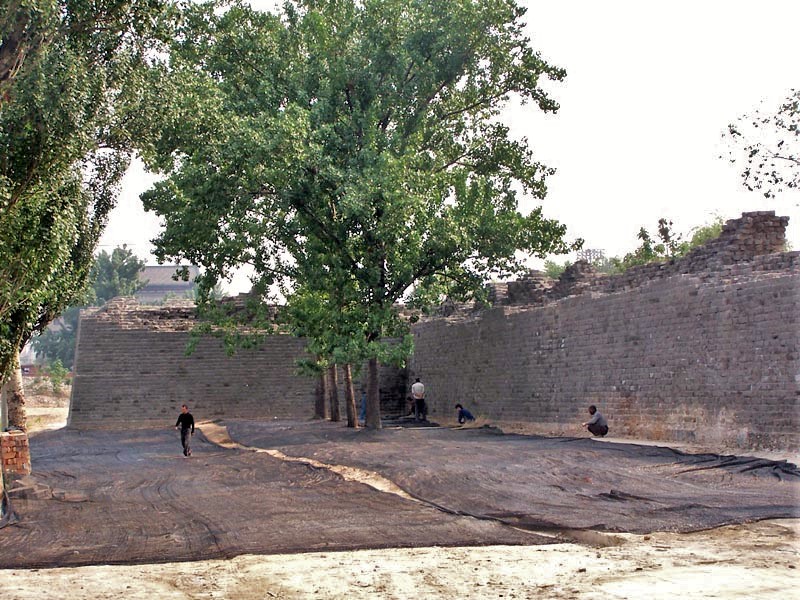
The gate's destruction in 1969 was part of a broader wave of urban modernization that led to the removal of many traditional structures in Beijing. This demolition erased much of the physical evidence of the gate's original form, leaving behind only archaeological remnants. Today, the site of Xizhimen is recognized as an archaeological ruin, reflecting its historical importance despite the absence of standing structures.
Architectural features and layout
While specific details about Xizhimen's architectural style are scarce, it likely followed the typical design principles of Chinese city gates during the Ming and Qing dynasties. These gates often featured a large arched entrance flanked by imposing walls and topped with a multi-tiered gate tower. The walls were constructed from brick and stone, designed to withstand sieges and attacks.
Additional defensive elements may have included arrow slits and machicolations for archers and defenders. The gate's position on the western side of the city wall made it a critical point for monitoring and controlling access from the western approaches to Beijing.
Modern context and legacy
Today, Xizhimen no longer exists as a physical gate but remains a significant historical reference point in Beijing's urban landscape. The area around the original gate site has transformed into a major transportation node, reflecting the city's growth and modernization. Despite its demolition, Xizhimen's legacy continues through archaeological studies and historical documentation.
The gate's connection to the imperial water supply from the Jade Spring Hills underscores the sophisticated urban planning of historical Beijing, where defensive structures were integrated with essential city services. Xizhimen serves as a reminder of the city's layered history, from imperial times through modern development.
Archaeological importance
As an archaeological ruin, the site provides valuable insights into the construction techniques and urban design of ancient Beijing. Excavations and research at the site contribute to the understanding of the city's defensive systems and infrastructure. Preservation efforts focus on documenting and interpreting the remains to educate the public and honor Beijing's cultural heritage.
Visitor information
While the original gate no longer stands, visitors to Beijing can explore the area around Xizhimen to appreciate its historical significance. The site is accessible as part of the city's urban environment, with nearby museums and cultural sites offering additional context about Beijing's city walls and gates.
Frequently asked questions (FAQ)
- What is the historical significance of Xizhimen?
- Xizhimen, also known as the "West City Gate," was built during the Ming Dynasty as part of the city's defensive fortifications. It played a crucial role in the protection of Beijing and served as a vital transportation hub connecting the city to the west.
- When was Xizhimen constructed?
- Xizhimen was constructed in the 15th century, specifically in 1437, during the reign of the Yongle Emperor. It has since undergone several renovations, preserving its historical essence while adapting to modern needs.
- How do I get to Xizhimen?
- Xizhimen is easily accessible via public transportation, including the Beijing Metro. The Xizhimen Station is just a short walk from the castle, making it convenient for visitors to reach the site.
- What are the opening hours of Xizhimen?
- Xizhimen is open to visitors daily from 8:00 AM to 6:00 PM. It's advisable to check for any seasonal changes in opening hours before your visit.
- Can I take guided tours at Xizhimen?
- Yes, guided tours are available at Xizhimen, providing visitors with in-depth knowledge about its history and architecture. These tours enhance the experience and allow for a deeper understanding of the site's significance.
- Is there an entrance fee for visiting Xizhimen?
- Yes, there is a modest entrance fee to visit Xizhimen, which helps maintain the site. The ticket prices are generally affordable, making it accessible for all visitors.
- What is the best time to visit Xizhimen?
- The best time to visit Xizhimen is during the spring (April to June) and autumn (September to November) when the weather is mild and comfortable. These seasons also provide a beautiful backdrop for photography with the changing foliage.
- Are there any nearby attractions to visit along with Xizhimen?
- Yes, nearby attractions include the Beijing Zoo, which is famous for its giant pandas, and the historic Beihai Park, offering beautiful gardens and lakes. These sites make for a perfect day of exploration around Xizhimen.
- Is Xizhimen accessible for visitors with disabilities?
- Xizhimen is working towards improving accessibility for all visitors. While some areas may be challenging, efforts are being made to provide suitable access options for those with disabilities. It's recommended to check in advance for specific accommodations.
Photo gallery

Public domain
Information
Loading map...
Visitor reviews
No reviews yet. Been here? Write the first review and help other travelers!
Write the first reviewVisited this castle? Share your experience
Your review helps other travelers and adds first-hand knowledge to our encyclopedia.