Beijing city fortifications
The Beijing city fortifications represent one of the most significant medieval urban defense systems in East Asia, constructed primarily during the Ming dynasty in the early 15th century. Spanning approximately 60 kilometres (37 miles), these walls enclosed the Inner City, Outer City, and the Imperial City, including the Forbidden City at the core of China's capital. The fortifications were designed to protect the political and cultural center of China through a complex network of walls, towers, gates, moats, and other defensive structures.
Historical context and significance
Beijing served as the capital for several major dynasties, including the Yuan, Ming, and Qing dynasties, as well as a secondary capital for the Liao and Jin dynasties. The city's fortifications evolved over centuries, reaching their most comprehensive form under the Ming dynasty, reflecting the era's emphasis on military defense and urban planning. The walls symbolized imperial authority and were crucial in defending the city against invasions and uprisings.
Architectural features of the fortifications
Walls and moats
The fortifications consisted of massive brick and rammed earth walls, some reaching heights of up to 12 meters (39 feet) and thicknesses sufficient to allow soldiers and horses to patrol the ramparts. Surrounding the walls was an extensive moat system, which added an extra layer of defense by hindering enemy approach and siege efforts.
Gates and gate towers
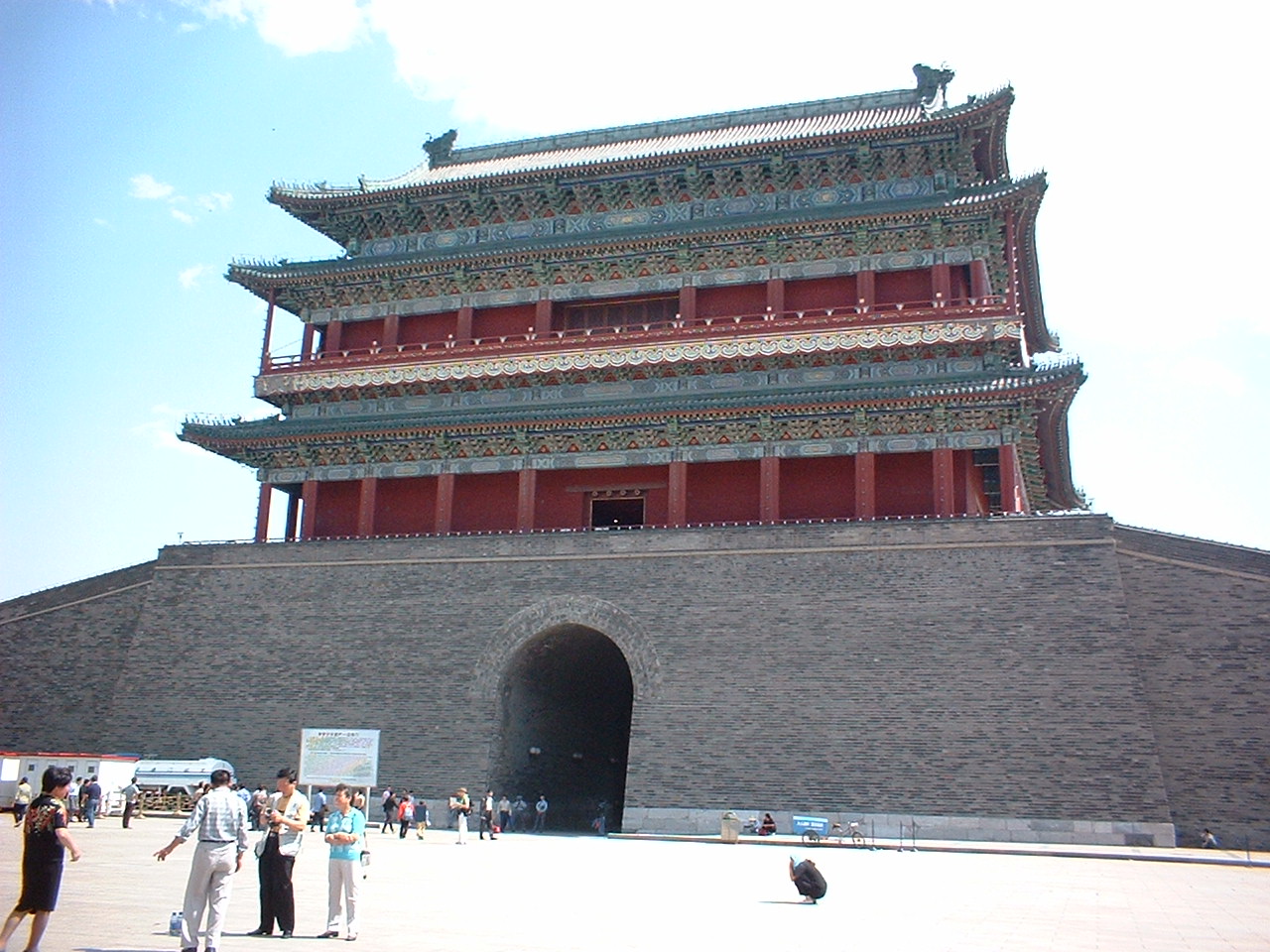
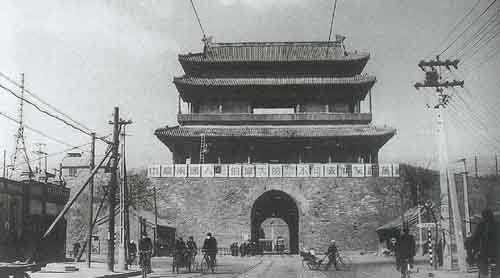
The city walls were punctuated by numerous gate complexes, each featuring imposing gate towers and watchtowers. These gates, such as Zhengyangmen and Deshengmen, served both defensive and ceremonial purposes. The gate towers were multi-storied structures that allowed defenders to observe and repel attackers, while also functioning as grand entrances into the city.
Barbicans and other defensive structures
Additional defensive features included barbicans—walled courtyards before the main gates designed to trap and expose attackers—and enemy sighting towers that provided early warnings of approaching threats. Corner guard towers reinforced vulnerable points along the walls, and sluice gates controlled water flow into the moats, demonstrating sophisticated hydraulic engineering.
Decline and preservation efforts
Following the fall of the Qing dynasty in 1911, the military importance of the city walls diminished, and modernization efforts led to their gradual dismantling. The majority of the Outer City walls and gates were demolished during the 1950s to accommodate urban expansion. The Inner City walls suffered significant destruction in the 1960s, particularly to make way for the 2nd Ring Road and Beijing Subway Line 2.
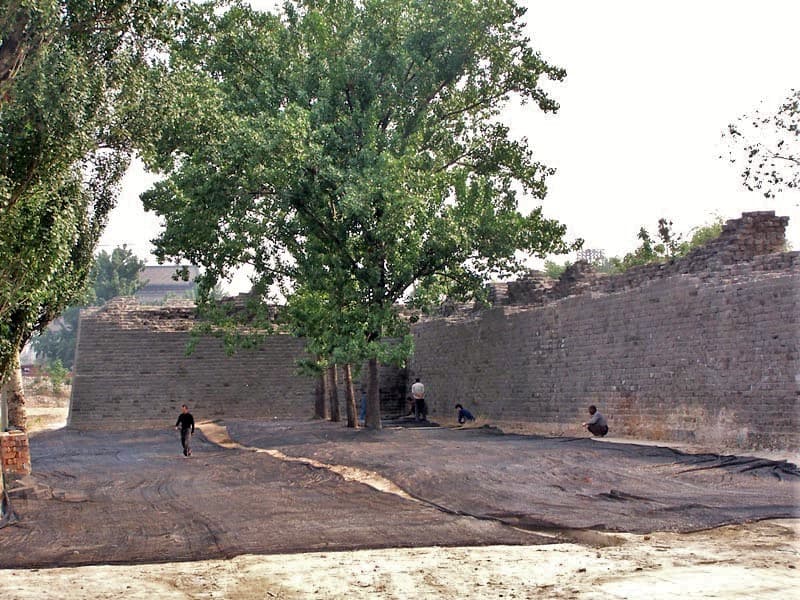
Despite widespread demolition, several key structures have survived or been restored. The Forbidden City remains largely intact as the Palace Museum. Notable surviving fortifications include the Tiananmen gate, the gate and watchtower at Zhengyangmen, the watchtower at Deshengmen, the southeastern corner guard tower, and a preserved 1.5-kilometre (0.93 mi) section of the Inner City wall near Chongwenmen. This section and the corner tower are now part of the Beijing Ming City Wall Ruins Park.
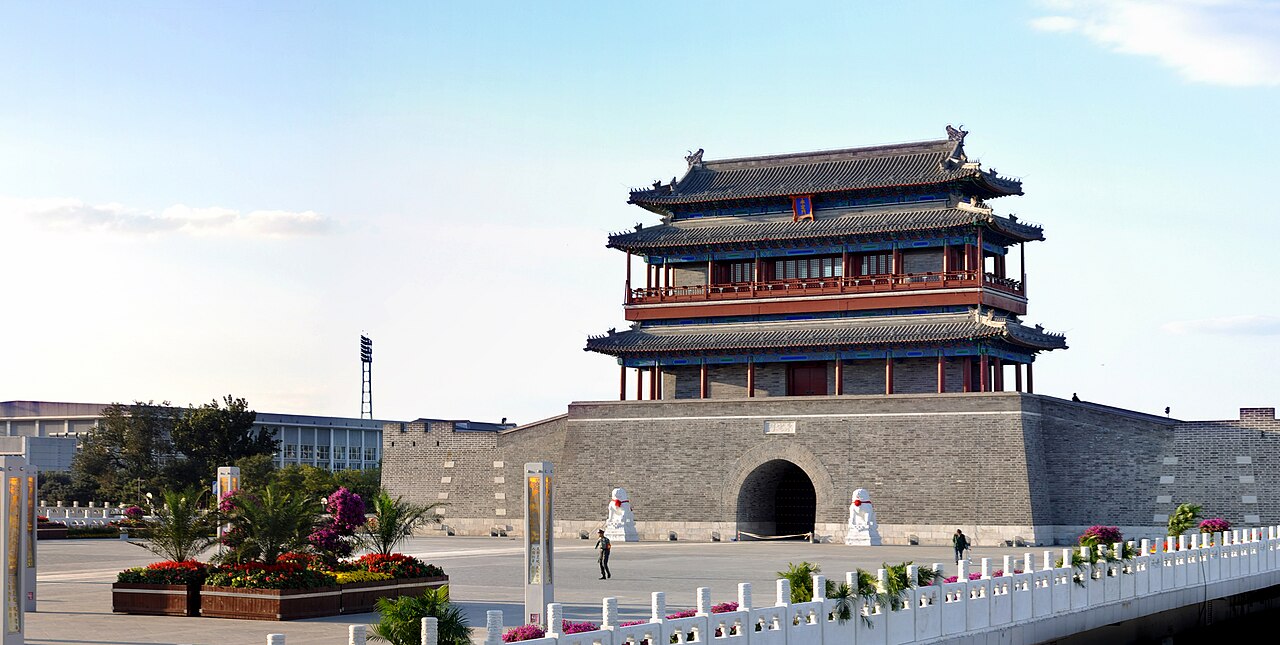
In 2004, the Yongdingmen gate was completely reconstructed, serving as a symbolic restoration of the city's historic defenses and as a cultural landmark.
Cultural and architectural legacy
The Beijing city fortifications illustrate the military architecture and urban design principles of imperial China. Their scale and complexity reflect the strategic importance of Beijing as a capital city and the technological capabilities of the Ming dynasty. The surviving structures offer valuable insights into the construction techniques of the time, including the use of rammed earth foundations, brickwork, and wooden superstructures.
Today, the remnants of the walls and gates serve as important cultural heritage sites, attracting visitors interested in China's imperial history and architectural traditions. The Beijing Ming City Wall Ruins Park provides a public space where people can experience a fragment of the ancient city defenses amidst the modern urban environment.
Frequently asked questions (FAQ)
- When were the Beijing city fortifications originally built?
- The Beijing city fortifications were primarily constructed during the early 15th century under the Ming dynasty to protect the imperial capital.
- What remains of the Beijing city walls can be seen today?
- Today, visitors can see surviving structures such as Tiananmen, Zhengyangmen gate and watchtower, Deshengmen watchtower, the southeastern corner guard tower, and a section of the Inner City wall near Chongwenmen.
- Why were most of the Beijing city walls demolished?
- Most of the walls were demolished in the 1950s and 1960s to make way for urban development projects, including the construction of the 2nd Ring Road and Beijing Subway Line 2.
- Is it possible to visit the Beijing Ming City Wall Ruins Park?
- Yes, the Beijing Ming City Wall Ruins Park is open to the public and offers a preserved section of the Inner City wall along with historical towers and informative displays.
- What architectural features characterized the Beijing city fortifications?
- The fortifications included massive brick walls, gate towers, watchtowers, barbicans, moats, sluice gates, and corner guard towers, reflecting advanced military architecture of the Ming dynasty.
Photo gallery

Photo by user:kallgan•Public domain
Information
Loading map...
Visitor reviews
No reviews yet. Been here? Write the first review and help other travelers!
Write the first reviewVisited this castle? Share your experience
Your review helps other travelers and adds first-hand knowledge to our encyclopedia.