Deshengmen — China castle

Deshengmen

Deshengmen city gate in Beijing
Late Medieval (14th–15th c.)
Partially Preserved

Deshengmen (simplified Chinese: 德胜门; traditional Chinese: 德勝門; pinyin: Déshèngmén; lit. 'Gate of Virtuous Triumph') is a historic city gate that once formed a key part of Beijing's northern city wall. Constructed in 1437 during the Ming dynasty, it is among the few surviving gates of Beijing's ancient fortifications and today serves as a prominent landmark on the northern section of the 2nd Ring Road.

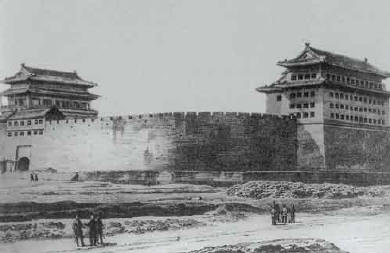
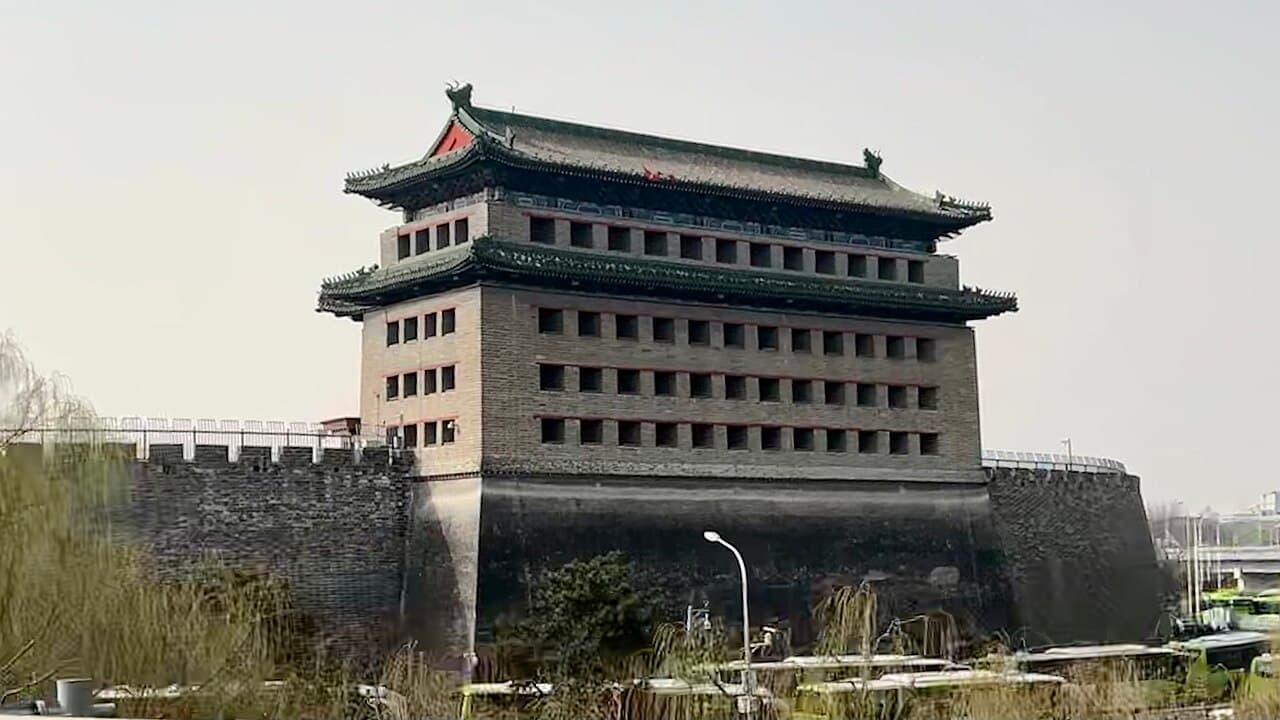
The original gate complex comprised three main structures: the gatehouse, the archery tower, and the barbican. These elements combined to form a formidable defensive ensemble typical of Chinese city gates from the Late Medieval period. The gatehouse itself was demolished in 1921, and the surrounding city wall was largely dismantled in 1969. However, both the archery tower and the barbican have been preserved and remain standing today. These structures overlook the northern city moat, which historically served as an additional defensive barrier.

Architectural design and defensive features

The design of Deshengmen reflects the strategic military architecture of the Ming dynasty. The archery tower was a tall, multi-storied structure designed to provide defenders with a vantage point to observe and repel attackers using bows and arrows. The barbican, a fortified outwork, created a narrow passage that attackers had to navigate, exposing them to defensive fire from multiple angles.

The gate complex was part of a larger system of fortifications that included the city walls, moats, and other gates, all designed to protect Beijing from invasions and control access to the city. The bastioned fortress classification is appropriate, as the gate's design incorporated bastion-like defensive elements to strengthen its military function.

Historical significance and cultural role

Deshengmen held considerable importance in the traditional military and civic life of Beijing. Its name, meaning "Gate of Virtuous Triumph", symbolized auspiciousness and victory. Historically, it was the gate through which the imperial military forces would march out of Beijing when going to battle. Upon return, troops would enter through Andingmen, the "Gate of Peace and Stability", reinforcing the symbolic duality of war and peace.

Over the centuries, Deshengmen witnessed numerous military campaigns and served as a critical checkpoint for controlling movement in and out of the city. Its strategic location on the northern approach to Beijing made it a focal point in the city's defense system.

Modern context and preservation

Today, Deshengmen stands as a rare surviving fragment of Beijing's ancient fortifications amid a rapidly modernizing urban landscape. The archery tower and barbican have been preserved and repurposed to house an ancient coin exhibition, providing cultural and historical education for visitors.

The gate complex is now surrounded by the Deshengmen bridge, a rotary overpass that channels traffic from the 2nd Ring Road to the Badaling Expressway, making the site a major transportation hub in northern Beijing. The streets adjacent to the gate still retain its name, with Deshengmen Inner Street lying south within the old city limits and Deshengmen Outer Street to the north.

Architectural legacy and urban integration

The preservation of Deshengmen offers valuable insight into Ming dynasty military architecture and urban planning. The gate's surviving structures demonstrate the integration of defensive needs with symbolic and ceremonial functions. Its continued presence amidst modern infrastructure highlights the challenges and successes of conserving historical monuments within a dynamic metropolis.

Frequently asked questions (FAQ)

What is the historical significance of Deshengmen?
Deshengmen, also known as the "Gate of Victory," is one of the original gates of the ancient city wall of Beijing. Built in the 15th century during the Ming Dynasty, it served as a military defense structure and a crucial entry point into the city, reflecting the historical importance of Beijing as a capital.
When was Deshengmen built?
Deshengmen was constructed in 1437 during the Ming Dynasty. It was part of a larger network of fortifications that protected the city and has undergone various renovations over the centuries, preserving its historical integrity.
What are the opening hours for Deshengmen?
Deshengmen is open to visitors daily from 8:00 AM to 6:00 PM. It's advisable to check for any seasonal changes in hours before your visit, as they may vary during public holidays.
Can I visit Deshengmen with accessibility needs?
Yes, Deshengmen is accessible to visitors with mobility challenges, though some areas may require assistance due to steps and uneven terrain. It is recommended to contact local authorities or tour guides for specific accessibility options before your visit.
Is it possible to buy tickets online for Deshengmen?
Yes, tickets for Deshengmen can typically be purchased online through various tourism websites or at the entrance. It's a good idea to buy in advance during peak tourist seasons to avoid long waiting times.
What is the best time to visit Deshengmen?
The best time to visit Deshengmen is during the spring (April to June) and autumn (September to November) months. During these periods, the weather is mild and pleasant, allowing for a more enjoyable experience while exploring the site.
Are there any nearby attractions to visit after Deshengmen?
Yes, nearby attractions include the famous Beihai Park and the Drum and Bell Towers, both offering rich historical insights and beautiful scenery. You can easily spend a full day exploring these culturally significant sites in close proximity to Deshengmen.
What is the ticket price for Deshengmen?
The ticket price for Deshengmen is typically around 20 RMB for adults, with discounts available for students and seniors. Prices may vary during special exhibitions or events, so it’s wise to check in advance for the most current information.

Photo gallery

Deshengmen
Click to view

Photo by Charlie fong•CC BY-SA 4.0

1 photo • Click any image to view in full screen

Information

Bastioned Fortress

Loading map...

Visitor reviews

No reviews yet. Been here? Write the first review and help other travelers!

Write the first review

Visited this castle? Share your experience

Your review helps other travelers and adds first-hand knowledge to our encyclopedia.
Write a review

(5/5)

0/2000 characters

Your review will be visible after admin approval

Nearby castles

1.8 km
Xizhimen — China castle

Xizhimen

, China

Xizhimen (Chinese: 西直门; pinyin: Xīzhímén) was a significant gate in the ancient Beijing city wall, serving both defensive and practical functions during its existence. Located in what is now a major transportation hub in Beijing, this gate played a crucial role in the city's historical urban fabric. It was notably the point of entry for the imperial drinking water supply, which originated from the Jade Spring Hills to the west of Beijing. This connection highlights the gate's importance beyond mere defense, linking it to the essential daily needs of the Emperor and the imperial court.The gate was part of the extensive fortifications that surrounded Beijing, which were constructed and expanded during various dynasties to protect the capital. Xizhimen was strategically positioned as one of the western gates of the city wall, facilitating controlled access and trade. The architecture of the gate, typical of Chinese city gates, would have included defensive features such as gate towers, watchtowers, and possibly barbicans to strengthen its fortification. However, detailed architectural records of Xizhimen's structure are limited due to its demolition and the passage of time.Historical significance and role in beijing's defensesThe Beijing city wall was an imposing structure that defined the city's boundaries for centuries. Xizhimen was one of several gates that controlled entry and exit points, each with specific roles in trade, military defense, and administration. The gate's role in channeling water from the Jade Spring Hills indicates its integration into the city's infrastructure, serving not only as a military checkpoint but also as a vital utility access point.The gate's destruction in 1969 was part of a broader wave of urban modernization that led to the removal of many traditional structures in Beijing. This demolition erased much of the physical evidence of the gate's original form, leaving behind only archaeological remnants. Today, the site of Xizhimen is recognized as an archaeological ruin, reflecting its historical importance despite the absence of standing structures.Architectural features and layoutWhile specific details about Xizhimen's architectural style are scarce, it likely followed the typical design principles of Chinese city gates during the Ming and Qing dynasties. These gates often featured a large arched entrance flanked by imposing walls and topped with a multi-tiered gate tower. The walls were constructed from brick and stone, designed to withstand sieges and attacks.Additional defensive elements may have included arrow slits and machicolations for archers and defenders. The gate's position on the western side of the city wall made it a critical point for monitoring and controlling access from the western approaches to Beijing.Modern context and legacyToday, Xizhimen no longer exists as a physical gate but remains a significant historical reference point in Beijing's urban landscape. The area around the original gate site has transformed into a major transportation node, reflecting the city's growth and modernization. Despite its demolition, Xizhimen's legacy continues through archaeological studies and historical documentation.The gate's connection to the imperial water supply from the Jade Spring Hills underscores the sophisticated urban planning of historical Beijing, where defensive structures were integrated with essential city services. Xizhimen serves as a reminder of the city's layered history, from imperial times through modern development.Archaeological importanceAs an archaeological ruin, the site provides valuable insights into the construction techniques and urban design of ancient Beijing. Excavations and research at the site contribute to the understanding of the city's defensive systems and infrastructure. Preservation efforts focus on documenting and interpreting the remains to educate the public and honor Beijing's cultural heritage.Visitor informationWhile the original gate no longer stands, visitors to Beijing can explore the area around Xizhimen to appreciate its historical significance. The site is accessible as part of the city's urban environment, with nearby museums and cultural sites offering additional context about Beijing's city walls and gates.

Details
2.3 km
Andingmen — China castle

Andingmen

Beijing, China

Andingmen (simplified Chinese: 安定门; traditional Chinese: 安定門; pinyin: Āndìngmén; meaning 'Gate of Stability') was a significant gate in the Ming dynasty city wall of Beijing, constructed as part of the extensive fortifications to protect the imperial capital from northern invasions. The gate served both defensive and ceremonial functions, controlling traffic and access through the northern section of the city wall. The Ming-era city walls of Beijing were among the most formidable urban defenses of their time, featuring massive walls, watchtowers, and gates strategically placed to guard the city. Andingmen was one of the key northern gates, reflecting the importance of securing the capital from threats coming from the north. The gate's architecture would have included imposing gate towers and barbicans, typical of Ming fortifications, designed to withstand sieges and control entry. Historical context and significance The construction of Beijing's city walls, including Andingmen, took place primarily in the 15th century during the Ming dynasty. These fortifications symbolized the strength and stability of the empire, with Andingmen's name literally meaning 'Gate of Stability'. The walls and gates were crucial in the defense against Mongol and other northern incursions, as well as in regulating trade and movement within the city. Over the centuries, the gate witnessed numerous historical events, including military campaigns and imperial processions. Its location on the northern wall made it a strategic point for controlling access to the city from the northern approaches. Architectural features of Andingmen While the original gate no longer exists, historical records and photographs indicate that Andingmen featured typical Ming dynasty gate architecture. This included a large gatehouse with a multi-eaved roof, sturdy stone foundations, and wooden structures above. The gate complex likely included defensive walls, watchtowers, and possibly a moat or other water defenses common in Beijing's city fortifications. The gate's design would have combined functionality with imperial symbolism, featuring decorative elements such as painted beams and intricate roof tiles, reflecting the aesthetics of Ming imperial architecture. Demolition and modern legacy In the 1950s, as Beijing modernized and expanded, the majority of the Ming city walls and gates, including Andingmen, were demolished to make way for new roads and urban development. The gate was torn down to facilitate traffic flow and urban planning, a fate shared by many historic structures in the city during that period. Today, the site of Andingmen is marked by the Andingmen Bridge, a major roundabout overpass on Beijing's northern 2nd Ring Road. This modern infrastructure links Andingmen Inner Street inside the former city walls with Andingmen Outer Street running northward. Nearby public transport includes bus and trolleybus stops as well as the Andingmen Station on Line 2 of the Beijing Subway, maintaining the area's role as a key transit hub. Preservation and archaeological importance Although the physical gate no longer stands, the site of Andingmen remains an important cultural and historical reference point in Beijing. Archaeological efforts have occasionally uncovered remnants of the city walls and gate foundations, providing insight into Ming dynasty urban defense systems and construction techniques. These ruins contribute to the understanding of Beijing's historical urban landscape and the evolution of its fortifications. The loss of Andingmen and other gates underscores the challenges of balancing urban development with heritage preservation in rapidly growing cities.

Late Medieval (14th–15th c.)
Details
5.7 km
Zhengyangmen — China castle

Zhengyangmen

Beijing, China

Zhengyangmen, commonly known as Qianmen, is a significant historic gate located in Beijing, China. This gate served as the southern entrance to the Inner City of Beijing, positioned just south of the iconic Tiananmen Square. Constructed in the 15th century during the Ming dynasty, it functioned as a critical component of the city's defensive fortifications, forming part of the extensive Beijing city wall. Although most of the ancient city walls were demolished in the 20th century, Zhengyangmen remains one of the few surviving gates, preserving a tangible link to Beijing's historic urban fabric. Historical significance and origins The gate was originally named Lizhengmen, meaning "beautiful portal," before adopting the name Zhengyangmen, which translates to "Gate of the Zenith Sun." This name reflects its position along Beijing's central north–south axis, a key element in the city's traditional layout and cosmological symbolism. The gate's strategic location underscored its importance as a defensive bastion guarding the southern approach to the Inner City, which housed the imperial palace and administrative centers. Architectural features and design Zhengyangmen exemplifies the characteristics of a bastioned fortress typical of late medieval Chinese military architecture. The structure comprises a massive gate tower and a barbican, which together formed a formidable defense system against invaders. The gate tower, built with traditional wooden frameworks atop a solid stone base, rises prominently over the city walls, offering commanding views of the surrounding area. The barbican, an enclosed courtyard between two gates, created a choke point that enhanced the gate's defensive capabilities. The walls of Zhengyangmen are thick and robust, constructed from large bricks and stones, designed to withstand siege warfare. Defensive features include arrow slits and battlements allowing defenders to repel attackers while remaining protected. The gate's design reflects the Ming dynasty's emphasis on combining aesthetic elegance with military functionality. Role in Beijing's urban landscape Zhengyangmen's location is central to Beijing's historic city planning. The city's main north–south axis runs directly through the gate, linking it visually and symbolically with other significant landmarks such as Tiananmen and the Forbidden City. This axis was integral to the city's spatial organization, reflecting Confucian principles of harmony and order. As a key urban gateway, Zhengyangmen not only served defensive purposes but also functioned as a ceremonial entrance to the Inner City. It witnessed numerous historical events and processions, marking it as a cultural as well as military landmark. Preservation and current status Despite the widespread demolition of Beijing's city walls in the 20th century, Zhengyangmen has been partially restored and preserved as an important cultural relic. It stands today as a prominent monument near the southern edge of Tiananmen Square, attracting visitors interested in Beijing's imperial history and traditional architecture. The gate's preservation highlights efforts to maintain China's architectural heritage amidst rapid urban development. Zhengyangmen continues to be a symbol of Beijing's historical identity and a reminder of the city's medieval past. Visiting Zhengyangmen Visitors to Beijing can explore Zhengyangmen as part of a broader experience of the city's historic core. The gate is accessible to the public, and its surroundings include museums and cultural sites that provide context about Beijing's ancient defenses and urban evolution. Walking through Zhengyangmen offers a tangible connection to the city's Ming dynasty origins and its development over centuries. The site is especially significant for those interested in Chinese military architecture and urban history.

Late Medieval (14th–15th c.)
Details