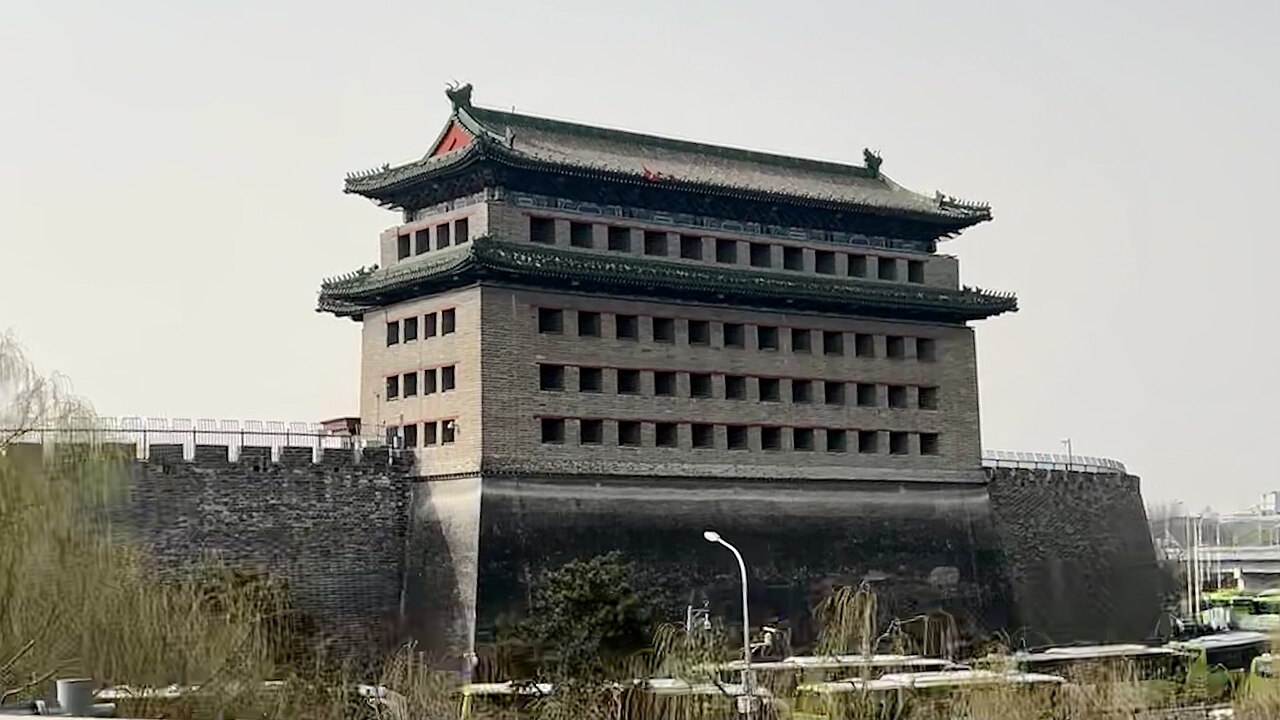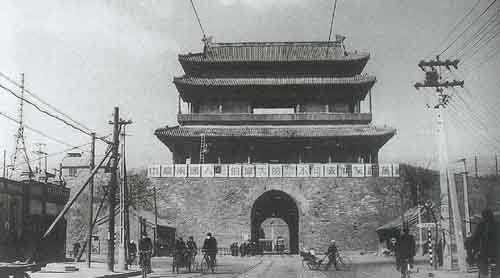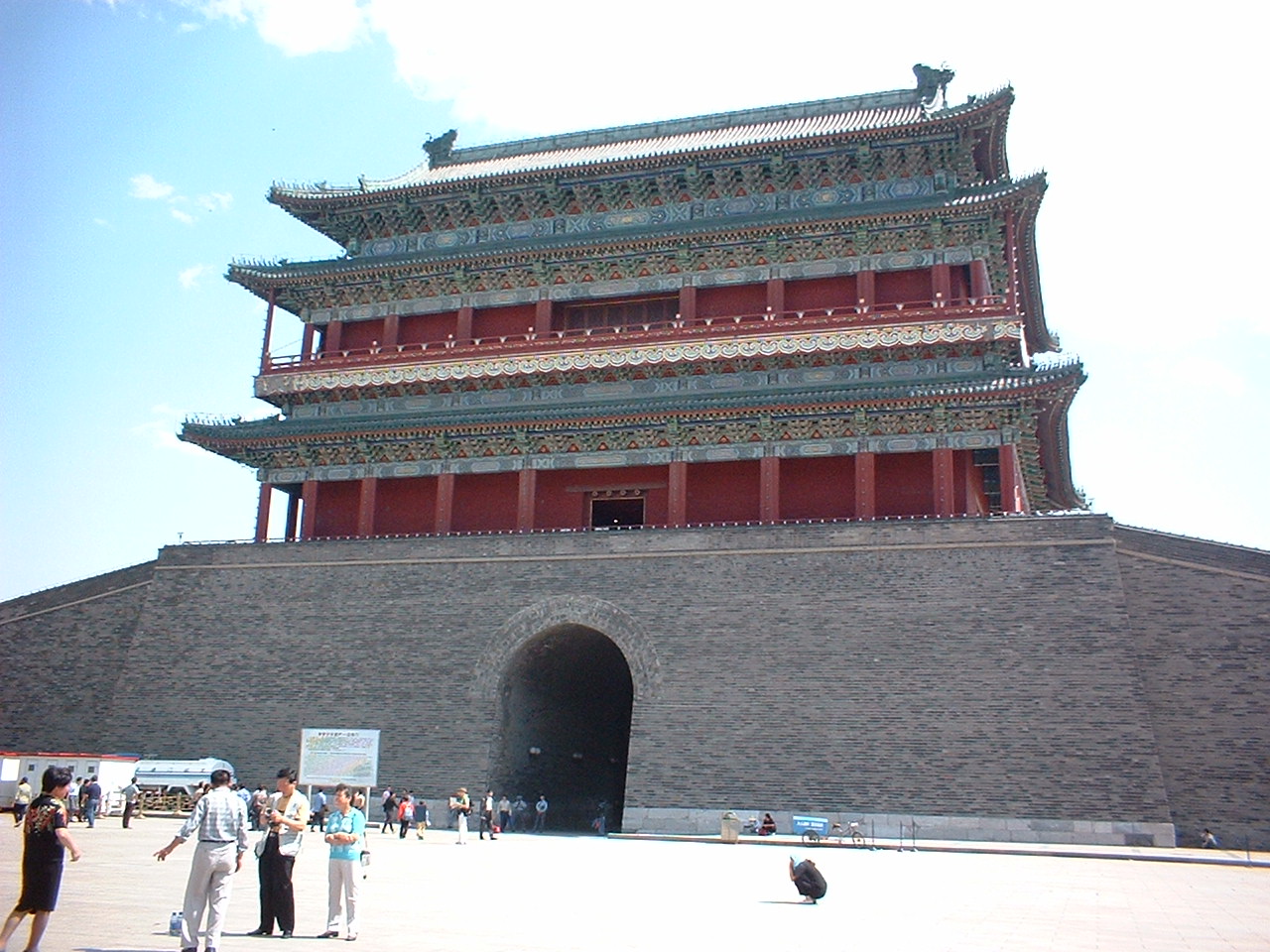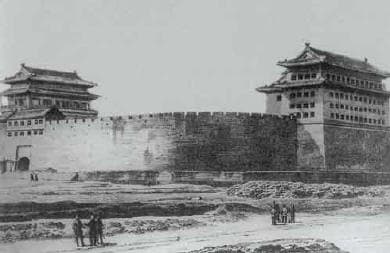
Andingmen (simplified Chinese: 安定门; traditional Chinese: 安定門; pinyin: Āndìngmén; meaning 'Gate of Stability') was a significant gate in the Ming dynasty city wall of Beijing, constructed as part of the extensive fortifications to protect the imperial capital from northern invasions. The gate served both defensive and ceremonial functions, controlling traffic and access through the northern section of the city wall.
The Ming-era city walls of Beijing were among the most formidable urban defenses of their time, featuring massive walls, watchtowers, and gates strategically placed to guard the city. Andingmen was one of the key northern gates, reflecting the importance of securing the capital from threats coming from the north. The gate's architecture would have included imposing gate towers and barbicans, typical of Ming fortifications, designed to withstand sieges and control entry.
Historical context and significance
The construction of Beijing's city walls, including Andingmen, took place primarily in the 15th century during the Ming dynasty. These fortifications symbolized the strength and stability of the empire, with Andingmen's name literally meaning 'Gate of Stability'. The walls and gates were crucial in the defense against Mongol and other northern incursions, as well as in regulating trade and movement within the city.
Over the centuries, the gate witnessed numerous historical events, including military campaigns and imperial processions. Its location on the northern wall made it a strategic point for controlling access to the city from the northern approaches.
Architectural features of Andingmen
While the original gate no longer exists, historical records and photographs indicate that Andingmen featured typical Ming dynasty gate architecture. This included a large gatehouse with a multi-eaved roof, sturdy stone foundations, and wooden structures above. The gate complex likely included defensive walls, watchtowers, and possibly a moat or other water defenses common in Beijing's city fortifications.
The gate's design would have combined functionality with imperial symbolism, featuring decorative elements such as painted beams and intricate roof tiles, reflecting the aesthetics of Ming imperial architecture.
Demolition and modern legacy
In the 1950s, as Beijing modernized and expanded, the majority of the Ming city walls and gates, including Andingmen, were demolished to make way for new roads and urban development. The gate was torn down to facilitate traffic flow and urban planning, a fate shared by many historic structures in the city during that period.
Today, the site of Andingmen is marked by the Andingmen Bridge, a major roundabout overpass on Beijing's northern 2nd Ring Road. This modern infrastructure links Andingmen Inner Street inside the former city walls with Andingmen Outer Street running northward. Nearby public transport includes bus and trolleybus stops as well as the Andingmen Station on Line 2 of the Beijing Subway, maintaining the area's role as a key transit hub.
Preservation and archaeological importance
Although the physical gate no longer stands, the site of Andingmen remains an important cultural and historical reference point in Beijing. Archaeological efforts have occasionally uncovered remnants of the city walls and gate foundations, providing insight into Ming dynasty urban defense systems and construction techniques.
These ruins contribute to the understanding of Beijing's historical urban landscape and the evolution of its fortifications. The loss of Andingmen and other gates underscores the challenges of balancing urban development with heritage preservation in rapidly growing cities.
Frequently asked questions (FAQ)
- What was the original purpose of Andingmen gate?
- Andingmen served as a northern gate in Beijing's Ming dynasty city wall, designed to protect the capital from northern invasions and control access to the city.
- When was Andingmen gate demolished?
- The gate was demolished in the 1950s during Beijing's urban modernization to make way for new roads and infrastructure.
- Can I visit the original Andingmen gate today?
- The original gate no longer exists, but the site is marked by the Andingmen Bridge on Beijing's 2nd Ring Road, with nearby public transport access.
- Are there any remnants of the gate or city wall at Andingmen?
- Some archaeological remnants of the city wall and gate foundations have been uncovered, offering insights into Ming-era construction techniques.
- How is Andingmen connected to Beijing's subway system?
- Andingmen Station on Line 2 of the Beijing Subway is located near the site, providing convenient access to the area where the gate once stood.
Photo gallery

Photo by Unknown authorUnknown author•Public domain
Information
Loading map...
Visitor reviews
No reviews yet. Been here? Write the first review and help other travelers!
Write the first reviewVisited this castle? Share your experience
Your review helps other travelers and adds first-hand knowledge to our encyclopedia.