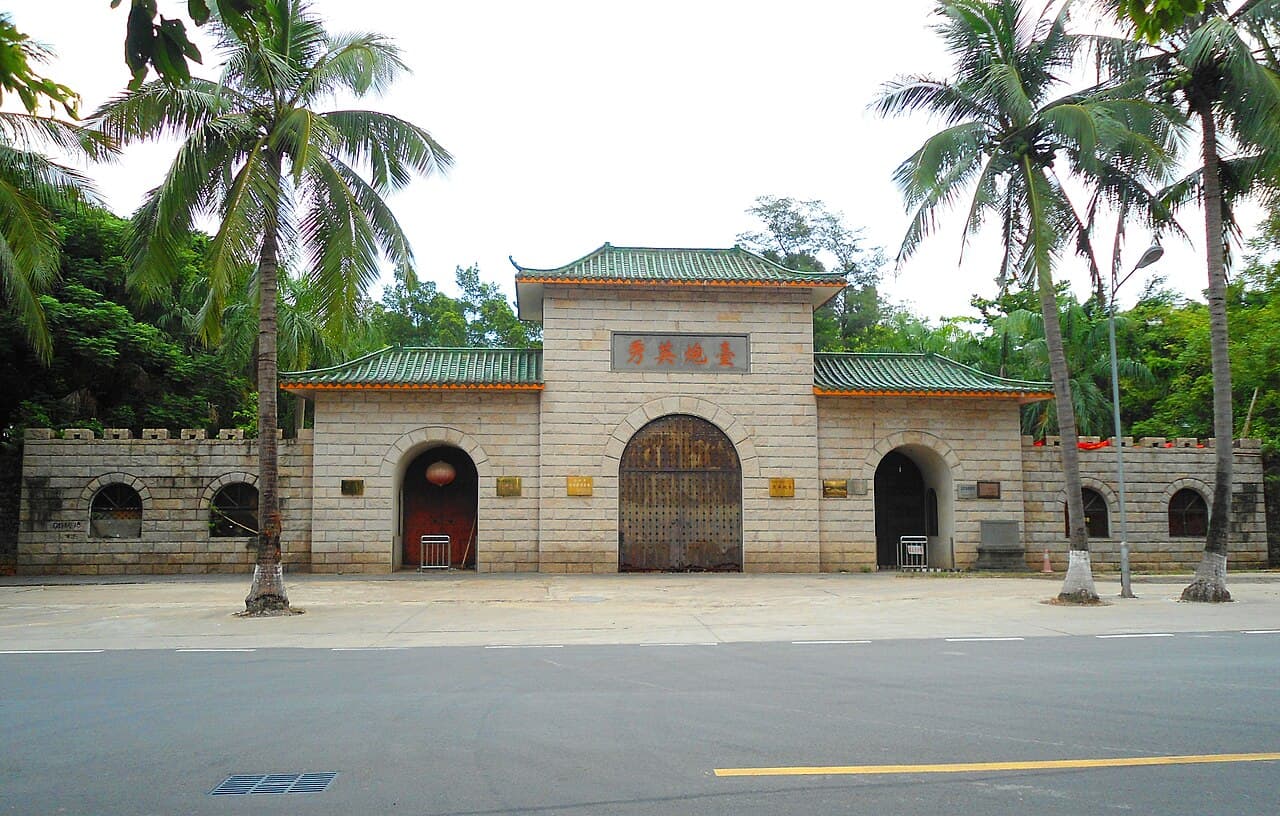
Xiuying Fort — China castle

Xiuying Fort

Xiuying fort in haikou, hainan province
Haikou City, China
Modern (19th–20th c.)
Partially Preserved

Xiuying Fort (秀英炮台) is a significant 19th-century bastioned fortress located in Haikou City, the capital of Hainan Province, China. Constructed during the late Qing Dynasty, this fortification played a crucial role in the coastal defense system of southern China, particularly in protecting the strategic harbor of Haikou against naval threats.

Historical background and strategic importance

The construction of Xiuying Fort began in the 19th century as part of China's efforts to bolster its coastal defenses amid increasing foreign naval incursions and the threat of colonial powers. The fort was built following the models of Western military architecture, incorporating advanced defensive features to withstand artillery bombardment and amphibious assaults.

Located on the coast of Haikou, the fort was strategically positioned to guard the entrance to the harbor and to serve as a deterrent against enemy ships. Its presence was vital during several conflicts in the region, including the Sino-French War (1883-1885), when French naval forces sought to assert control over Hainan Island.

Architectural features and design

Xiuying Fort is classified as a bastioned fortress, a style characterized by angular bastions projecting from the curtain walls to provide overlapping fields of fire and eliminate blind spots. This design was influenced by European military engineering principles that had been adopted in China during the 19th century modernization efforts.

The fort's walls are constructed from robust stone and brick materials, designed to absorb and deflect cannon fire. The bastions are equipped with cannon emplacements, allowing defenders to cover all approaches with artillery. Inside the fort, there are barracks, ammunition magazines, and command posts arranged around a central courtyard.

The layout of the fort reflects a blend of traditional Chinese defensive concepts and Western military engineering, showcasing the transitional period of Chinese fortification architecture during the late Qing era.

Role in regional defense and historical events

During its operational period, Xiuying Fort served as a key military installation for the Qing government, tasked with protecting Hainan Island from foreign invasions and piracy. The fort was actively manned by Chinese troops and was part of a network of coastal defenses including other forts and naval units.

Though it did not witness extensive combat, the fort's presence was a significant factor in regional defense strategy. It helped to secure maritime trade routes and maintain sovereignty over the island during a period marked by foreign encroachment and internal challenges within China.

Current condition and cultural significance

Today, Xiuying Fort stands as a partially preserved historical site, attracting visitors interested in military history and coastal fortifications. Efforts have been made to maintain and restore parts of the fort, allowing for public access and educational opportunities.

The fort is recognized for its cultural heritage value, representing the intersection of Chinese and Western military architecture and the historical context of China's late imperial defense policies. It offers insight into the technological and strategic adaptations China undertook in response to 19th-century geopolitical pressures.

Visiting information

Xiuying Fort is open to the public, providing a glimpse into China's coastal defense history. Visitors can explore the bastions, walls, and internal structures while learning about the fort's role through informational displays. The site is accessible from Haikou city and often included in historical tours of Hainan Island.

Frequently asked questions (FAQ)

What is Xiuying Fort?
Xiuying Fort is a historic military fortress located in Haikou City, China. Constructed in the late Qing dynasty, it was designed to protect the island from foreign invasions and has since become a symbol of Hainan's rich history and architectural heritage.
When was Xiuying Fort built?
Xiuying Fort was built between 1891 and 1900 during the Qing dynasty. The fort played a crucial role during the Sino-Japanese War and represents a significant period in China's military architecture.
Can I visit Xiuying Fort?
Yes, Xiuying Fort is open to visitors, offering a glimpse into its historical significance and unique architecture. Visitors can explore the fort's well-preserved structures and scenic views overlooking the sea.
What are the opening hours of Xiuying Fort?
Xiuying Fort is typically open from 8:00 AM to 6:00 PM daily. It is advisable to check for any seasonal changes in hours of operation before planning your visit.
Is there an entrance fee to visit Xiuying Fort?
Yes, there is a small entrance fee to visit Xiuying Fort, which helps with the maintenance and preservation of the site. The ticket prices are affordable, making it accessible for most visitors.
What is the best time to visit Xiuying Fort?
The best time to visit Xiuying Fort is during the cooler months from October to April when the weather is pleasant for outdoor exploration. Avoiding the peak summer months can enhance your experience as the temperatures can be quite high.
What nearby attractions are there to see?
Nearby attractions include the Haikou People's Park and the beautiful beaches along the Haikou coastline. These locations complement your visit to Xiuying Fort and offer additional opportunities for sightseeing and relaxation.
Is Xiuying Fort accessible for people with disabilities?
While Xiuying Fort has made efforts to improve accessibility, some areas may present challenges due to the historical structure's design. It is recommended to contact the fort in advance for specific accessibility options to ensure a comfortable visit.

Photo gallery

Xiuying Fort
Click to view

Photo by Anna Frodesiak•CC0

1 photo • Click any image to view in full screen

Information

Bastioned Fortress

Loading map...

Visitor reviews

No reviews yet. Been here? Write the first review and help other travelers!

Write the first review

Visited this castle? Share your experience

Your review helps other travelers and adds first-hand knowledge to our encyclopedia.
Write a review

(5/5)

0/2000 characters

Your review will be visible after admin approval

Nearby castles

338.9 km
Kaiping Diaolou — China castle

Kaiping Diaolou

Kaiping, China

Kaiping Diaolou are a unique collection of fortified multi-storey towers located in the Kaiping region of Guangdong province, China. These towers represent a remarkable fusion of architectural styles and cultural influences, reflecting the social and historical context of early 20th-century rural China. Constructed primarily during the late 19th and early 20th centuries, the diaolou served both defensive and residential purposes, protecting local communities from bandit raids while also symbolizing wealth and status.Historical background and cultural significanceThe Kaiping Diaolou emerged in response to the turbulent social conditions in Guangdong during the late Qing dynasty and early Republic era. Frequent bandit attacks and clan conflicts made rural villages vulnerable, prompting local families, many of whom had returned from overseas, to build fortified structures that combined the functions of watchtowers, homes, and community strongholds. These towers are a testament to the migration patterns of Chinese emigrants who brought back architectural ideas and wealth from abroad, especially from North America.The diaolou are recognized as a UNESCO World Heritage Site, highlighting their outstanding universal value as an architectural and cultural phenomenon. They illustrate the adaptation of traditional Chinese defensive architecture with Western architectural elements, reflecting the global connections of the Kaiping region's emigrant communities.Architectural features and stylesThe diaolou are typically multi-storey stone or reinforced concrete towers, ranging from three to six floors in height. Their designs incorporate a blend of Chinese traditional motifs and Western architectural styles, including elements of Art Deco, Baroque, and Neoclassical styles. This eclecticism is evident in decorative features such as arched windows, balustrades, and ornate cornices.Structurally, the towers were built with thick walls and narrow windows to serve defensive purposes. Many towers feature battlements, loopholes for firearms, and reinforced gates. Internally, the towers contain living quarters, storage rooms, and sometimes communal spaces, designed to accommodate extended families during sieges.Construction techniques and materialsMost Kaiping Diaolou were constructed using locally sourced stone, bricks, and later reinforced concrete, which was innovative at the time in rural China. The use of concrete allowed for taller and more durable structures. The towers’ foundations were carefully laid to ensure stability, often on uneven terrain.Notable diaolou and their featuresAmong the hundreds of diaolou originally built, only about 1,800 remain today, with several notable examples attracting visitors and scholars. The Li Garden Tower is famous for its intricate carvings and blend of Chinese and Western styles. The Watchtower of Jinjiangli is notable for its height and defensive features.Preservation and modern significanceMany Kaiping Diaolou have suffered from neglect and natural decay, but efforts have been made to preserve and restore key towers. Their designation as a World Heritage Site has increased awareness and tourism, contributing to local economies and cultural pride.Today, the diaolou stand not only as architectural landmarks but also as symbols of the resilience and cultural hybridity of the Kaiping communities. They offer valuable insights into early 20th-century rural life, migration, and the blending of Eastern and Western influences in architecture.

Contemporary (20th–21st c.)
Details
403.6 km
City Walls of Zhaoqing — China castle

City Walls of Zhaoqing

Zhaoqing, China

The city walls of Zhaoqing represent a significant example of ancient Chinese military architecture, serving as a bastioned fortress designed to protect the city from invasions and attacks. These walls are part of a comprehensive defensive system that reflects the strategic importance of Zhaoqing throughout Chinese history. The fortifications include thick stone walls, bastions, and gates that were constructed to withstand sieges and to control access to the city. Historical background and significance Zhaoqing, located in the Guangdong province of southern China, has been a critical military and administrative center for centuries. The construction of the city walls dates back to the Ming dynasty (1368–1644), a period marked by extensive fortification efforts across China to defend against both internal rebellions and external threats such as pirates and invading armies. The walls were built to enclose the city, providing a secure perimeter that allowed the inhabitants to thrive while maintaining control over the surrounding region. The strategic placement of the walls along natural geographic features enhanced their defensive capabilities, integrating the city’s terrain into the overall military design. Architectural features and construction Bastioned fortress design The city walls of Zhaoqing exemplify the bastioned fortress style, characterized by angular bastions projecting from the main curtain walls. These bastions allowed defenders to cover adjacent wall sections with crossfire, eliminating blind spots and enhancing the city’s defense against attackers. Materials and techniques The walls were constructed primarily from locally sourced stone and bricks, bonded with traditional mortar techniques. The thickness of the walls varies but is generally substantial enough to resist artillery bombardment of the period. The battlements atop the walls provided protection for archers and soldiers stationed along the ramparts. Gates and watchtowers Several gates punctuate the walls, serving as controlled entry points into the city. These gates were fortified with heavy wooden doors reinforced with iron, and often featured gatehouses and watchtowers for surveillance and defense. The watchtowers offered elevated vantage points to monitor approaching threats and coordinate defensive responses. Military and cultural importance The fortifications of Zhaoqing played a crucial role in the city’s defense during various conflicts, including regional skirmishes and larger military campaigns. The walls not only provided physical security but also symbolized the city’s strength and resilience. Today, the city walls stand as a cultural heritage site, reflecting the ingenuity of ancient Chinese military engineering and the historical significance of Zhaoqing as a fortified urban center. Preservation efforts aim to maintain the structural integrity of the walls while allowing visitors to appreciate their historical context. Visiting the city walls of zhaoqing Visitors to Zhaoqing can explore sections of the city walls that remain well-preserved, gaining insight into the architectural and military techniques of the Ming dynasty. The site offers opportunities for walking tours along the ramparts, with views of the surrounding city and landscape. Interpretive signage and guided tours provide historical context, enhancing the educational experience. The walls are accessible year-round, with the best times to visit being spring and autumn when the weather is mild. Related heritage and nearby attractions Zhaoqing is also known for its scenic natural surroundings, including the famous Seven Star Crags and Dinghu Mountain. These landmarks complement a visit to the city walls by offering a broader understanding of the region’s cultural and natural heritage. The combination of historic fortifications and natural beauty makes Zhaoqing a compelling destination for those interested in history, architecture, and outdoor exploration.

Late Medieval (14th–15th c.)
Details
411.4 km
Taipa Fortress — China castle

Taipa Fortress

Taipa, China

Taipa Fortress (Chinese: 氹仔炮台; Portuguese: Fortaleza da Taipa) is a 19th-century bastioned fortress situated in northwestern Taipa, in the Special Administrative Region of Macau, China. This fortress is notable for its role in the coastal defense system during the late Qing dynasty and early colonial period, reflecting the military architecture and strategic concerns of its time. Historical context and strategic importance The construction of Taipa Fortress took place in the 19th century, a period marked by increasing foreign influence and military tensions in the region. Macau, as a Portuguese settlement, was strategically located along important maritime routes, necessitating robust defensive structures to protect against potential naval threats and piracy. Taipa Fortress was part of a network of fortifications designed to secure the island of Taipa and its surrounding waters. Its position in northwestern Taipa allowed it to oversee and control access to key coastal areas, serving as a deterrent against hostile forces and safeguarding the local population and colonial interests. Architectural features and design The fortress exemplifies the bastioned fortress style, a military architectural form that evolved to withstand artillery attacks. Its design includes thick masonry walls arranged with bastions—projecting angular structures that enable defensive fire in multiple directions, eliminating blind spots. The layout typically features a polygonal plan with bastions at the corners, allowing defenders to cover the walls with overlapping fields of fire. The walls were constructed using local stone and brick materials, providing durability against cannon fire. Within the fortress, there were facilities such as gun emplacements, ammunition storage rooms, and quarters for the garrison. The design reflects a balance between defensive capability and the practical needs of the soldiers stationed there. Military role and historical events Throughout its operational period, Taipa Fortress played a role in the defense of Macau's territorial waters. Although it did not witness major battles, its presence contributed to the security of the region during periods of unrest in the late 19th and early 20th centuries. The fortress was manned by a small garrison responsible for monitoring maritime activity and responding to potential threats. Its strategic position complemented other fortifications in Macau, forming a defensive network that helped maintain Portuguese control over the territory. Preservation and current status Today, Taipa Fortress is recognized as an important cultural and historical site in Macau. While some parts of the structure have been preserved and restored, others remain in a state of partial preservation. The fortress is accessible to visitors interested in military history and colonial architecture. Efforts to maintain the fortress focus on preserving its distinctive bastioned features and educating the public about its historical significance. It stands as a tangible link to Macau's colonial past and its strategic maritime heritage. Visiting Taipa Fortress Visitors to Taipa Fortress can explore its ramparts and enjoy views of the surrounding coastal landscape. Informational plaques provide context about the fortress's history and architectural elements. The site is generally open to the public, though specific visiting hours and ticketing policies may vary. It is recommended to check local resources for the latest visitor information.

Modern (19th–20th c.)
Details