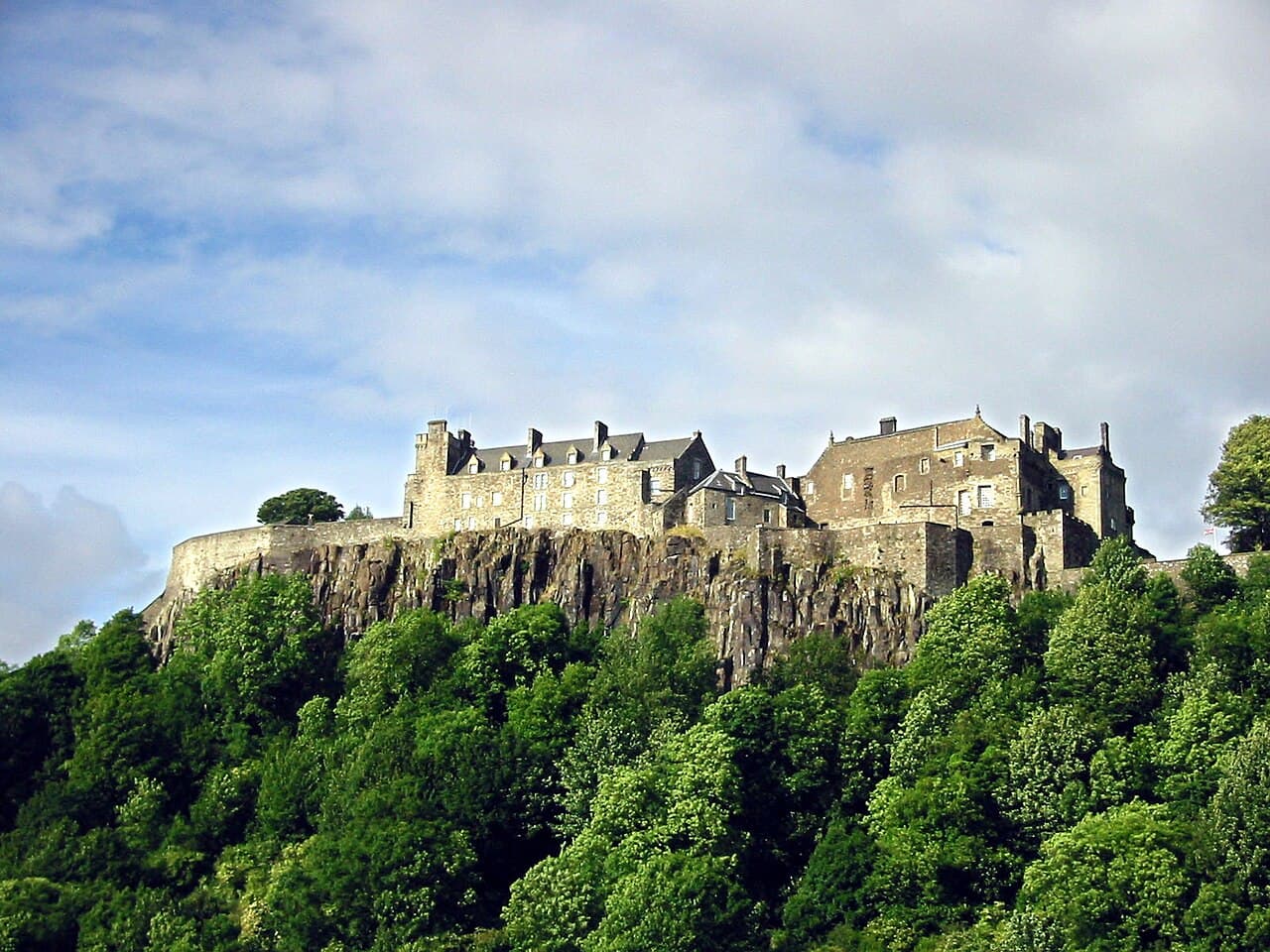
Stirling Castle
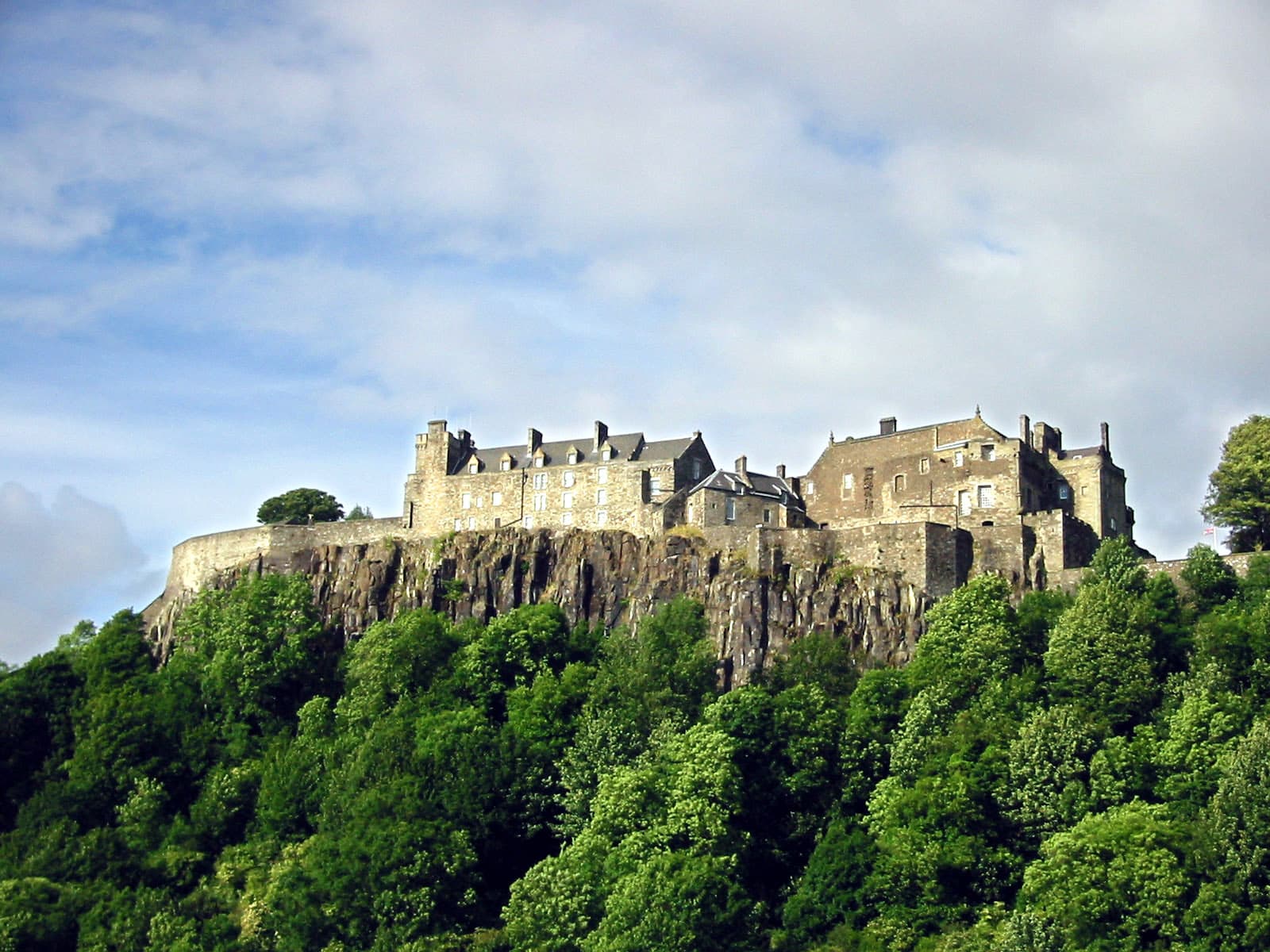
Stirling Castle stands as one of the largest and most historically significant castles in Scotland, renowned for its commanding position and architectural grandeur. Perched atop Castle Hill, a volcanic crag forming part of the Stirling Sill geological formation, the castle enjoys natural defenses with steep cliffs on three sides. This strategic location guarded the lowest crossing of the River Forth until the late 19th century, making Stirling Castle a pivotal military and administrative stronghold from the medieval period onward.
The castle's origins trace back to at least the 12th century, with the earliest recorded mention around 1110 during the reign of King Alexander I, who died there in 1124. Over the centuries, Stirling Castle evolved from a royal residence into a formidable fortress, witnessing key moments in Scottish history including the Wars of Scottish Independence. It endured numerous sieges during the late 13th and early 14th centuries, frequently changing hands between Scottish and English forces. Notably, the castle was near the sites of two major battles: the Battle of Stirling Bridge (1297) led by William Wallace and the Battle of Bannockburn (1314) under Robert the Bruce, the latter resulting in Bruce deliberately damaging the castle to prevent English reoccupation.
Architectural evolution and royal significance
Following the turbulent Wars of Independence, the castle was rebuilt and expanded under the Stewart monarchs in the 14th and 15th centuries, with much of the surviving masonry dating from the 1380s. The castle reached its architectural zenith during the reigns of James IV, James V, and James VI in the 15th and 16th centuries. James IV initiated major construction projects including the King's Old Building, the Great Hall, and the imposing Forework gatehouse. His son, James V, commissioned the magnificent Royal Palace, blending Renaissance and late Gothic styles, considered the first Renaissance palace in the British Isles.
The castle's Inner Close courtyard is surrounded by the key buildings: the King’s Old Building (c. 1496), the Great Hall (c. 1503), the Royal Palace (1530s-1540s), and the Chapel Royal (1594). The palace's richly decorated stone façade features statues of James V, mythological figures, and planetary deities, reflecting the Renaissance influence and the monarch’s power. Inside, the royal apartments include finely restored chambers with hand-woven tapestries and the famous Stirling Heads—carved oak roundels depicting portraits of Scottish nobility and royalty.
The great hall and king's old building
The Great Hall, built by James IV, is one of Scotland's grandest secular medieval buildings. Measuring 42 by 14.25 meters, it originally featured a hammerbeam roof and crenellated parapet, which were restored in the late 20th century. The King’s Old Building, the oldest part of the Inner Close, contains chambers with expansive views and an octagonal stair tower, exemplifying late medieval Scottish architecture.
The chapel royal and later uses
The Chapel Royal was rebuilt in 1594 for the baptism of Prince Henry and showcases Italianate arched windows and Renaissance interior decoration. It later served military purposes but was restored to reveal its historic murals and design, underscoring the castle’s religious and ceremonial importance.
Defensive features and outer structures
The castle’s defenses include the Outer Defences dating mainly from the early 18th century, built to accommodate artillery advancements. The French Spur bastion, constructed during the regency of Mary of Guise in the 1550s, exemplifies Renaissance military architecture with gun emplacements and a talus slope. The Forework gatehouse once spanned Castle Hill’s width with multiple towers and passages, though now partially reduced in height.
The Outer Close contains Georgian military buildings such as the Main Guard House and Fort Major’s House, alongside remnants of the castle’s original kitchens and a building known as the "Cunzie Hoose," believed to have been the castle mint. The Nether Bailey at the northern end includes 19th-century military stores and guardhouses, reflecting the castle’s continued military use into the modern era.
Gardens and surrounding landscape
The castle grounds feature two notable gardens. The southern garden includes a historic bowling green, while the King’s Knot garden, located below the west wall, is a 16th-century formal garden surviving as earthworks. The King’s Knot occupies the site of a medieval jousting arena called the Round Table, inspired by Arthurian legend, and includes an octagonal mount constructed in 1629.
Stirling Castle’s role in Scottish history and heritage
Stirling Castle has been a symbol of Scottish independence and royal authority for centuries. It was the site of several coronations, including that of Mary, Queen of Scots in 1542, and witnessed the births and deaths of monarchs such as James VI. After the 1603 Union of the Crowns, its role shifted from a royal residence to a military fortress and prison, playing a part in the Jacobite risings and serving as a barracks into the 19th century.
A comprehensive restoration completed in 2011 has returned the castle’s royal lodgings to their 16th-century splendor, allowing visitors to experience the grandeur of Renaissance Scotland. Managed by Historic Scotland, Stirling Castle remains a major tourist attraction and a cherished monument reflecting the complex history and architectural heritage of Scotland.
Frequently asked questions (FAQ)
- How do I get to Stirling Castle?
- Stirling Castle is conveniently located in the heart of Stirling, Scotland. You can reach it by car, train, or bus, with regular public transport available from major cities such as Edinburgh and Glasgow.
- What is the historical significance of Stirling Castle?
- Stirling Castle is one of Scotland's most important historical sites, having served as a royal residence and military stronghold. Its strategic location made it a focal point during many of Scotland's historic battles, including the Wars of Scottish Independence.
- When was Stirling Castle built?
- The origins of Stirling Castle date back to the 12th century, though it has undergone numerous renovations and expansions over the centuries. Its architecture reflects various styles and periods, showcasing the evolution of Scottish castle design.
- Can I take guided tours of Stirling Castle?
- Yes, guided tours are available at Stirling Castle, offering visitors insightful narratives about its history and architecture. You can also explore the castle at your own pace with an audio guide for a more personalized experience.
- Why is the architecture of Stirling Castle unique?
- The architecture of Stirling Castle is notable for its blend of Renaissance and medieval styles, particularly evident in the royal palace and the Great Hall. Its elaborate stonework and stunning views over the surrounding countryside make it a remarkable example of Scottish castle architecture.
- Is it possible to visit Stirling Castle year-round?
- Yes, Stirling Castle is open year-round, though opening hours may vary by season. It is advisable to check the official website for the most current visiting hours and any seasonal closures.
- What are the ticket prices for Stirling Castle?
- Ticket prices for Stirling Castle vary depending on age and concession status, with discounts available for children and seniors. Family tickets are also offered, and purchasing tickets online in advance can help you save time and money.
- What is the best time to visit Stirling Castle?
- The best time to visit Stirling Castle is during the spring and summer months when the weather is milder and the gardens are in full bloom. However, visiting during the autumn can provide a quieter experience with beautiful fall foliage.
- Are there any nearby attractions to Stirling Castle?
- Yes, nearby attractions include the Wallace Monument, a tribute to Scottish hero William Wallace, and the Battle of Bannockburn Visitor Centre, which commemorates a pivotal battle in Scottish history. Both sites offer additional insights into Scotland's rich heritage and are easily accessible from the castle.

Information
Website
Visit websiteFeatured in
Articles on the Castlopedia blog that feature Stirling Castle.
Sources & official resources
Verify the information above using these authoritative references.
Loading map...
Visitor reviews
No reviews yet. Been here? Write the first review and help other travelers!
Write the first reviewVisited this castle? Share your experience
Your review helps other travelers and adds first-hand knowledge to our encyclopedia.



