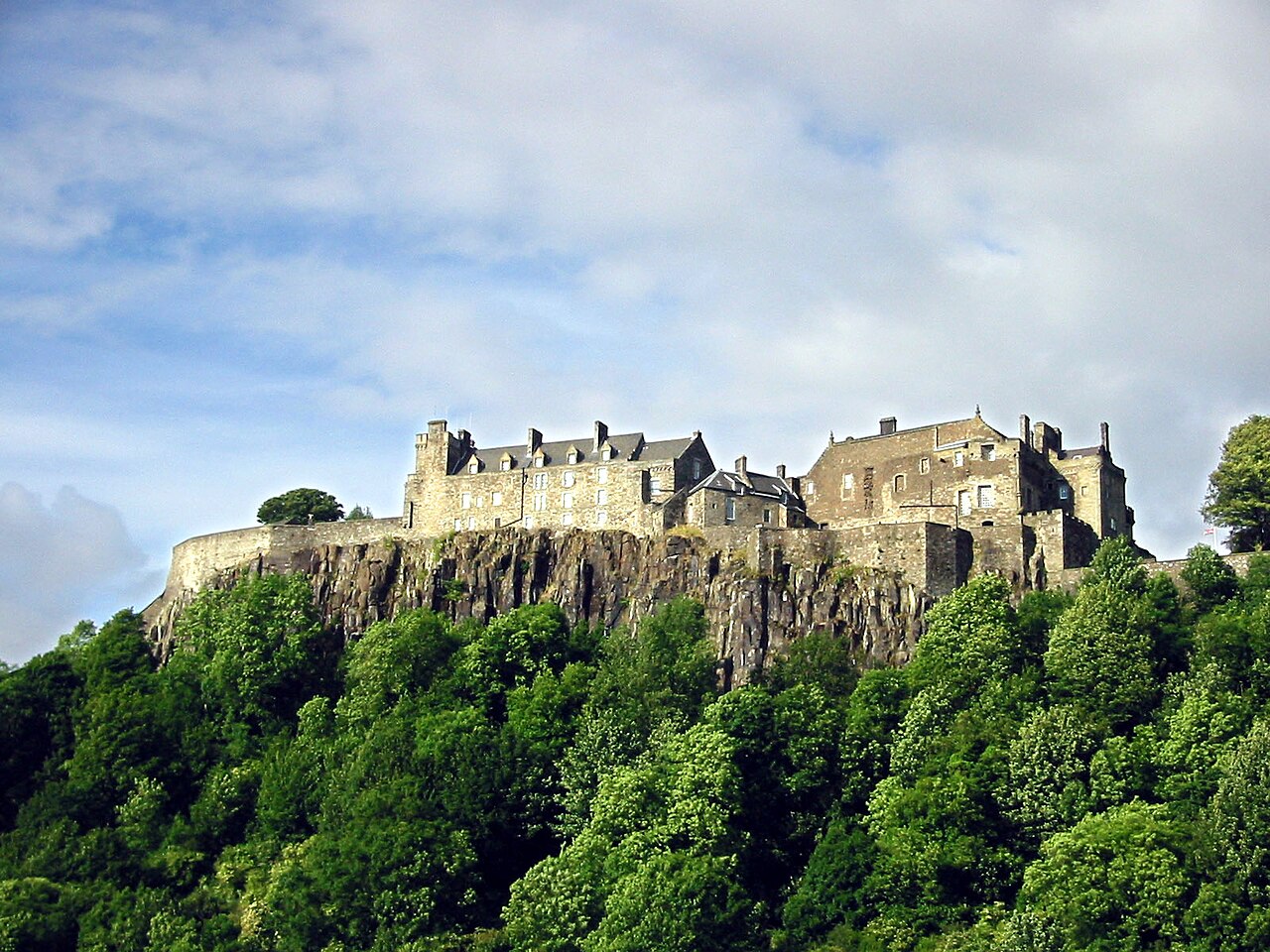
Mar's Wark

Mar's Wark: historic Renaissance townhouse in Stirling, Scotland
Stirling, Scotland, United Kingdom
Renaissance (15th–17th c.)
Partially Preserved

Mar's Wark is a remarkable example of a 16th-century Scottish Renaissance townhouse located in the historic city of Stirling, Scotland. Constructed by John Erskine, Earl of Mar and Regent of Scotland, this building was intended to serve as his principal family residence. The house stands prominently in front of the churchyard of the Holy Rude Church, commanding a strategic position at the head of the processional route leading up the hill to the iconic Stirling Castle above the town's tollbooth.

Historical context and significance

John Erskine, a key political figure during the turbulent mid-16th century, held important roles such as the governor of Edinburgh Castle during the regency of Mary of Guise from 1554 to 1560. Following the controversial murder of Mary Queen of Scots' second husband, Lord Darnley, in 1567, Erskine opposed the queen and consequently lost his governorship of Edinburgh Castle. However, he retained the hereditary position of keeper of Stirling Castle, a prestigious role his family had intermittently held since the reign of King Robert I (Robert the Bruce).

It is believed that construction of Mar's Wark began during this period, reflecting Erskine's status and ambitions. The building's location near the Holy Rude Church and along the ceremonial route to Stirling Castle underscores its importance in the town's social and political landscape.

Architectural features and style

Mar's Wark exemplifies the Scottish Renaissance architectural style, blending traditional Scottish building techniques with Renaissance influences from continental Europe. The townhouse is notable for its robust stone construction, detailed carved stonework, and ornamental features that reflect the wealth and status of its owner.

The façade facing the churchyard is richly decorated with heraldic motifs and sculptural elements, including the Erskine family coat of arms. The building originally featured large windows and an imposing entrance, designed to impress visitors and assert the prominence of the Earl of Mar.

Internally, the house was organized with a great hall and private chambers, typical of noble residences of the period. Although much of the interior has not survived intact, the structural remains provide insight into the layout and function of Renaissance townhouses in Scotland.

Location and strategic importance

Situated in Stirling, a city known as the "Gateway to the Highlands," Mar's Wark occupies a key position in the urban fabric. Its placement opposite the Holy Rude Church, one of Scotland's oldest churches, and along the processional route to Stirling Castle, highlights its ceremonial and strategic significance.

The proximity to Stirling Castle, a royal fortress with a commanding view over the surrounding landscape, reinforced the Earl of Mar's influence in both local and national affairs. The building's location allowed it to serve not only as a residence but also as a statement of power and prestige.

Later history and preservation

Over the centuries, Mar's Wark has experienced periods of decline and partial ruin. Despite this, significant portions of the building's façade and structural elements remain well preserved, offering valuable insight into Renaissance architecture in Scotland.

Today, Mar's Wark is recognized for its historical and architectural importance. It stands as a testament to the legacy of John Erskine and the cultural heritage of Stirling. Conservation efforts have aimed to maintain its structural integrity and promote public awareness of its significance.

Visiting Mar's Wark

Visitors to Stirling can view Mar's Wark from the exterior as it is located in a public area near the Holy Rude Church. While the interior is not generally open to the public, the building's prominent façade and its context within the historic townscape make it a noteworthy stop for those interested in Scottish Renaissance architecture and history.

The site offers a unique glimpse into the lifestyle of Scottish nobility during the 16th century and the political dynamics of the era. Its proximity to Stirling Castle and other historic landmarks makes it an integral part of any cultural itinerary in the region.

Frequently asked questions (FAQ)

How do I get to Mar's Wark?
Mar's Wark is located in Stirling, United Kingdom, easily accessible by public transport. If you are traveling by car, there are nearby parking facilities available for visitors.
What is the historical significance of Mar's Wark?
Mar's Wark is a notable example of early 17th-century architecture and served as a mansion for the prominent Mar family. It has played a significant role in the history of Stirling, reflecting the region's political and social changes over the centuries.
When was Mar's Wark built?
Construction of Mar's Wark began in 1570 and was completed in the early 1600s. It was commissioned by Sir James Mar, a key figure in Scottish history.
Can I take guided tours of Mar's Wark?
Guided tours are available at Mar's Wark, providing visitors with in-depth knowledge of its history and architecture. It's advisable to check the schedule ahead of your visit for tour times.
Why is Mar's Wark considered an architectural landmark?
Mar's Wark is recognized for its Renaissance-style architecture and intricate design elements. Its unique structure and historical context make it a significant landmark in Scottish heritage.
Is it possible to visit Mar's Wark year-round?
Mar's Wark has specific opening hours, typically operating from late spring to early autumn. It's best to check the official website for the most current visiting hours and any seasonal closures.
What are the ticket prices for visiting Mar's Wark?
Admission prices for Mar's Wark vary depending on age and group size, with discounts often available for students and seniors. It's recommended to purchase tickets in advance online for convenience.
What is the best time to visit Mar's Wark?
The best time to visit Mar's Wark is during the summer months when the weather is generally more pleasant. This also allows for exploring the surrounding gardens and enjoying outdoor activities in the area.
Are there any nearby attractions to Mar's Wark?
Yes, visitors to Mar's Wark can explore other local attractions such as Stirling Castle and the Wallace Monument, both of which are steeped in Scottish history. The area offers a rich cultural experience with plenty of options for sightseeing.

Information

Lowland Castle

Sources & official resources

Verify the information above using these authoritative references.

Loading map...

Visitor reviews

No reviews yet. Been here? Write the first review and help other travelers!

Write the first review

Visited this castle? Share your experience

Your review helps other travelers and adds first-hand knowledge to our encyclopedia.

Write a review

(5/5)

0/2000 characters

Your review will be visible after admin approval

Nearby castles

0.3 km

The King's Knot

Stirling, United Kingdom

The King's Knot is a historic earthwork garden located within the ancient King's Park in Stirling, Scotland, nestled beneath the imposing Stirling Castle. This site represents a significant example of late medieval and early Renaissance landscape design associated with the Scottish royal court. The King's Knot, together with the adjacent Queen's Knot, forms part of a series of intricate geometric earthworks that once served as formal gardens and hunting grounds for Scottish monarchs. Historical background and royal significance King's Park has been Crown property since at least the late 12th century, first documented in 1190 as the "Aulde" park. By 1264, it was expanded and enclosed as the "Neu" park, specifically managed for deer and fox hunting, reflecting the importance of game preservation and royal leisure pursuits during the medieval period. The park's proximity to Stirling Castle made it an ideal location for royal recreation, including hunting, jousting, and outdoor festivities. The most significant phase of development for the park, including the creation of the King's and Queen's Knots, occurred between 1490 and 1508. During this period, the area was transformed with the addition of formal gardens, orchards, fish ponds, and vegetable plots. Over 1,000 trees were planted in 1497 alone, demonstrating the scale and ambition of the project. These enhancements reflected the Renaissance influence on Scottish royal gardens, emphasizing symmetry, order, and controlled nature. Architectural and landscape features The King's Knot is a distinctive example of a knot garden, a style popular in late medieval and Renaissance Europe characterized by intricate patterns formed by low hedges or earthworks. Unlike many surviving knot gardens that use clipped box hedges, the King's Knot is an earthwork design consisting of raised banks and ditches forming interlaced loops and geometric shapes. This form of garden was both decorative and symbolic, representing control over nature and the sophistication of the royal household. The earthworks are set within the larger context of the King's Park, which included a variety of landscape features such as orchards, fish ponds, and hunting enclosures. The park was carefully managed to support royal hunting activities, with enclosures for deer and foxes, and was a vital part of the royal household's food supply and leisure. Decline and preservation Following the Union of the Crowns in 1603, when the Scottish royal court relocated to London, the King's Park and its gardens, including the King's Knot, fell into neglect. Without regular maintenance, the formal garden structures became overgrown and partially obscured by natural vegetation. Over the centuries, the site has been subject to various degrees of preservation and archaeological interest. Today, the King's Knot is recognized as a significant heritage feature within Stirling's historic landscape. Conservation efforts have focused on maintaining the earthworks' visibility and preventing further degradation. The site offers visitors a glimpse into the recreational and horticultural practices of Scotland's late medieval and early Renaissance monarchy. Cultural and heritage importance The King's Knot is not only an important historical garden earthwork but also a symbol of Scotland's royal past and its connection to Stirling Castle, one of the country's most iconic fortresses. The site's survival provides valuable insights into the design and function of royal parks and gardens during a formative period in Scottish history. Visitors to Stirling can explore the King's Park and appreciate the King's Knot as part of a broader experience of Scotland's medieval heritage, combining military, residential, and recreational elements in one historic landscape.

Late Medieval (14th–15th c.)
Details
0.6 km
Stirling Castle — United Kingdom castle

Stirling Castle

Stirling, United Kingdom

Stirling Castle stands as one of the largest and most historically significant castles in Scotland, renowned for its commanding position and architectural grandeur. Perched atop Castle Hill, a volcanic crag forming part of the Stirling Sill geological formation, the castle enjoys natural defenses with steep cliffs on three sides. This strategic location guarded the lowest crossing of the River Forth until the late 19th century, making Stirling Castle a pivotal military and administrative stronghold from the medieval period onward. The castle's origins trace back to at least the 12th century, with the earliest recorded mention around 1110 during the reign of King Alexander I, who died there in 1124. Over the centuries, Stirling Castle evolved from a royal residence into a formidable fortress, witnessing key moments in Scottish history including the Wars of Scottish Independence. It endured numerous sieges during the late 13th and early 14th centuries, frequently changing hands between Scottish and English forces. Notably, the castle was near the sites of two major battles: the Battle of Stirling Bridge (1297) led by William Wallace and the Battle of Bannockburn (1314) under Robert the Bruce, the latter resulting in Bruce deliberately damaging the castle to prevent English reoccupation. Architectural evolution and royal significance Following the turbulent Wars of Independence, the castle was rebuilt and expanded under the Stewart monarchs in the 14th and 15th centuries, with much of the surviving masonry dating from the 1380s. The castle reached its architectural zenith during the reigns of James IV, James V, and James VI in the 15th and 16th centuries. James IV initiated major construction projects including the King's Old Building, the Great Hall, and the imposing Forework gatehouse. His son, James V, commissioned the magnificent Royal Palace, blending Renaissance and late Gothic styles, considered the first Renaissance palace in the British Isles. The castle's Inner Close courtyard is surrounded by the key buildings: the King’s Old Building (c. 1496), the Great Hall (c. 1503), the Royal Palace (1530s-1540s), and the Chapel Royal (1594). The palace's richly decorated stone façade features statues of James V, mythological figures, and planetary deities, reflecting the Renaissance influence and the monarch’s power. Inside, the royal apartments include finely restored chambers with hand-woven tapestries and the famous Stirling Heads—carved oak roundels depicting portraits of Scottish nobility and royalty. The great hall and king's old building The Great Hall, built by James IV, is one of Scotland's grandest secular medieval buildings. Measuring 42 by 14.25 meters, it originally featured a hammerbeam roof and crenellated parapet, which were restored in the late 20th century. The King’s Old Building, the oldest part of the Inner Close, contains chambers with expansive views and an octagonal stair tower, exemplifying late medieval Scottish architecture. The chapel royal and later uses The Chapel Royal was rebuilt in 1594 for the baptism of Prince Henry and showcases Italianate arched windows and Renaissance interior decoration. It later served military purposes but was restored to reveal its historic murals and design, underscoring the castle’s religious and ceremonial importance. Defensive features and outer structures The castle’s defenses include the Outer Defences dating mainly from the early 18th century, built to accommodate artillery advancements. The French Spur bastion, constructed during the regency of Mary of Guise in the 1550s, exemplifies Renaissance military architecture with gun emplacements and a talus slope. The Forework gatehouse once spanned Castle Hill’s width with multiple towers and passages, though now partially reduced in height. The Outer Close contains Georgian military buildings such as the Main Guard House and Fort Major’s House, alongside remnants of the castle’s original kitchens and a building known as the "Cunzie Hoose," believed to have been the castle mint. The Nether Bailey at the northern end includes 19th-century military stores and guardhouses, reflecting the castle’s continued military use into the modern era. Gardens and surrounding landscape The castle grounds feature two notable gardens. The southern garden includes a historic bowling green, while the King’s Knot garden, located below the west wall, is a 16th-century formal garden surviving as earthworks. The King’s Knot occupies the site of a medieval jousting arena called the Round Table, inspired by Arthurian legend, and includes an octagonal mount constructed in 1629. Stirling Castle’s role in Scottish history and heritage Stirling Castle has been a symbol of Scottish independence and royal authority for centuries. It was the site of several coronations, including that of Mary, Queen of Scots in 1542, and witnessed the births and deaths of monarchs such as James VI. After the 1603 Union of the Crowns, its role shifted from a royal residence to a military fortress and prison, playing a part in the Jacobite risings and serving as a barracks into the 19th century. A comprehensive restoration completed in 2011 has returned the castle’s royal lodgings to their 16th-century splendor, allowing visitors to experience the grandeur of Renaissance Scotland. Managed by Historic Scotland, Stirling Castle remains a major tourist attraction and a cherished monument reflecting the complex history and architectural heritage of Scotland.

High Medieval (11th–13th c.)
Details
3.6 km

Airthrey Castle

Stirling, United Kingdom

Airthrey Castle stands as a notable example of a post-renaissance country house in Stirling, Scotland, with a history stretching back to the late 14th century. The estate first appears in records around 1370, marking its longstanding presence in Scottish heritage. Over the centuries, it passed through various owners, reflecting the changing fortunes and alliances of Scottish nobility. It became part of the Graham family estate before transferring to the Earl of Hopetoun, a title associated with the prominent Hopetoun House in West Lothian. The current castle structure was designed in 1791 by the renowned Scottish architect Robert Adam, a leading figure in the neoclassical architectural movement. Adam's design for Airthrey Castle exemplifies the elegant style and symmetry characteristic of his work, blending classical elements with the functional needs of a grand country residence. The house features refined stonework, balanced façades, and well-proportioned windows that emphasize light and openness. Historical ownership and estate development Following its initial documentation in the 14th century, the Airthrey estate underwent several ownership changes. The Grahams held the property for a significant period, contributing to its development and local prominence. After the Adam-designed house was completed, the estate was sold to the Abercrombie family, who maintained it until the Grahams repurchased it in 1891. This period saw the estate adapt to the evolving social and economic contexts of Scotland, including agricultural improvements and landscaping enhancements typical of the era. Architectural features and landscape Airthrey Castle is set within extensive grounds that were landscaped to complement the house's neoclassical style. The estate includes mature woodlands, parkland, and water features that enhance the picturesque setting. The castle itself is a two-story stone building with a symmetrical layout, featuring classical pilasters and a central pediment. The interiors originally included spacious reception rooms, fine plasterwork, and detailed wood paneling, all hallmarks of Robert Adam's refined aesthetic. The estate's landscaping reflects the influence of the 18th-century landscape movement, which emphasized naturalistic designs with carefully planned vistas and water elements. Airthrey Loch, located within the grounds, adds to the scenic quality and was likely integrated into the overall landscape design during the estate's development phases. 20th-century uses and transformation In the 20th century, Airthrey Castle transitioned from a private residence to institutional use. It served as a maternity hospital, reflecting the broader trend of repurposing large country houses for public services during and after the World Wars. This phase introduced functional alterations to the building to accommodate medical facilities. In 1969, the estate became the central site for the newly established University of Stirling. The castle and its grounds were incorporated into the university campus, with the building used for administrative offices and special events. The university's presence has ensured the preservation and continued use of the castle, blending historic architecture with modern academic life. Preservation and current status Airthrey Castle is currently well-preserved and maintained as part of the university estate. Its architectural integrity remains largely intact despite adaptations for institutional purposes. The castle is a significant heritage asset in Stirling, representing both Scotland's architectural evolution and the adaptive reuse of historic buildings in contemporary settings. Visiting Airthrey Castle and the university grounds While the castle itself is primarily used for university functions and is not generally open for public tours, the surrounding grounds and parkland are accessible for visitors and students. The estate offers scenic walking routes around Airthrey Loch and through mature woodlands, providing a tranquil environment within close proximity to Stirling city. The university occasionally hosts cultural and academic events in the castle, which can be of interest to visitors.

Post-Renaissance (17th–18th c.)
Details