Shanhai Pass
Shanhai Pass (simplified Chinese: 山海关; traditional Chinese: 山海關; pinyin: Shānhǎi Guān; lit. 'Mountain Sea Pass') stands as a pivotal fortified gateway at the eastern terminus of the Great Wall of China. This hill castle commands the narrowest choke point in the strategic Liaoxi Corridor, a vital coastal plain nestled between the foothills of the Yan Mountains and the Bohai Sea. The pass forms the only easily traversable land route connecting North China and Northeast China, making it a crucial military and logistical point throughout Chinese history.
Geographical and strategic significance
Located in present-day Shanhaiguan District, Qinhuangdao, Hebei Province, Shanhai Pass sits on the east bank of the Shi River. The pass's defensive walls extend from the rugged Yan Mountains to the shores of the Liaodong Bay, effectively sealing off the coastal corridor. This natural bottleneck has historically been a key defensive position, controlling access to the fertile and politically vital North China Plain.
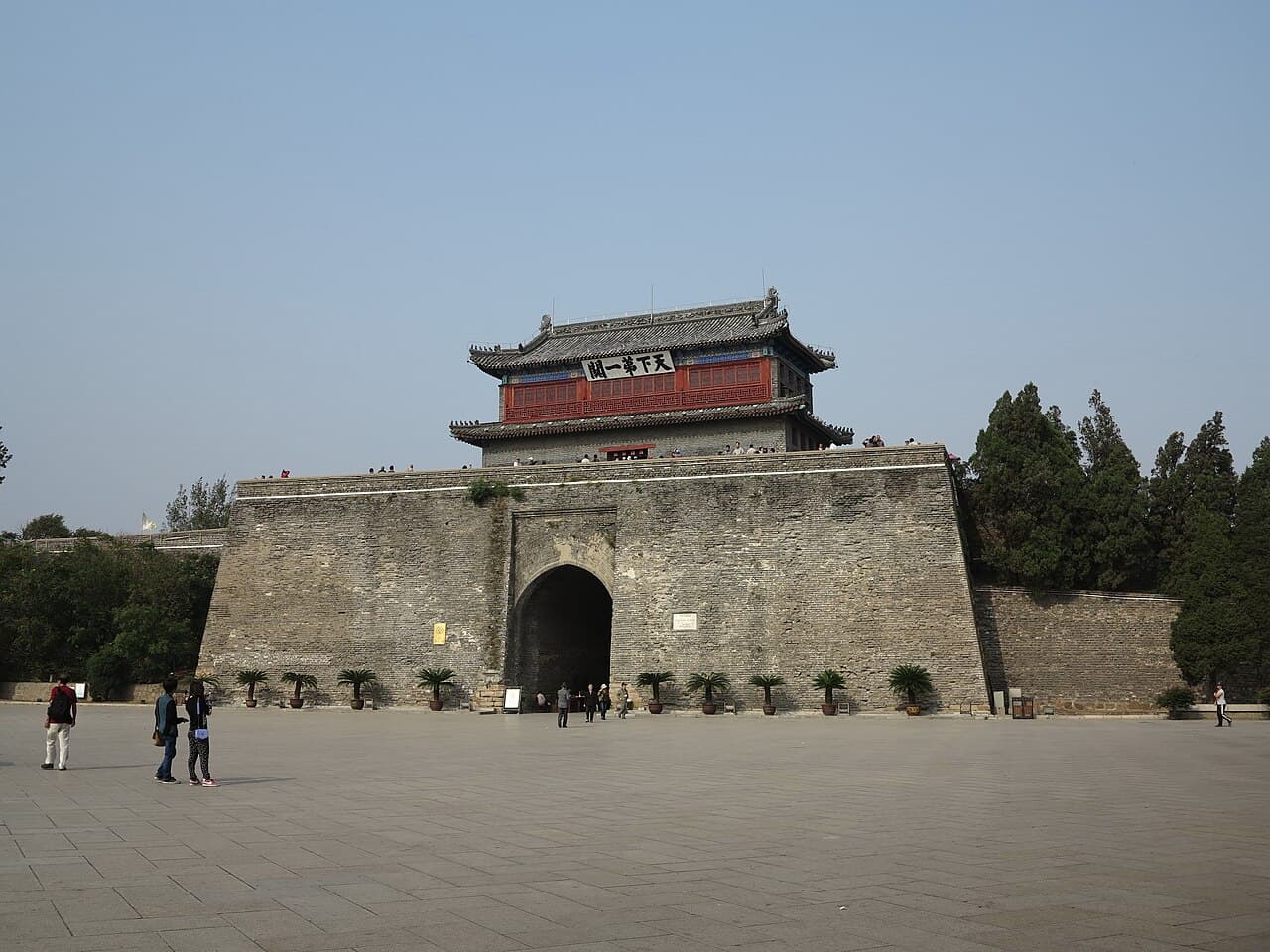
The pass's terrain combines mountainous barriers with coastal plains, which made it a formidable obstacle to invading forces. Its position at the junction of mountain and sea earned it the nickname "Greatest Pass Under Heaven" (天下第一关), reflecting its unmatched strategic importance in Chinese military history.
Historical context and construction
Throughout its long history, the garrisons at Shanhai Pass served as frontline defense against incursions by various non-Sinitic nomadic groups from the northeast, including the Dongyi, Donghu (including the Xianbei and Wuhuan), Khitan, and Jurchen (later Manchus). These groups repeatedly challenged the security of the Chinese heartland, making the pass a focal point of military activity.
The current fortifications date primarily to the early Ming dynasty, constructed in the 14th century as part of the Ming Great Wall system. The pass was extensively reinforced after the Yongle Emperor relocated the imperial capital from Nanjing to Beijing following the Jingnan campaign. This move elevated Shanhai Pass to the most critical defensive barrier protecting the imperial capital and its surrounding regions.
The pass was designed to withstand direct sieges with its robust gatehouse, barbican walls, and extensive fortifications. Its strategic location meant that bypassing the pass required navigating treacherous mountain routes through the Yan Mountains, which posed severe logistical challenges for any invading army.
Architectural features and defensive structures
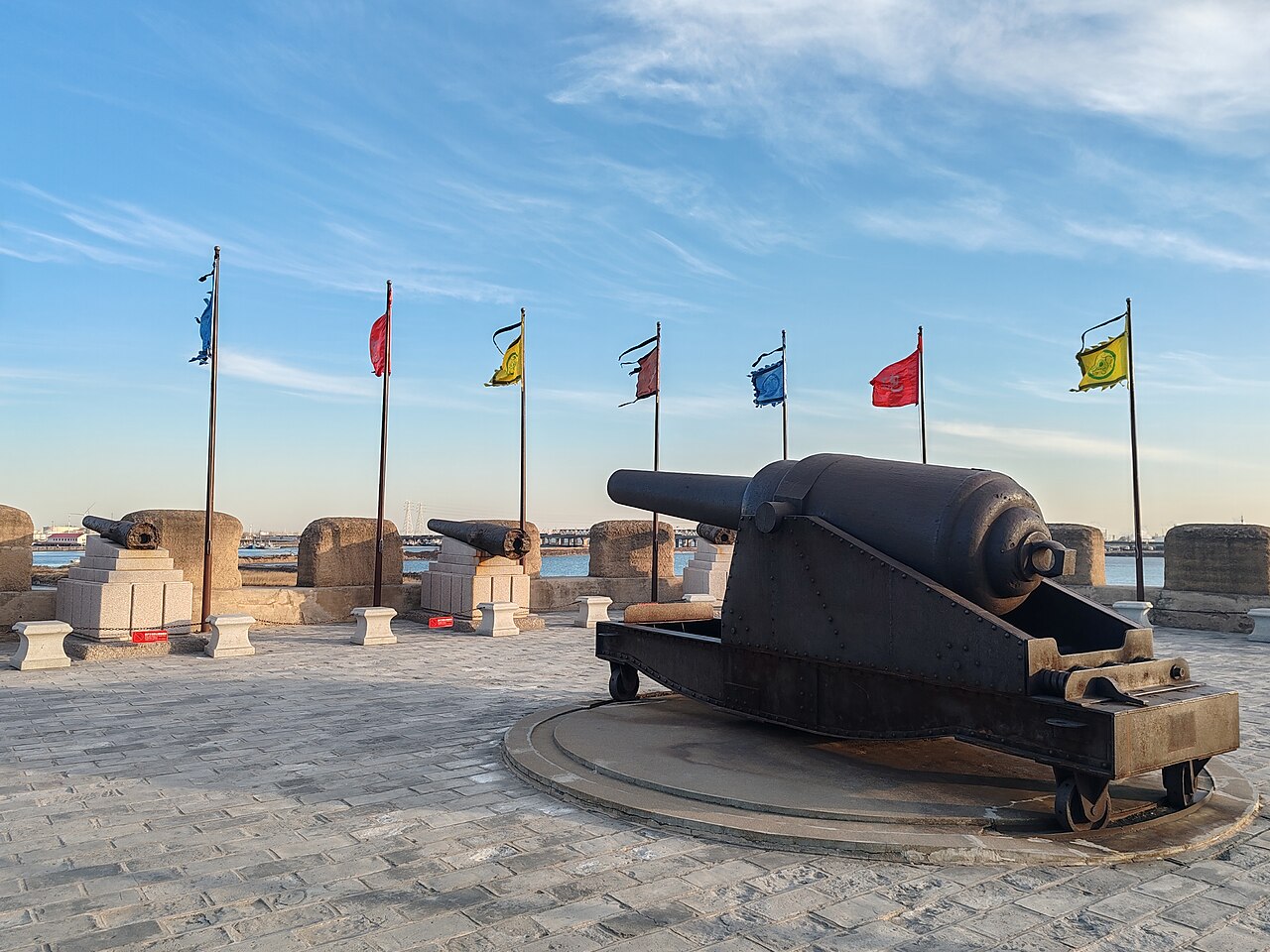
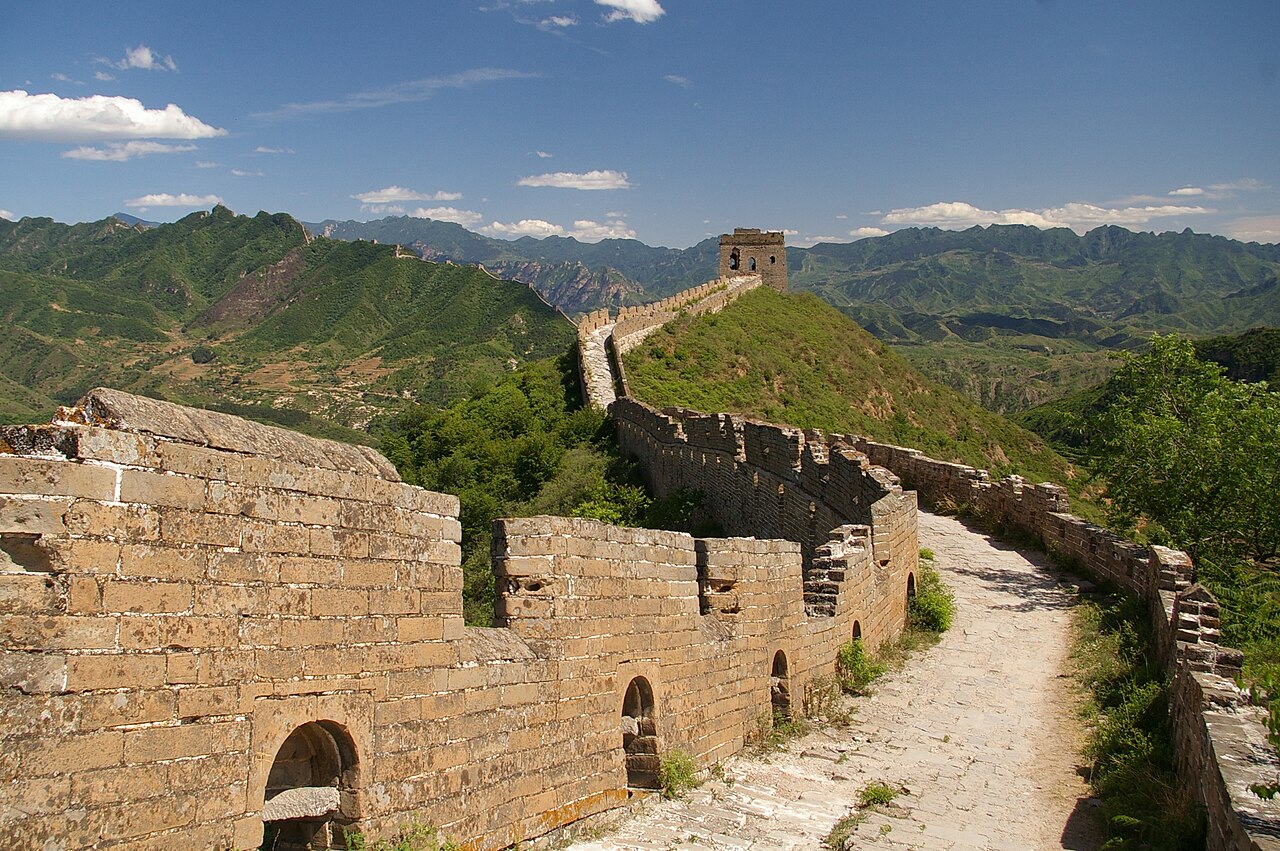
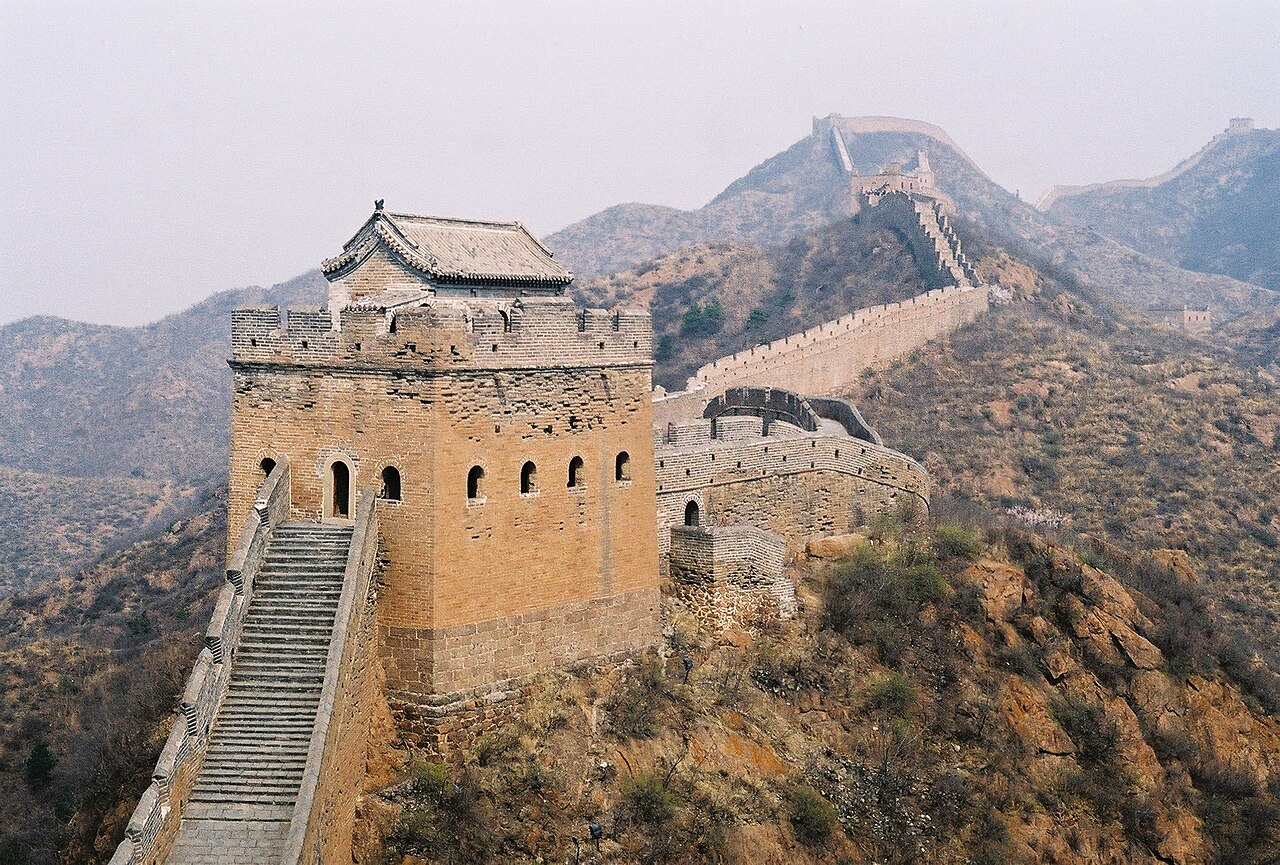
Shanhai Pass exemplifies traditional Chinese military architecture adapted to its unique geographical setting. The fortification includes massive stone and brick walls stretching from mountain ridges to the sea, creating an almost impregnable barrier. The main gate complex features a multi-tiered gatehouse with defensive battlements, arrow slits, and platforms for artillery placement.
One of the most iconic features is the "Old Dragon's Head" (老龙头), where the Great Wall extends directly into the Bohai Sea. This unique water castle element served both symbolic and practical defensive functions, controlling naval access and serving as a spectacular terminus of the Great Wall.
The pass also contains numerous watchtowers, battlements, and courtyards designed for troop deployment and rapid communication. The integration of natural terrain with man-made fortifications showcases the sophisticated military engineering of the Ming era.
Role in military history
Shanhai Pass played a decisive role in several historic conflicts. Its strategic importance was highlighted during the Manchu conquest of China in the 17th century when the pass was the site of a critical battle that allowed the Manchu forces to enter China proper and establish the Qing dynasty. The pass's defenses delayed invasions and controlled access to the heartland for centuries.
The pass also served as a military garrison and administrative center, housing troops and officials responsible for frontier defense and border management. Its position at the edge of the empire made it a cultural and military frontier zone, witnessing the interaction between Han Chinese and various nomadic peoples.
Modern significance and preservation
Today, Shanhai Pass is a prominent tourist destination, attracting visitors worldwide who come to see the remarkable convergence of the Great Wall and the sea at the Old Dragon's Head. The site offers insights into ancient Chinese military architecture and the historical dynamics of frontier defense.
In recognition of its cultural and historical importance, Shanhai Pass was designated a Major Historical and Cultural Site Protected at the National Level by the Chinese government in 1961. It was subsequently inscribed as part of the UNESCO World Heritage Site listing for the Great Wall in 1987.
The pass is accessible via the Jingshen Expressway and the Beijing–Harbin railway, with the nearby Shanhaiguan railway station facilitating visitor access. Preservation efforts continue to maintain the structural integrity of the walls and gatehouses, balancing tourism with conservation.
Visitor experience and attractions
Visitors to Shanhai Pass can explore the extensive fortifications, including the main gate complex, battlements, and watchtowers. The dramatic setting where the Great Wall meets the Bohai Sea offers unique photographic opportunities and a tangible connection to China's vast military history.
The site includes museums and exhibitions detailing the history of the pass, the Great Wall, and the various peoples who shaped the region's history. Guided tours provide context on the architectural features and historical events associated with the pass.
Frequently asked questions (FAQ)
- What is Shanhai Pass known for?
- Shanhai Pass is renowned as one of the most significant military strongholds in Chinese history, often referred to as the "First Pass Under Heaven." It marks the eastern end of the Great Wall of China and served as a crucial defense point against invasions. The site is rich in historical significance, showcasing the strategic importance of the Great Wall.
- When was Shanhai Pass built?
- Shanhai Pass was constructed in the Ming Dynasty, around the 14th century. It has undergone various renovations and restorations over the centuries to maintain its historical integrity. The pass played a vital role in protecting the northern borders of China from invasions.
- Can I visit Shanhai Pass year-round?
- Yes, Shanhai Pass is open to visitors year-round, though operating hours may vary by season. It’s advisable to check the official website or local resources for the most accurate information regarding opening hours during holidays or special events. Visitors can enjoy the scenic beauty and historical architecture throughout the year.
- What are the ticket prices for Shanhai Pass?
- The entrance fee for Shanhai Pass is generally affordable, with discounts available for students and seniors. Prices may vary depending on the season and any special events taking place. It's best to purchase tickets on-site or check online for updated pricing information.
- Is Shanhai Pass accessible for visitors with mobility issues?
- Shanhai Pass has made efforts to improve accessibility for all visitors, including those with mobility challenges. While some areas may have steep inclines or uneven surfaces, there are designated paths and viewing spots that are easier to navigate. It’s recommended to consult with staff on-site for assistance and the best routes to take.
- When is the best time to visit Shanhai Pass?
- The best time to visit Shanhai Pass is during the spring and autumn months when the weather is mild and the natural scenery is at its most beautiful. Avoiding the peak summer heat and winter chill can enhance your experience. Additionally, visiting during these seasons often means fewer crowds.
- What nearby attractions can I explore while visiting Shanhai Pass?
- Visitors to Shanhai Pass can also explore the nearby picturesque Beidaihe Beach, known for its scenic coastline and recreational opportunities. Additionally, the Old Dragon Head, where the Great Wall meets the Bohai Sea, is a short drive away. These attractions offer a perfect complement to your historical visit.
Photo gallery

Information
Loading map...
Visitor reviews
No reviews yet. Been here? Write the first review and help other travelers!
Write the first reviewVisited this castle? Share your experience
Your review helps other travelers and adds first-hand knowledge to our encyclopedia.