Salah El-Din Castle
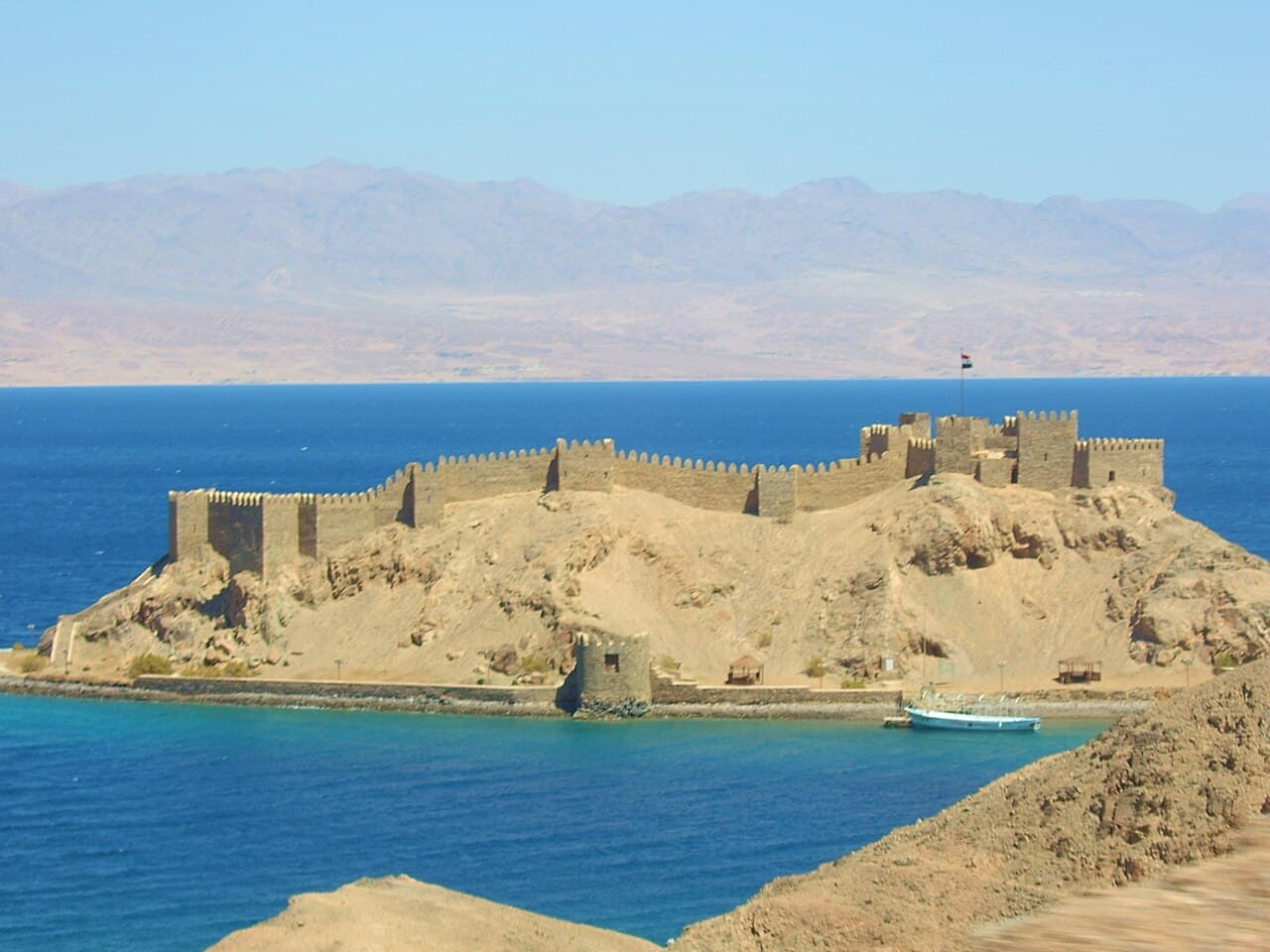
Salah El-Din Castle, located on Pharaoh's Island in the northwestern tip of the Gulf of Aqaba, Egypt, is a significant medieval fortress with a rich history tied to the Crusades and Islamic military architecture. This 12th-century hill castle was strategically built to control maritime routes and protect the region from Crusader incursions. The castle complex is divided into two main sections: the northern and southern parts, each featuring distinct defensive and residential structures.
Geographical and historical context
Pharaoh's Island (Arabic: جَزِيْرَةُ فِرعَون Jazīratu Firʽawn), also known as Coral Island, is a small island situated approximately 250 meters east off the shore of Egypt's eastern Sinai Peninsula. Its location in the northern Gulf of Aqaba made it a critical point for controlling trade and military passage between the Red Sea and the Mediterranean. Some scholars associate the island with the biblical port of Ezion-Geber, highlighting its long-standing strategic importance.
Architectural features and layout
The castle's design reflects typical High Medieval military architecture with adaptations to the island's rocky terrain. The hill castle is built on elevated ground to maximize visibility and defense against naval and land attacks. The fortress includes thick curtain walls, battlements, and towers that provided vantage points for archers and lookouts.
The northern section primarily served as the main defensive stronghold, housing the keep and watchtowers. The southern section contained living quarters, storage facilities, and cisterns for water supply, essential for withstanding sieges. The castle's layout also incorporated gatehouses and narrow passageways to control access and enhance security.
Historical significance and military role
Salah El-Din Castle was constructed during the reign of Salah ad-Din (Saladin), the famous Muslim leader who fought against the Crusaders in the 12th century. The fortress formed part of a network of defensive positions designed to secure the Red Sea trade routes and prevent Crusader expansion into Muslim-held territories.
The castle witnessed several conflicts and changes of control during the Crusades and later periods. Its position allowed it to monitor naval traffic and serve as a base for military operations in the region. Despite its strategic importance, the castle eventually fell into disuse and ruin, but its remains still provide valuable insights into medieval fortification techniques.
Current condition and preservation
Today, Salah El-Din Castle stands as ruins on Pharaoh's Island. The remains include substantial portions of the original walls, towers, and foundations, though much of the superstructure has deteriorated over centuries of exposure to the elements. The site offers visitors a glimpse into the island's medieval past and the military architecture of the High Medieval period.
Efforts to preserve and study the castle continue, emphasizing its cultural and historical value as a heritage site in Egypt. The island and castle attract historians, archaeologists, and tourists interested in Crusader-era fortifications and Islamic military history.
Visiting Salah El-Din Castle
Access to Pharaoh's Island is typically by boat from the nearby Sinai coast. Visitors to the castle can explore the ruins and enjoy panoramic views of the Gulf of Aqaba and surrounding landscapes. The site is an important destination for those interested in medieval history, archaeology, and Egypt's diverse heritage beyond its ancient pharaonic monuments.
Architectural highlights
- Thick defensive walls adapted to the island's rocky terrain
- Watchtowers and battlements for surveillance and defense
- Gatehouses controlling access points
- Cisterns for water storage, crucial for siege endurance
- Residential quarters and storage areas within the southern section
Historical context
- Built in the 12th century during the reign of Salah ad-Din
- Part of a strategic network defending the Red Sea and Gulf of Aqaba
- Linked to the Crusades and Islamic military campaigns in the region
- Associated with biblical port Ezion-Geber by some scholars
Frequently asked questions (FAQ)
- How do I get to Salah El-Din Castle on Pharaoh's Island?
- Visitors can reach Salah El-Din Castle by taking a boat from the Sinai Peninsula coast, as the castle is located on Pharaoh's Island in the Gulf of Aqaba.
- What is the historical significance of Salah El-Din Castle?
- Salah El-Din Castle was built in the 12th century during the reign of Saladin to protect Red Sea trade routes and defend against Crusader incursions.
- What architectural features make Salah El-Din Castle unique?
- The castle features thick defensive walls, watchtowers, gatehouses, and cisterns, all adapted to its rocky island terrain for strategic defense.
- Is Salah El-Din Castle open to visitors year-round?
- The castle ruins on Pharaoh's Island are accessible year-round, but visitors should check local conditions and boat availability for safe access.
- Can I explore the entire castle complex?
- Visitors can explore the accessible ruins of both the northern and southern parts of the castle, including defensive walls and residential areas.
Photo gallery

Information
Loading map...
Visitor reviews
No reviews yet. Been here? Write the first review and help other travelers!
Write the first reviewVisited this castle? Share your experience
Your review helps other travelers and adds first-hand knowledge to our encyclopedia.