Qasr Dush
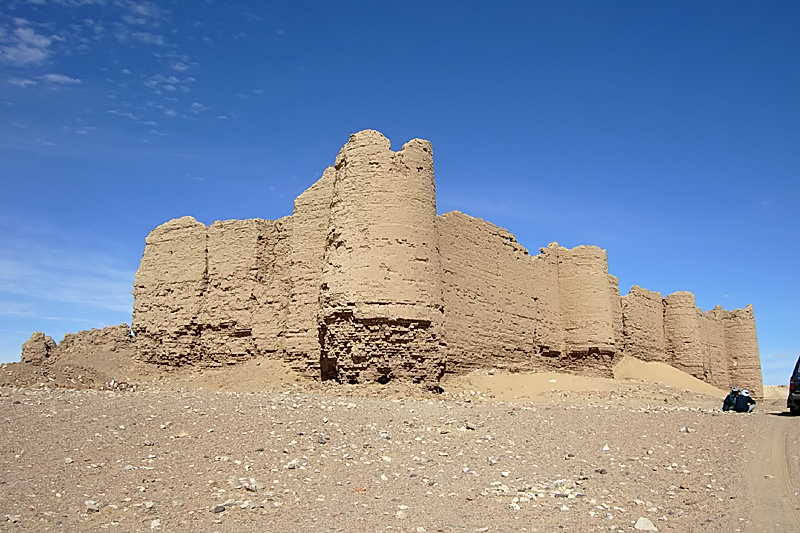
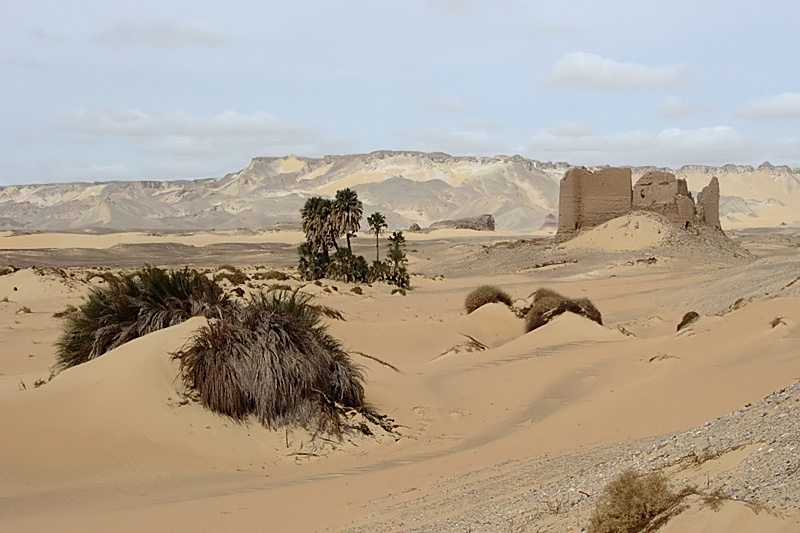
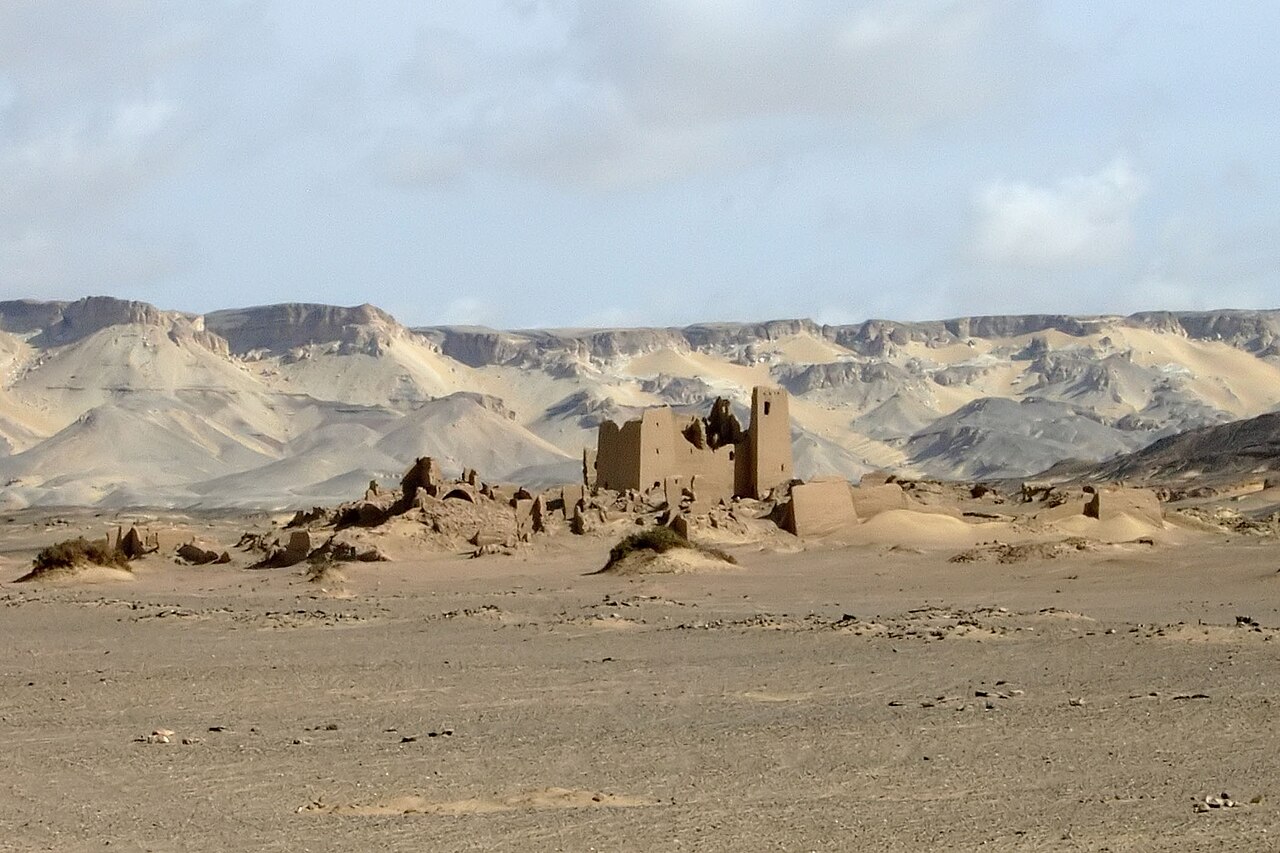
Qasr Dush is a significant archaeological site located in the Western Desert of Egypt, near the Dakhla Oasis. This ancient hill castle dates primarily to the Roman period, with notable early Christian influences evident in its remains. The site offers valuable insights into the military, religious, and social history of the region during antiquity.
Historical context and significance
The fortress was constructed during the Roman occupation of Egypt, likely in the 1st to 3rd centuries AD, serving as a strategic military outpost to control the desert routes and protect the valuable oasis settlements. Its location on a rocky hill provided a natural defensive advantage, allowing surveillance over the surrounding desert and approach paths.
Later, during the early Christian period, Qasr Dush became notable for its religious structures, including a well-preserved chapel with Christian iconography, which reflects the spread of Christianity in Egypt's desert regions. The site thus illustrates the transition from a Roman military fortress to a religious center.
Architectural features and layout
The castle is characterized by its robust stone walls built from local limestone, enclosing a roughly rectangular plan adapted to the contours of the hill. Defensive features include thick curtain walls, corner towers, and a fortified gatehouse designed to withstand desert raids.
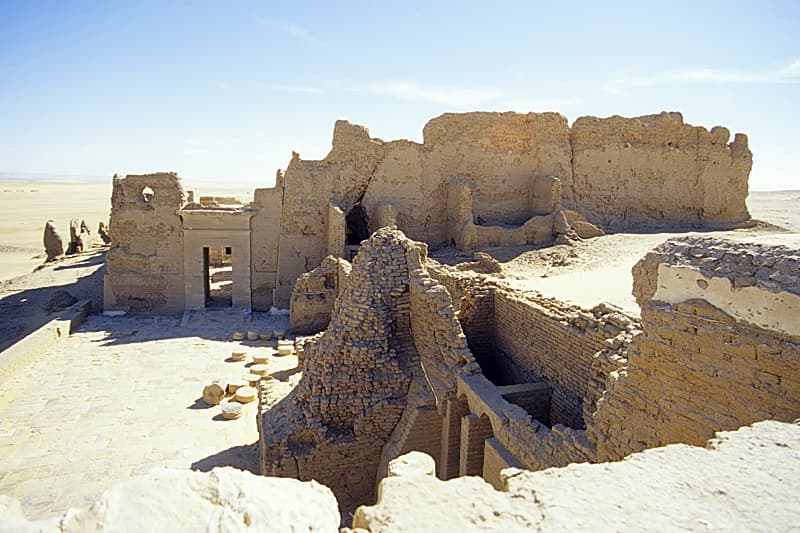
Inside the enclosure, remains of residential quarters, storerooms, and the chapel have been uncovered. The chapel is particularly remarkable for its well-preserved frescoes and inscriptions, which provide valuable information about the Christian community that once inhabited the site.
Defensive structures
The walls of Qasr Dush are constructed with large ashlar blocks, some showing evidence of Roman masonry techniques. The towers at the corners served as lookout points and defensive positions, allowing defenders to cover all sides of the castle.
The entrance gate was strategically positioned and fortified, featuring a narrow passage to control access and enhance security.
Religious architecture
The early Christian chapel within Qasr Dush is one of the best-preserved examples in the region. It contains painted decorations depicting biblical scenes and symbols, which are rare survivals in desert fortresses. The chapel's architecture includes a small nave and an apse, typical of early Christian worship spaces.
Archaeological importance and preservation
Qasr Dush is classified as an archaeological site with partially preserved remains. Excavations have revealed significant artifacts and architectural elements that contribute to understanding Roman military strategy and the spread of Christianity in remote desert areas.
The site is managed by Egyptian antiquities authorities who oversee its conservation. Due to its remote location, Qasr Dush remains less visited than other Egyptian monuments, preserving its historical integrity.
Visiting Qasr Dush
Visitors interested in ancient military architecture and early Christian history can explore Qasr Dush as part of tours to the Dakhla Oasis region. The castle's rugged setting offers a glimpse into the challenges of desert fortifications and the cultural transformations over centuries.
Access may require coordination with local guides and authorities, as facilities are limited and the site is not widely developed for tourism.
Nearby attractions
The Dakhla Oasis area includes other Roman and early Christian sites, such as the Temple of Hibis and the village of Balat, making it a rich destination for archaeological exploration.
Photo gallery

Information
Loading map...
Visitor reviews
No reviews yet. Been here? Write the first review and help other travelers!
Write the first reviewVisited this castle? Share your experience
Your review helps other travelers and adds first-hand knowledge to our encyclopedia.