Vipava Castle
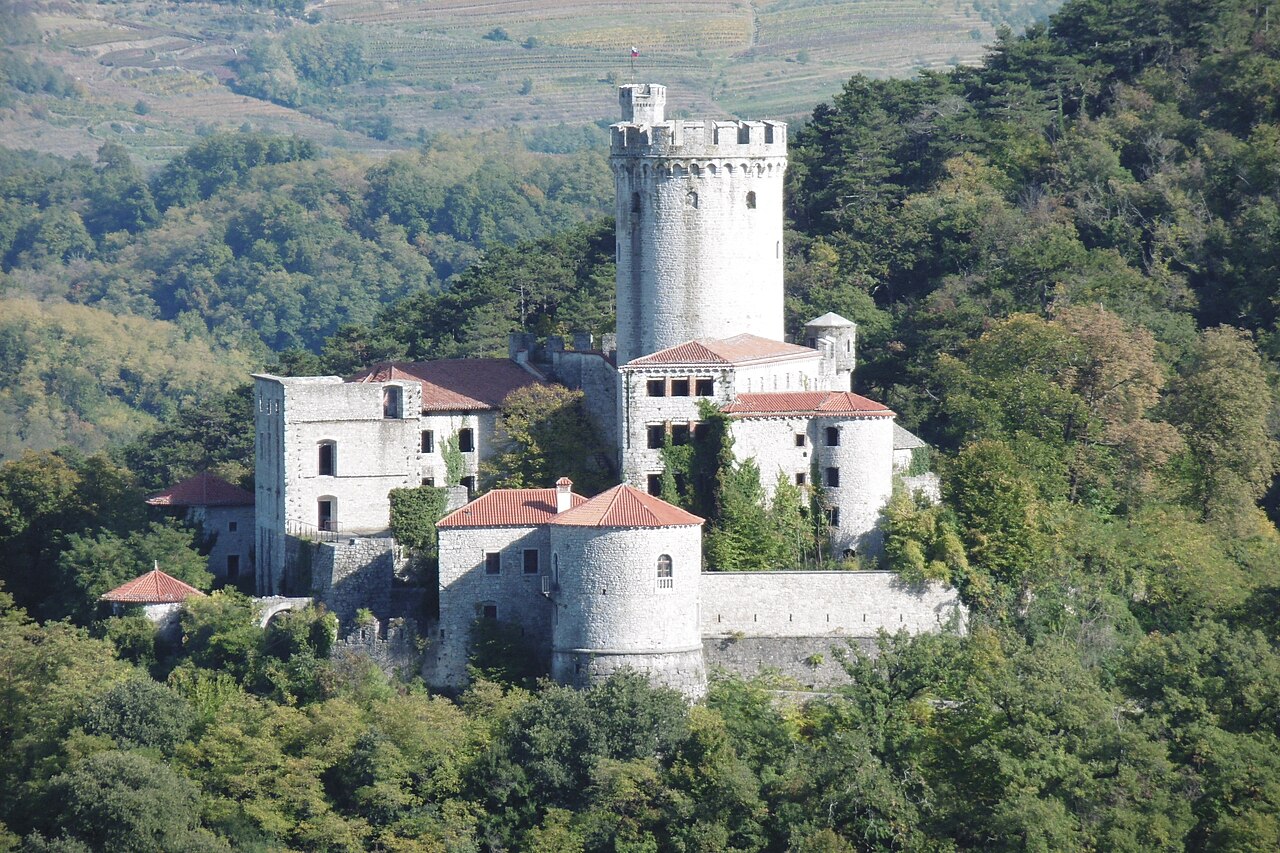
Vipava Castle, locally called Stari Grad meaning "Old Castle," is a notable medieval fortress ruin perched on a mountainous spur north of the town of Vipava in Slovenia. Known also by its German name Alt Wippach, it lies near the Italian border, north of Trieste, commanding strategic views over the Upper Vipava valley. This castle is a significant example of Romanesque military architecture from the High Medieval period.
Origins and early history
The castle was most likely constructed in the 12th century by the Patriarchate of Aquileia, a powerful ecclesiastical state that controlled the region. Although the first written mention of the castle itself is from 1275 under the name castrum Wipaci superioris (Upper Vipava Castle), a knight named Wiluiuns de Wippach is recorded in 1154, indicating the presence of a knightly family associated with the site. The castle served as the residence of the Knights of Vipava until the mid-14th century, marking its importance as a feudal stronghold in the region.
Changing ownership and political significance
Following the departure of the Knights of Vipava, the castle passed through the hands of numerous noble families, reflecting the turbulent political landscape of the area. Among its owners were the Knights of Rihemberk, the Šneperskies from Snežnik, the Habsburgs (who acquired it in 1344), the Weissenfelsers (Belopeški), the Counts of Celje, and the Herberstein family who took possession in 1487.
In the first half of the 16th century, the castle was briefly occupied by the Venetians, a reflection of the ongoing conflicts between regional powers. However, the Habsburgs soon regained control. After 1577, the castle belonged to the Lanthieri Counts, who eventually abandoned it in the 17th century when they built a more comfortable palace in Vipava town below. Since then, the castle has gradually fallen into ruin.
Architectural features and layout
The ruins of Vipava Castle reveal a fortress with a rectangular ground plan. The complex included two palatial residential buildings and a mighty keep or defensive tower, which served as the stronghold's principal defensive feature. The castle's thick Romanesque walls enclosed the courtyard and protected the inhabitants from attacks. The remains of the walls and towers still outline the castle's original layout, providing insight into medieval fortification design in the region.
The castle's elevated position on a mountain spur allowed for excellent surveillance of the surrounding valley, a key strategic advantage. Its design reflects typical High Medieval military architecture with a focus on defense and control over the surrounding lands.
Decline and present condition
After the Lanthieri Counts ceased using Vipava Castle in the 17th century, the fortress fell into disrepair. The construction of a new palace in the town below made the castle obsolete as a noble residence. Over the centuries, natural decay and lack of maintenance reduced the castle to ruins. Today, Vipava Castle stands as a partially preserved medieval ruin, accessible only by footpaths, as it cannot be reached by car.
Despite its ruined state, the castle remains a popular destination for hikers and visitors due to its panoramic views of the Upper Vipava valley. The approximately 30-minute walk from Vipava town to the castle provides a scenic route through the Slovenian countryside.
Vipava Castle in cultural and historical context
Vipava Castle's history reflects the complex feudal and political dynamics of the Slovenian Littoral region during the Middle Ages. Its succession of owners, including prominent noble families and the Habsburg dynasty, illustrates the castle's role in regional power struggles. The brief Venetian occupation highlights the strategic importance of the site in broader Adriatic conflicts.
Today, the castle is valued both as a cultural heritage site and a natural landmark. Its ruins offer a tangible connection to Slovenia's medieval past and serve as a reminder of the region's historical ties to the Patriarchate of Aquileia and Central European noble lineages.
Visitor information
Vipava Castle is open to the public year-round as an outdoor ruin. Visitors should prepare for a moderate hike as the castle is reachable only by foot. The site does not have facilities or ticketed entry, making it a free attraction. The best time to visit is during spring to autumn when the weather is favorable for hiking and sightseeing.
Nearby attractions
While visiting Vipava Castle, travelers can explore the charming town of Vipava, known for its wine production and historical architecture. The surrounding Vipava valley offers numerous hiking and cycling trails, making the area a popular destination for outdoor enthusiasts.
Frequently asked questions (FAQ)
- What is the historical significance of Vipava Castle?
- Vipava Castle has a rich history dating back to the 12th century, serving as a strategic fortress for the region. It played a crucial role in the defense against invasions and has witnessed many historical events that shaped the local culture and heritage.
- When was Vipava Castle built?
- Vipava Castle was originally constructed in the late 12th century, with various modifications and expansions made over the centuries. The castle's architecture reflects different styles, showcasing its evolution through time and various influences.
- Can I visit Vipava Castle during the winter months?
- Yes, Vipava Castle is open for visitors year-round, but it is advisable to check specific opening hours during the winter season. Some areas of the castle may be less accessible due to weather conditions, so planning ahead is recommended.
- Is it possible to take guided tours of Vipava Castle?
- Guided tours are available at Vipava Castle, offering visitors a deeper understanding of its history and architecture. These tours are typically conducted by knowledgeable guides who can share fascinating stories and details about the castle.
- What are the opening hours for Vipava Castle?
- Vipava Castle usually opens to visitors from 10 AM to 5 PM, with extended hours during the peak tourist season. It is recommended to check the official website or contact local tourism information for any changes in hours before your visit.
- What is the best time to visit Vipava Castle?
- The best time to visit Vipava Castle is during the spring and early autumn months when the weather is pleasant, and the surrounding landscapes are beautiful. This period also offers various local events and festivals that enhance the visitor experience.
- Are there any nearby attractions to Vipava Castle?
- Yes, visitors to Vipava Castle can explore several nearby attractions, including the picturesque Vipava Valley and the charming town of Ajdovščina. Wine tasting experiences and hiking trails are also popular activities in the region.
- What are the ticket prices for visiting Vipava Castle?
- Ticket prices for Vipava Castle are quite reasonable, typically around 5 euros for adults, while discounts may apply for students and groups. Children under a certain age often enter for free, making it an affordable destination for families.
- How do I get to Vipava Castle?
- Vipava Castle is easily accessible by car and public transport, with regular bus services connecting it to major cities in Slovenia. Once in Vipava, the castle is a short walk from the town center, making it convenient for visitors.
Information
Loading map...
Visitor reviews
No reviews yet. Been here? Write the first review and help other travelers!
Write the first reviewVisited this castle? Share your experience
Your review helps other travelers and adds first-hand knowledge to our encyclopedia.