Amagasaki Castle — Japan castle

Amagasaki Castle

Amagasaki Castle: history and architecture of a Japanese flatland castle
Amagasaki, Japan
Early Medieval (5th–10th c.)
Partially Restored

Amagasaki Castle (尼崎城; Amagasaki-jō) is a historically significant flatland castle located in the city of Amagasaki, Hyōgo Prefecture, Japan. It served as the administrative center and military headquarters of the Amagasaki Domain, a feudal domain under the control of the Tokugawa shogunate during the Edo period (1603–1868). The castle's strategic location in northern Settsu Province made it an important stronghold for regional governance and defense.

Historical background and significance

Constructed in the early 17th century, Amagasaki Castle was built during a time of relative peace and stability following the unification of Japan under Tokugawa Ieyasu. Unlike many Japanese castles built on hills or mountains, Amagasaki Castle is classified as a flatland castle (hirajiro), meaning it was constructed on level ground rather than elevated terrain. This design choice reflected the castle's role as a political and administrative center rather than purely a military fortress.

Amagasaki Domain, governed from this castle, was a significant feudal domain that managed local affairs, taxation, and justice under the Tokugawa regime. The castle's presence symbolized the shogunate's authority in the region and served as a residence for the daimyo (feudal lord) and his retainers.

Architectural features and layout

The castle originally featured typical Edo period architectural elements, including a main keep (tenshu), defensive walls, moats, gates, and baileys. The main keep was a multi-storied structure that provided vantage points for surveillance and defense. Surrounding the keep were moats and earthen walls designed to impede attackers.

The castle grounds included residential quarters for the daimyo and his retainers, administrative buildings, and storage facilities. The layout was carefully planned to balance defense with the practical needs of governance and daily life.

Defensive structures

Amagasaki Castle's defenses incorporated stone walls and moats typical of the period. Although it was a flatland castle, the design made use of layered moats and strategically placed gates to control access. The castle's defensive features were designed more for deterrence and control rather than withstanding prolonged sieges, reflecting the peaceful conditions of the Edo period.

Destruction and restoration

With the fall of the Tokugawa shogunate and the advent of the Meiji Restoration in the late 19th century, many castles including Amagasaki Castle were dismantled or destroyed as symbols of the old feudal order. The original structures of Amagasaki Castle were largely lost during this period.

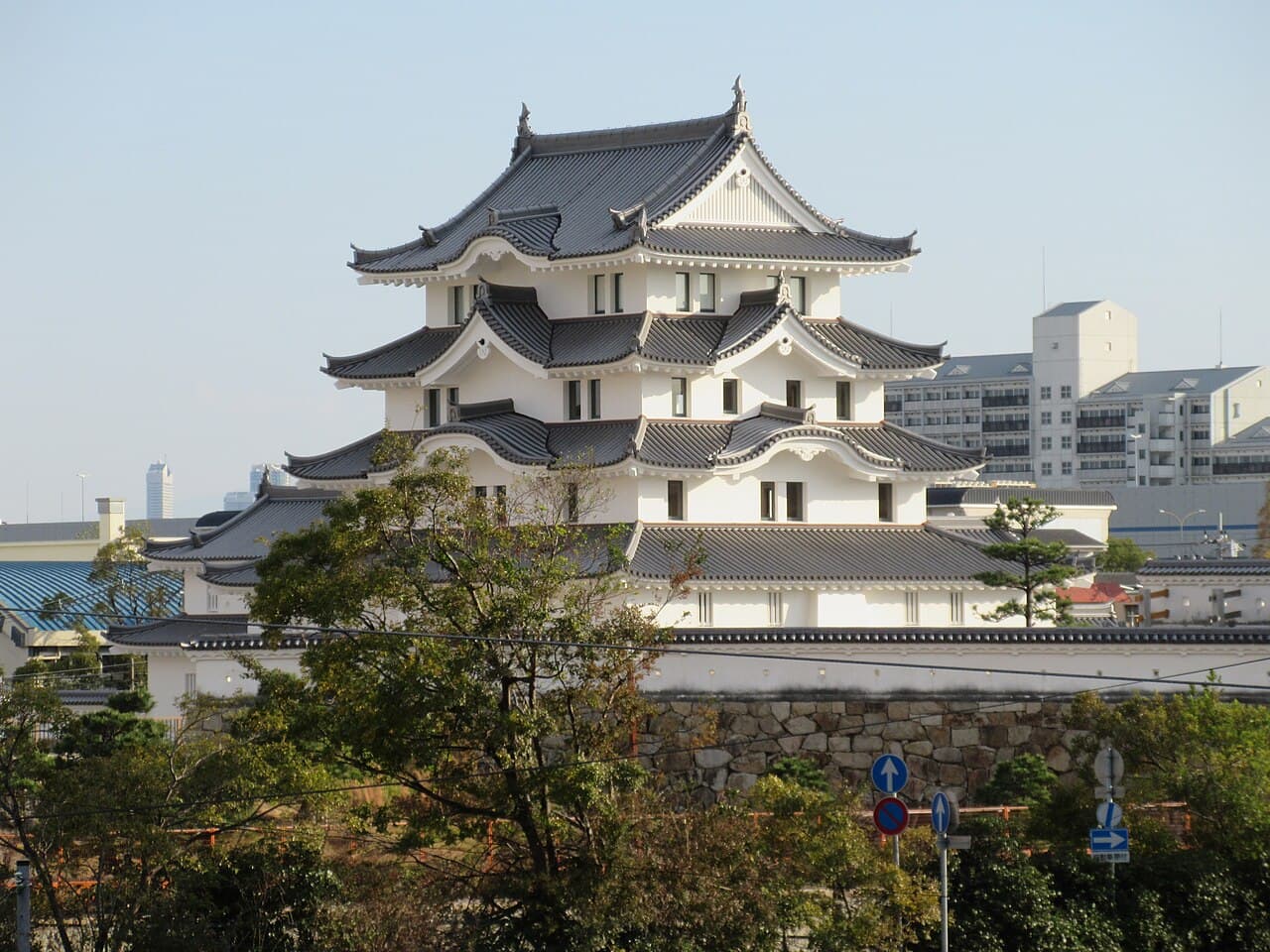
In recent years, efforts have been made to reconstruct portions of the castle to preserve its cultural heritage and educate the public. A section of the castle was reconstructed in 2018, providing visitors with a glimpse into the castle's historical architecture and significance. This reconstruction includes elements such as the main gate and parts of the walls, designed to reflect the castle's original Edo period appearance.

Cultural importance and tourism

Today, Amagasaki Castle stands as a symbol of the city's rich history and its role in the feudal era of Japan. The reconstructed sections serve as a cultural and educational site, attracting visitors interested in Japanese history, architecture, and the legacy of the Tokugawa shogunate.

The castle grounds often host events and exhibitions that highlight traditional Japanese culture and the history of the Amagasaki Domain. Its location in Hyōgo Prefecture makes it accessible for tourists exploring the Kansai region.

Frequently asked questions (FAQ)

When was Amagasaki Castle originally built?
Amagasaki Castle was originally constructed in the early 17th century during the early Edo period, serving as the center of Amagasaki Domain.
What type of castle is Amagasaki Castle?
Amagasaki Castle is classified as a flatland castle, meaning it was built on level ground rather than on a hill or mountain.
Is Amagasaki Castle open to visitors today?
Yes, parts of Amagasaki Castle have been reconstructed and are open to the public, offering insights into its historical architecture and significance.
What happened to Amagasaki Castle during the Meiji period?
The original castle was largely destroyed during the early Meiji period as part of the dismantling of feudal structures following the Meiji Restoration.
Where is Amagasaki Castle located?
Amagasaki Castle is located in the city of Amagasaki, within Hyōgo Prefecture, Japan.

Photo gallery

Amagasaki Castle
Click to view

Photo by KishujiRapid•CC BY-SA 4.0

1 photo • Click any image to view in full screen

Information

Lowland Castle

Current owner

Municipality

Loading map...

Visitor reviews

No reviews yet. Been here? Write the first review and help other travelers!

Write the first review

Visited this castle? Share your experience

Your review helps other travelers and adds first-hand knowledge to our encyclopedia.
Write a review

(5/5)

0/2000 characters

Your review will be visible after admin approval

Nearby castles

7.4 km
Itami Castle — Japan castle

Itami Castle

Itami, Japan

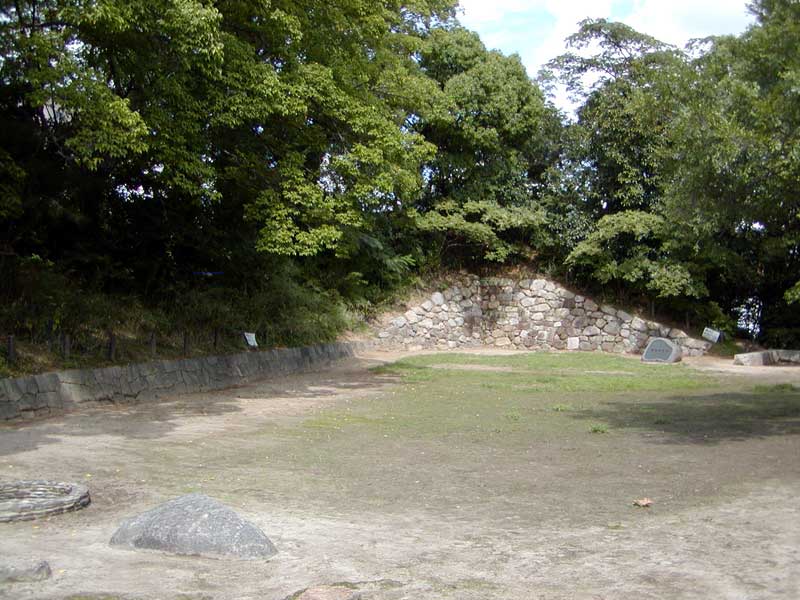
Itami Castle (伊丹城, Itami-jō), also known as Arioka Castle (有岡城 or 在岡城, Arioka-jō), is a significant archaeological site from the Muromachi period located in the former Kawabe District of northern Settsu Province, which corresponds to the modern city of Itami in Hyōgo Prefecture, Japan. The castle's ruins lie prominently near the present-day Itami Station, offering a tangible connection to Japan's feudal past. Protected as a National Historic Site since 1979, the site provides valuable insights into regional military architecture and history during a turbulent era in Japanese history. Historical background and significance Itami Castle was constructed during the Muromachi period (1336–1573), a time characterized by political fragmentation and frequent military conflict among feudal lords, or daimyōs. The castle served as a strategic stronghold in Settsu Province, a region of considerable military and economic importance due to its proximity to the Osaka Basin and key transportation routes. It was controlled by various samurai clans over the centuries, reflecting the shifting allegiances and power struggles typical of the period. The castle's alternate name, Arioka Castle, is often used interchangeably in historical records and local tradition. It played a role in several notable conflicts, including the struggles involving the Ikeda clan and other regional powers. Although the castle was eventually dismantled and fell into ruin, its remains have been preserved due to their cultural and historical value. Architectural features and layout As a typical Muromachi period fortress, Itami Castle was designed primarily for defense and control of the surrounding territory. The castle's layout included earthen ramparts, moats, and wooden structures, typical of Japanese castles before the widespread use of stone walls in later periods. The site features remnants of fortified baileys and defensive works that illustrate the military engineering techniques of the time. The castle was likely constructed as a hill castle (yamajiro), taking advantage of natural elevations to enhance its defensive capabilities. The ruins reveal traces of the main enclosure (honmaru), secondary enclosures (ninomaru), and various gates and watchtowers that would have controlled access and provided vantage points against attackers. Although much of the wooden architecture has not survived, the earthworks and foundations provide a clear outline of the castle's original form. Decline and preservation Following the unification of Japan under the Tokugawa shogunate in the early 17th century, many castles including Itami were dismantled or abandoned as centralized peace reduced the need for regional fortresses. Over time, the site fell into ruin, with natural erosion and urban development affecting the remains. Recognizing its historical importance, the Japanese government designated the ruins as a National Historic Site in 1979, ensuring protection and archaeological study. Excavations have uncovered artifacts and structural remains that contribute to understanding the Muromachi period castle construction and feudal society. Today, the site is accessible to the public, with informational signage and preservation efforts aimed at maintaining its condition as archaeological ruins. Cultural and educational value Itami Castle's ruins serve as an important cultural resource for both scholars and visitors interested in Japan's medieval history. The site provides a window into the feudal era, illustrating the military, political, and social dynamics of the Muromachi period. Educational programs and local tourism initiatives highlight the castle's role in regional history and promote heritage conservation. Its location near modern infrastructure like Itami Station makes the ruins accessible for day visitors, allowing a direct encounter with Japan's past amid contemporary surroundings. The castle's preservation contributes to the broader understanding of Japanese castle evolution, bridging early fortification styles with later developments during the Sengoku and Edo periods. Visiting information and accessibility The ruins of Itami Castle are open to the public year-round, with no entrance fee, making it an accessible destination for history enthusiasts and casual visitors alike. The site is equipped with interpretive panels that explain the castle's historical context and architectural features. Visitors can explore the earthworks and foundations, gaining a sense of the castle's scale and strategic design. Its proximity to Itami Station allows convenient access by train, and the surrounding area offers additional attractions related to the cultural heritage of Hyōgo Prefecture. While the castle remains are primarily earthworks and foundations, the site provides a meaningful experience of Japan's medieval fortifications and the legacy of the Muromachi period.

Details
10.1 km
Osaka Castle — Japan castle

Osaka Castle

Osaka, Japan

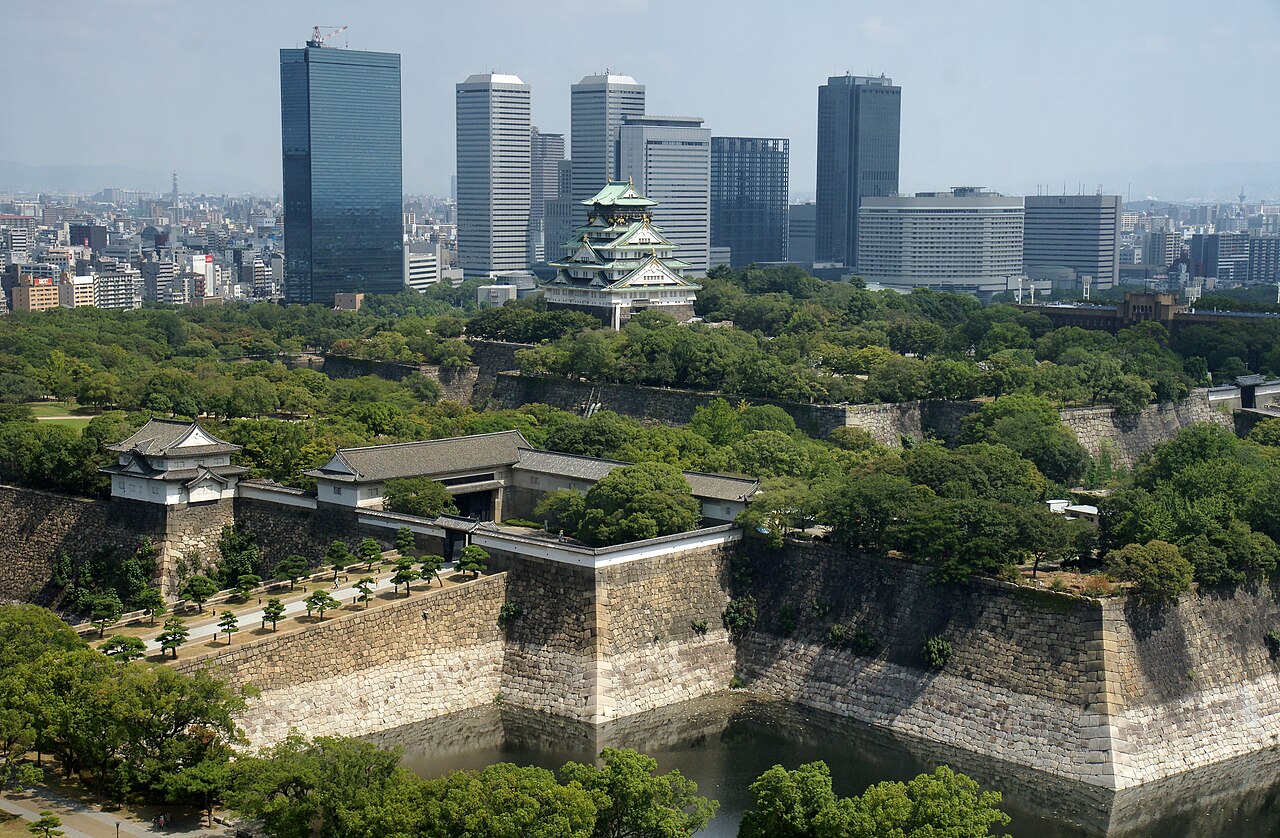
Osaka Castle, located in the heart of Osaka, Japan, stands as a monumental symbol of Japan's turbulent Renaissance period and the unification of the country under Toyotomi Hideyoshi. Constructed in 1583, this lowland castle was designed to be an impregnable fortress, showcasing advanced military architecture and strategic defensive features that made it one of the most formidable castles of its time. From the outset, Toyotomi Hideyoshi envisioned Osaka Castle as a powerful statement of authority and military might. The castle was surrounded by a vast moat system, with a large outer moat encircling the entire complex. This moat was crossed by only two access points, one of which was a small, easily defensible bridge that could be destroyed to prevent enemy advances. The castle's inner grounds were elevated approximately three levels above the water level of the moat, providing a significant tactical advantage. Attackers faced the daunting task of scaling three imposing stone walls and breaching multiple layers of turrets (yagura) to reach the central main keep (tenshu). Architectural design and defensive features Osaka Castle's architecture reflects the innovative military engineering of the late 16th century. The castle's stone walls are particularly noteworthy for their massive size and intricate construction, designed to withstand siege warfare and natural disasters. The walls were built using enormous granite blocks carefully fitted without mortar, demonstrating advanced masonry skills. The castle complex included multiple gates and turrets strategically placed to maximize defensive coverage and create overlapping fields of fire against attackers. The main keep was a multi-storied structure that served both as a command center and a symbol of Toyotomi's power. It was richly decorated and housed various living quarters, armories, and observation decks. The elevation of the keep above the surrounding grounds allowed defenders to monitor the battlefield and coordinate defense effectively. Historical significance and key events Osaka Castle played a central role in the power struggles of early modern Japan. After Toyotomi Hideyoshi's death, the castle became the focal point of the conflict between the Toyotomi loyalists and the rising Tokugawa shogunate. In 1615, during the Siege of Osaka, the castle fell to Tokugawa forces after a fierce battle. The fall marked the end of the Toyotomi clan's influence, and Hideyoshi's heir, Hideyori, tragically committed suicide to avoid capture. Following the siege, the Tokugawa shogunate undertook extensive renovations from 1620, rebuilding and expanding the castle. The Tokugawa-era reconstruction included a new, larger main keep that surpassed the original in scale and grandeur, reinforcing the castle's status as a symbol of Tokugawa authority. Unfortunately, in 1665, the main keep was destroyed by lightning and fire and was not rebuilt for centuries. Modern restoration and present condition In the 20th century, Osaka Castle underwent significant restoration efforts to preserve and celebrate its historical and cultural legacy. The current main keep is a concrete reconstruction completed in the 1930s, which houses a museum dedicated to the castle's rich history and the life of Toyotomi Hideyoshi. While the modern structure includes an elevator and modern facilities, many visitors appreciate the surrounding original elements, including several preserved gates, yagura turrets, and the impressive stone walls. The castle grounds now form a large public park spanning approximately six hectares, cherished by locals and tourists alike, especially during the spring cherry blossom season. The park offers a peaceful retreat in the bustling city, with walking paths that showcase the castle's extensive fortifications and historic architecture. Visitor experience and tips Visitors to Osaka Castle are encouraged to explore beyond the main keep museum to fully appreciate the castle's historical layout and architectural grandeur. The original castle gates and turrets provide a tangible connection to the past, and the massive stone walls remain a highlight for photography and historical interest. The surrounding park is ideal for leisurely strolls, picnics, and cultural events. While the reconstructed main keep offers valuable exhibits and panoramic views from its observation deck, some visitors prefer to experience the castle's exterior fortifications and natural setting. The site is accessible year-round, with peak visitation during spring for cherry blossoms and autumn for colorful foliage. Accessibility and practical information The castle is located in central Osaka city, easily reachable by public transport. Opening hours typically run from morning to early evening, with seasonal variations. Entrance fees apply for the main keep museum, while the castle grounds and park are free to enter. Guided tours and informational signage enhance the visitor experience. Cultural and heritage importance Osaka Castle remains a powerful emblem of Japan's Renaissance era and the country's unification under Toyotomi Hideyoshi. It represents the pinnacle of lowland castle design in Japan, combining aesthetic grandeur with formidable military engineering. The castle's layered history—from its original construction, through destruction and Tokugawa renovation, to modern restoration—reflects the dynamic political and cultural transformations of Japan over centuries. Today, Osaka Castle is not only a major tourist attraction but also a cherished cultural asset, hosting festivals, historical reenactments, and educational programs that celebrate Japan's feudal past and architectural heritage.

Renaissance (15th–17th c.)
Details
21.3 km
Iimoriyama Castle — Japan castle

Iimoriyama Castle

, Japan

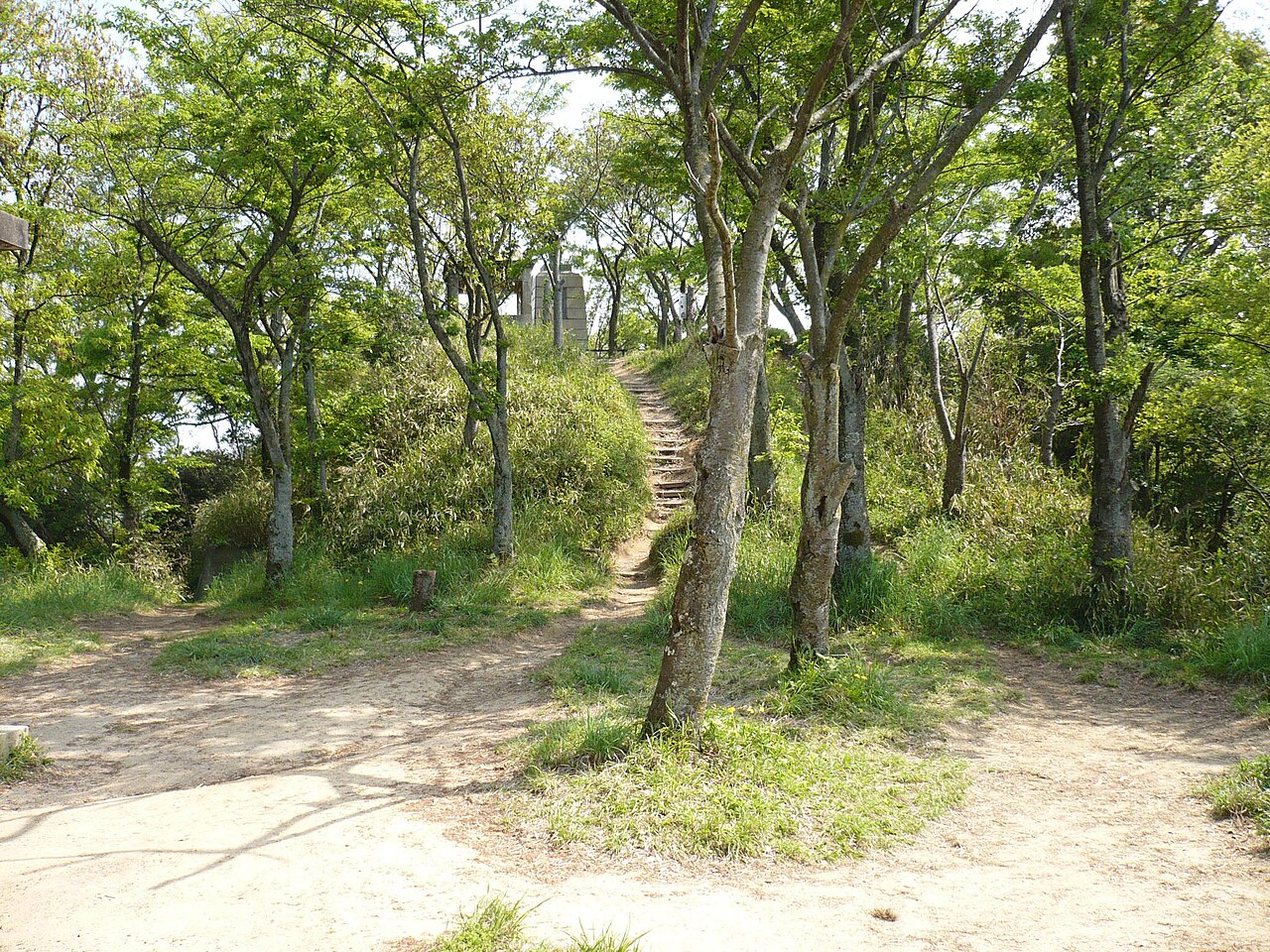
Iimoriyama Castle (飯盛山城, Iimoriyama-jō) is a historically significant Sengoku period mountain-top castle located in Osaka Prefecture, Japan. Constructed in the 14th century, it occupies a strategic position atop a 315.9-meter mountain, providing commanding views of the surrounding terrain. This elevated location was typical for Japanese mountain castles, known as yamajiro, which were designed to leverage natural defenses and difficult access routes.The castle served as the original power base for the influential Miyoshi clan, a prominent samurai family during the turbulent Sengoku era. The Miyoshi clan utilized Iimoriyama Castle as a stronghold to consolidate their control over the region and as a defensive position against rival clans. The castle's position and fortifications played a critical role in their military strategies.Historical context and significanceDuring the Sengoku period (mid-15th to early 17th century), Japan was fragmented into numerous feudal domains often engaged in conflict. Iimoriyama Castle was constructed in the Late Medieval period, a time when mountain castles became increasingly important for defense and control of territories. The Miyoshi clan rose to prominence in the 16th century, using Iimoriyama as their base before expanding influence into the Kansai region.The castle witnessed several conflicts and power struggles typical of the era, including clashes with rival clans such as the Oda and the Ashikaga shogunate forces. Its location on a mountain made it difficult to besiege, although it eventually fell as political tides shifted during the unification of Japan under Oda Nobunaga and later Toyotomi Hideyoshi.Architectural features and layoutIimoriyama Castle exemplifies the characteristics of a yamajiro or mountain castle, built primarily for defense rather than comfort or grandeur. The castle's ruins reveal remnants of stone walls and terraced enclosures that adapted to the mountain's natural contours. Defensive features likely included earthen ramparts, moats carved into the rock, and narrow paths designed to slow enemy advances.The castle complex would have contained watchtowers, gates, and residential quarters for the lord and retainers, though these structures have not survived intact. The natural terrain supplemented man-made fortifications, making the castle a formidable defensive site during its operational period.Strategic advantages of the mountain locationPositioned at over 300 meters in elevation, Iimoriyama Castle commanded extensive views over the surrounding valleys and routes. This vantage point allowed early warning of approaching enemies and control over key transportation corridors. The steep slopes and dense forest around the castle further enhanced its defensive capabilities, forcing attackers to navigate difficult terrain under defensive fire.Decline and current stateFollowing the consolidation of power in Japan under the Tokugawa shogunate in the early 17th century, many mountain castles like Iimoriyama were abandoned or dismantled as political stability reduced the need for such fortifications. Over time, natural erosion and human activity have reduced Iimoriyama Castle to archaeological ruins.Today, the site is recognized for its historical and cultural value, attracting visitors interested in Japan's feudal history and castle architecture. Although much of the original structure no longer stands, the ruins provide valuable insight into Late Medieval Japanese military architecture and the strategic use of terrain in castle design.Visiting Iimoriyama CastleThe castle ruins are accessible to hikers and history enthusiasts, with trails leading to the summit where the castle once stood. Visitors can explore the remains of defensive earthworks and stone foundations while enjoying panoramic views of Osaka Prefecture. Interpretive signage at the site helps contextualize the castle's history and importance.Visiting hours and access may vary seasonally, and it is recommended to check local information before planning a trip. The site is generally free to visit, making it an attractive destination for those interested in Japan's Sengoku period and mountain castle heritage.Legacy of the Miyoshi clan and Iimoriyama CastleThe Miyoshi clan played a significant role in the Sengoku period's complex political landscape. Their use of Iimoriyama Castle as a base underscores the importance of mountain castles in regional power struggles. The castle's ruins stand as a testament to the clan's historical influence and the military architecture of the time.While no extensive structures remain, archaeological studies continue to reveal details about the castle's construction techniques and the lifestyle of its occupants. Iimoriyama Castle remains an important cultural heritage site, reflecting Japan's feudal past and the strategic ingenuity of its builders.

Late Medieval (14th–15th c.)
Details