Leap Castle
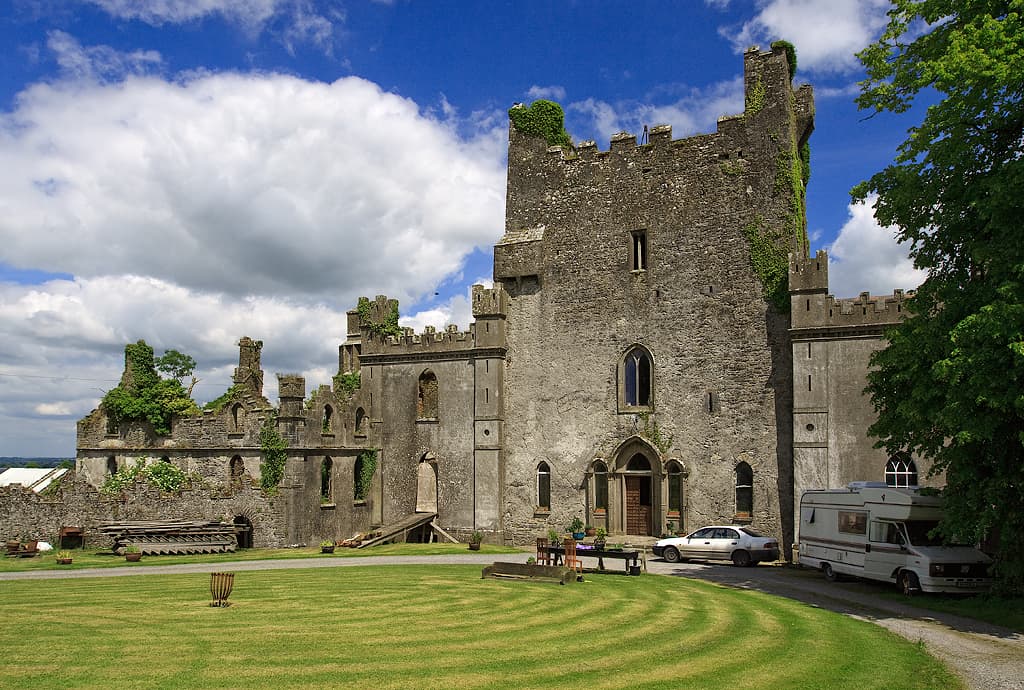
Leap Castle is a prominent 13th-century hill castle located in County Offaly, Ireland, near the town of Roscrea. The castle stands approximately 6 kilometres north of Roscrea and 10 kilometres south of Kinnitty along the R421 road, situating it within a historically rich region of the Irish midlands. Known for its imposing medieval architecture and turbulent past, Leap Castle is one of Ireland's most infamous castles, often associated with legends and ghost stories.
Historical background and origins
Leap Castle was constructed during the High Medieval period, with its origins tracing back to the 13th century. It was built by the ruling O'Bannon clan, who were a powerful Gaelic family in the region. The castle's strategic location on a hill provided a commanding view of the surrounding landscape, making it a formidable defensive stronghold during a time of frequent clan warfare and territorial disputes.
The castle's name, Caisleán Léim Uí Bhánáin in Irish, translates to "Castle of the Leap of the O'Bannons," referring to a legendary leap made by the clan's ancestors to escape enemies, symbolizing both the castle's defensive significance and its deep connection to local lore.
Architectural features and layout
Leap Castle exemplifies typical hill castle characteristics of the medieval era. Its design includes a robust keep or donjon, which served as the central fortified residence and last line of defense. The thick stone walls of the keep are punctuated by narrow slit windows, designed for archers to defend the castle while minimizing vulnerability.
The castle complex also features a courtyard enclosed by defensive walls, with remnants of ancillary buildings such as a chapel, great hall, and living quarters for the garrison and inhabitants. A notable architectural element is the presence of a dungeon, historically used for imprisoning captives and possibly associated with the castle's darker reputation.
Leap Castle's defensive structures include battlements and a gatehouse that controlled access to the interior. The castle's elevated position and natural rocky outcrops enhanced its defensibility against attackers. Although the castle suffered damage and periods of neglect, significant portions of its stonework remain intact, offering insight into medieval Irish castle construction.
Historical significance and events
Throughout its history, Leap Castle was a site of numerous clan conflicts and power struggles, particularly involving the O'Bannons and rival families such as the O'Carrolls. The castle was frequently besieged and changed hands multiple times during the medieval period.
In addition to its military role, Leap Castle held social and administrative importance as a seat of local power. The castle's chapel and great hall were centers for religious observance and clan gatherings.
Leap Castle is also infamous for its association with grisly events and legends. Stories of violent deaths, betrayals, and hauntings have contributed to its reputation as one of Ireland's most haunted castles. The so-called "Bloody Chapel" within the castle is linked to a particularly brutal murder, adding to the castle's eerie legacy.
Preservation and current status
Today, Leap Castle is classified as a partially preserved medieval structure. While it has undergone some restoration efforts, much of the castle remains in a state of ruin, with certain sections stabilized to prevent further decay. The castle is privately owned and has been opened to the public for guided tours, attracting visitors interested in its architecture and haunted history.
The castle's location in the Irish midlands makes it accessible for tourists exploring the region's rich heritage. Preservation efforts continue to focus on maintaining the structural integrity of the remaining walls and key features to allow future generations to appreciate this significant example of medieval Irish fortification.
Architectural style and influences
Leap Castle's architecture reflects typical High Medieval defensive design, with influences from Gaelic Irish castle-building traditions. The use of thick stone walls, narrow windows, and a central keep aligns with contemporary European castle construction methods of the 13th century.
The castle's chapel and interior spaces exhibit elements of early Gothic style, evident in the pointed arches and stone detailing, although these features are modest compared to larger ecclesiastical buildings of the period.
Visiting Leap Castle
Visitors to Leap Castle can explore the ruins and learn about its complex history through guided tours that highlight both the architectural features and the folklore surrounding the site. The castle's dramatic setting and storied past make it a compelling destination for those interested in medieval history and Irish heritage.
Frequently asked questions (FAQ)
- How do I get to Leap Castle?
- Leap Castle is located near Roscrea in County Tipperary, Ireland. It is easily accessible by car, with ample parking available on-site. Public transportation options are limited, so it is recommended to plan your visit by driving or arranging a taxi.
- What is the historical significance of Leap Castle?
- Leap Castle is known as one of the most haunted castles in Ireland, with a rich and tumultuous history dating back to the 15th century. It was the ancestral home of the O'Carroll clan and has witnessed many conflicts and tragedies, contributing to its eerie reputation. Today, it stands as a fascinating example of medieval architecture and Irish heritage.
- When was Leap Castle built?
- Leap Castle was originally constructed in the 15th century, although its site may have been occupied much earlier. The castle has undergone various renovations and restorations over the centuries, reflecting changes in architectural styles and the needs of its inhabitants. Its historical layers make it a captivating site for visitors interested in Ireland's past.
- Can I take a guided tour of Leap Castle?
- Yes, guided tours of Leap Castle are available, providing visitors with insights into its history, architecture, and haunting legends. The tours are led by knowledgeable guides who share fascinating stories and answer questions. It is advisable to check the castle's website for tour availability and to book in advance during peak tourist seasons.
- Why is Leap Castle considered haunted?
- Leap Castle is often referred to as one of the most haunted locations in Ireland due to numerous ghost sightings and chilling legends. Many visitors have reported encountering supernatural occurrences, particularly in the castle’s infamous "Bloody Chapel." This reputation adds an intriguing layer to its historical significance, attracting paranormal enthusiasts and curious tourists alike.
- Is it possible to explore the grounds of Leap Castle?
- Yes, visitors are welcome to explore the grounds of Leap Castle, which include beautiful gardens and stunning views of the surrounding countryside. While the interior of the castle may have restricted access, the outdoor areas are perfect for walking and taking photographs. Be sure to respect any posted guidelines to ensure a safe and enjoyable visit.
- What are the opening hours for Leap Castle?
- Leap Castle typically opens to visitors from March to October, with specific hours that may vary depending on the season. During peak months, the castle may stay open longer to accommodate tourists. It's best to check the official website or contact the castle directly for the most up-to-date information on opening hours.
- What are the ticket prices for visiting Leap Castle?
- Ticket prices for Leap Castle vary depending on the type of tour and the age of the visitor. Generally, adult tickets are priced modestly, while discounts may be available for children, seniors, and groups. Always check the official website for current pricing and any special offers or events that may be occurring during your visit.
- What nearby attractions can I visit while in Roscrea?
- While visiting Leap Castle, you can also explore other nearby attractions such as the historic Roscrea Castle and the picturesque Damer House. The area is rich in natural beauty, with opportunities for hiking and enjoying the scenic Irish countryside. Many visitors also enjoy discovering local shops and cafes in the charming town of Roscrea.
Photo gallery

Information
Featured in
Articles on the Castlopedia blog that feature Leap Castle.
Loading map...
Visitor reviews
No reviews yet. Been here? Write the first review and help other travelers!
Write the first reviewVisited this castle? Share your experience
Your review helps other travelers and adds first-hand knowledge to our encyclopedia.