Ballaghmore Castle
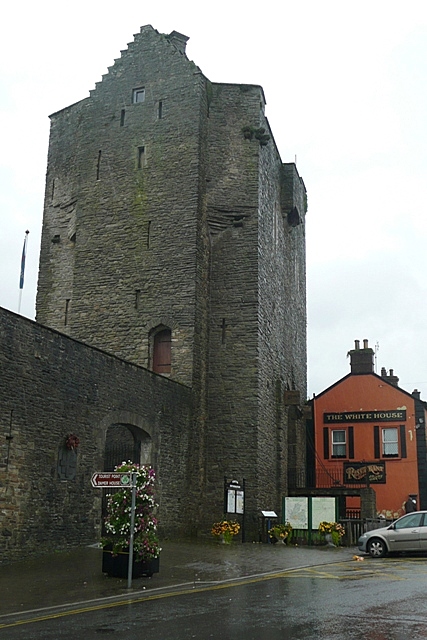
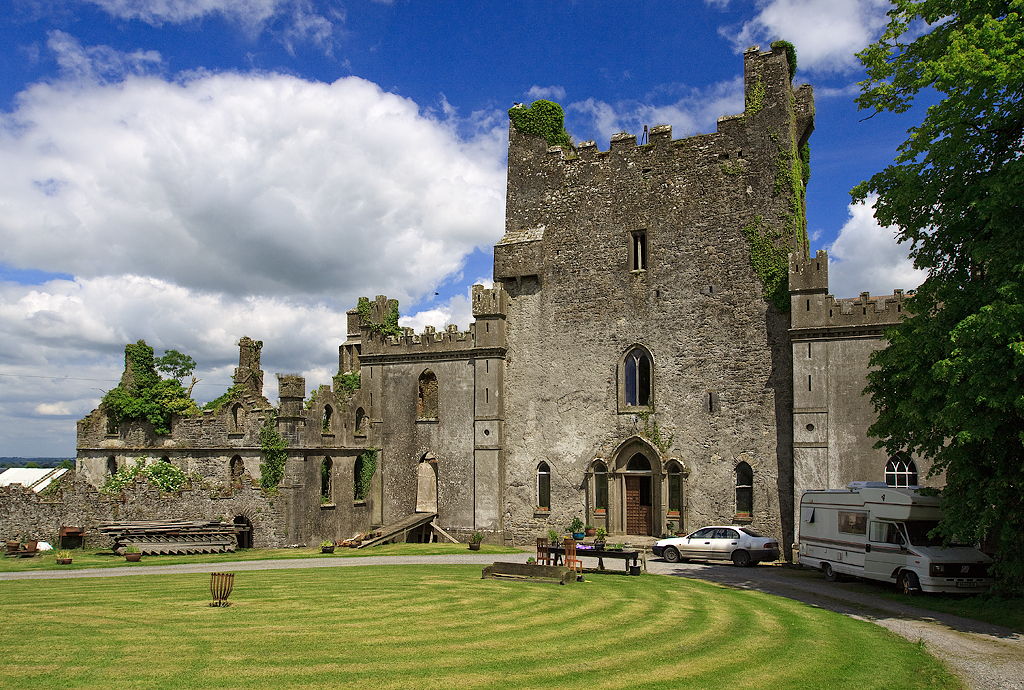
Ballaghmore Castle stands as a remarkable example of a late medieval Irish tower house, located near the town of Borris-in-Ossory in Northern Ireland. Constructed in 1480 by the chieftain of the Mac Giolla Phádraig clan, also known as the FitzPatrick family, the castle embodies the defensive and residential architecture typical of the period. Its name, derived from the nearby ancient roadway An Bealach Mór or "the great way," highlights its strategic importance in controlling access towards the kingdom of Munster and overseeing surrounding lands.
Historical context and significance
The Mac Giolla Phádraig clan traced their lineage to the "Sons of the Servant of Saint Patrick," linking the family to early Irish Christian traditions. The castle served as a stronghold for the clan during a turbulent era in Irish history, witnessing significant events such as the Cromwellian conquest of Ireland in the mid-17th century. In 1647, Ballaghmore Castle was attacked and damaged by forces loyal to Oliver Cromwell, reflecting the broader conflict between Irish chieftains and English parliamentary forces during this period.
In the 19th century, the castle entered a new phase when it was purchased by Mr. Ely in 1836. Ely undertook restoration efforts and during this time uncovered a hoard of gold, which brought considerable attention to the site. However, Ely's plans to inhabit the castle were cut short when he was killed by local farmers who were opposed to his actions. Subsequently, the castle was repurposed as a grain storage facility, marking a shift from its original defensive and residential functions.
Despite periods of neglect and disrepair, Ballaghmore Castle remains unique as the only inhabited fortress within the historic barony of Upper Ossory. The surrounding lands were historically home to prominent local families, including the Kehoe, O’Grady, Gilmartin, Rigney, Phelan, Delaney, and Maher clans, who shared in the region's cultural and historical developments alongside the castle.
Architectural features and layout
Ballaghmore Castle is a classic example of a stone tower house, a prevalent form of fortified residence in late medieval Ireland. Built using traditional masonry techniques of the 15th century, the structure is designed to provide both defense and habitation. The castle's vertical emphasis, thick stone walls, narrow windows, and battlements are characteristic of tower houses intended to withstand sieges and control the surrounding territory.
The castle is situated in a scenic area near mountains, enhancing its strategic vantage point. Its layout typically includes multiple floors with vaulted chambers, defensive features such as machicolations, and a strong entrance protected by a fortified doorway. These architectural elements underscore the castle's role as a seat of power and a refuge for the FitzPatrick clan.
The sheela-na-gig carving
One of Ballaghmore Castle's most distinctive and culturally significant features is the Sheela-na-Gig carving located on a corner stone of the outer front wall. This grotesque figure depicts an emaciated female with exaggerated genitalia and a contorted facial expression. Sheela-na-Gigs are widely interpreted as fertility symbols and representations of the cycle of life and death. In Celtic tradition, such carvings were believed to ward off evil spirits and protect buildings from malevolent supernatural forces.
While Sheela-na-Gigs were once common throughout Ireland and Britain during the medieval period, many were destroyed or removed in later centuries, particularly during the Victorian era. The survival of this carving at Ballaghmore Castle provides a rare and valuable link to the spiritual and cultural beliefs of medieval Ireland, emphasizing the castle's connection to local folklore and religious practices.
Changes in use and preservation efforts
Following its initial role as a fortified residence, Ballaghmore Castle experienced various changes in function and condition. The 19th-century restoration by Mr. Ely reflects early efforts to preserve the structure, although his untimely death curtailed these plans. The castle's subsequent use as a grain store indicates a practical adaptation to changing economic circumstances in the region.
By the late 20th century, the castle had again fallen into disrepair until it was purchased by its current owner in 1990. Since then, preservation efforts have helped maintain the castle as an inhabited structure, ensuring that many of its original architectural features, including the Sheela-na-Gig, remain visible and accessible to visitors and historians alike.
Today, Ballaghmore Castle stands not only as a monument to the turbulent history of medieval and early modern Ireland but also as a testament to the resilience of Irish heritage and architecture. Its continued habitation and preservation contribute to the cultural landscape of Northern Ireland and offer valuable insights into the region's past.
Information
Website
Visit websiteSources & official resources
Verify the information above using these authoritative references.
Loading map...
Visitor reviews
No reviews yet. Been here? Write the first review and help other travelers!
Write the first reviewVisited this castle? Share your experience
Your review helps other travelers and adds first-hand knowledge to our encyclopedia.