Khanzad Castle
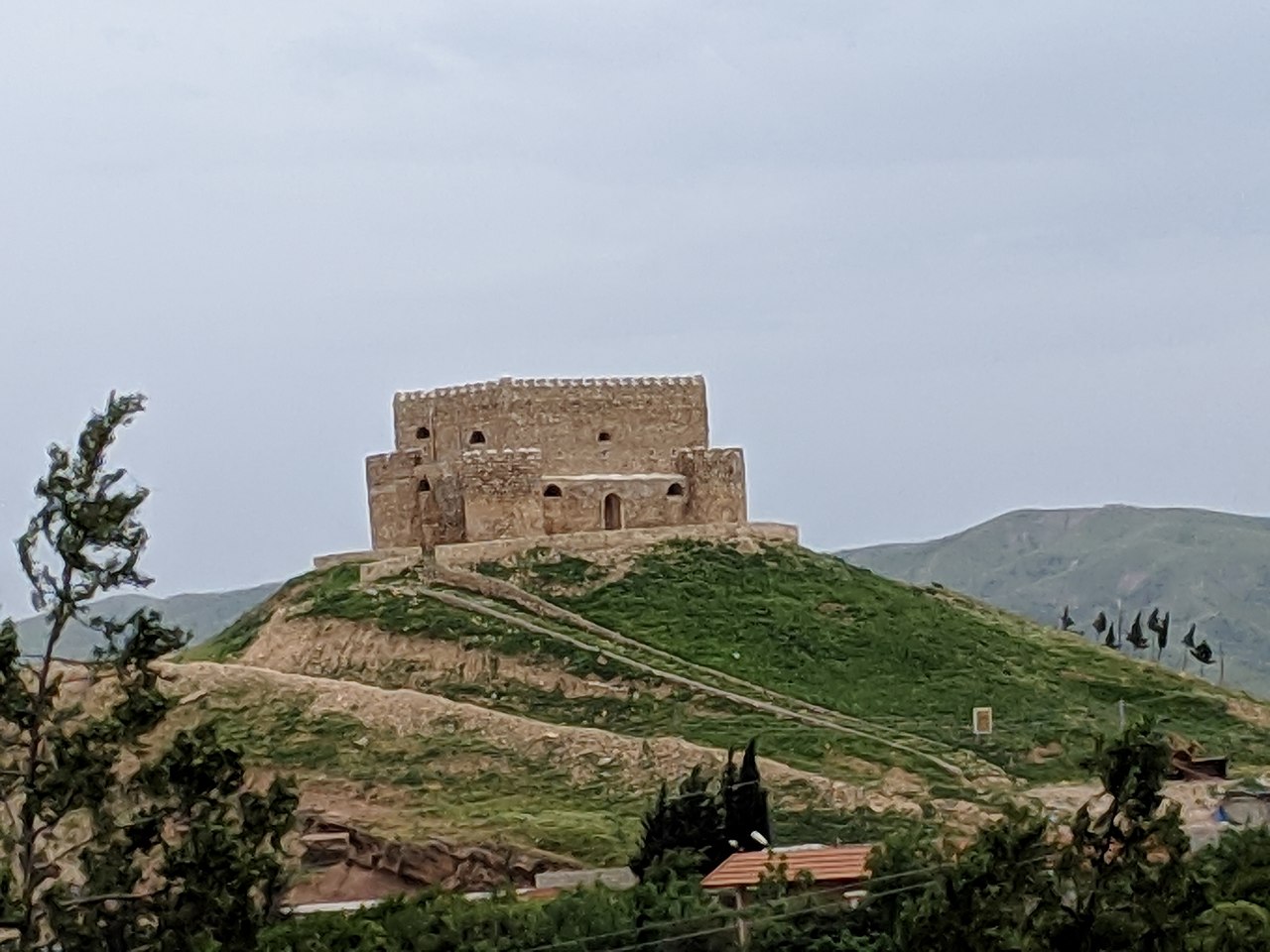
Khanzad Castle, also known as Banaman Citadel, stands prominently on a hilltop overlooking the expansive Harir plains in the region now known as the Erbil Governorate in Iraq. This bastioned fortress was constructed under the directive of Mir Khanzad, a notable female ruler who governed the two districts of Harir and Soran. The castle's strategic location atop the hill provided commanding views of the surrounding landscape, making it a formidable military and administrative center during its time.
Historical context and significance
The castle dates back to the late 16th or early 17th century, a period marked by the complex political dynamics of the Ottoman Empire in the region. Khanzad was the sister of Mir Sulaiman (or Sleman), the ruler of the Soran Emirate under Ottoman suzerainty. After the suspicious death of Mir Sulaiman, who was reportedly poisoned by Lashkry, one of his military commanders, Khanzad assumed control of the Emirate, a rare example of female leadership in a predominantly male-dominated era and region.
The assassination led to Lashkry fleeing to the Sinjar (Shengal) Mountains, while Khanzad consolidated power and maintained control over the Emirate. Her rule is a significant chapter in the history of Kurdish governance and resistance during Ottoman rule.
Architectural features and fortress design
Khanzad Castle exemplifies the characteristics of a bastioned fortress, a style that incorporates angled bastions projecting outward from the main walls to provide defensive coverage against attackers. The fortifications were designed to withstand sieges and artillery attacks, which were increasingly common during the period of its construction.
The castle's walls are robust and thick, constructed from local stone materials, and include multiple bastions that allowed defenders to cover all approaches. The elevated position of the castle enhanced its defensive capabilities, making it difficult for enemies to mount successful assaults.
Inside the fortress, there would have been various functional spaces including garrison quarters, storage rooms, command halls, and possibly residential chambers for Mir Khanzad and her court. The design reflects a blend of military necessity and administrative function, typical of regional fortresses of the time.
Khanzad's leadership and legacy
Mir Khanzad's assumption of power following her brother's death marks a notable moment in the history of the region. As a female leader, she navigated the challenges of ruling a frontier emirate under the shadow of the Ottoman Empire. Her leadership helped maintain stability and control over the districts of Harir and Soran during a turbulent period.
The castle itself stands as a testament to her authority and the military and political significance of the Soran Emirate during her reign. Though detailed historical records of her rule are limited, Khanzad's legacy endures through the castle that bears her name and the stories of her governance.
Current condition and cultural importance
Today, Khanzad Castle remains a prominent historical site in the Erbil Governorate. While the fortress has endured the test of time, it is recognized as a valuable cultural and architectural heritage site, reflecting the history of Kurdish leadership and Ottoman-era fortifications.
Preservation efforts are important to maintain the structural integrity of the castle and to promote its historical significance to visitors and scholars alike. The site attracts those interested in military architecture, Kurdish history, and the complex interplay of regional powers in early modern Mesopotamia.
Visiting Khanzad Castle
Visitors to Khanzad Castle can explore the impressive bastioned walls and enjoy panoramic views of the Harir plains. The site offers a unique glimpse into the region's past and the role of female leadership in Kurdish history. While facilities may be limited, the castle's location and historical significance make it a compelling destination for cultural tourism in Iraq.
Exploring the castle provides an opportunity to appreciate the architectural ingenuity of bastioned fortresses and to reflect on the turbulent history of the Soran Emirate under Ottoman influence.
Frequently asked questions (FAQ)
- When was Khanzad Castle built?
- Khanzad Castle was built in the late 16th or early 17th century during the period of Ottoman influence in the region.
- Who was Mir Khanzad?
- Mir Khanzad was the sister of Mir Sulaiman, ruler of the Soran Emirate, who took control after her brother's death and ruled the districts of Harir and Soran.
- What type of fortress is Khanzad Castle?
- Khanzad Castle is a bastioned fortress, designed with projecting bastions for improved defense against attacks.
- Where is Khanzad Castle located?
- Khanzad Castle is located on a hilltop in Banaman, overlooking the Harir plains in the Kurdistan Region of Iraq.
- Is Khanzad Castle open to visitors?
- Khanzad Castle is accessible to visitors who wish to explore its historic walls and enjoy views of the surrounding plains, though facilities may be limited.
Information
Loading map...
Visitor reviews
No reviews yet. Been here? Write the first review and help other travelers!
Write the first reviewVisited this castle? Share your experience
Your review helps other travelers and adds first-hand knowledge to our encyclopedia.