Kanzad Castle
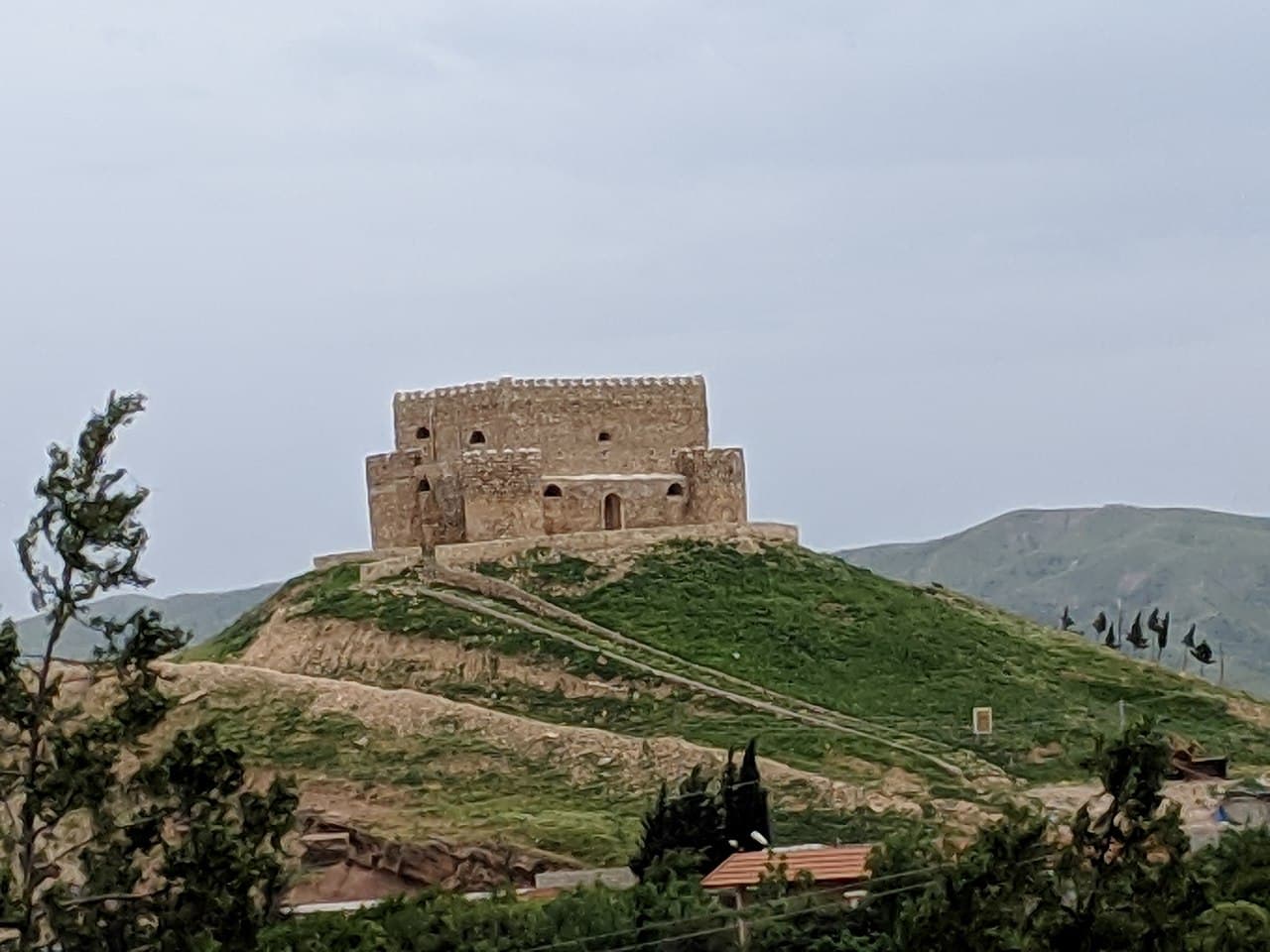
Kanzad Castle stands as a remarkable example of 16th-century Kurdish fortress architecture in the region of modern-day Iraq. Located within the municipality of Banaman, approximately 22 kilometers east of the city of Erbil, this hill castle was strategically positioned between Pir Mam Mountain and Kanzad Mountain. Its elevated placement atop a hill allowed for commanding views of the surrounding terrain and the vital road connecting Erbil and Shaqlawa, underscoring its importance as both a military stronghold and a residence.
The castle was commissioned by Mir Xanzad, a notable female leader of the Kurdish Soran Emirate, during the late 16th century. Mir Xanzad's leadership was exceptional for the time, and she played a crucial role in consolidating Kurdish power in the region. Naming the fortress after herself, she established Kanzad Castle as a symbol of her authority and as a defensive bastion to protect the capital city of Erbil under her rule.
Historical significance and context
The construction of Kanzad Castle marked a significant phase in the history of Kurdish fortifications. During the late medieval period, the Kurdish emirates faced numerous challenges from neighboring powers, making the establishment of strong defensive structures essential. Kanzad Castle was part of a network of fortresses built by Mir Xanzad to secure her territories and maintain control over key routes.
Unlike many other castles attributed to Mir Xanzad, which have succumbed to the ravages of time, Kanzad Castle has remained remarkably well preserved. Its endurance provides valuable insights into the architectural techniques and defensive strategies employed by Kurdish builders during this period. The castle's preservation was formally recognized in 2007 when local authorities registered it as a protected heritage site, ensuring its conservation for future generations.
Architectural features and design
Materials and construction
Kanzad Castle was constructed primarily from stone and gypsum, materials chosen for their durability and availability in the region. The solid masonry work has contributed significantly to the fortress's longevity, allowing much of the original structure to survive intact over more than four centuries.
Layout and structural elements
The fortress rises to an approximate height of 40 meters and comprises two main floors. This dual-level design reflects a combination of military and residential functions, with spaces adapted for both defense and winter habitation. The castle's layout includes four bastion-shaped towers, which are rounded defensive projections extending from the main walls. These bastions enhanced the fortress's ability to repel attackers by providing overlapping fields of fire and eliminating blind spots.
The walls and towers are arranged to maximize surveillance and control over the surrounding landscape, particularly the crucial road between Erbil and Shaqlawa. The strategic placement of the bastions and the castle's elevated position made it a formidable obstacle to any advancing forces.
Role in Kurdish heritage and culture
Kanzad Castle holds a special place in Kurdish cultural memory as a symbol of past sovereignty and resilience. It represents the legacy of Mir Xanzad, one of the few female Kurdish rulers known for her political and military leadership. The fortress is often cited among Kurdish communities as tangible evidence of historical autonomy and regional strength.
Beyond its military and residential functions, Kanzad Castle serves as a cultural landmark that continues to inspire Kurdish identity and pride. Its preservation allows for ongoing archaeological study and public education about the medieval history of Kurdistan and the broader region.
Preservation and modern status
Today, Kanzad Castle is recognized as a well-preserved example of late 16th-century Kurdish fortress architecture. Its registration as a heritage site has helped protect it from neglect and damage. The castle's structural integrity remains largely intact, with minimal alterations or ruinous decay, making it a valuable resource for historians and visitors alike.
Local historians and archaeologists emphasize the importance of Kanzad Castle as both a monument and an archaeological site. Its survival provides critical information on the construction techniques, defensive features, and living conditions of Kurdish fortresses during the reign of Mir Xanzad. This makes Kanzad Castle not only a historical relic but also an enduring symbol of Kurdish cultural heritage.
Frequently asked questions (FAQ)
- When was Kanzad Castle built and by whom?
- Kanzad Castle was built in the late 16th century by Mir Xanzad, a prominent female leader of the Kurdish Soran Emirate.
- Where is Kanzad Castle located?
- The castle is located approximately 22 kilometers east of Erbil in the municipality of Banaman, Iraq, situated on a hill between Pir Mam Mountain and Kanzad Mountain.
- What are the main architectural features of Kanzad Castle?
- The castle features four bastion-shaped towers, two main floors, and is constructed primarily from stone and gypsum, designed for both defense and winter habitation.
- Why is Kanzad Castle significant to Kurdish heritage?
- Kanzad Castle symbolizes Kurdish sovereignty and resilience, representing the leadership of Mir Xanzad and serving as a cultural landmark of Kurdish identity.
- Is Kanzad Castle well preserved?
- Yes, Kanzad Castle is remarkably well preserved compared to other fortresses from the same era, maintaining much of its original structure and architectural integrity.
Photo gallery

Information
Loading map...
Visitor reviews
No reviews yet. Been here? Write the first review and help other travelers!
Write the first reviewVisited this castle? Share your experience
Your review helps other travelers and adds first-hand knowledge to our encyclopedia.