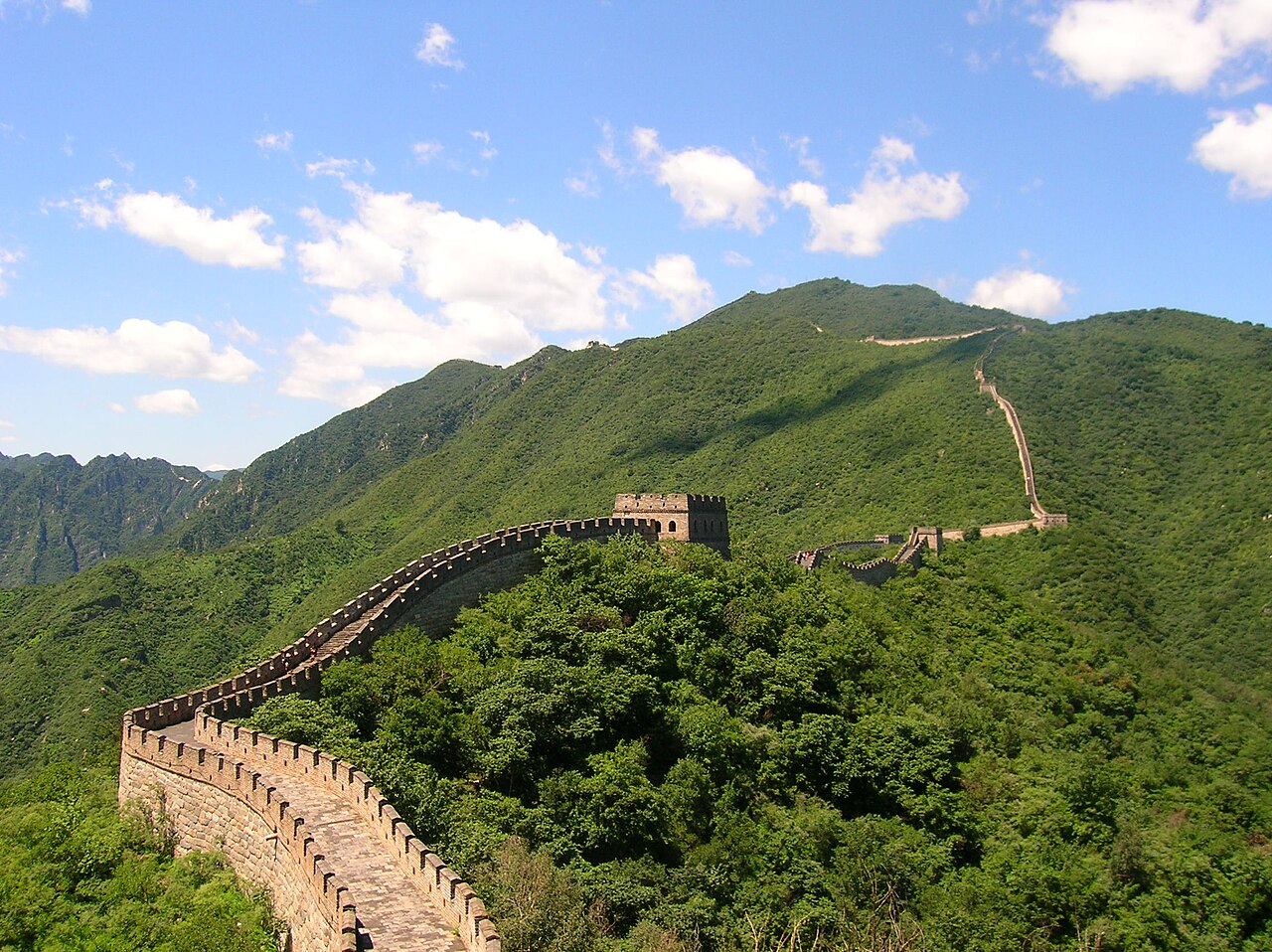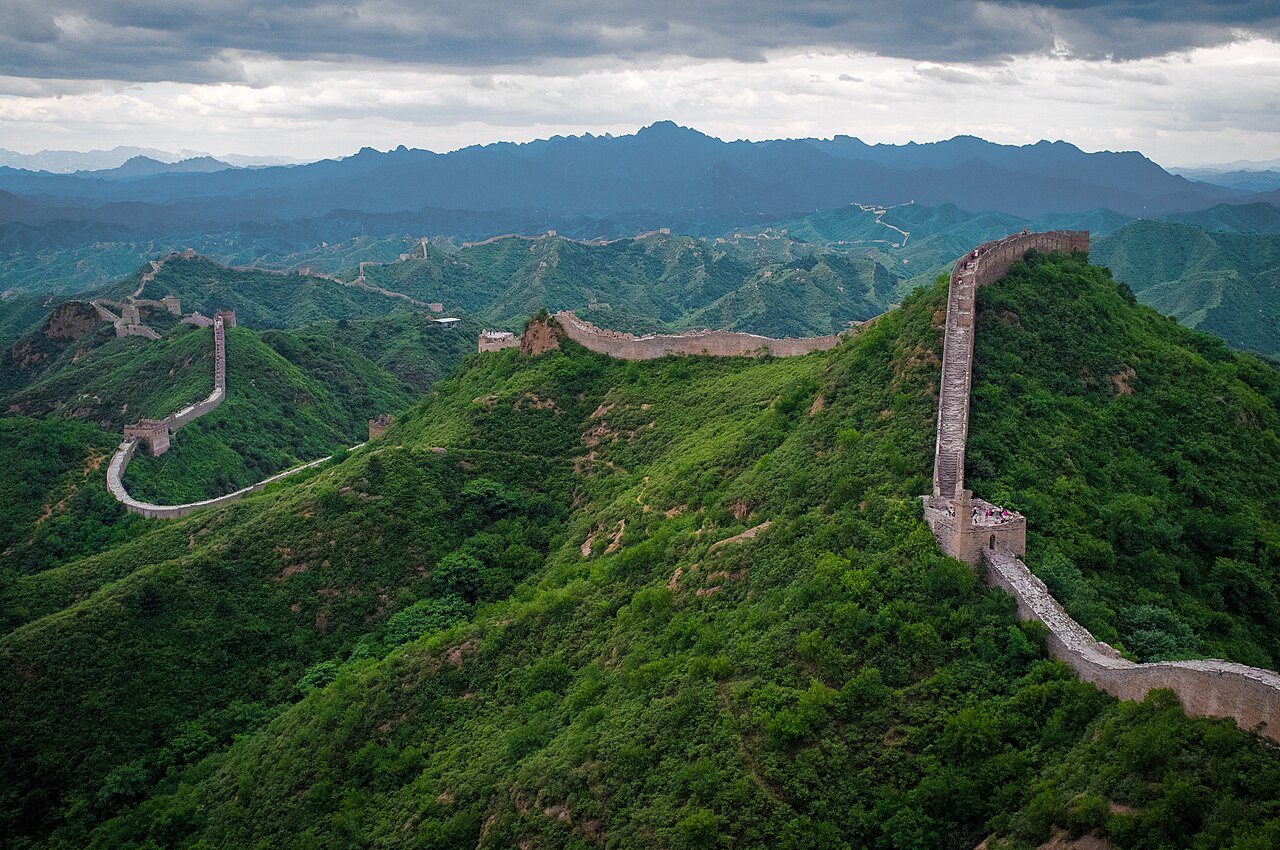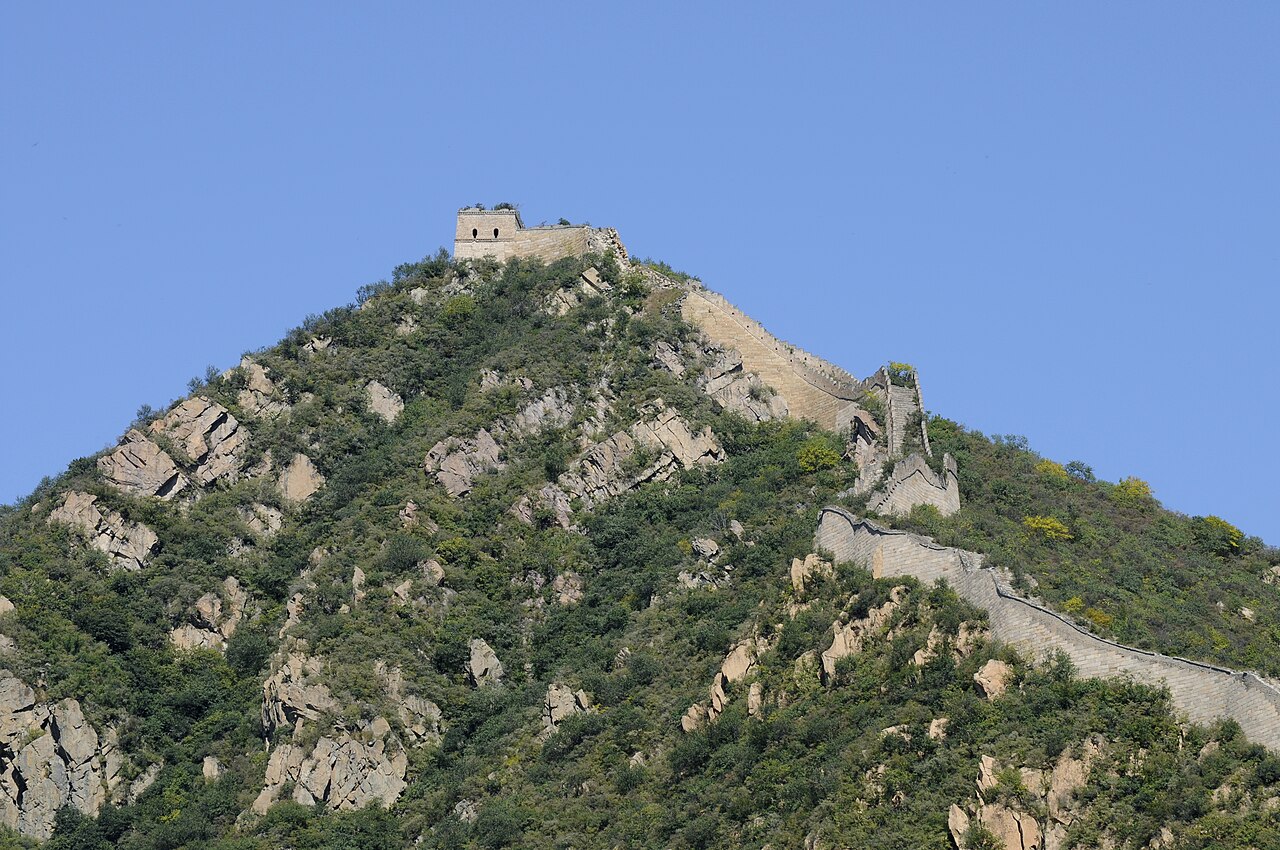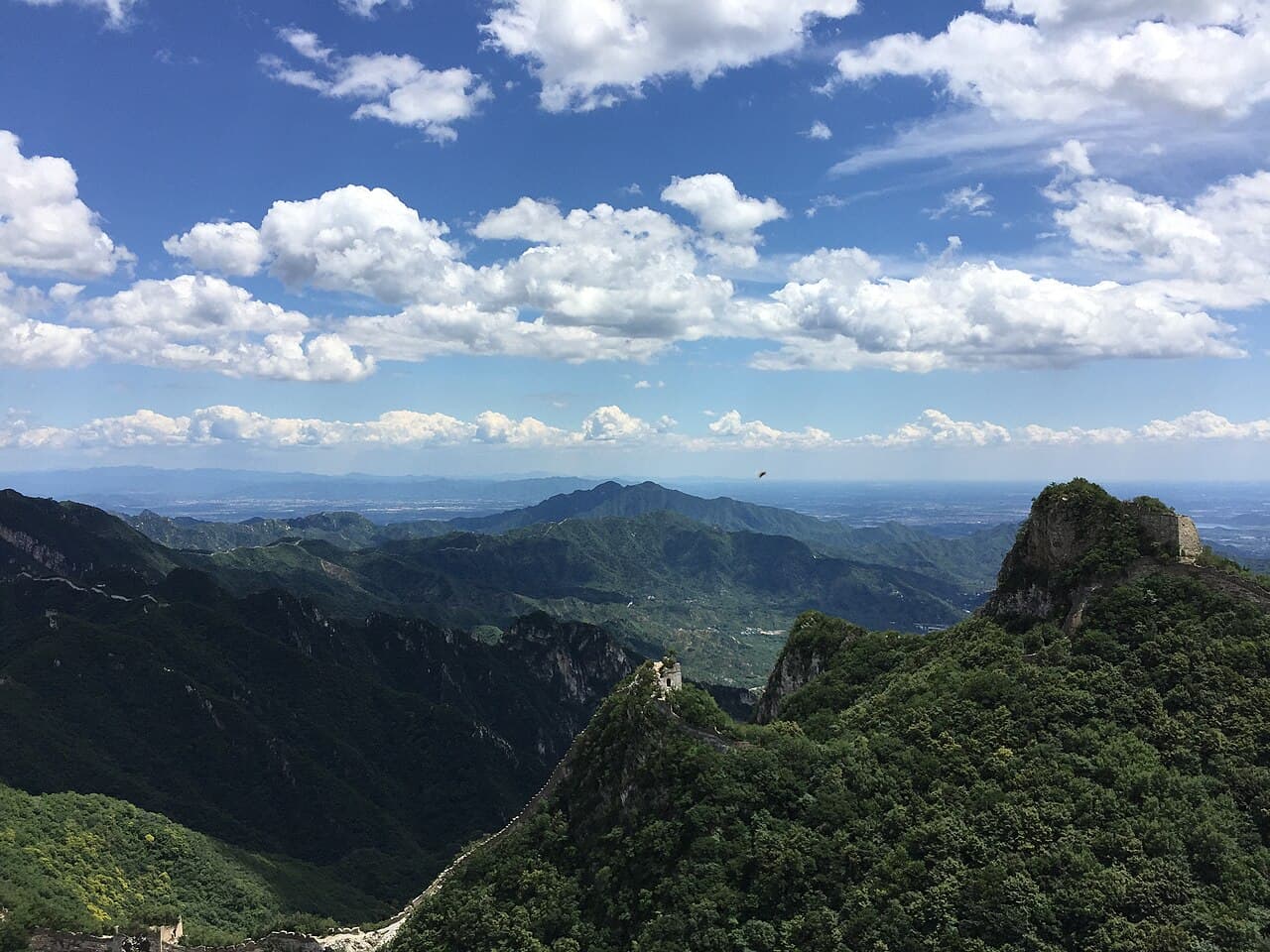
Jiankou (Chinese: 箭扣; pinyin: Jiànkòu) is a striking and historically significant section of the Great Wall of China, renowned for its dramatic natural setting and challenging terrain. The name "Jiankou" translates to "Arrow Nock," inspired by the mountain ridge's shape resembling an arrow with a collapsed ridge that looks like the notch where an arrow is placed on a bow. This section extends approximately 20 kilometers and is situated about 73 kilometers north of Beijing in the Huairou District, nestled between the popular Mutianyu and Moshikou sections of the Great Wall.
Constructed during the 14th century in the late medieval period, Jiankou represents a vital part of the Great Wall's defensive network built under the Ming dynasty. Unlike many other restored sections, Jiankou remains largely unrestored, preserving its original rugged and wild character. The wall here follows a steep and precipitous mountain ridge, making it one of the most challenging and visually dramatic stretches of the Great Wall. The terrain includes sharp inclines, crumbling watchtowers, and precarious battlements, all contributing to its reputation as a demanding yet rewarding hike for adventurous visitors and experienced climbers.
Historical significance and construction
The Jiankou section was constructed primarily during the Ming dynasty (1368–1644), a period marked by extensive fortification efforts to protect the northern borders of China from invasions by nomadic tribes. The wall's design in this area takes advantage of the natural topography, with the steep mountain ridges providing a formidable natural defense. The construction involved local materials such as limestone and granite, shaped into walls, watchtowers, and battlements that blend with the rugged landscape.
Jiankou's watchtowers and battlements were strategically positioned to allow for signaling and defense, although many of these structures have fallen into ruin due to centuries of weathering and lack of maintenance. Despite this, the section offers invaluable insight into the original construction techniques and military architecture of the Ming era.
Architectural features and natural environment
Wall structure and watchtowers
The wall at Jiankou is characterized by its steep ascent and descent along the mountain ridge, with sections of wall that are narrow and precariously perched. The watchtowers, once used for surveillance and communication, are now mostly in ruins but remain iconic features of the landscape. Their placement on high points allowed for visual contact with adjacent towers, facilitating the transmission of smoke or fire signals.
Natural landscape and hiking challenges
The surrounding landscape is rugged and steep, with the wall weaving through dense forests and rocky outcrops. This natural setting enhances the dramatic appearance of Jiankou but also presents significant risks. The wall's condition, with many collapsed sections and eroded battlements, requires hikers to be cautious and experienced. The area is popular among photographers and those seeking an off-the-beaten-path experience of the Great Wall, as it remains largely untouched by modern restoration efforts.
Preservation concerns and tourism impact
Jiankou's lack of restoration contributes to its picturesque yet dangerous condition. Natural erosion, weathering, and human activity such as unregulated tourism and vandalism have accelerated the deterioration of this section. Conservation efforts face challenges due to the difficult terrain and the desire to maintain the wall's authentic appearance.
The section was temporarily closed in 2020 due to the COVID-19 pandemic, reflecting broader impacts on tourism. Visitors are advised to take precautions and respect preservation guidelines when exploring Jiankou to help protect this historic and fragile site.
Access and visitor information
Jiankou is accessible from Beijing via the Huairou District, with several hiking routes connecting it to neighboring sections like Mutianyu. The hike is recommended for experienced adventurers due to the steep and unstable conditions. There are no formal facilities or extensive tourist infrastructure on-site, emphasizing the need for preparation and caution.
Visitors interested in exploring Jiankou should plan for a physically demanding experience and consider guided tours for safety. The best times to visit are during spring and autumn when the weather is mild, and the natural scenery is particularly striking.
Frequently asked questions (FAQ)
- How do I get to Jiankou from Beijing?
- Jiankou is located about 73 kilometers north of Beijing in the Huairou District. Visitors can reach it by car or bus, often via routes that also serve the Mutianyu Great Wall section. It's recommended to arrange transportation in advance due to the remote location.
- What should I expect when hiking Jiankou?
- The Jiankou section features steep, rugged terrain with many collapsed and unstable parts of the wall. It is suitable only for experienced hikers and climbers. Proper footwear and preparation are essential, and guided tours are recommended for safety.
- Is Jiankou suitable for family visits?
- Due to its dangerous and uneven terrain, Jiankou is not recommended for young children or those with limited mobility. Families should consider visiting more accessible sections of the Great Wall, such as Mutianyu, instead.
- When is the best time to visit Jiankou?
- Spring and autumn are the best seasons to visit Jiankou, offering mild weather and beautiful natural scenery. Summers can be hot and humid, while winters are cold and may bring snow, increasing hiking risks.
- Are there any facilities or services at Jiankou?
- Jiankou has minimal tourist infrastructure. There are no formal visitor centers or extensive facilities, so visitors should bring necessary supplies such as water, food, and first aid. Planning ahead is essential for a safe visit.
Photo gallery

Information
Loading map...
Visitor reviews
No reviews yet. Been here? Write the first review and help other travelers!
Write the first reviewVisited this castle? Share your experience
Your review helps other travelers and adds first-hand knowledge to our encyclopedia.