The Great Wall of China represents one of the most extensive and complex fortification systems ever constructed, spanning thousands of kilometers across northern China. Its primary function was to serve as a formidable defense line against invasions and raids by various nomadic groups from the Eurasian Steppe, including the Xiongnu and later the Mongols. The wall also played crucial roles in border control, immigration regulation, and trade management along the Silk Road.
Construction of the Great Wall began in the 7th century BC during the Warring States period, when individual Chinese states built separate walls to protect their territories. These early walls were primarily made of rammed earth and wood. The first major unification and connection of these walls occurred under the Qin dynasty (221–206 BC), when Emperor Qin Shi Huang ordered the linking and reinforcement of existing fortifications to consolidate his newly unified empire's northern frontier.
Architectural features and defensive structures
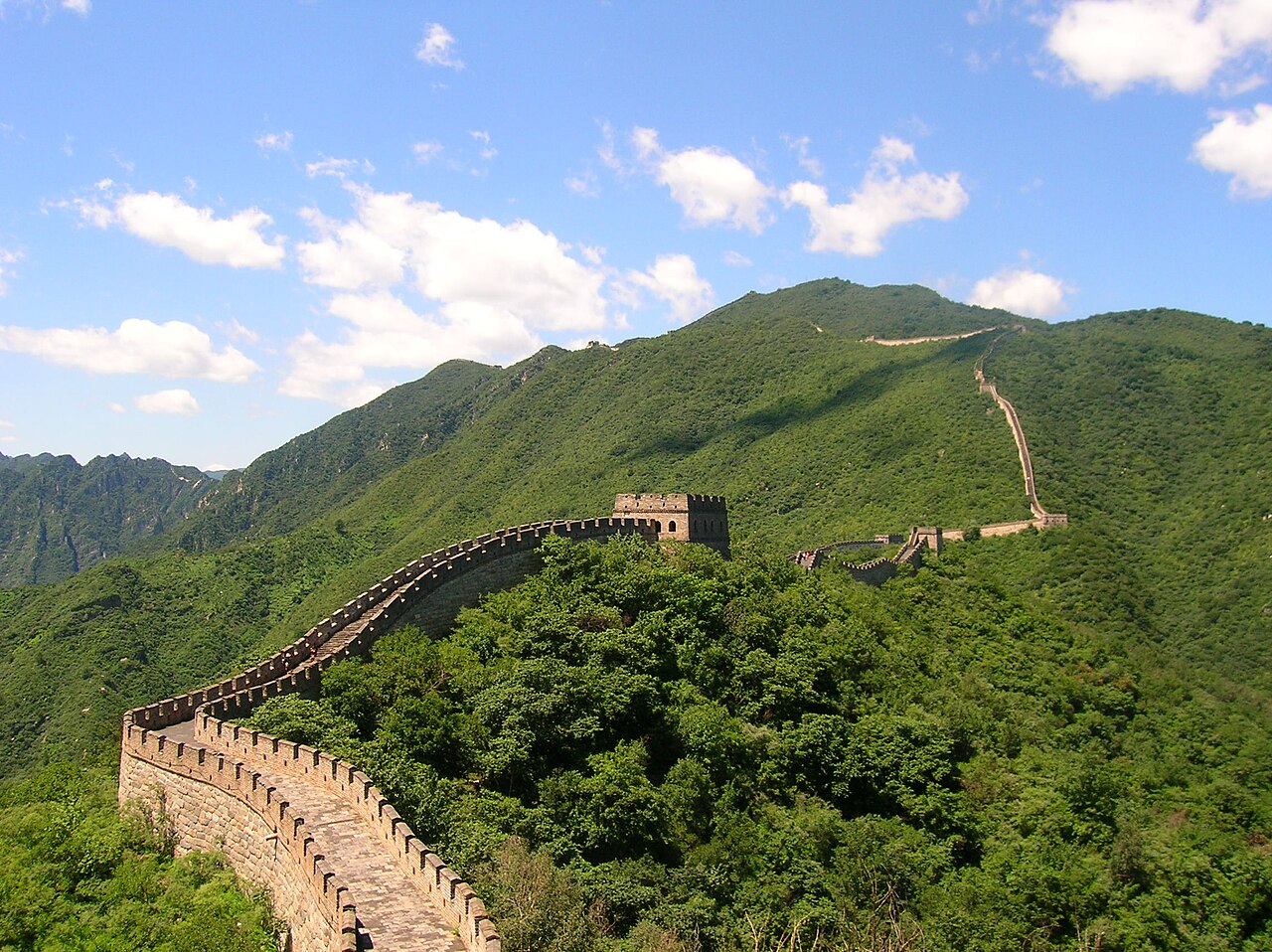
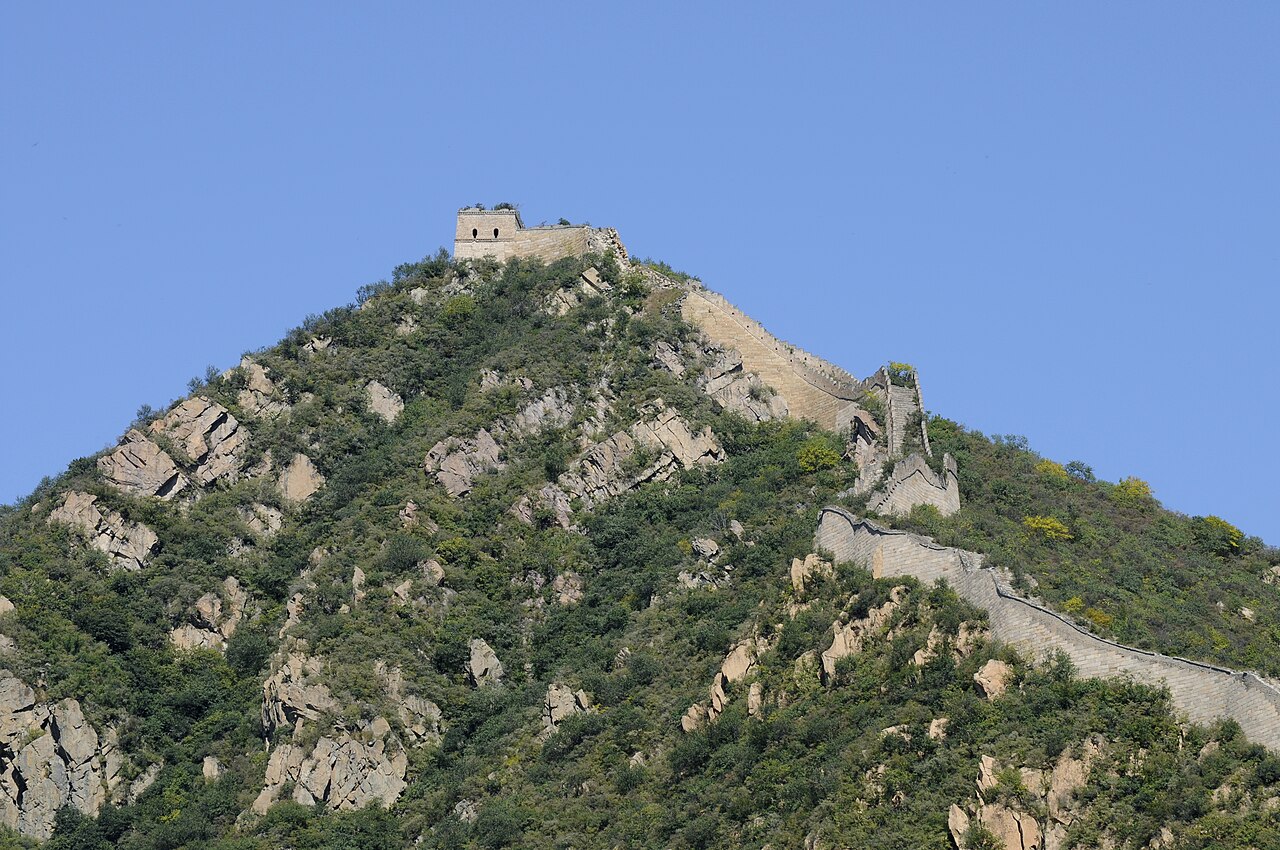
The Great Wall's design incorporates a variety of military architectural features that enhanced its defensive capabilities. Key among these are the numerous watchtowers strategically placed along the wall to provide surveillance and early warning signals. These towers allowed soldiers to communicate using smoke signals by day and fire signals by night, facilitating rapid transmission of information across vast distances.
The wall also included troop barracks and garrison stations to house soldiers tasked with manning the defenses. The battlements and parapets were constructed to provide cover for archers and infantry, while the wall's height and thickness varied according to the terrain and strategic importance of specific sections.
Materials and construction techniques
The materials used in construction varied widely depending on the region and era. Early walls used compacted earth and wood, while later sections, especially those built during the Ming dynasty (1368–1644), incorporated bricks and stone blocks. The Ming builders improved the wall's durability and defensive strength by using mortar and designing complex fortifications including fortress towers, gatehouses, and moats in some areas.
Historical development and expansions
Successive Chinese dynasties expanded and rebuilt the wall to respond to changing military threats. After the Qin dynasty, the Han dynasty (206 BC–220 AD) extended the wall westwards to protect the Silk Road trade routes. During the Northern Wei and later dynasties, repairs and additions were made, but many earlier walls fell into disrepair during periods of internal strife.
The most famous and best-preserved sections of the Great Wall were constructed during the Ming dynasty, which faced persistent threats from the Mongols and other northern tribes. The Ming fortifications are characterized by their robust stone and brick construction, extensive watchtowers, and elaborate defensive features designed for artillery and infantry defense.
Geographical extent and significance
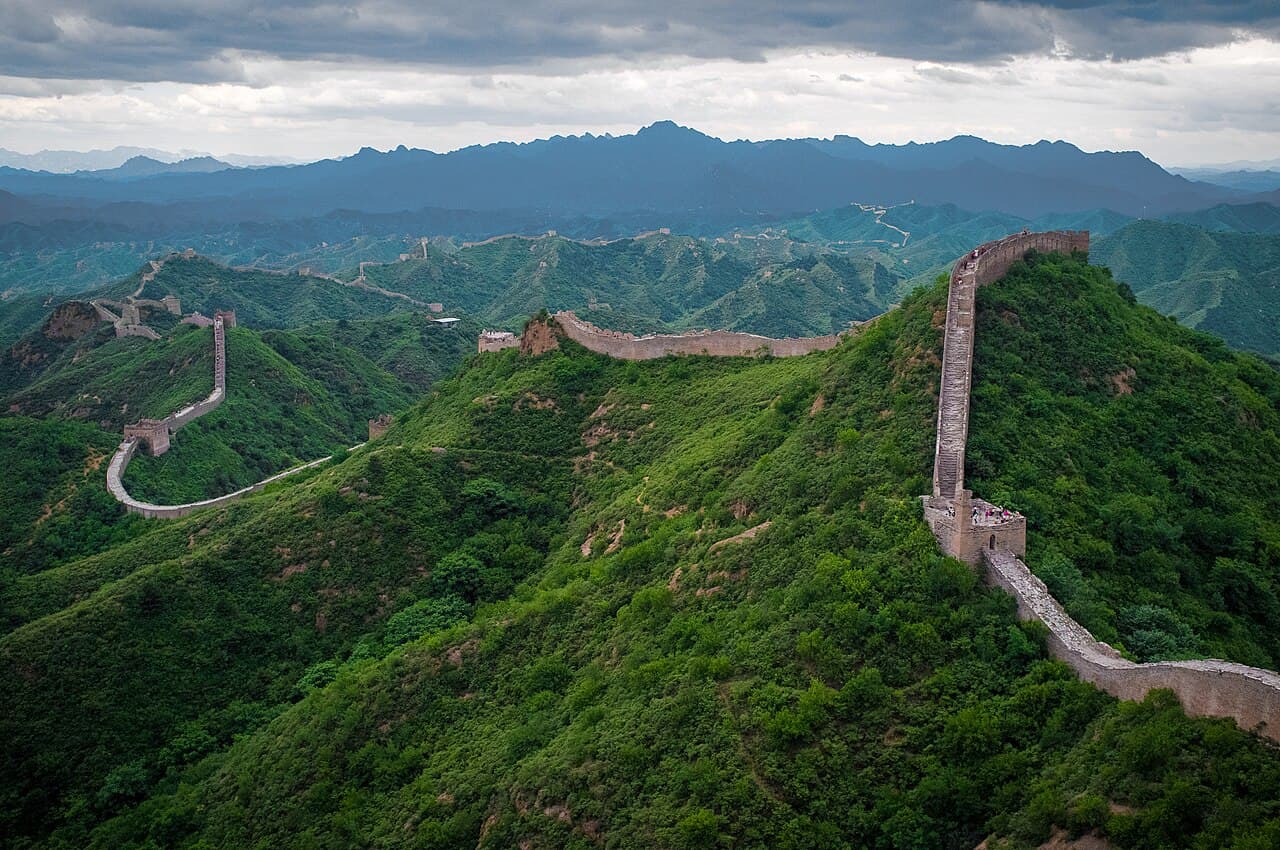
The Great Wall stretches from Liaodong in the east to Lop Lake in the west, forming an arc that roughly delineates the edge of the Mongolian steppe. Its total length is approximately 21,196 kilometers (13,170 miles), making it the longest wall structure in the world.
The wall traverses diverse landscapes including mountains, deserts, and plains, adapting its construction to the local environment. This vast scale and the engineering challenges involved make the Great Wall a remarkable architectural achievement.
Legacy and cultural importance
Today, the Great Wall of China is a UNESCO World Heritage Site and was recognized as one of the New 7 Wonders of the World in 2007. It serves as a symbol of China's historical strength, ingenuity, and cultural heritage. The wall attracts millions of visitors annually who come to witness its imposing presence and learn about its role in Chinese history.
Conservation efforts continue to preserve the wall, although many sections remain in varying states of preservation, ranging from well-maintained tourist areas to remote ruins. The Great Wall's enduring legacy lies not only in its military function but also in its impact on Chinese identity and its status as an iconic monument of human engineering.
Frequently asked questions (FAQ)
- What is the best time to visit the Great Wall of China?
- The best time to visit the Great Wall is during spring (April to June) and autumn (September to November) when the weather is mild and the crowds are smaller. These seasons offer clear skies and comfortable temperatures for hiking and sightseeing.
- Can I hike along the Great Wall of China?
- Yes, many sections of the Great Wall are open for hiking, ranging from well-preserved tourist areas to rugged, less-visited stretches. Popular sections for hiking include Badaling, Mutianyu, and Jinshanling.
- Is the Great Wall of China a UNESCO World Heritage Site?
- Yes, the Great Wall was designated a UNESCO World Heritage Site in 1987 due to its historical significance and architectural grandeur. It is recognized globally as an important cultural monument.
- How long is the Great Wall of China?
- The Great Wall stretches approximately 21,196 kilometers (13,170 miles) across northern China, making it the longest wall structure in the world.
- What defensive features does the Great Wall include?
- The Great Wall incorporates watchtowers, troop barracks, garrison stations, battlements, and signaling systems using smoke and fire. These features enabled effective surveillance and communication along the vast frontier.
Photo gallery

Information
Loading map...
Visitor reviews
No reviews yet. Been here? Write the first review and help other travelers!
Write the first reviewVisited this castle? Share your experience
Your review helps other travelers and adds first-hand knowledge to our encyclopedia.