Jaffa Gate — Palestine castle

Jaffa Gate

Jaffa gate, old city of jerusalem
Renaissance (15th–17th c.)
Well Preserved

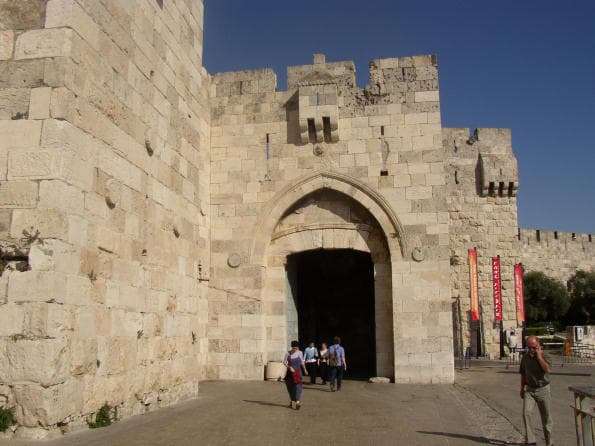
Jaffa Gate (Hebrew: שער יפו, romanized: Sha'ar Yafo; Arabic: باب الخليل, romanized: Bāb al-Khalīl, "Hebron Gate") is one of the seven main open gates of the Old City of Jerusalem. It is a prominent example of a Renaissance-era bastioned fortress gate constructed in the 16th century under Ottoman rule, specifically completed in 1538. The gate marks a significant historical and architectural landmark that has played a crucial role in the city's defense and urban development.

Architectural design and defensive features

The original Jaffa Gate was built as a fortified gate tower with a distinctive L-shaped entryway. This design was a common medieval defensive strategy aimed at slowing down and controlling access to the city. Attackers approaching the gate would be forced to make a sharp turn, exposing their flanks to defenders positioned on the walls and towers. The gate was secured at both the north and east ends with heavy wooden doors, enhancing its defensive capability.

The gate's outer entrance faces Jaffa Road, the historic route that connected the port city of Jaffa to Jerusalem. This road was the main thoroughfare for pilgrims and traders arriving from the Mediterranean coast, making Jaffa Gate a vital entry point into the city.

Historical context and modifications

The gate was constructed during the Ottoman period as part of a comprehensive rebuilding of Jerusalem's city walls ordered by Sultan Suleiman the Magnificent. The walls and gates, including Jaffa Gate, were designed to reflect contemporary military architecture influenced by Renaissance fortification principles, which included bastioned elements to improve resistance against artillery.

In 1898, a significant modification was made when the Ottoman authorities created a large breach in the city wall adjacent to the gate to the south. This opening was made to facilitate the entry of German Emperor Wilhelm II during his visit to Jerusalem, allowing him to enter the city in a ceremonial procession. The breach included a ramp that now serves as a vehicular access point into the Old City from the west, reflecting the adaptation of the historic structure to modern transportation needs.

Cultural and strategic significance

Jaffa Gate has long been a focal point of Jerusalem's urban life. Its strategic location on the western side of the Old City made it the main gateway for merchants, pilgrims, and travelers arriving from the Mediterranean coast. The gate's name derives from the city of Jaffa, the ancient port that served as the primary maritime gateway to Jerusalem.

The gate also holds cultural significance as a symbol of Jerusalem's layered history, representing the city's medieval past and its evolution through Ottoman rule into the modern era. It stands as a testament to the city's enduring importance as a religious and commercial center.

Current condition and visitor experience

Today, the Jaffa Gate remains a well-preserved example of Renaissance fortification architecture. The original gate structure is intact, showcasing the medieval defensive layout with its L-shaped passage and heavy doors, although the adjacent breach and ramp reflect later modifications.

The gate is a popular entry point for visitors exploring the Old City of Jerusalem. The surrounding area features bustling markets, historic buildings, and access to several important religious sites. Visitors can appreciate both the architectural features of the gate and its role in Jerusalem's complex history.

Frequently asked questions (FAQ)

What is Jaffa Gate?
Jaffa Gate is one of the most significant and historic entrances to the Old City of Jerusalem, located in the State of Palestine. It has served as a vital connection between the city and the coastal city of Jaffa for centuries, symbolizing the rich cultural and historical heritage of the region.
When was Jaffa Gate built?
Jaffa Gate was constructed in the 16th century during the Ottoman Empire's rule over Jerusalem. This architectural marvel was designed as part of the city's defensive walls, showcasing the strategic importance of the Old City throughout history.
Can I visit Jaffa Gate?
Yes, Jaffa Gate is open to visitors year-round, allowing you to explore its historical significance and stunning architecture. It serves as a gateway to the bustling markets and religious sites within the Old City, making it a must-visit location for tourists.
What are the opening hours for Jaffa Gate?
Jaffa Gate is accessible to the public at all hours, but it's advisable to visit during daylight for safety and to fully appreciate the surroundings. The nearby attractions and markets typically operate from early morning until evening, enhancing your visit.
Is it possible to take guided tours at Jaffa Gate?
Yes, guided tours are available for visitors interested in learning more about the history and significance of Jaffa Gate and the Old City. Many local tour companies offer informative experiences, allowing you to delve deeper into the rich heritage of the area.
What is the best time to visit Jaffa Gate?
The best time to visit Jaffa Gate is during the spring (March to May) and fall (September to November) when the weather is mild and pleasant. These seasons also attract fewer tourists, providing a more enjoyable experience as you explore the surroundings.
Are there any nearby attractions to Jaffa Gate?
Yes, Jaffa Gate is conveniently located near several notable attractions, including the Tower of David Museum and the vibrant markets of the Old City. You can easily explore iconic sites such as the Western Wall and the Church of the Holy Sepulchre, all within walking distance.
What are the ticket prices for visiting attractions near Jaffa Gate?
Most attractions near Jaffa Gate, including historical sites and museums, have varying ticket prices that are generally affordable. Be sure to check individual sites for specific pricing and any available discounts for students or groups.
Is Jaffa Gate accessible for individuals with disabilities?
Jaffa Gate has made efforts to improve accessibility for visitors with disabilities, including wheelchair access to certain areas. However, some parts of the Old City may still pose challenges due to uneven surfaces and narrow pathways, so plan accordingly to ensure a comfortable visit.

Photo gallery

Jaffa Gate
Click to view

Photo by Herwig Reidlinger•CC BY-SA 3.0

1 photo • Click any image to view in full screen

Information

Bastioned Fortress

Loading map...

Visitor reviews

No reviews yet. Been here? Write the first review and help other travelers!

Write the first review

Visited this castle? Share your experience

Your review helps other travelers and adds first-hand knowledge to our encyclopedia.
Write a review

(5/5)

0/2000 characters

Your review will be visible after admin approval

Nearby castles

0.2 km
Walls of Jerusalem — Israel castle

Walls of Jerusalem

, Israel

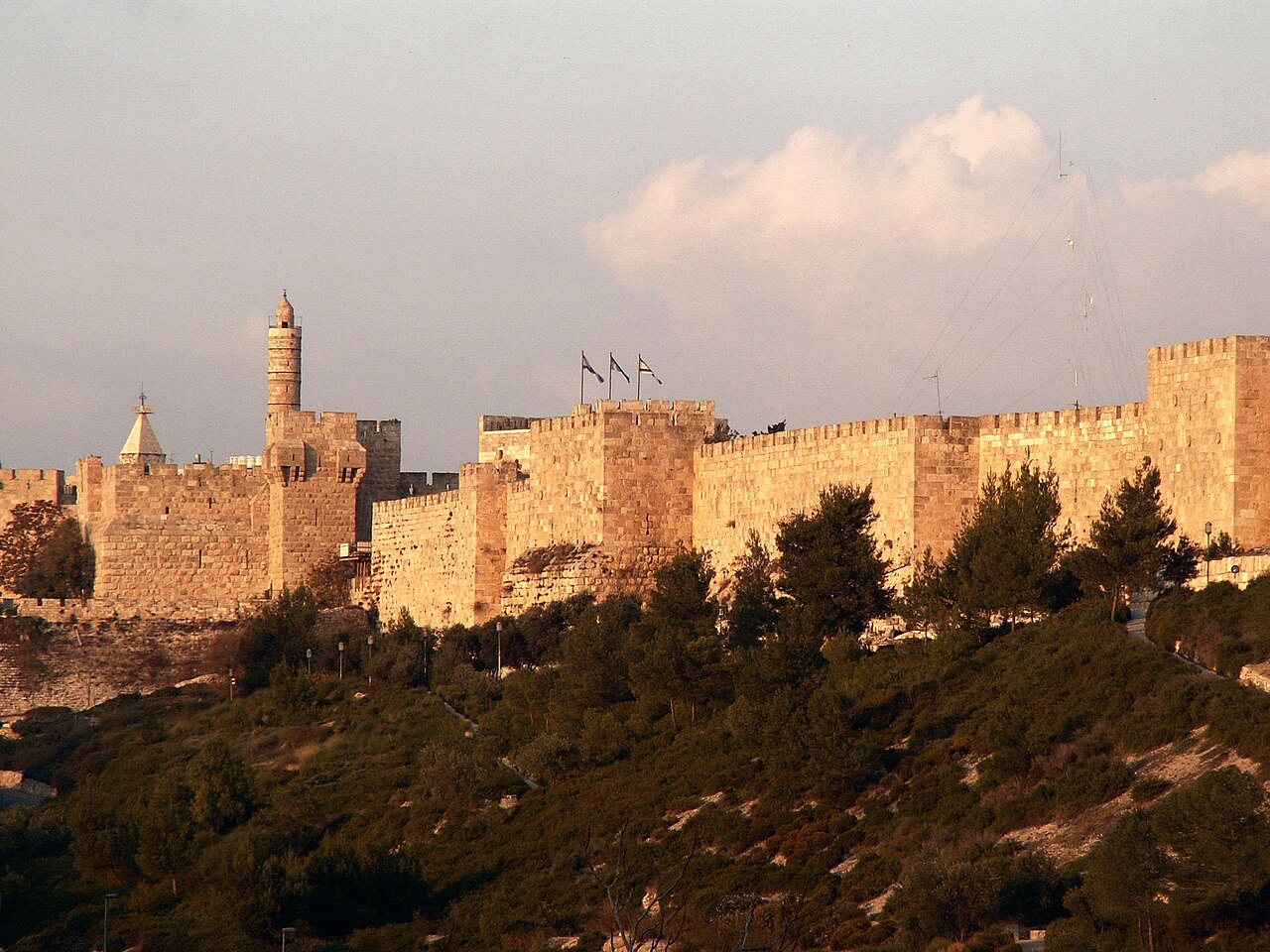
The Walls of Jerusalem are a defining feature of the Old City, enclosing an area of approximately one square kilometer. These fortifications, visible on maps for over five centuries, were rebuilt under the orders of Sultan Suleiman the Magnificent between 1537 and 1541 during the Ottoman Empire. Although the current walls date from the 16th century, they stand on the site of earlier fortifications, reflecting Jerusalem's long and complex history of defense and urban development. Architectural features of the walls The walls extend for 4,018 meters (2.497 miles) with an average height of 12 meters (39 feet) and thickness of around 2.5 meters (8.2 feet). Their robust construction includes 34 watchtowers strategically placed for surveillance and defense. The fortifications incorporate seven main gates which historically served as controlled entry points for traffic and commerce. Archaeological efforts have also reopened two minor gates, enhancing understanding of the city's historic access routes. Historical significance and preservation The walls have witnessed Jerusalem's turbulent history, including sieges, reconstructions, and cultural transformations. Their current form reflects the Early Modern Ottoman period rather than the Early Medieval era, as the original walls were largely in ruins before Sultan Suleiman's reconstruction. In 1981, the walls, along with the Old City, were inscribed on the UNESCO World Heritage Site list, recognizing their cultural and historical importance on a global scale. The tower of david citadel Located near the Jaffa Gate, the Tower of David, also called the Citadel, is an ancient fortress that complements the defensive role of the city walls. The present structure primarily dates to the Mamluk and Ottoman periods, but it is built atop layers of fortifications from the Hasmonean, Herodian, Byzantine, and Early Muslim periods. The citadel has endured multiple destructions and rebuildings, particularly during the Crusader era. Historical layers and architectural evolution Archaeologist Dan Bahat notes that the original Hasmonean towers were modified by Herod the Great, who replaced the northeastern tower with a larger structure that came to be known as the "Tower of David" from the 5th century CE onward. The name later shifted in the 19th century to the minaret on the opposite side of the citadel, and since 1967 it officially refers to the entire complex. Cultural and modern use Today, the Tower of David serves as a museum and cultural venue, hosting art exhibitions, concerts, and sound-and-light shows that draw visitors worldwide. It holds a special place in Israeli art history, known for the "Tower of David Period" in the 1920s when it was a hub for artistic activity. Strategic importance and urban context The walls and citadel together formed the core of Jerusalem's defense system, controlling access and providing protection against invaders. The fortifications reflect a blend of military architecture adapted to the city's topography and historical needs. Their preservation allows insight into Jerusalem's layered past, from ancient times through the Ottoman era to the present day. Gates and watchtowers The seven main gates of the walls include famous entrances such as the Jaffa Gate, Damascus Gate, and Zion Gate. Each gate has distinct architectural features and historical roles. The watchtowers, evenly spaced along the walls, provided vantage points for sentries to monitor the surrounding landscape and coordinate defense. Construction techniques and materials The walls were constructed using local limestone, a common building material in Jerusalem, lending the fortifications their characteristic pale hue. The thickness and height of the walls were designed to withstand artillery and siege tactics of the 16th century, incorporating bastioned elements for improved defense, consistent with contemporary military architecture. Visitor experience and cultural heritage Visitors to the Old City can walk along sections of the walls and explore the gates, gaining a tangible sense of the city's historic boundaries. The Tower of David Museum offers exhibitions on Jerusalem's history, archaeology, and cultural significance, enriching the visitor's understanding of the city's complex heritage. Unesco world heritage status The designation as a UNESCO World Heritage Site underscores the walls' universal value. It helps ensure ongoing conservation efforts and promotes awareness of Jerusalem's unique historical landscape. Access and tourism The walls and the Tower of David are major attractions within Jerusalem, accessible year-round with guided tours available. Their central location near key city landmarks makes them integral to cultural tourism and educational programs.

Post-Renaissance (17th–18th c.)
Details
0.4 km
Zion Gate — Israel castle

Zion Gate

, Israel

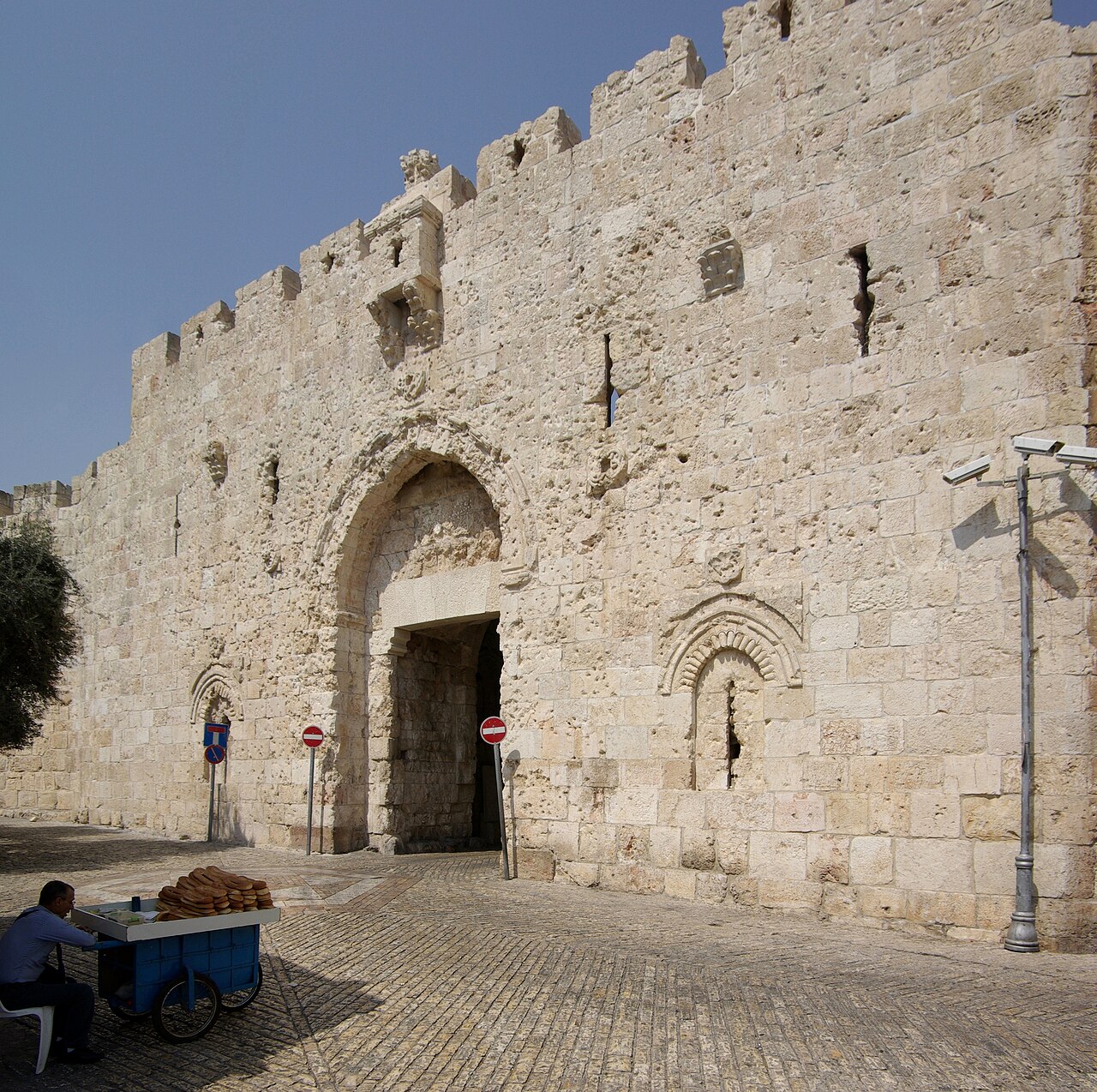
Zion Gate (Hebrew: שער ציון, Sha'ar Zion; Arabic: باب النبي داود, Bab an-Nabi Dawud, "Prophet David Gate"), also known as Bab Sahyun or Bab Harat al-Yahud, is one of the seven historic gates of the Old City of Jerusalem. This gate forms part of the ancient fortifications that have protected Jerusalem for centuries and serves as a significant cultural and historical landmark. Historical context and construction The Zion Gate was constructed in the 16th century during the Renaissance period under the rule of the Ottoman Empire. It was built as part of the comprehensive rebuilding and fortification of Jerusalem's city walls initiated by Sultan Suleiman the Magnificent between 1535 and 1542. The gate was designed as a bastioned fortress to strengthen the city's defenses against both external military threats and internal unrest. The gate's architecture reflects the military engineering advancements of the time, incorporating bastions—projecting parts of the fortification designed to allow defensive fire in multiple directions. This was a strategic improvement over earlier medieval walls, adapting to the increasing use of firearms and artillery in siege warfare. Architectural features and design Zion Gate is notable for its robust construction and distinctive features. The gate is built primarily of large, well-cut stones, characteristic of Ottoman masonry. It features a prominent arched entrance flanked by thick walls and bastions that extend outward, providing defensive advantages. The gate's design includes narrow slits and openings for archers and later for musketeers to defend the city effectively. The gate's interior and exterior walls bear marks of various historical conflicts, including bullet holes and damage from battles, particularly from the 1948 Arab-Israeli War. These scars serve as tangible reminders of the city's turbulent modern history. Strategic importance and historical events Located on the southern wall of the Old City, Zion Gate faces the Mount Zion area, a site of religious and historical significance. The gate provided access to the Jewish and Armenian quarters and was a critical point of entry during various periods. Throughout its history, Zion Gate has witnessed numerous sieges and battles. It played a significant role during the 1948 Arab-Israeli War, where fierce fighting occurred around the gate as control over the Old City was contested. The gate's fortifications were tested, and its resilience was a factor in the city's defense. Cultural significance and current status Today, Zion Gate remains an active and important entrance to the Old City of Jerusalem. It is a site of pilgrimage and tourism, attracting visitors interested in the city's layered history and architecture. The gate stands as a symbol of Jerusalem's enduring legacy and complex past. The gate is maintained as part of the city's historic preservation efforts. Visitors can observe the gate's architectural details and the historical marks left by centuries of conflict, providing a tangible connection to Jerusalem's multifaceted heritage. Visiting Zion Gate Visitors to Zion Gate can access the Old City through this historic entrance, which connects to significant religious and cultural sites nearby. The gate's location offers a gateway to exploring the Jewish and Armenian quarters, as well as proximity to Mount Zion and other landmarks. While the gate itself is open to the public, visitors are encouraged to respect the site's cultural and religious importance. Guided tours often include Zion Gate as part of broader explorations of Jerusalem's Old City walls and gates.

Renaissance (15th–17th c.)
Details
0.6 km
Dung Gate — Palestine castle

Dung Gate

Jerusalem, Palestine

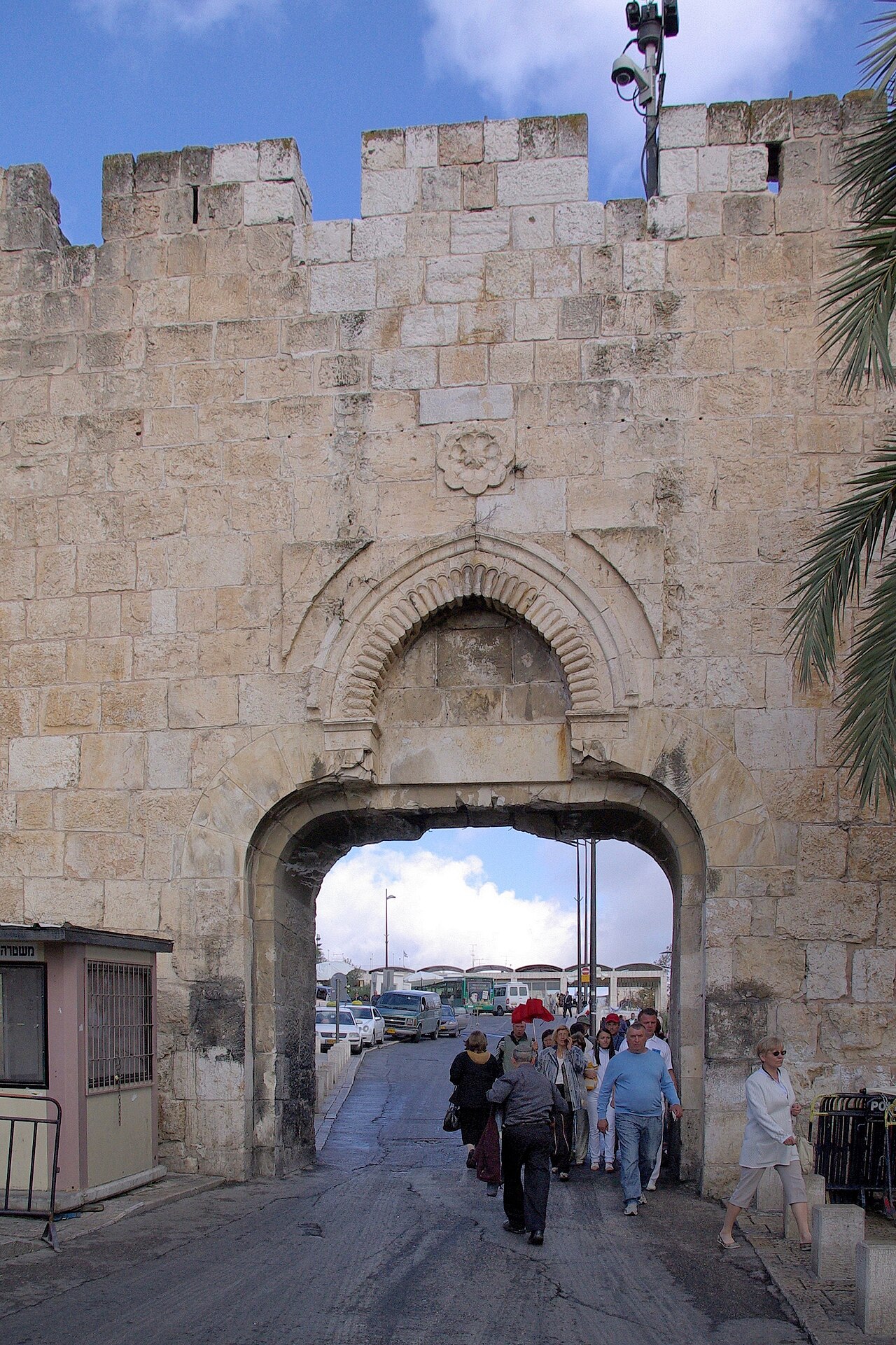
The Dung Gate (Hebrew: שער האשפות, romanized: Sha'ar Ha'ashpot), also known as Bab al-Maghariba (Arabic: باب المغاربة, romanized: Gate of the Maghrebis), Mughrabi Gate, Moroccan Gate, or Silwan Gate, is one of the historic gates of the Old City of Jerusalem. It was originally constructed in the 16th century during the Ottoman period as a small postern gate, forming part of the defensive bastioned fortress walls built by the Ottomans under Sultan Suleiman the Magnificent. This gate served as a secondary entrance primarily for waste removal, which is how it came to be known as the "Dung Gate." Historical background and strategic importance The Ottoman fortifications of Jerusalem were a comprehensive effort to modernize and strengthen the city's defenses, replacing earlier medieval walls with a more robust and angled bastioned fortress system. The Dung Gate was positioned on the southern side of the Old City walls, near the City of David and the Silwan neighborhood, providing access to the southern hill slopes. Its location made it strategically important for controlling movement into and out of the city, especially for traffic heading toward the Western Wall and the Temple Mount. Architectural features and modifications The gate was initially a narrow postern gate, typical of Renaissance-era Ottoman military architecture, designed to allow controlled access while maintaining the integrity of the city walls. The bastioned fortress style is characterized by angled walls and protruding bastions that allowed defenders to cover the approaches with crossfire, a significant improvement over earlier medieval curtain walls. In the 20th century, the Dung Gate underwent significant modifications to accommodate modern transportation needs. In 1952, under Jordanian administration, the gate was widened to allow vehicular traffic, reflecting the increasing importance of motor vehicles in urban mobility. Later, in 1985, Israeli authorities further expanded the gate to improve access for buses and larger vehicles, especially those transporting visitors to the Western Wall. Role in modern Jerusalem Today, the Dung Gate serves as the main entrance for vehicles exiting the Old City and is a critical access point for buses carrying pilgrims and tourists to the Western Wall, one of Judaism's holiest sites. Its proximity to the City of David archaeological site and the Silwan neighborhood also makes it a focal point for visitors interested in the ancient and modern history of Jerusalem. The gate's name, reflecting its original function related to waste disposal, contrasts with its current role as a bustling urban gateway, illustrating the evolution of Jerusalem's urban fabric over centuries. Preservation and cultural significance As part of the Old City walls of Jerusalem, the Dung Gate is a protected heritage site under various preservation efforts. Its Renaissance Ottoman bastioned fortress architecture is a testament to the military and urban planning innovations of the time. It remains a symbol of Jerusalem's layered history, bridging the medieval and modern eras.

Renaissance (15th–17th c.)
Details