Zion Gate
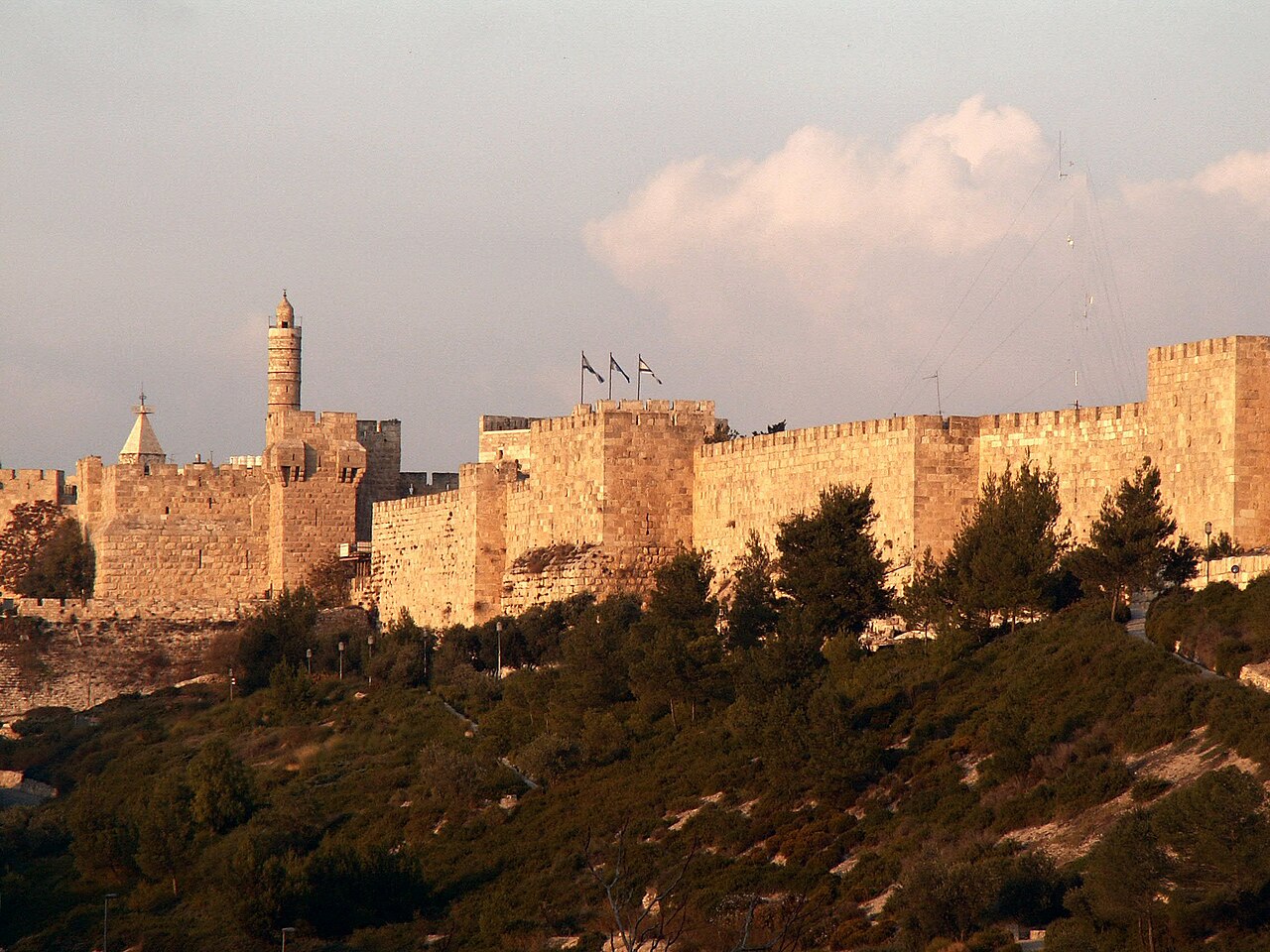
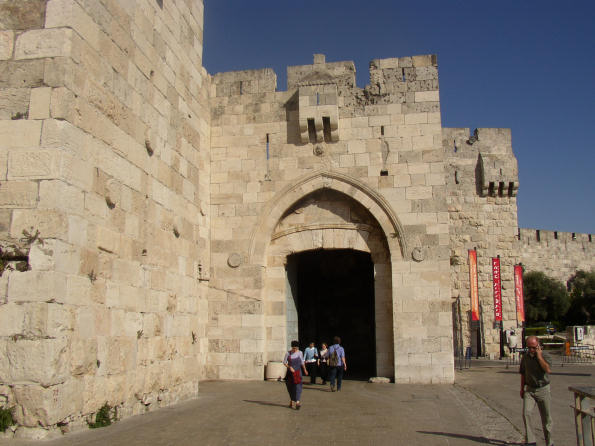
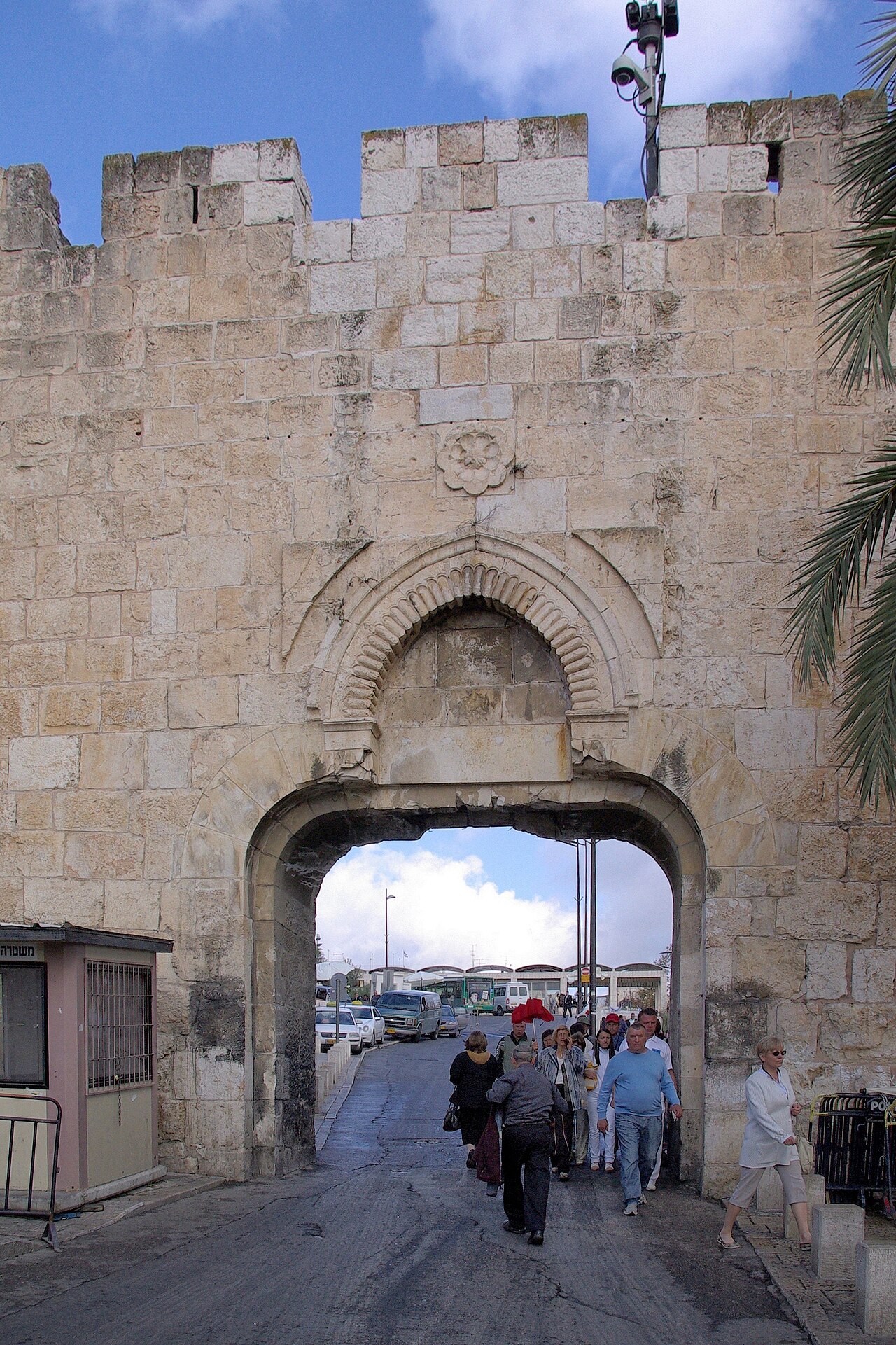
Zion Gate (Hebrew: שער ציון, Sha'ar Zion; Arabic: باب النبي داود, Bab an-Nabi Dawud, "Prophet David Gate"), also known as Bab Sahyun or Bab Harat al-Yahud, is one of the seven historic gates of the Old City of Jerusalem. This gate forms part of the ancient fortifications that have protected Jerusalem for centuries and serves as a significant cultural and historical landmark.
Historical context and construction
The Zion Gate was constructed in the 16th century during the Renaissance period under the rule of the Ottoman Empire. It was built as part of the comprehensive rebuilding and fortification of Jerusalem's city walls initiated by Sultan Suleiman the Magnificent between 1535 and 1542. The gate was designed as a bastioned fortress to strengthen the city's defenses against both external military threats and internal unrest.
The gate's architecture reflects the military engineering advancements of the time, incorporating bastions—projecting parts of the fortification designed to allow defensive fire in multiple directions. This was a strategic improvement over earlier medieval walls, adapting to the increasing use of firearms and artillery in siege warfare.
Architectural features and design
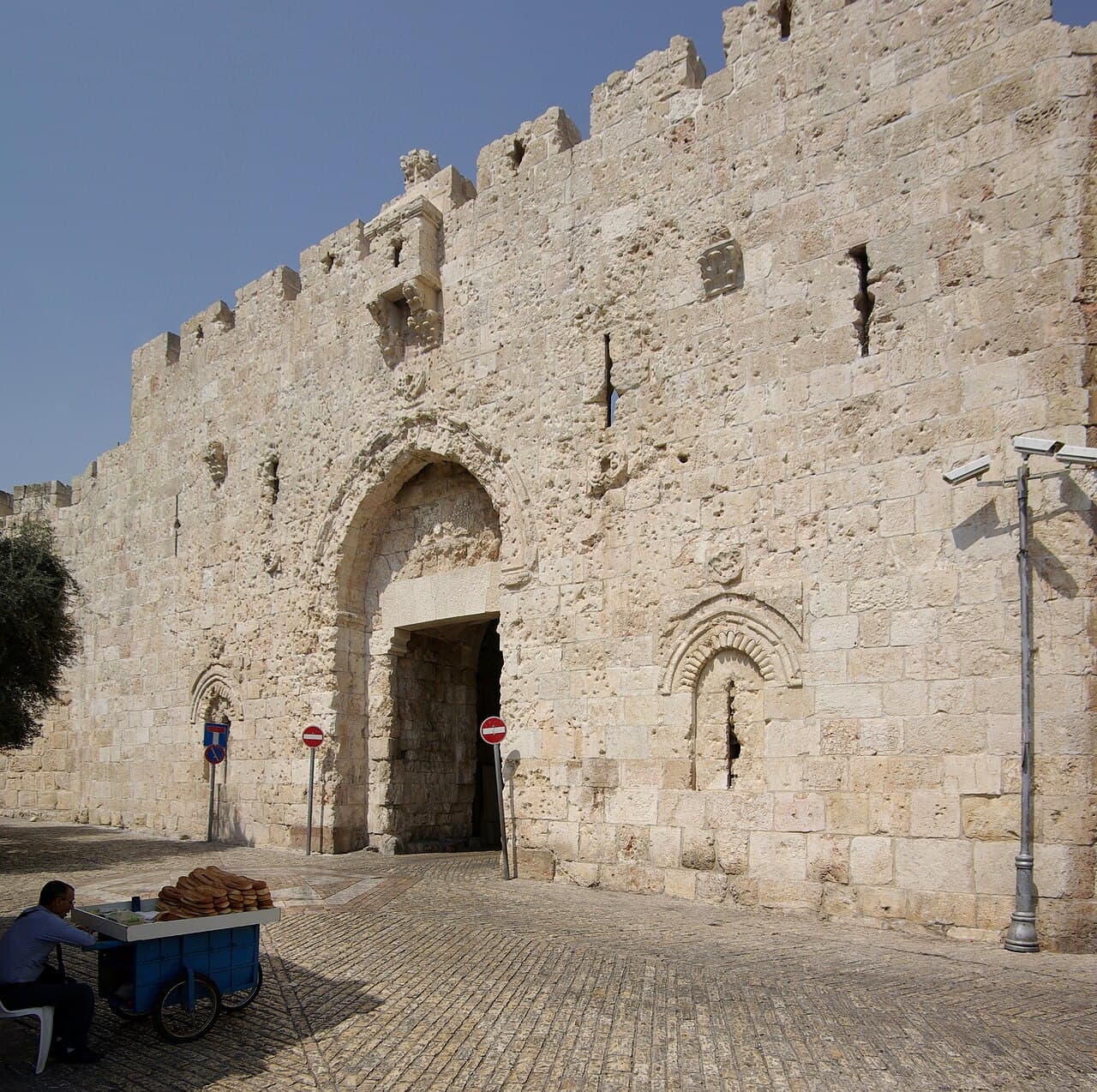
Zion Gate is notable for its robust construction and distinctive features. The gate is built primarily of large, well-cut stones, characteristic of Ottoman masonry. It features a prominent arched entrance flanked by thick walls and bastions that extend outward, providing defensive advantages. The gate's design includes narrow slits and openings for archers and later for musketeers to defend the city effectively.
The gate's interior and exterior walls bear marks of various historical conflicts, including bullet holes and damage from battles, particularly from the 1948 Arab-Israeli War. These scars serve as tangible reminders of the city's turbulent modern history.
Strategic importance and historical events
Located on the southern wall of the Old City, Zion Gate faces the Mount Zion area, a site of religious and historical significance. The gate provided access to the Jewish and Armenian quarters and was a critical point of entry during various periods.
Throughout its history, Zion Gate has witnessed numerous sieges and battles. It played a significant role during the 1948 Arab-Israeli War, where fierce fighting occurred around the gate as control over the Old City was contested. The gate's fortifications were tested, and its resilience was a factor in the city's defense.
Cultural significance and current status
Today, Zion Gate remains an active and important entrance to the Old City of Jerusalem. It is a site of pilgrimage and tourism, attracting visitors interested in the city's layered history and architecture. The gate stands as a symbol of Jerusalem's enduring legacy and complex past.
The gate is maintained as part of the city's historic preservation efforts. Visitors can observe the gate's architectural details and the historical marks left by centuries of conflict, providing a tangible connection to Jerusalem's multifaceted heritage.
Visiting Zion Gate
Visitors to Zion Gate can access the Old City through this historic entrance, which connects to significant religious and cultural sites nearby. The gate's location offers a gateway to exploring the Jewish and Armenian quarters, as well as proximity to Mount Zion and other landmarks.
While the gate itself is open to the public, visitors are encouraged to respect the site's cultural and religious importance. Guided tours often include Zion Gate as part of broader explorations of Jerusalem's Old City walls and gates.
Frequently asked questions (FAQ)
- What is the historical significance of Zion Gate?
- Zion Gate, also known as the David's Gate, is one of the eight gates in the Old City of Jerusalem and holds significant historical importance. It was built in 1540 as part of the city walls by the Ottoman Sultan Suleiman the Magnificent and has witnessed many pivotal events throughout history, including the 1967 Six-Day War.
- When was Zion Gate constructed?
- Zion Gate was constructed in the year 1540 as part of the expansion of Jerusalem's city walls during the Ottoman period. Its architectural style reflects the Mamluk and Ottoman influences prevalent at that time, making it an important example of 16th-century military architecture.
- Can I visit Zion Gate year-round?
- Yes, Zion Gate is accessible to visitors year-round, as it is an integral part of the Old City of Jerusalem. However, it is advisable to check for any local events or religious observances that may affect access.
- What are the opening hours for Zion Gate?
- Zion Gate does not have specific opening hours, as it is always open for public access. Visitors can explore the area surrounding the gate at any time of day, but guided tours are typically offered during standard daylight hours.
- Is it possible to take guided tours around Zion Gate?
- Yes, guided tours are available that include Zion Gate as part of a broader exploration of the Old City of Jerusalem. These tours often provide valuable insights into the history and architecture of the gate and its surroundings.
- What is the best time to visit Zion Gate?
- The best time to visit Zion Gate is during the spring (March to May) and fall (September to November) when the weather is mild and pleasant. Early mornings or late afternoons are also ideal for avoiding crowds and capturing beautiful photographs.
- Are there any nearby attractions to visit after Zion Gate?
- Yes, several attractions are located near Zion Gate, including the Dormition Abbey, the Western Wall, and the Mount Zion area. Exploring these sites can enrich your experience and provide a deeper understanding of the historical and spiritual significance of the region.
- How much does it cost to visit Zion Gate?
- Visiting Zion Gate is free of charge, as it is an open public site. However, if you choose to participate in guided tours or visit nearby paid attractions, there may be associated costs.
- Is Zion Gate accessible for individuals with mobility issues?
- Zion Gate is located in a historic area with uneven stone paths, making it somewhat challenging for individuals with mobility issues. However, there are nearby accessible routes that can help visitors navigate the surrounding area with more ease.
Photo gallery

Information
Loading map...
Visitor reviews
No reviews yet. Been here? Write the first review and help other travelers!
Write the first reviewVisited this castle? Share your experience
Your review helps other travelers and adds first-hand knowledge to our encyclopedia.