Hushan Great Wall
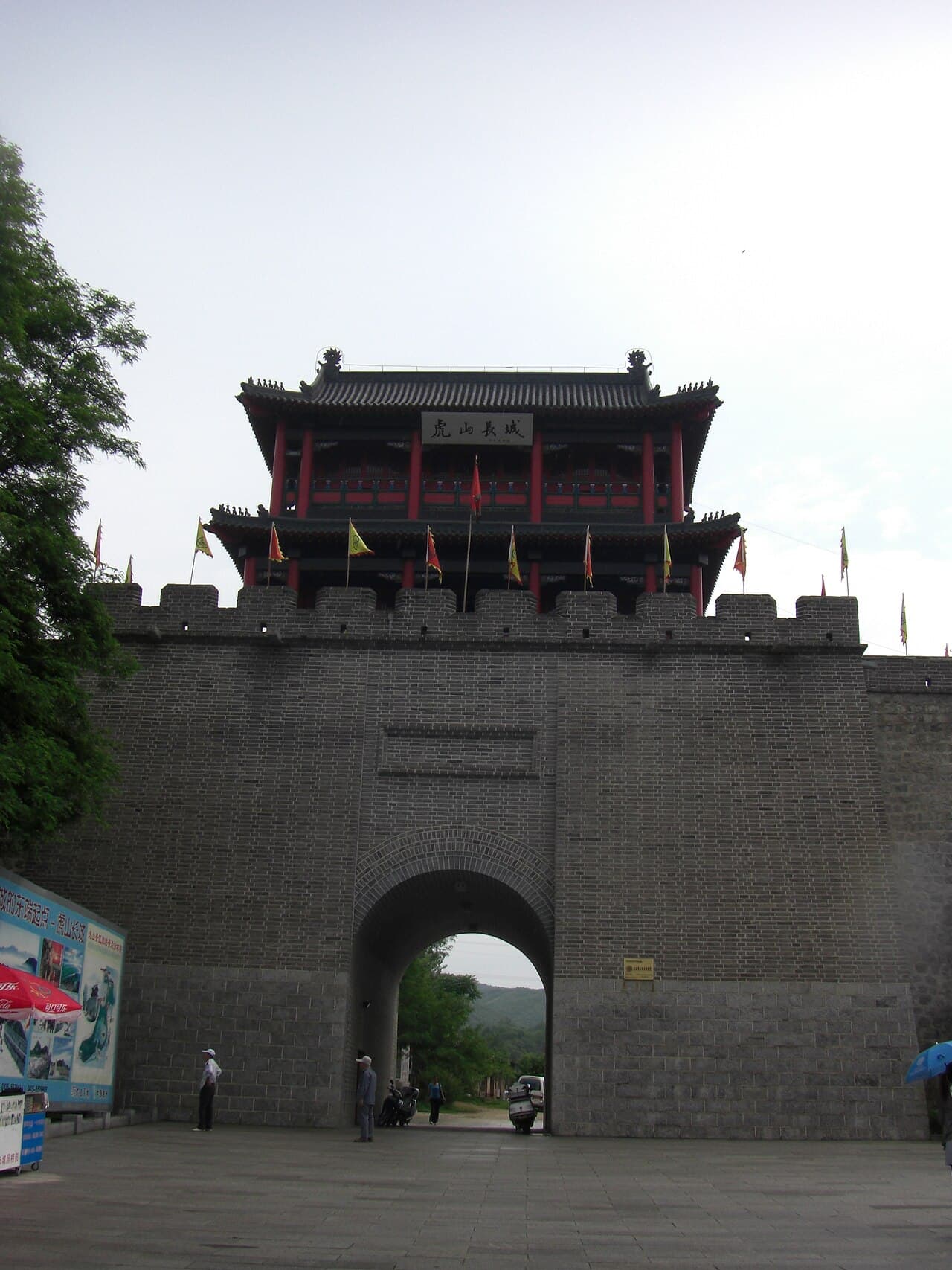
The Hushan Great Wall, also known as the Tiger Mountain Great Wall (Hǔshān Chángchéng), represents a significant eastern extension of the Ming dynasty Great Wall located in Kuandian Manchu Autonomous County, Liaoning Province, China. This section of the Great Wall stretches approximately 1,200 metres over the rugged terrain of Hushan, or "Tiger Mountain," rising to an elevation of 146.3 metres. It is situated about 15 kilometres northeast of Dandong city, directly adjacent to the China–North Korea border, marking a critical frontier defense point in the Ming northern border system.
Historical context and strategic importance
The construction of the Hushan Great Wall dates back to the 15th century, specifically documented in the 15th year of the Chenghua era (AD 1479) during the Ming dynasty. This fortification was part of a broader defensive strategy to protect the empire from frequent raids by Jurchen bandits who threatened the northern frontier and neighboring Joseon villages. The wall's location along the Yalu River served as a natural barrier, and the wall itself extended the Ming defensive line to the riverbanks, a feature noted in numerous Ming dynasty records and poems referencing a "border wall" (边墙).
Architectural features and restoration
The Hushan Great Wall is classified as a bastioned fortress due to its military architectural elements designed for active defense and surveillance. The structure climbs sharply over steep mountainous terrain, showcasing typical Ming military engineering adapted to difficult landscapes. In the late 20th century, comprehensive surveys led by the architectural historian Luo Zhewen identified the ruins at Hushan as the eastern terminus of this Great Wall section. Subsequently, a 1,250-metre segment underwent restoration in 1992, preserving its structural integrity and making it accessible for visitors.
Earlier fortifications and regional significance
Archaeological evidence reveals that the Hushan area hosted fortresses long before the Ming period. Ruins dating back to the Four Commanderies of Han and Goguryeo eras have been discovered, indicating the site's longstanding strategic value in controlling movements and defending against nomadic incursions from the north. Similar ancient fortifications have been identified across Liaoning Province and in parts of North Korea, including North Pyongan and Chagang provinces. Nearby lies the historical city site known as Posuo or Bakjak (Jiuliancheng), underscoring the region's historical importance as a military and administrative center.
Contemporary perspectives and scholarly debates
The Hushan Great Wall's historical classification has sparked debate among scholars, particularly between Chinese and Korean academics. Some South Korean archaeologists express skepticism regarding the wall's identification as a Ming Great Wall segment, citing a lack of definitive evidence. They suggest that the fortifications may have been constructed jointly by Ming and Joseon forces as a defensive measure against Jurchen raids rather than being solely a Chinese Great Wall extension. This perspective highlights the complex historical narratives and political sensitivities surrounding border heritage sites in Northeast Asia.
Visitor information and cultural heritage
Today, the Hushan Great Wall stands as a partially restored section of the Ming dynasty's extensive frontier defenses. It offers visitors a glimpse into the military architecture and border defense strategies employed during the late medieval period in China. The site is accessible from Dandong city, with a car park marking the wall's eastern end. Visitors can explore the steep climbs and enjoy panoramic views of the surrounding mountainous landscape and the Yalu River valley, appreciating the wall's historical role in shaping regional security and cultural exchange.
Frequently asked questions (FAQ)
- How do I get to the Hushan Great Wall from Dandong city?
- The Hushan Great Wall is located about 15 km northeast of Dandong city. Visitors can reach the site by car or local transport, with a car park available at the eastern end of the wall for convenient access.
- What is the historical significance of the Hushan Great Wall?
- The wall was built in the 15th century during the Ming dynasty to defend against Jurchen raids along the northern frontier. It marks the eastern terminus of the Ming Great Wall and played a key role in regional border defense.
- When was the Hushan Great Wall restored?
- A 1,250-metre section of the wall was restored in 1992 following archaeological surveys that confirmed its historical importance. The restoration aimed to preserve the wall's structure and make it accessible to visitors.
- Can I hike along the Hushan Great Wall?
- Yes, visitors can hike along the restored sections of the wall. The terrain is steep and mountainous, so appropriate footwear and caution are recommended for safety and comfort.
- Why is there debate about the Hushan Great Wall's origins?
- Some Korean scholars question whether the wall was solely built by the Ming dynasty, suggesting it may have been a joint Ming-Joseon construction. This debate reflects differing historical interpretations and political sensitivities in the region.

Information
Loading map...
Visitor reviews
No reviews yet. Been here? Write the first review and help other travelers!
Write the first reviewVisited this castle? Share your experience
Your review helps other travelers and adds first-hand knowledge to our encyclopedia.