Ganghwa Sanseong
Ganghwa Sanseong Fortress (Korean: 강화산성; Hanja: 江華山城) is a historically significant bastioned fortress located on Ganghwa Island in the Republic of Korea. Constructed beginning in 1232 during the high medieval period, it served as the capital of the Goryeo kingdom after the royal court relocated from Kaesong amid the Mongol invasions of Korea. This fortress was designed to protect the kingdom from foreign incursions and played a critical role in Korean defense for centuries.
Architectural design and structure
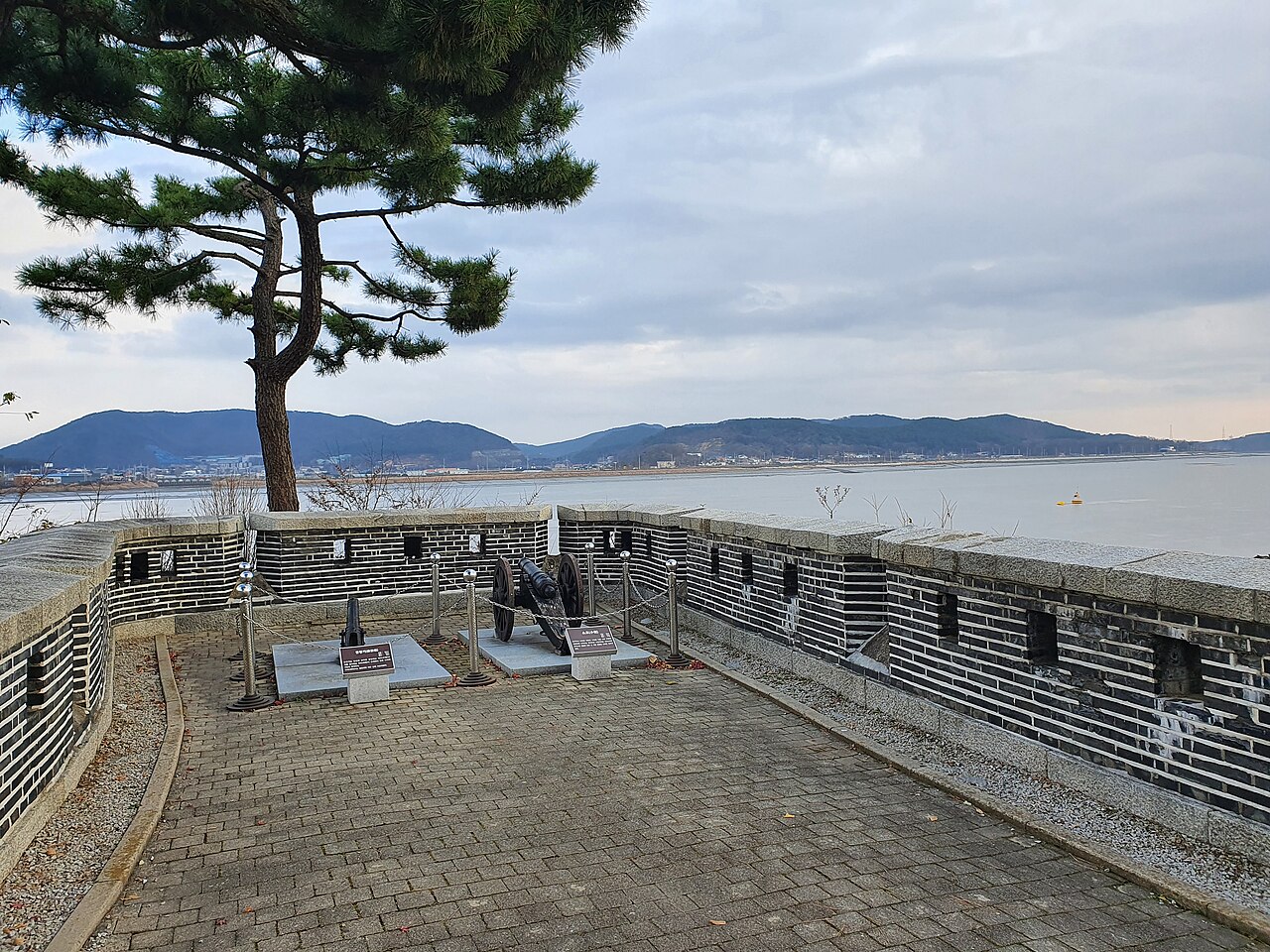
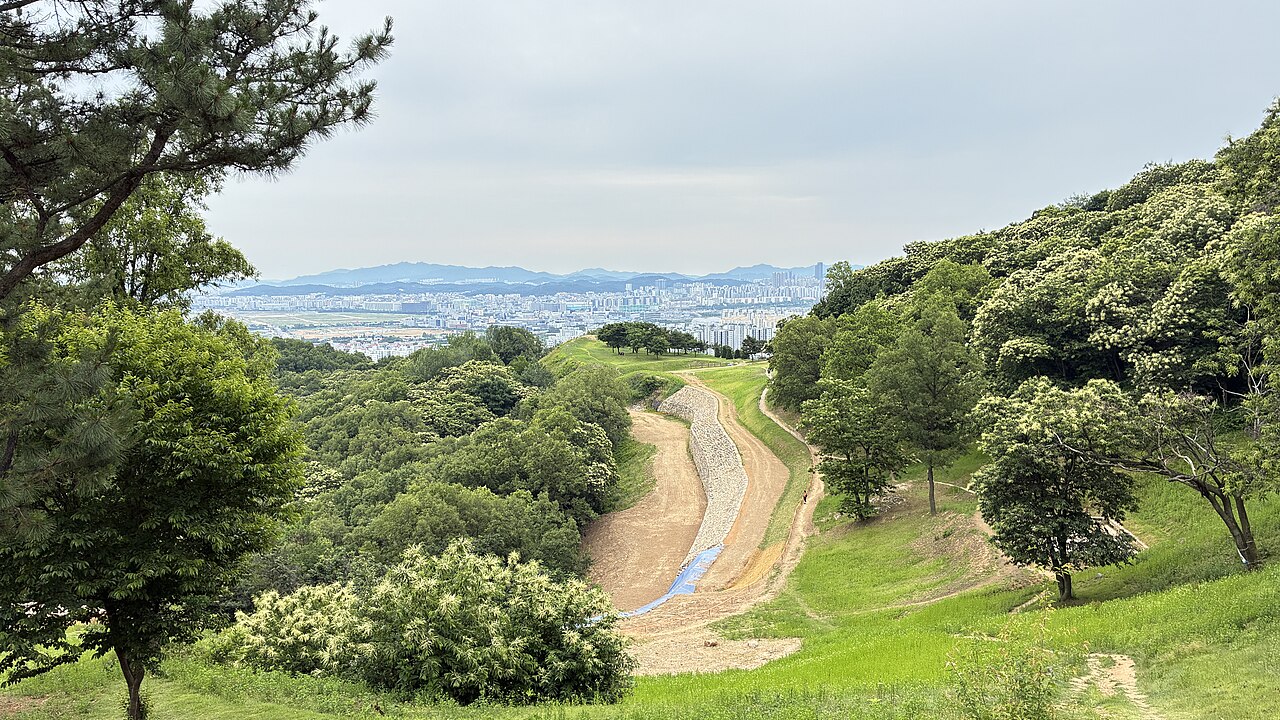
The fortress was originally built with three concentric rammed earth walls, a design inspired by the city walls of Kaesong. The inner wall enclosed the royal palace site, while the outer wall extended along the eastern coastline of Ganghwa Island, strategically guarding access from the mainland. This layered fortification system was intended to create multiple defensive barriers against invaders.
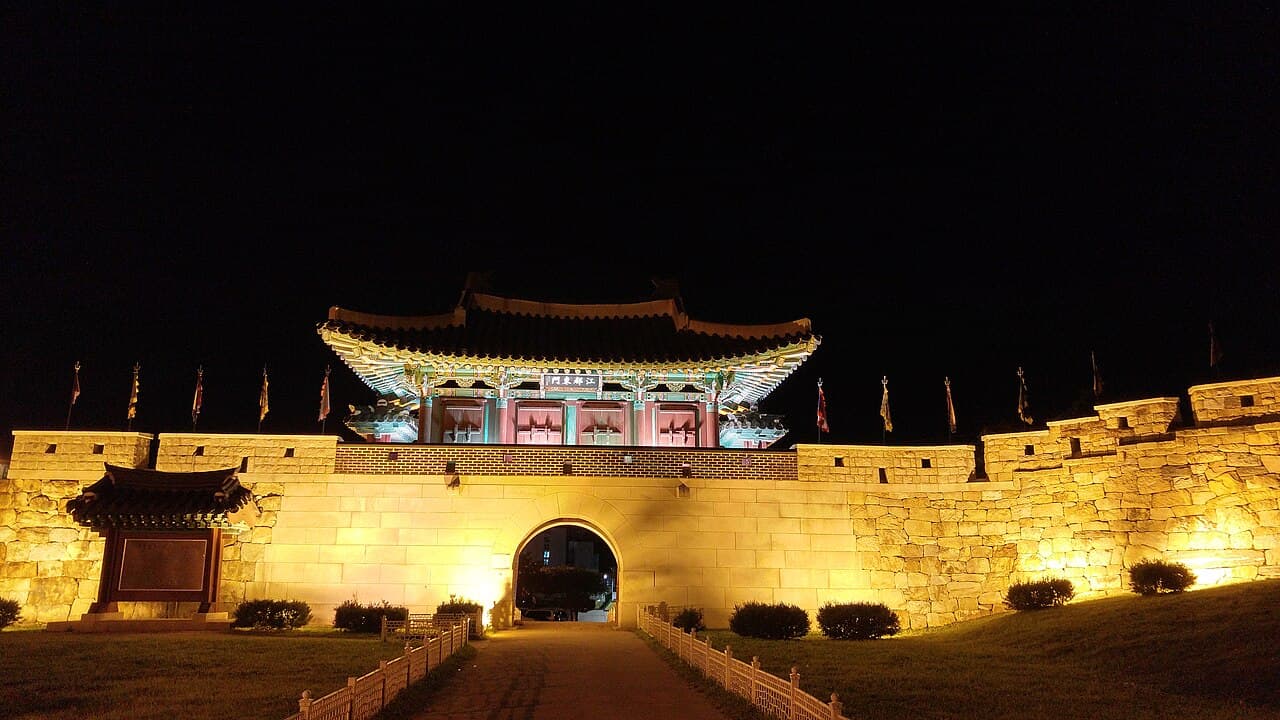
During the Joseon period, the inner and outer walls were reconstructed using stone, enhancing their durability and defensive capabilities. However, the middle wall was never rebuilt, leaving the fortress with two main stone walls. The walls featured bastions and other fortification elements typical of bastioned fortress design, which allowed defenders to cover approaches effectively.
Historical significance and military role
Ganghwa Sanseong's location at the mouth of the Han River made it a crucial military site for controlling naval and land access to the Korean peninsula's interior. It was a key defensive position during multiple foreign invasions and conflicts, including the 1866 French expedition to Korea and the 1871 United States expedition to Korea, both of which caused damage to the fortress.
The fortress also holds diplomatic significance as the site where the Japan–Korea Treaty of 1876 was signed, marking a turning point in Korean history and relations with Japan.
Preservation and restoration efforts
Following centuries of military use and damage, the inner fortress was designated a Historic Site in 1964, recognizing its cultural and historical importance. Since then, significant restoration work has been undertaken to preserve the remaining structures and walls. The outer walls received separate historic site status in 2003, further underscoring the fortress's heritage value.
Today, Ganghwa Sanseong Fortress stands as a well-preserved example of high medieval Korean military architecture, reflecting centuries of defensive strategy and cultural history. Visitors can explore the extensive stone walls, bastions, and the palace site within the inner enclosure, gaining insight into the fortress's role in Korean history.
Legacy and cultural importance
The fortress is a symbol of Korean resilience during periods of foreign threat and internal transition. Its layered walls and strategic positioning illustrate the military engineering knowledge of the Goryeo and Joseon dynasties. Ganghwa Sanseong remains a significant heritage site for understanding Korea's medieval fortifications and the geopolitical challenges faced by the peninsula.
Frequently asked questions (FAQ)
- How do I get to Ganghwa Sanseong?
- Ganghwa Sanseong is accessible by public transportation, including buses that run regularly from Incheon. You can also reach the castle by car, with parking facilities available nearby. If you're using public transport, it's recommended to check the latest schedules to plan your visit accordingly.
- What is the historical significance of Ganghwa Sanseong?
- Ganghwa Sanseong, built in the late 17th century, played a crucial role in defending Korea against invasions, particularly during the late Joseon Dynasty. Its strategic location provided a vantage point over the surrounding area, making it an important military fortress. Today, it stands as a testament to Korea's rich historical heritage and architecture.
- When was Ganghwa Sanseong constructed?
- Construction of Ganghwa Sanseong began in 1703, during the reign of King Sukjong of the Joseon Dynasty. It was completed in 1714 and served as a key defensive structure against potential invasions. The castle has since been preserved as a historical site, attracting many visitors each year.
- Can I visit Ganghwa Sanseong year-round?
- Yes, Ganghwa Sanseong is open to visitors throughout the year. However, the best time to visit is during the spring and autumn months when the weather is mild and the surrounding scenery is particularly beautiful. Seasonal events may also take place, enhancing your experience.
- Why is Ganghwa Sanseong known for its architecture?
- Ganghwa Sanseong is renowned for its unique military architecture, which reflects the traditional Korean style of fortification. The castle features stone walls, watchtowers, and fortified gates that showcase the engineering techniques of the period. Its design not only served practical purposes but also embodies the aesthetic values of Korean culture.
- Is it possible to explore the interior of Ganghwa Sanseong?
- While the main focus of the visit is on the exterior and surrounding landscape, some areas within Ganghwa Sanseong may be accessible to visitors. Guided tours are often available, providing insights into the castle's history and architecture. Be sure to check for any specific restrictions or areas that may be closed during your visit.
- What are the ticket prices for visiting Ganghwa Sanseong?
- The entrance fee for Ganghwa Sanseong is typically modest, making it an affordable destination for both locals and tourists. Prices may vary for adults, children, and seniors, with discounts often available for groups. It's advisable to check the official website or local tourist information for the most current pricing.
- What are the opening hours for Ganghwa Sanseong?
- Ganghwa Sanseong generally operates from 9 AM to 6 PM, but hours may vary depending on the season or special events. It's a good idea to verify the opening hours before your visit to ensure you have ample time to explore the site. Early morning visits can provide a quieter experience and stunning views.
- Are there any nearby attractions to explore after visiting Ganghwa Sanseong?
- Yes, there are several nearby attractions worth visiting, including the Ganghwa Peace Observatory and the historic temples of the island. You can also explore beautiful natural sites such as beaches and hiking trails in the area. Combining your visit to Ganghwa Sanseong with these attractions can make for a delightful day trip.
Photo gallery

Information
Loading map...
Visitor reviews
No reviews yet. Been here? Write the first review and help other travelers!
Write the first reviewVisited this castle? Share your experience
Your review helps other travelers and adds first-hand knowledge to our encyclopedia.