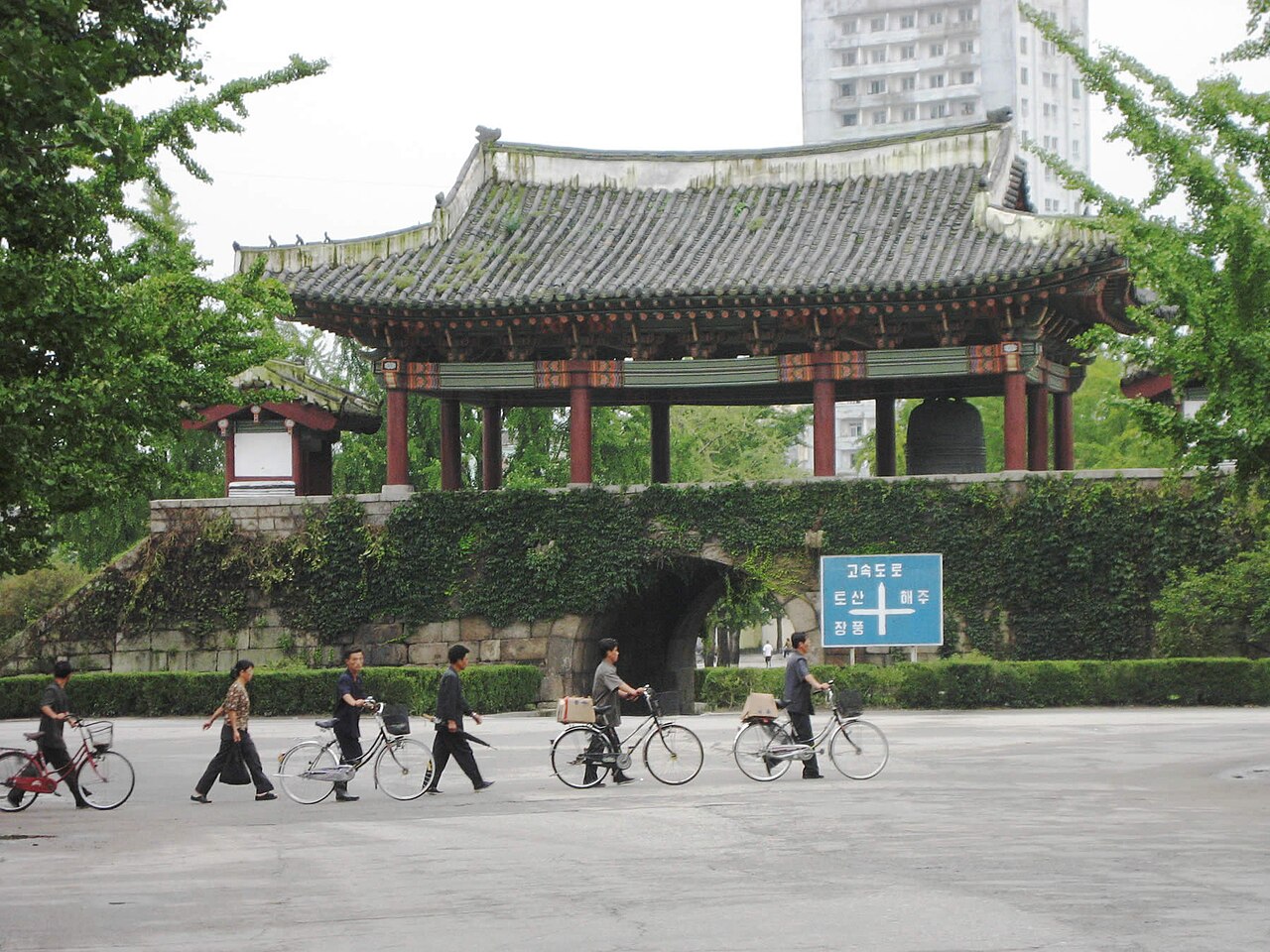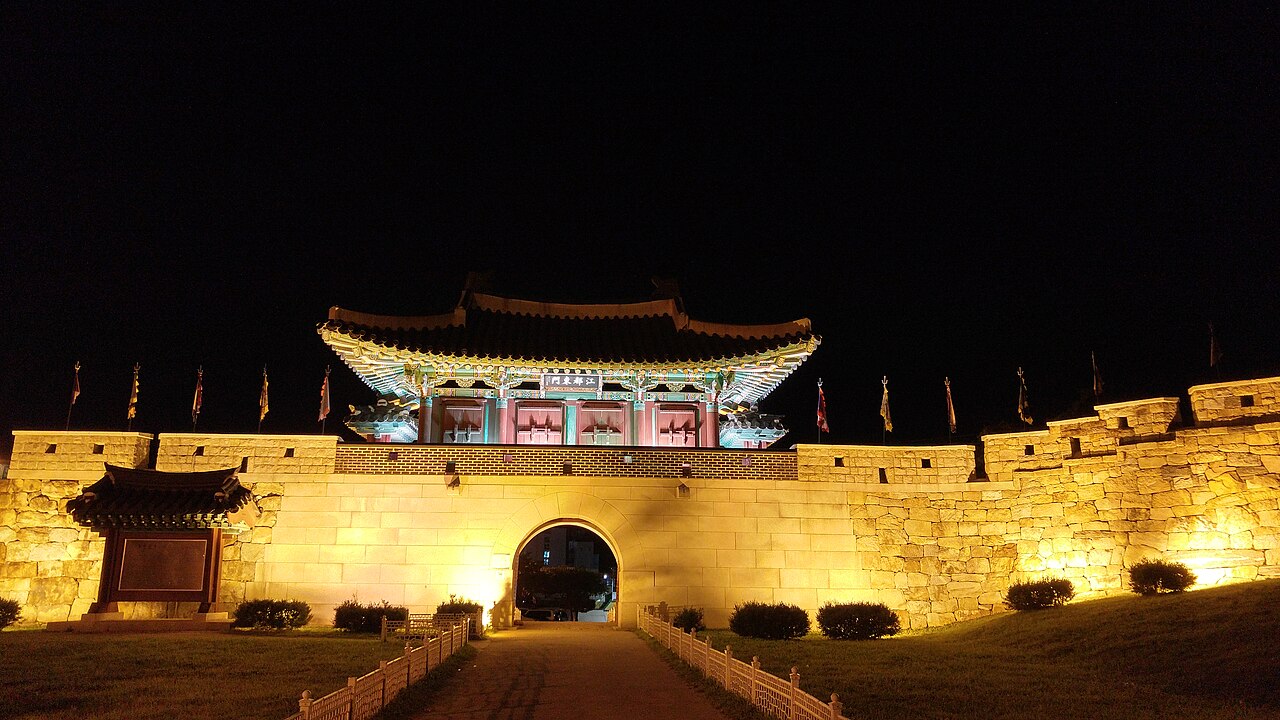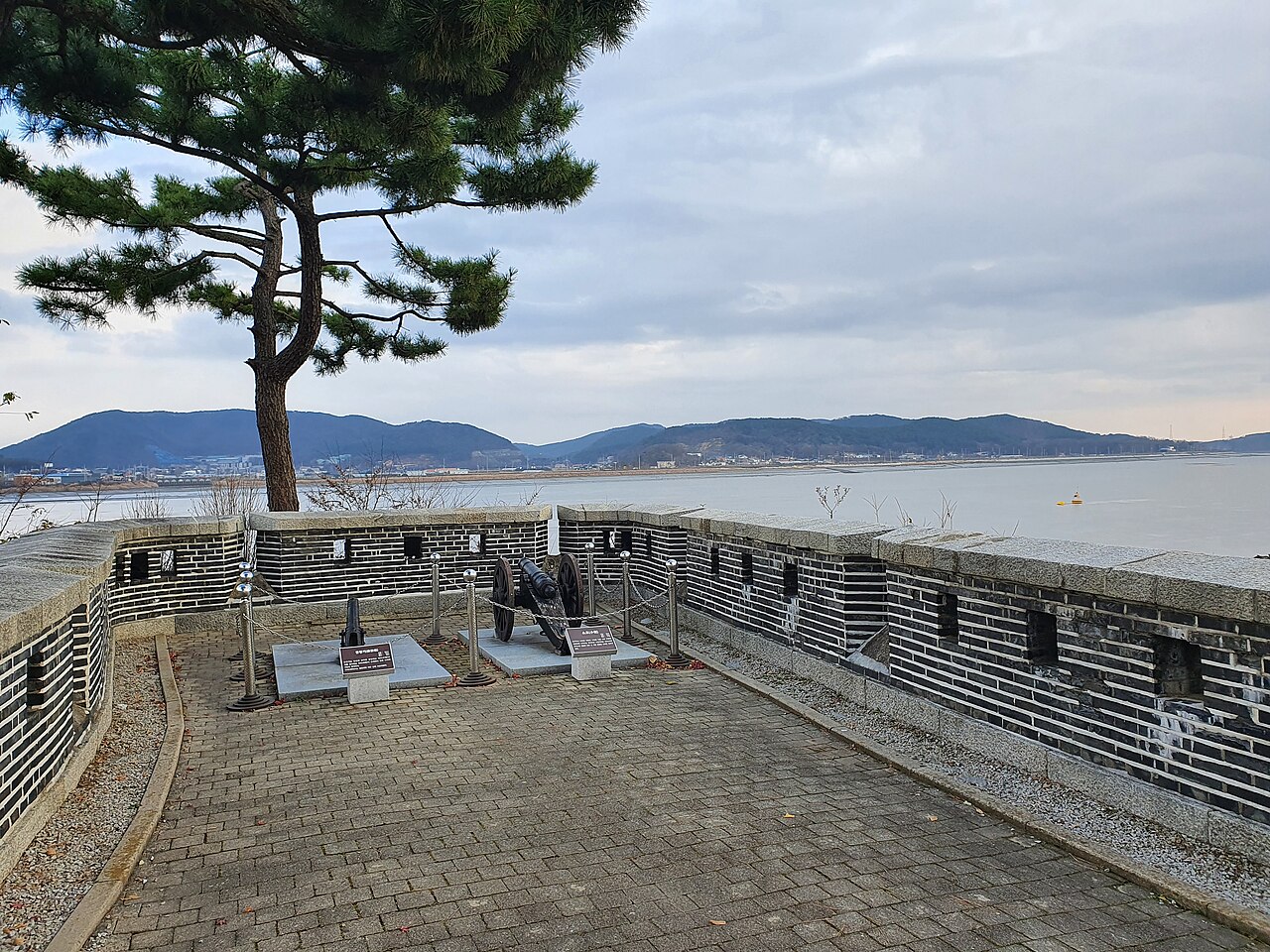
Pyongyang Castle stands as a significant historic fortress located in what is now Pyongyang, the capital city of North Korea. This hill castle has played a crucial role throughout Korean history, serving as a political, military, and cultural center for various Korean states across centuries.
The castle's origins trace back to ancient times, with records indicating its strategic importance by the 4th century. In 375, it was attacked by Geunchogo of Baekje, one of the Three Kingdoms of Korea, underscoring its early military significance. Later, in 427, King Jangsu of Goguryeo transferred the capital of the Goguryeo kingdom from Gungnae Fortress to Pyongyang Castle. This move was instrumental in establishing Pyongyang as a burgeoning metropolitan capital, fostering a period of cultural and economic prosperity during the Three Kingdoms period.
Strategic and political importance in ancient korea
Pyongyang Castle's location on a hill provided natural defensive advantages, making it a formidable stronghold. Its elevation allowed for surveillance of the surrounding terrain and protection against invasions. As the capital of Goguryeo, it became a center for administration and military planning. The castle's fortifications were likely enhanced during this period to support its new status.
Following the fall of Goguryeo, Pyongyang became the capital of the Protectorate General to Pacify the East, established by the Tang dynasty in 668 after their conquest of the Korean peninsula. This period marked the castle's role as an administrative center under Chinese influence. However, by 676, control of Pyongyang shifted to the kingdom of Silla, one of the other Three Kingdoms, placing the castle on the contested border between Silla and the emerging Balhae kingdom.
Later historical developments and shifting control
During the Later Silla period, Pyongyang Castle was largely abandoned, reflecting the shifting political landscape of the Korean peninsula. It was later recovered by Wang Geon, the founder of the Goryeo dynasty, who designated it as the Western Capital. This reinstatement reaffirmed Pyongyang's importance as a regional center.
In the Joseon dynasty, Pyongyang served as the provincial capital of Pyeongan Province. The castle and city witnessed significant military action during the Japanese invasions of Korea (1592–1598), when Japanese forces captured Pyongyang and held it until the Siege of Pyongyang led to their defeat. Later, in the 17th century, Pyongyang was temporarily occupied during the Qing invasion of Joseon until peace treaties were established.
Cultural significance and religious history
Despite the turbulent military history, Pyongyang evolved into a center of cultural and religious importance. From the 16th century onward, as Korea gradually opened to foreign influence, Pyongyang became a base for the expansion of Christianity. By 1880, the city was known as "the Jerusalem of the East" due to its large number of churches and Protestant missionaries, the highest concentration in Asia at the time.
Modern historical events and legacy
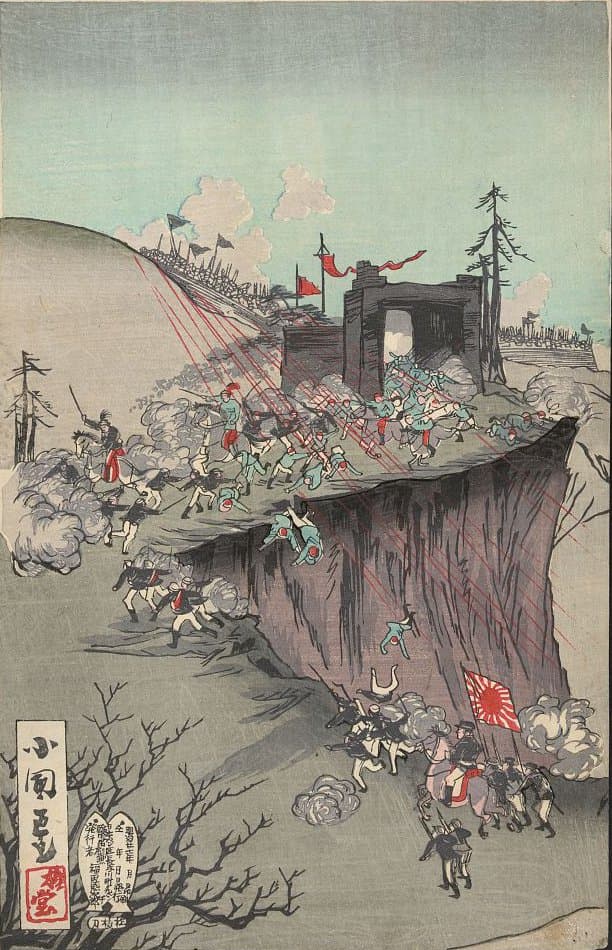
By 1890, Pyongyang had grown to a population of about 40,000. It was the site of the Battle of Pyongyang during the First Sino-Japanese War in 1894, which resulted in extensive destruction and depopulation of the city. Subsequently, the castle area and city continued as the provincial capital of South Pyeongan Province from 1896 onward.
Today, Pyongyang Castle is recognized as one of the National Treasures of North Korea. Although much of the original fortress structure has not survived intact, its historical footprint remains significant for understanding the military, political, and cultural development of Korea from ancient times through the modern era.
Architectural features and defensive structures
While detailed architectural records of Pyongyang Castle are limited, as a hill castle, it would have included typical defensive features such as stone walls following the contours of the hill, gates controlling access, and watchtowers for surveillance. The fortress's design was adapted to the natural terrain, maximizing defense against invaders. Over time, successive rulers likely modified and reinforced the castle's fortifications to meet evolving military needs.
Fortifications and layout
The castle's walls would have enclosed the main administrative and residential areas, with inner courtyards and chambers for governance and military command. The elevated position allowed for effective defense and control of the surrounding region, essential for the capital of a powerful kingdom like Goguryeo.
Cultural and symbolic elements
Beyond its military function, Pyongyang Castle symbolized the authority and prestige of its rulers. Its status as a capital city fortress reflected the political power centralized within its walls. The castle's cultural significance was enhanced during periods of prosperity, especially under Goguryeo and later during the Goryeo and Joseon dynasties.
Frequently asked questions (FAQ)
- What is the historical significance of Pyongyang Castle?
- Pyongyang Castle, also known as the Pyongyang Fortress, has a rich history dating back to the ancient Korean kingdoms. It served as a vital military stronghold and a royal palace, symbolizing the power and resilience of the Korean people throughout various dynasties.
- When was Pyongyang Castle built?
- The original construction of Pyongyang Castle dates back to the 3rd century BC, with various renovations and expansions occurring over the centuries. The current structure reflects both traditional Korean architectural styles and the influences of later periods.
- How do I get to Pyongyang Castle?
- Visitors can reach Pyongyang Castle by taking public transportation or hiring a local guide in Pyongyang. The castle is conveniently located near other historical sites, making it an ideal stop for tourists exploring the city.
- What are the opening hours for Pyongyang Castle?
- Pyongyang Castle is typically open to visitors from 9 AM to 5 PM, but it’s advisable to check in advance as hours may vary seasonally or for special events. Guided tours often provide insights that enhance your visit, so consider joining one for a more informative experience.
- Can I take photos inside Pyongyang Castle?
- Photography policies at Pyongyang Castle can vary, and it is important to check with your guide or the castle's management. In general, visitors are allowed to take photos in designated areas, but flash photography and tripods may be restricted.
- Is it possible to access Pyongyang Castle for individuals with mobility issues?
- While efforts have been made to improve accessibility at historical sites, Pyongyang Castle may present challenges for visitors with mobility issues due to its ancient architecture and uneven terrain. It is recommended to contact local tour operators to inquire about available accommodations.
- What is the best time to visit Pyongyang Castle?
- The best time to visit Pyongyang Castle is during the spring (April to June) and autumn (September to November) when the weather is mild and the scenery is most picturesque. These seasons also coincide with various cultural events, offering a richer experience for visitors.
- Are there any nearby attractions to visit after Pyongyang Castle?
- Yes, after exploring Pyongyang Castle, visitors can enjoy nearby attractions such as the Arch of Triumph and Kim Il-sung Square, both rich in historical significance. These sites offer further insight into the culture and history of Pyongyang.
- What are the ticket prices for Pyongyang Castle?
- Ticket prices for Pyongyang Castle can vary, so it is advisable to check current rates before your visit. Generally, entrance fees are quite affordable, and guided tours may have additional costs that include insights into the castle's history and architecture.
Photo gallery

Photo by Utagawa Kunimasa V•Public domain
Information
Loading map...
Visitor reviews
No reviews yet. Been here? Write the first review and help other travelers!
Write the first reviewVisited this castle? Share your experience
Your review helps other travelers and adds first-hand knowledge to our encyclopedia.