Hisham's Palace
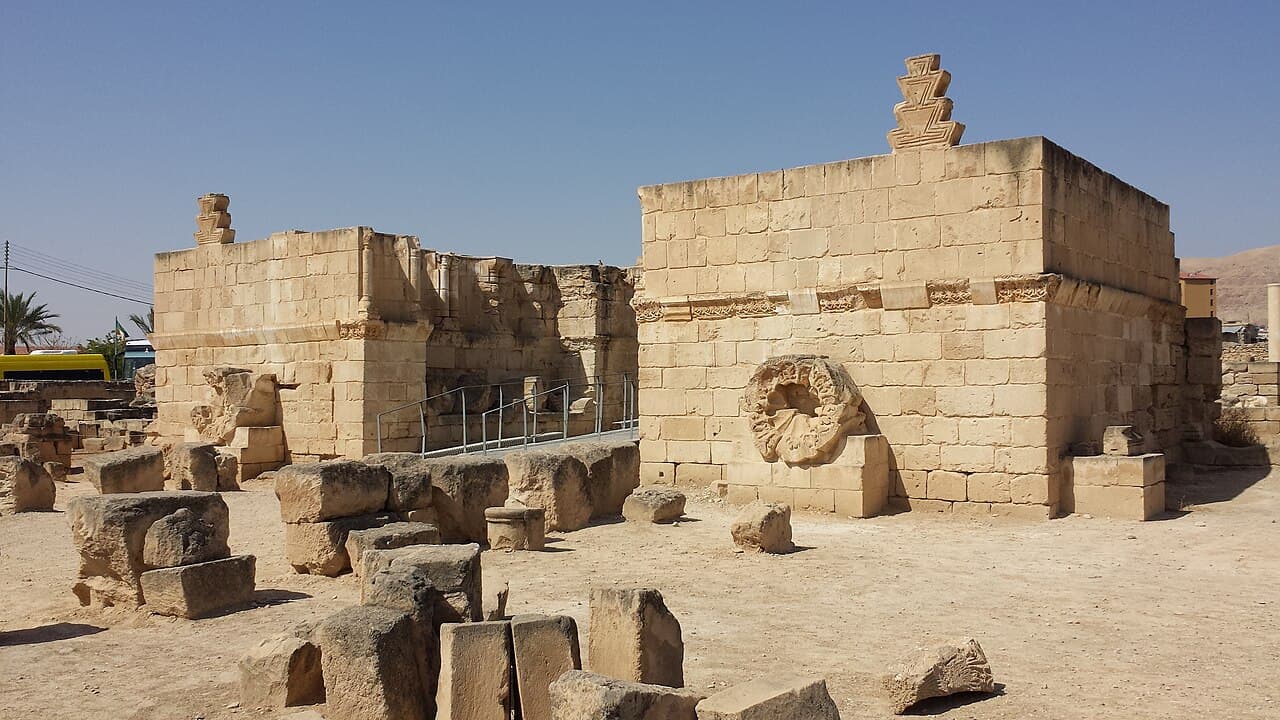
Hisham's Palace, also known as Khirbat al-Mafjar, is a significant archaeological site from the early Islamic period, located approximately 3 kilometres north of Jericho in the West Bank, Palestine. Constructed in the 8th century during the reign of the Umayyad dynasty, this site represents one of the most important examples of Umayyad desert castles. The palace complex, which was occupied until the 11th century, is believed to have been destroyed by a major earthquake in 1033.
Historical context and significance
The palace was built during a period of extensive Umayyad architectural and cultural development, when desert castles served multiple purposes including administrative, residential, and agricultural functions. Hisham's Palace reflects the Umayyads' interest in demonstrating power and luxury through monumental architecture combined with sophisticated engineering.
Its location near Jericho, one of the oldest inhabited cities in the world, provided strategic access to water sources and fertile land, which was crucial for sustaining the palace's agricultural estate and bath complex. The site is a rare surviving example of early Islamic architecture and landscaping that integrates residential, recreational, and agricultural facilities.
Architectural layout and features
The palace structure
The palace itself is the centerpiece of the complex, covering a substantial area with remains of walls, rooms, and courtyards. It was designed with a combination of residential quarters and administrative spaces, showcasing the Umayyad architectural style characterized by decorative stucco carvings, arched doorways, and intricate geometric and vegetal motifs.
Bath complex
Adjacent to the palace is an ornate bath complex, which was an essential feature of Umayyad palatial architecture. The baths include a series of rooms such as cold, warm, and hot baths, similar to Roman and Byzantine models but adapted for Islamic customs. This complex was supplied by an elaborate water system connected to nearby springs, demonstrating advanced hydraulic engineering.
Agricultural estate and water system
The palace was part of a larger agricultural estate spanning over 60 hectares (150 acres). The estate included gardens, orchards, and fields, all irrigated through a sophisticated network of canals and channels drawing water from local springs. This integration of agriculture with residential and recreational facilities was innovative for its time and highlights the Umayyads' emphasis on self-sufficiency and luxury.
Artistic and cultural elements
One of the most remarkable features of Hisham's Palace is its extensive and well-preserved mosaic floors. Covering nearly 850 square metres (9,100 square feet), these mosaics are among the largest continuous mosaic floors in the world. They depict a variety of scenes including hunting, animals, and vegetal patterns, reflecting both the artistic influences of the Mediterranean and the cultural symbolism of the Umayyad period.
The site also contains fragments of frescoes and stucco decoration that provide insight into the decorative arts of early Islamic palatial architecture. These artistic elements contribute to understanding the cultural synthesis occurring during the Umayyad era, blending Byzantine, Persian, and Arab traditions.
Preservation and public access
Currently classified as archaeological ruins, Hisham's Palace has been the subject of archaeological excavation and conservation efforts. The site is on the tentative list of UNESCO World Heritage Sites, reflecting its cultural and historical importance.
Since 2021, the palace has been open to the public, allowing visitors to explore the ruins, including the mosaic floors, bath complex, and remnants of the palace structure. The site offers valuable educational opportunities about early Islamic architecture and Umayyad history.
Visiting hisham's palace
Visitors to Hisham's Palace can experience a unique glimpse into the Umayyad period through its extensive ruins and artistic remains. The site is accessible from Jericho and provides interpretive signage to guide visitors through its key features. The surrounding landscape offers a sense of the palace's historical setting and its integration with the natural environment.
Frequently asked questions (FAQ)
- What is Hisham's Palace and where is it located?
- Hisham's Palace is an early Islamic archaeological site located about 3 kilometres north of Jericho in the West Bank, Palestine. It is a well-preserved example of an Umayyad desert castle complex.
- When was Hisham's Palace built and by whom?
- The palace was constructed in the 8th century by the Umayyad dynasty during the early Islamic period, serving as a luxurious desert castle and agricultural estate.
- What are the main features of Hisham's Palace?
- The site includes a palace, an ornate bath complex, and an agricultural estate connected by an advanced water system. It is famous for one of the largest continuous mosaic floors in the world.
- Is Hisham's Palace open to visitors?
- Yes, the site has been open to the public since 2021. Visitors can explore the ruins, including mosaics, baths, and palace remains, with interpretive signage available.
- Why is Hisham's Palace historically important?
- Hisham's Palace provides valuable insight into Umayyad architecture, art, and hydraulic engineering. It illustrates the blending of Byzantine, Persian, and Arab influences in early Islamic culture.
Photo gallery

Information
Current owner
Palestinian National Authority
Loading map...
Visitor reviews
No reviews yet. Been here? Write the first review and help other travelers!
Write the first reviewVisited this castle? Share your experience
Your review helps other travelers and adds first-hand knowledge to our encyclopedia.