Herod's Gate
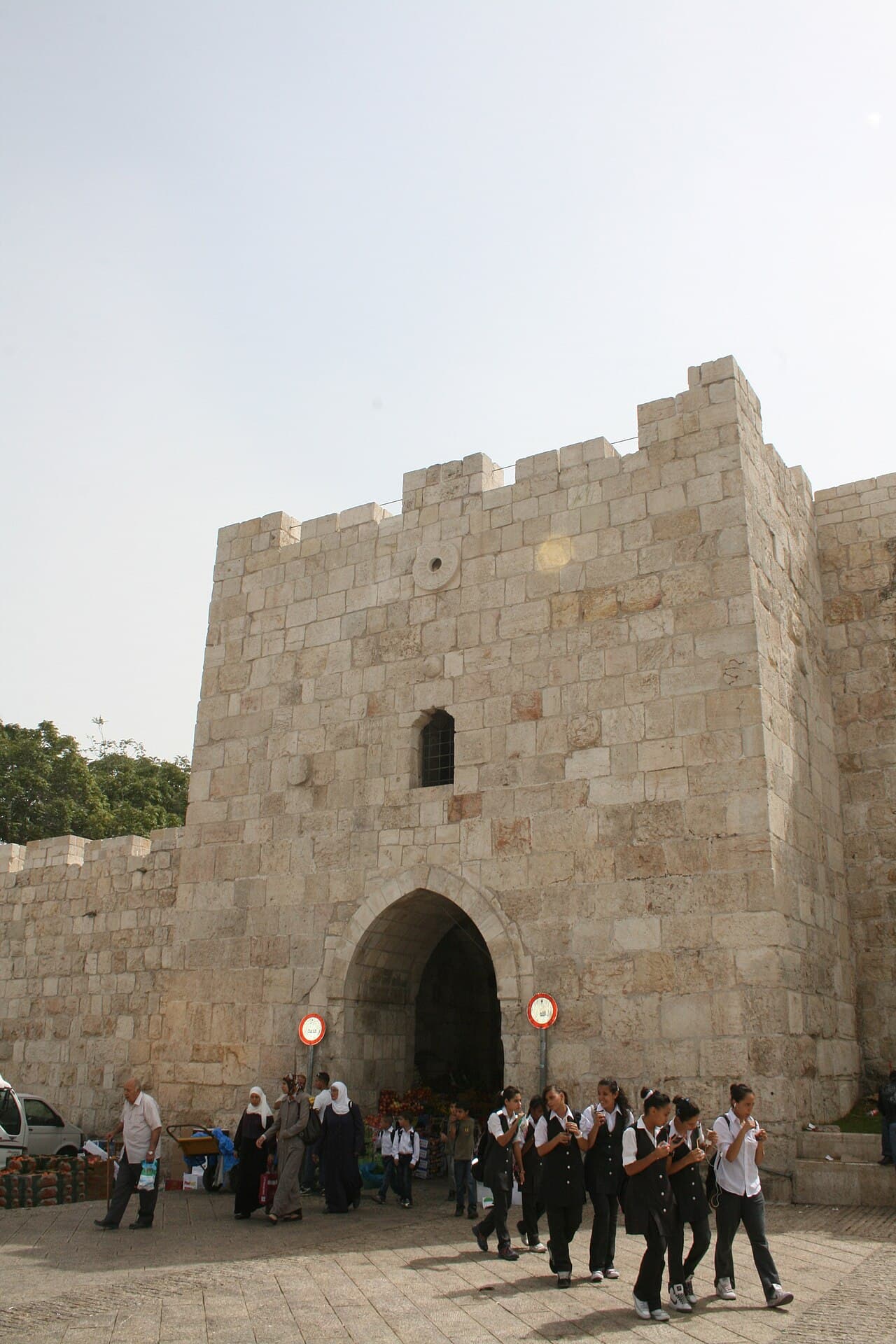
Herod's Gate (Arabic: باب الزاهرة, Bab az-Zahra, Hebrew: שער הפרחים, Sha'ar HaPrakhim, meaning 'Flowers Gate') is a significant fortified entrance located in the northeastern part of the Old City of Jerusalem. As one of the seven open gates of this ancient walled city, it serves as a vital connection between the Muslim Quarter inside the walls and the adjacent Palestinian neighborhood of Bab az-Zahra, situated just outside the city walls. The gate lies a short distance east of the famed Damascus Gate and stands at an elevation of approximately 755 meters above sea level.
Historical context and strategic importance
The gate's name, Herod's Gate, is traditionally linked to the Herodian period, although the current structure dates primarily from the 19th century Ottoman renovations. It was constructed as part of the extensive fortification efforts undertaken by the Ottoman Empire to reinforce the walls of Jerusalem, which originally date back to the 16th century under Sultan Suleiman the Magnificent. The gate's strategic location on the northeastern side of the city walls made it an important access point for trade and movement between the Old City and the surrounding neighborhoods.
Architectural features and design
Herod's Gate is classified as a bastioned fortress gate, reflecting the military architectural style used during the Ottoman period to enhance defensive capabilities. The gate complex includes a prominent bastion—a projecting part of the fortification designed to provide flanking fire against attackers. This bastion helps protect the gate's entrance and the adjoining walls from direct assault.
The gate itself features a narrow, arched passageway typical of Ottoman military architecture, designed to control access and facilitate defense. The stonework exhibits the robust and functional style characteristic of the period, with limited ornamental detailing compared to earlier medieval gates. The gate's proximity to the Muslim Quarter inside the Old City also places it within a densely built urban fabric, influencing its compact and fortified design.
Role within Jerusalem's city walls
Jerusalem's Old City walls, rebuilt in the 16th century, include seven open gates, each serving different quarters and functions. Herod's Gate is one of the smaller gates but remains significant due to its location and the neighborhood it serves. It facilitates pedestrian traffic and local commerce, connecting the historic urban core with the modern neighborhoods outside the walls.
The gate's name in Arabic, Bab az-Zahra, refers to the adjacent neighborhood, while the Hebrew name, Sha'ar HaPrakhim, translates to 'Flowers Gate,' reflecting local naming traditions. This dual nomenclature underscores the cultural and historical layers present in Jerusalem's urban landscape.
Preservation and current status
Today, Herod's Gate remains well preserved as part of the Old City's fortifications. It continues to function as a pedestrian gateway and is accessible to visitors exploring Jerusalem's historic quarters. The gate's surrounding area is vibrant, combining residential, commercial, and religious sites that reflect the city's diverse heritage.
Efforts to maintain the gate and the adjacent walls have ensured that this bastioned fortress gate retains its historical integrity, allowing it to serve both as a functional passage and a monument to Jerusalem's layered past.
Visitor information and accessibility
Visitors to Herod's Gate can explore the lively Muslim Quarter and the Bab az-Zahra neighborhood, both rich in cultural and historical significance. The gate is open daily, providing easy access between these areas. Its location near other major gates like Damascus Gate makes it a convenient point for walking tours of Jerusalem's Old City walls and quarters.
While the gate itself does not have entrance fees, nearby attractions may charge admission. Visitors are encouraged to respect the local customs and the religious sensitivities of the area when exploring the gate and its surroundings.
Frequently asked questions (FAQ)
- What is the historical significance of Herod's Gate?
- Herod's Gate is historically significant as part of Jerusalem's fortified Old City walls, dating mainly from the 19th-century Ottoman renovations. It connects the Muslim Quarter to the Bab az-Zahra neighborhood and reflects the city's layered cultural heritage.
- Can I visit Herod's Gate year-round?
- Yes, Herod's Gate is open daily and accessible year-round to pedestrians. It serves as an entry point between the Old City's Muslim Quarter and the Bab az-Zahra neighborhood.
- What architectural style characterizes Herod's Gate?
- Herod's Gate features Ottoman military architecture from the 19th century, including a bastioned fortress design with a narrow arched passageway for controlled access and defense.
- Is there an admission fee to enter Herod's Gate?
- There is no admission fee to pass through Herod's Gate itself, as it functions as a public pedestrian gate within the Old City walls.
- How does Herod's Gate relate to other gates in Jerusalem's Old City?
- Herod's Gate is one of seven open gates in Jerusalem's Old City walls, located east of Damascus Gate. It serves a smaller but important role in connecting the Muslim Quarter with neighborhoods outside the walls.
Photo gallery

Information
Address
Old City of Jerusalem, Bab az-Zahra neighborhood, Jerusalem, State of Palestine
Loading map...
Visitor reviews
No reviews yet. Been here? Write the first review and help other travelers!
Write the first reviewVisited this castle? Share your experience
Your review helps other travelers and adds first-hand knowledge to our encyclopedia.