Damascus Gate
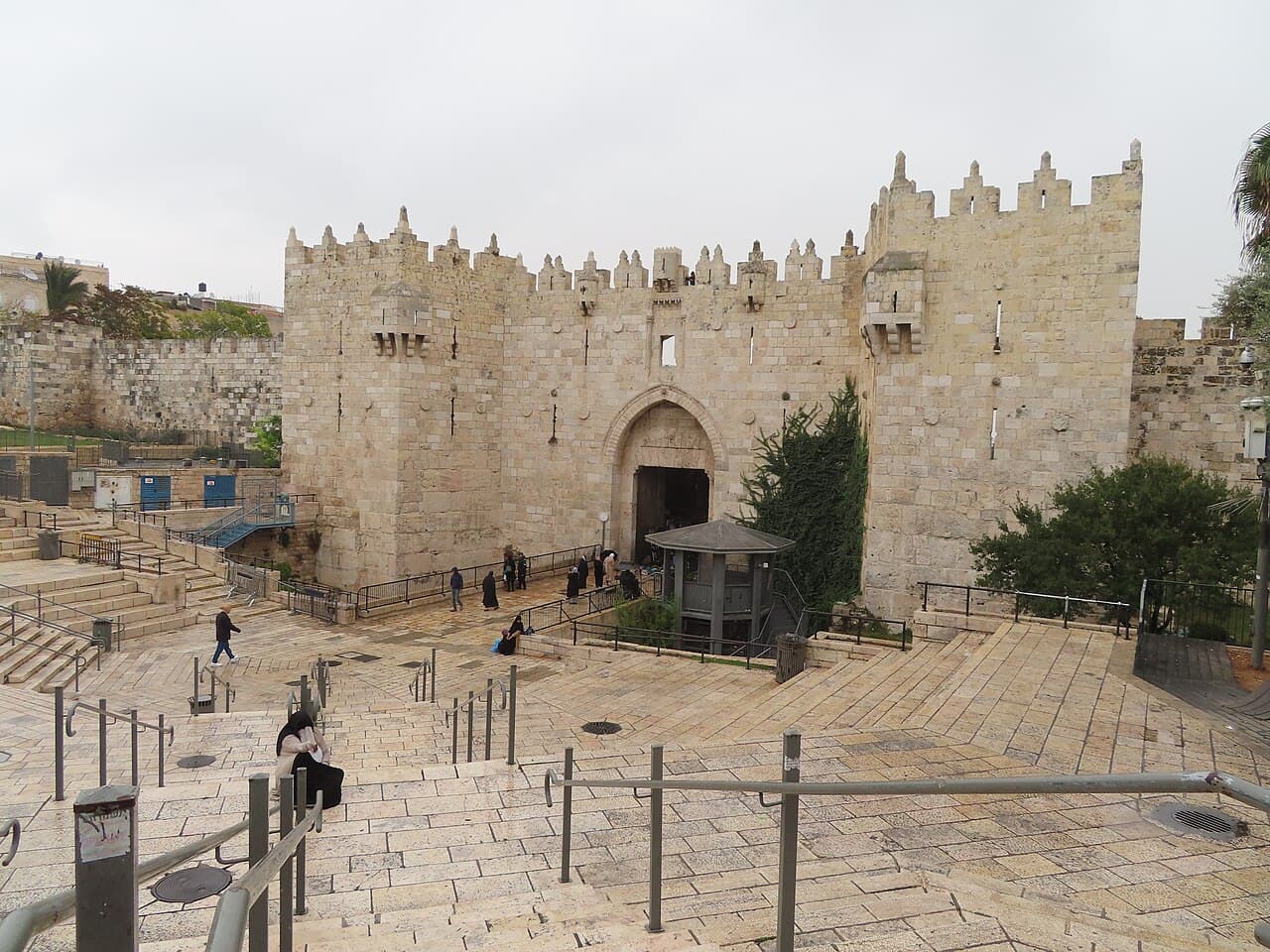
Damascus Gate is one of the most prominent and historically significant gates of the Old City of Jerusalem. Positioned on the city's northwest wall, this gate has served as a crucial access point for centuries, connecting Jerusalem to the ancient highway leading to Nablus (historically known as Shechem or Sichem) and further onward to the Syrian capital, Damascus. The gate's English name, Damascus Gate, reflects this vital connection, while its Hebrew name, Sha'ar Shkhem (שער שכם), translates to "Shechem Gate" or more contemporarily "Nablus Gate". Its Arabic names, Bāb al-Naṣr (باب النصر), meaning "Gate of Victory," and Bāb al-ʿĀmūd (باب العامود), meaning "Gate of the Column," evoke its deep historical and cultural resonance, with the latter name dating back to at least the 10th century and commemorating a Roman column that once stood prominently behind the gate in the 2nd century CE.
Historical significance and origins
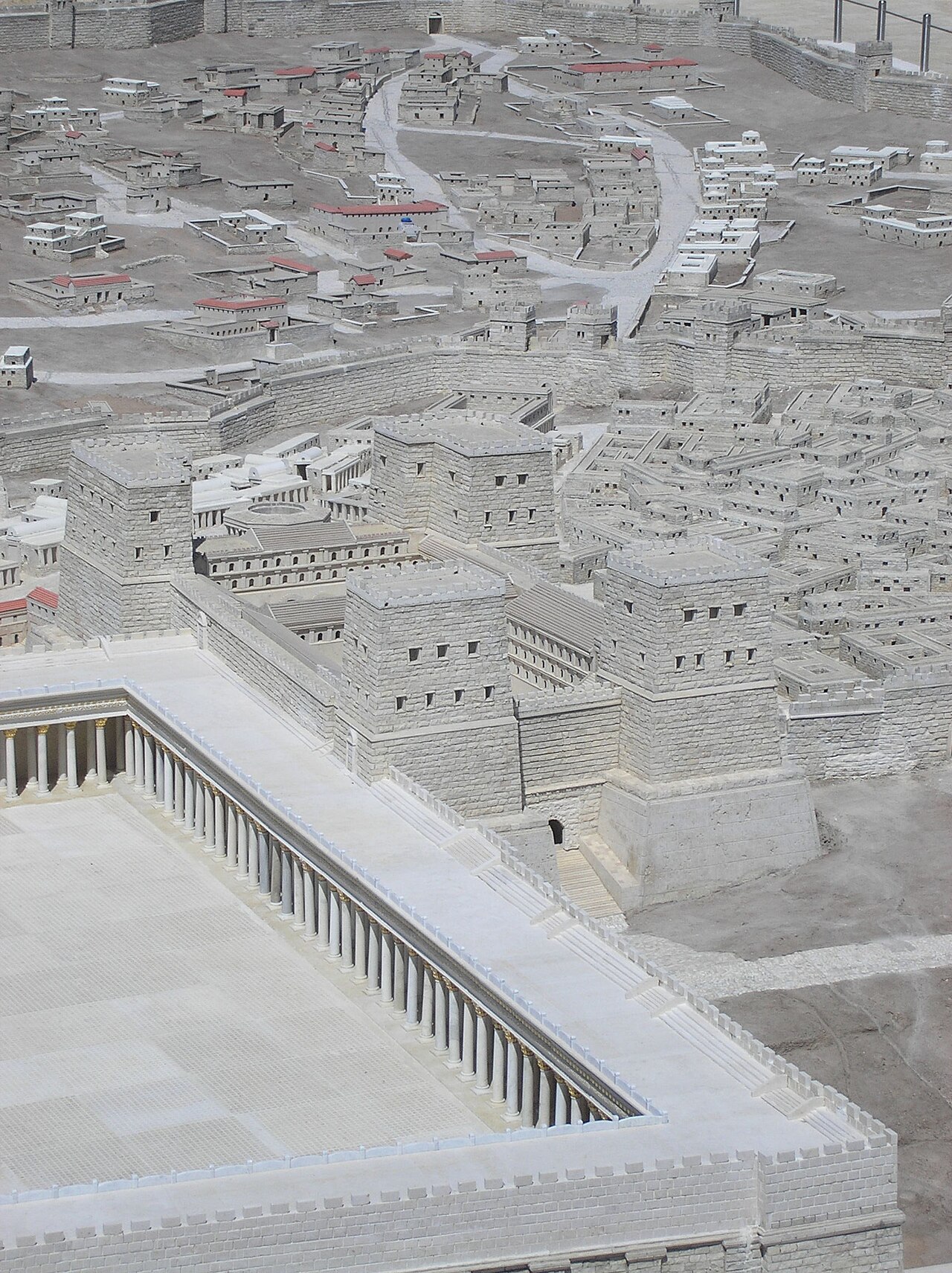
The current structure of Damascus Gate was constructed in the 16th century during the Renaissance period under the rule of the Ottoman Empire, specifically commissioned by Sultan Suleiman the Magnificent as part of his extensive rebuilding of Jerusalem's city walls. However, the site of the gate has a much older history, dating back to Roman times. Archaeological evidence reveals that a Roman gate stood here in the 2nd century CE, serving as a major entrance to the city and as a hub for trade and military movements.
This Roman gate was part of a grand design that included a large plaza or square behind the gate, dominated by a towering Roman column, which gave rise to the Arabic name Bāb al-ʿĀmūd. The column likely served as a monumental marker and possibly as a symbol of Roman authority in the region. Over the centuries, the gate has witnessed numerous historical events, including sieges, conquests, and various phases of urban development.
Architectural features and design
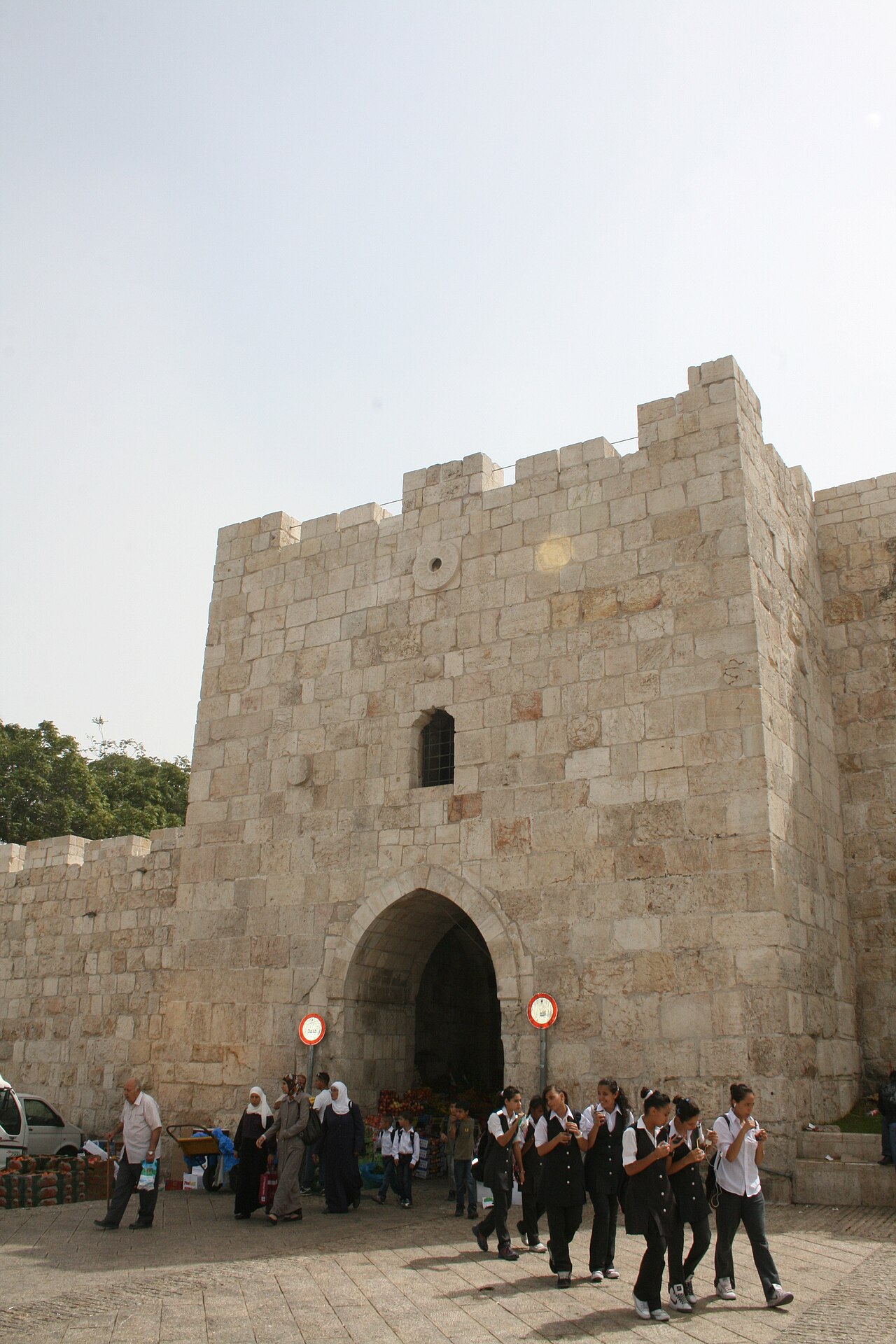
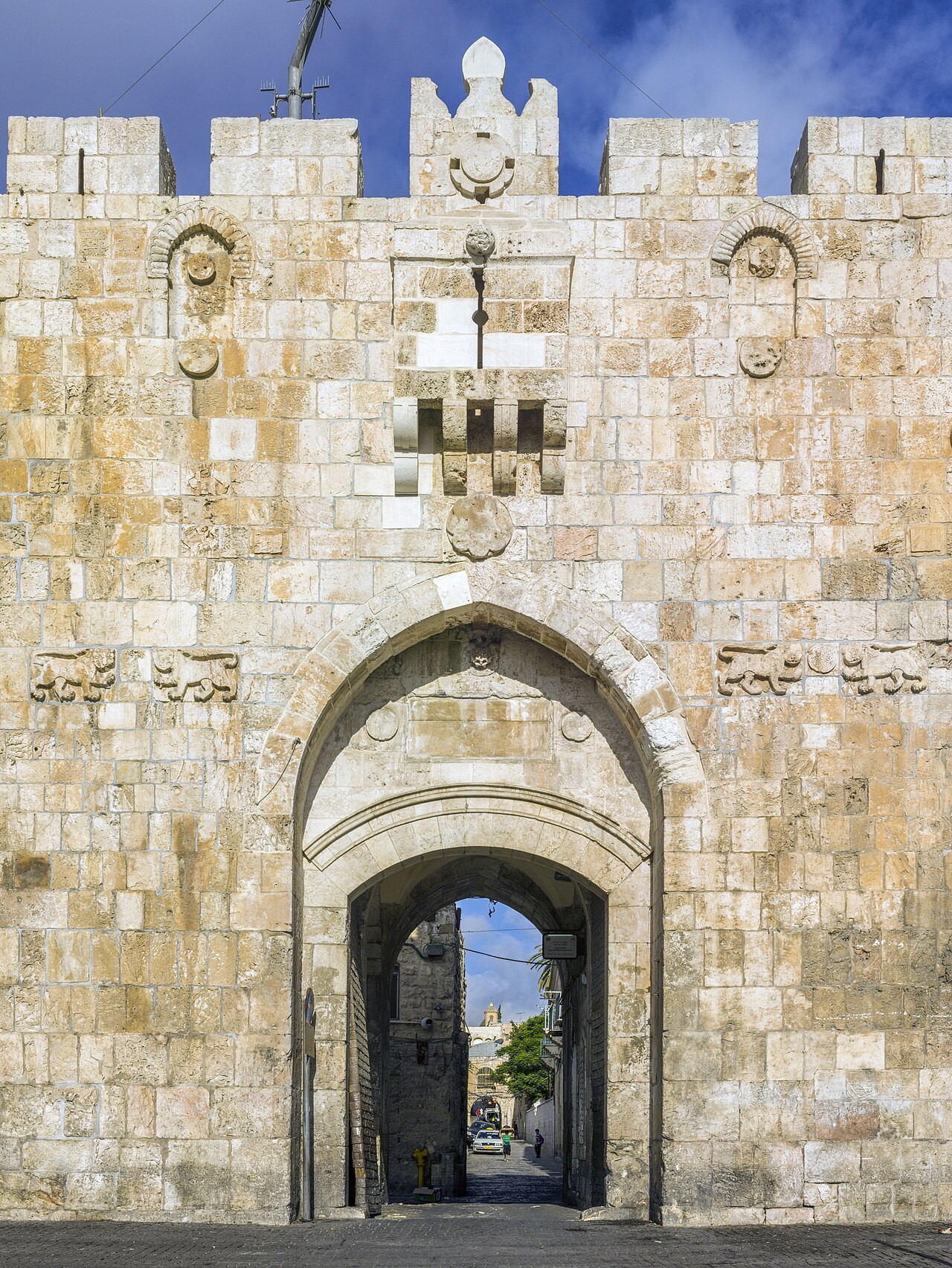
Damascus Gate is classified as a bastioned fortress, a style that combines defensive military architecture with monumental city gate design. The gate's robust fortifications include large bastions flanking the main entrance, designed to provide defensive fire coverage against attackers. The gate features a pointed arch entrance framed by heavy stonework, typical of Ottoman military architecture, and is constructed primarily from local limestone.
The gate complex includes a covered passageway that leads into the city, with multiple chambers and guard rooms integrated into the walls. The bastions are equipped with machicolations and arrow slits, reflecting the military technology of the time. The gate’s design balances functional defense with aesthetic elements, including decorative stone carvings and inscriptions in Arabic script that commemorate its construction under Sultan Suleiman.
Role in Jerusalem’s urban fabric
As one of the main entrances to the Old City, Damascus Gate plays a vital role in the urban layout and daily life of Jerusalem. It opens onto a bustling plaza that has historically been a center for commerce and social interaction. The gate connects the Old City to the northern suburbs and the road to Nablus, making it a key gateway for trade and travel.
The area surrounding the gate is rich in cultural diversity, reflecting Jerusalem's complex history as a meeting point of various religious and ethnic communities. The gate’s proximity to important religious sites adds to its significance, serving pilgrims and visitors from around the world.
Preservation and current condition
Damascus Gate remains well preserved and is maintained as a historic monument and active city gate. It is part of the larger UNESCO World Heritage site encompassing the Old City of Jerusalem. Conservation efforts focus on preserving both its structural integrity and its historical features, including the stone masonry and inscriptions.
The gate continues to be a focal point for visitors exploring Jerusalem’s rich heritage, offering insight into the city's layered history from Roman times through the Ottoman period to the present day. Its enduring presence highlights the blend of military architecture and urban functionality that defines many of Jerusalem’s city gates.
Visitor information and cultural impact
Visitors to Damascus Gate can experience a remarkable blend of history, architecture, and vibrant street life. The gate is accessible year-round and serves as a gateway to the Muslim Quarter of the Old City, where markets, religious sites, and historic neighborhoods await exploration.
The gate’s architectural grandeur and historical significance make it a popular subject for photography and scholarly study. It stands as a symbol of Jerusalem’s enduring legacy as a crossroads of civilizations and cultures.
Frequently asked questions (FAQ)
- What is the historical significance of Damascus Gate?
- Damascus Gate is a key entrance to Jerusalem's Old City, originally built in Roman times and rebuilt in the 16th century by the Ottomans. It served as a major gateway connecting Jerusalem to Nablus and Damascus, reflecting the city's strategic and cultural importance.
- Can I visit Damascus Gate year-round?
- Yes, Damascus Gate is accessible to visitors throughout the year. It serves as an active city gate and a popular tourist destination, connecting to the bustling Muslim Quarter and local markets.
- What architectural style characterizes Damascus Gate?
- Damascus Gate features Ottoman military architecture from the Renaissance period, characterized by its bastioned fortress design, pointed arches, and robust stone construction.
- Is Damascus Gate part of a UNESCO World Heritage site?
- Yes, Damascus Gate is included in the UNESCO World Heritage designation for the Old City of Jerusalem, recognized for its cultural and historical significance.
- Why is the gate also called Bab al-Amud?
- The name Bab al-Amud, meaning 'Gate of the Column,' refers to a Roman column that once stood behind the gate in the 2nd century CE, marking the site and giving the gate its historic Arabic name.
Photo gallery

Information
Loading map...
Visitor reviews
No reviews yet. Been here? Write the first review and help other travelers!
Write the first reviewVisited this castle? Share your experience
Your review helps other travelers and adds first-hand knowledge to our encyclopedia.