Harlech Castle
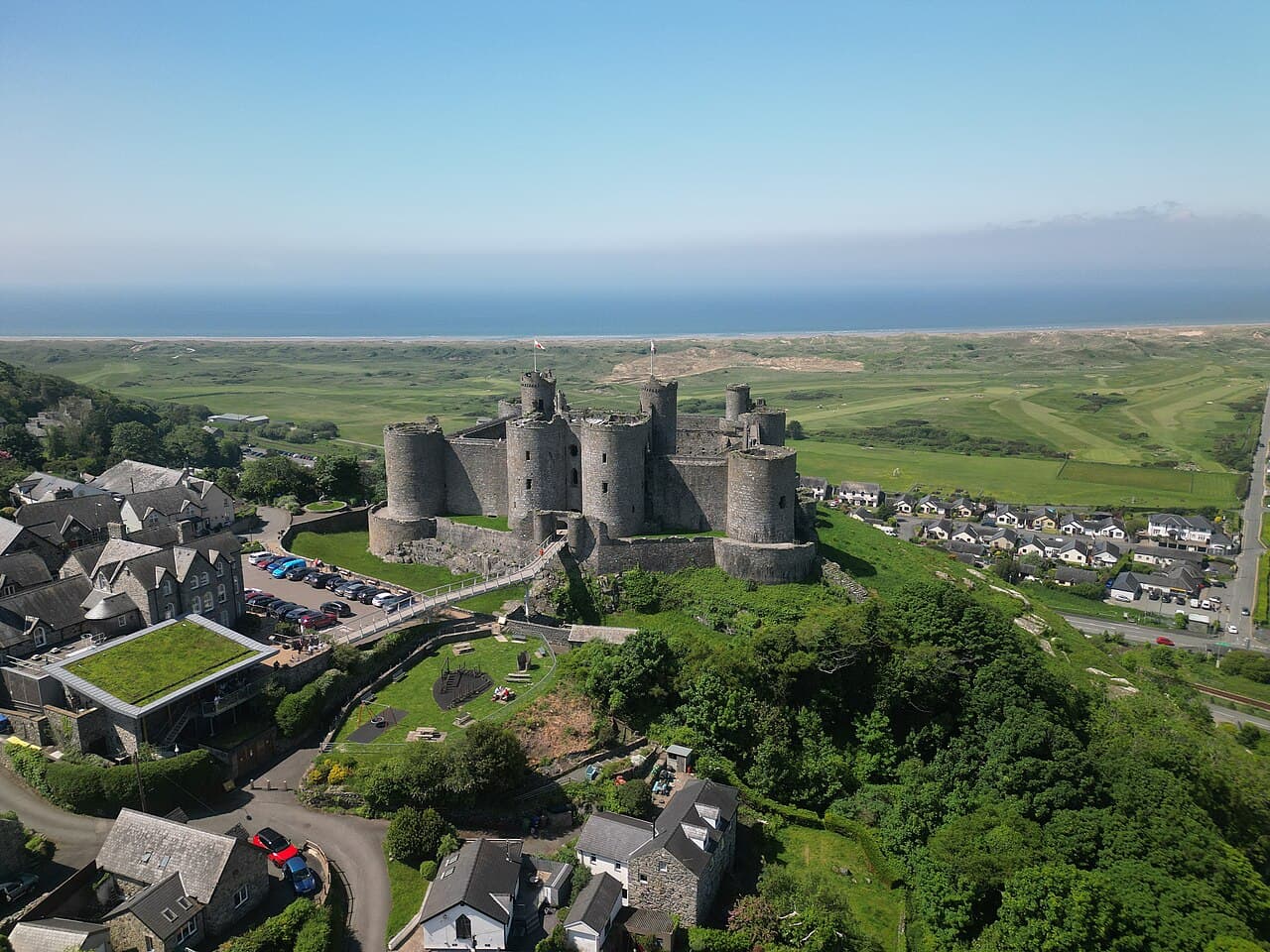
Harlech Castle stands as one of the most iconic medieval fortifications in Wales, dramatically perched atop a rocky spur overlooking the Irish Sea. Constructed between 1282 and 1289 under the direction of King Edward I, the castle was a key component of his strategic campaign to conquer and control Wales. It formed part of the famous 'iron ring' of castles designed to subdue the Welsh and secure English dominance in the region. Its commanding position on the Harlech Dome provided natural defenses and panoramic views, making it a formidable stronghold against both land and sea attacks.
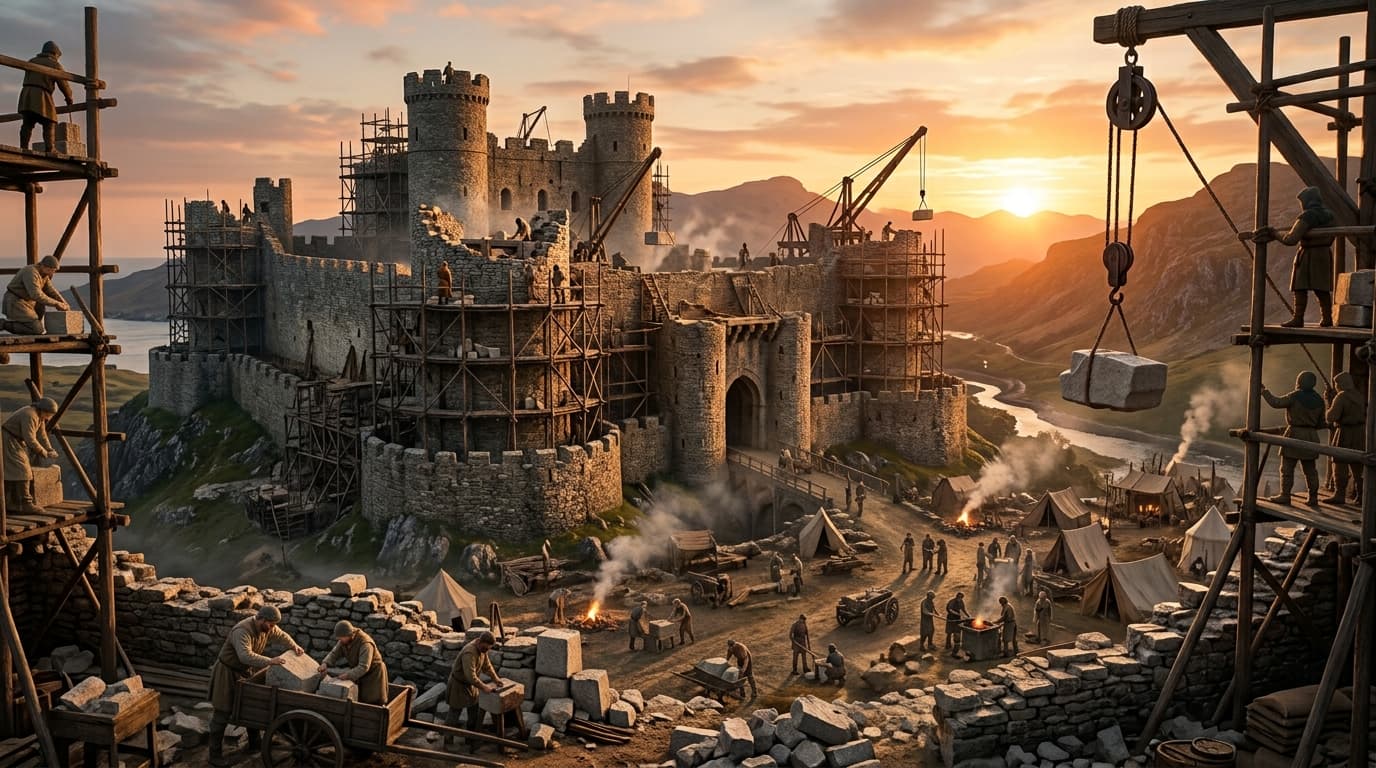
The castle's architecture exemplifies the concentric castle design characteristic of late 13th-century military engineering, with multiple layers of defensive walls and towers arranged to maximize protection. Built primarily from locally quarried grey-green sandstone, the castle also features decorative elements crafted from softer yellow sandstone sourced near Egryn Abbey. The robust construction includes a massive twin-towered gatehouse, four large circular towers enclosing the inner ward, and a protected water gate descending to the former shoreline, which allowed the castle to be resupplied by sea during sieges.
Historical significance and military role
Harlech Castle played a pivotal role in Welsh and English history over several centuries. Shortly after its completion, it successfully withstood a siege during the Welsh uprising led by Madog ap Llywelyn in 1294–1295. In 1404, it was captured by the Welsh prince Owain Glyndŵr, who used it as his residence and military headquarters during his rebellion until English forces recaptured it in 1409.
During the Wars of the Roses in the 15th century, Harlech was held by Lancastrian forces for seven years, enduring a prolonged siege that ended in 1468 when Yorkist troops took the castle. This dramatic episode inspired the famous Welsh battle song "Men of Harlech." Later, during the English Civil War, the castle remained a royalist stronghold until it surrendered to Parliamentary forces in 1647, marking the last mainland fortress to fall. Following this, Parliament ordered the castle to be partially dismantled to prevent its future military use.
Architectural features and design
Concentric layout and defensive elements
The castle exemplifies the concentric design principle, featuring multiple defensive walls arranged one inside the other. The outer ward is dominated by a massive twin-towered gatehouse with a heavily fortified passage defended by at least three portcullises and multiple thick doors, reflecting the Tonbridge style of military architecture from the 13th century. The gatehouse also contained residential chambers for the castle constable and visiting dignitaries, with large windows and fireplaces indicating high-status accommodation.
The inner ward is protected by four large circular towers, originally named for their uses or positions, such as the prison tower housing a dungeon and the chapel tower, which was later converted into an artillery workshop. The ward encloses essential buildings including a great hall, chapel, kitchen, and granary, arranged within a roughly rectangular area measuring approximately 60 by 42 meters.
Water gate and sea access
A distinctive feature is the protected water gate with a stairway of 127 steps carved into the cliffside, leading down to the former shoreline. When built, the sea reached close to the castle, allowing supplies to be brought in by boat during sieges. Over the centuries, the coastline has receded by about 800 meters, altering this vital connection.
Architectural influences and craftsmanship
The castle's architectural details reveal strong influences from Savoyard building traditions, attributed to the master builder James of Saint George, who led the construction of Edward I's Welsh castles. Features such as semi-circular arches, corbelled towers, putlog holes for wooden scaffolding, and decorative battlements reflect this heritage. Some battlements originally had triple finial ornamentation similar to Conwy Castle, though only traces survive today.
Cultural legacy and preservation
Harlech Castle has long inspired artists and historians due to its dramatic setting and rich history. From the late 18th century, it became a subject for painters drawn to its picturesque ruins and evocative atmosphere. In the 20th century, conservation efforts helped stabilize and partially restore the structure.
In 1986, Harlech Castle was inscribed as a UNESCO World Heritage Site, recognized as one of the finest surviving examples of late 13th and early 14th-century military architecture in Europe. Managed today by Cadw, the Welsh Government's historic environment service, it is a popular tourist attraction offering visitors panoramic views over Tremadog Bay and the Snowdonia mountains.
The castle remains a powerful symbol of Welsh history and resilience, embodying centuries of conflict, architectural innovation, and cultural identity. Its well-preserved ruins continue to capture the imagination of all who visit, standing as a testament to the skill of medieval builders and the turbulent history of the region.
Frequently asked questions (FAQ)
- What is the historical significance of Harlech Castle?
- Harlech Castle is a UNESCO World Heritage Site and one of the best-preserved medieval castles in Wales. Built in the late 13th century by Edward I, it played a crucial role during the Welsh Wars of Independence and symbolizes the power of the English crown over Wales.
- When was Harlech Castle built?
- Construction of Harlech Castle began in 1283 and was completed in 1289. It was part of Edward I's campaign to conquer Wales and is a prime example of his strategic military architecture.
- What are the opening hours for Harlech Castle?
- Harlech Castle is generally open to visitors daily, with opening hours varying by season. It is advisable to check the official website before your visit for the most current hours and any seasonal variations.
- Can I buy tickets online for Harlech Castle?
- Yes, tickets for Harlech Castle can be purchased online through the official website. Buying tickets in advance is recommended to avoid queues and ensure a smooth entry, especially during peak tourist seasons.
- Is Harlech Castle accessible for visitors with mobility challenges?
- Harlech Castle has made efforts to improve accessibility, including designated parking and pathways. However, due to its historic structure, some areas may still present challenges for those with mobility impairments, so it's best to check specific accessibility options before your visit.
- When is the best time to visit Harlech Castle?
- The best time to visit Harlech Castle is during the spring and early autumn months when the weather is mild and the landscape is beautiful. These seasons typically attract fewer crowds compared to the summer months, allowing for a more enjoyable experience.
- What nearby attractions can I visit while in Harlech?
- In addition to Harlech Castle, visitors can explore the stunning Harlech Beach, known for its scenic views and sand dunes. The nearby Snowdonia National Park offers excellent hiking and outdoor activities, making it a perfect destination for nature lovers.
- What are the ticket prices for Harlech Castle?
- Ticket prices for Harlech Castle vary based on age and concession rates. Adult tickets are generally around £8, while discounts are available for children, seniors, and families, so it's wise to check the official website for the latest pricing information.
Photo gallery

Information
Website
Visit websiteFeatured in
Articles on the Castlopedia blog that feature Harlech Castle.
Sources & official resources
Verify the information above using these authoritative references.
Loading map...
Visitor reviews
No reviews yet. Been here? Write the first review and help other travelers!
Write the first reviewVisited this castle? Share your experience
Your review helps other travelers and adds first-hand knowledge to our encyclopedia.