Tomen y Mur
Tomen y Mur stands as a remarkable archaeological site in the heart of Snowdonia National Park, North Wales. This ancient fortress complex uniquely combines the legacy of Roman military engineering with Norman medieval fortifications. Originally established as a Roman fort around AD 77-78 during the governorship of Gnaeus Julius Agricola, it played a pivotal role in the Roman conquest and control of the native Ordovices tribe and the strategic road networks of northern Britain.
The fort's initial construction featured typical Roman military architecture of the period, utilizing timber and earthworks to house a cavalry unit of approximately 1,000 soldiers. This early phase reflects the aggressive expansionist phase of Roman Britain, emphasizing rapid deployment and control. By the early 2nd century, under the reign of Emperor Hadrian, the fort underwent significant transformation. It was rebuilt in stone on a smaller scale to accommodate an infantry garrison of about 500 troops, signaling a shift from conquest to consolidation and defense.
Roman military architecture and layout
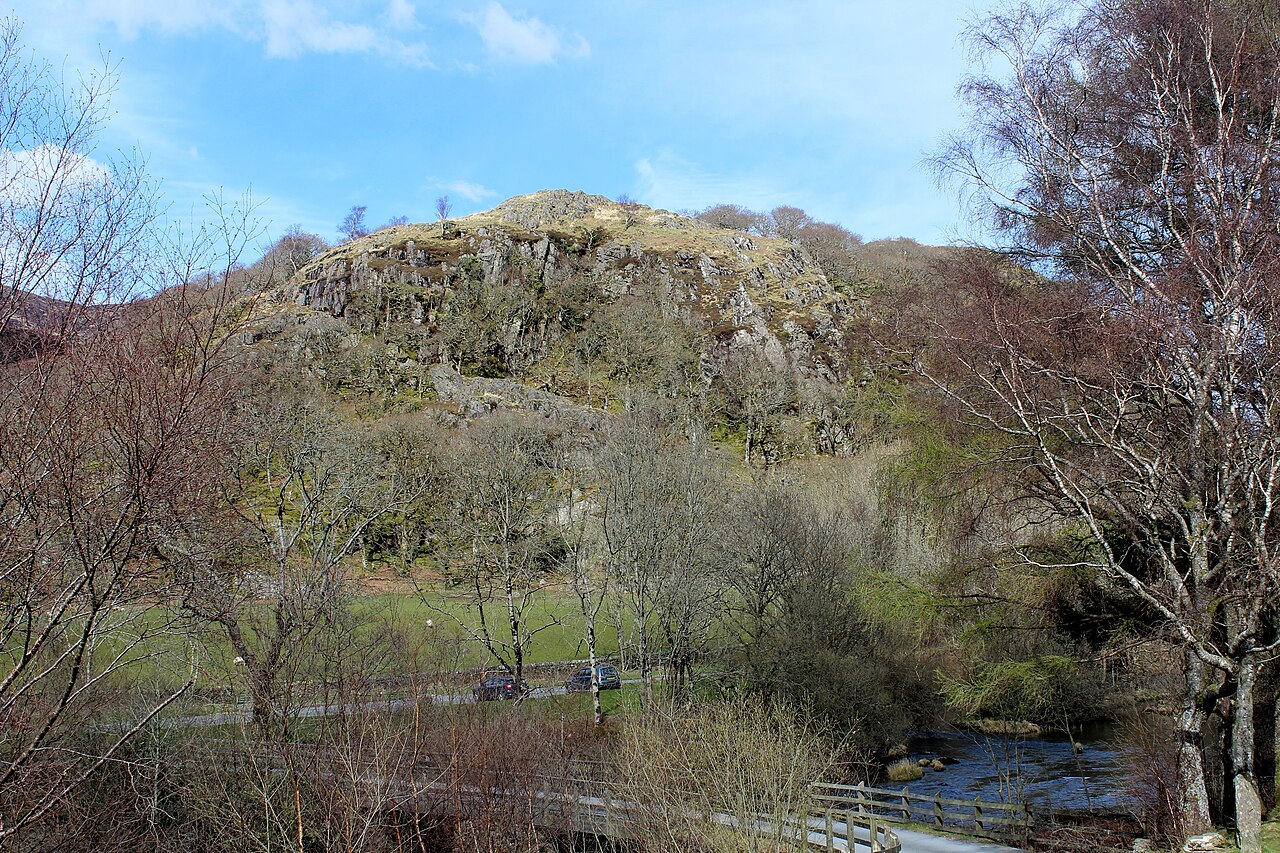
The fort covers roughly 1.7 hectares and is strategically positioned on the slopes of Mynydd Maentwrog, overlooking the surrounding landscape northeast of Llyn Trawsfynydd. Its design embodies classic Roman military principles, including a rectangular plan fortified by stone curtain walls, defensive earth banks, and a network of internal buildings arranged for optimal military efficiency.
Among the surviving Roman features, the fort boasts an exceptionally rare small amphitheatre (ludus), a unique element in Britain, likely used for soldier training and entertainment. The presence of a bathhouse highlights the Roman emphasis on hygiene and social life within military installations. Additionally, residential quarters for officers and soldiers, a possible temple for religious observance, and a mansio serving as a rest stop for officials and travelers along the Roman road network have been identified.
Centurial stones and inscriptions
Significant archaeological finds include centurial stones, which are inscribed markers detailing the construction efforts of different Roman military units. Some of these stones, originally from Tomen y Mur, have been found at nearby Harlech Castle. These inscriptions provide invaluable evidence of the fort's phased construction and the specific legions involved, linking the site to the broader military infrastructure of Roman Britain.
Transition to medieval fortification
Following the Roman military withdrawal around AD 140, the site did not fall into ruin but continued to hold cultural and strategic importance. Archaeological evidence such as a 5th-century tombstone indicates early medieval activity, with local traditions associating the site with Welsh princely families descended from Cunedda, a legendary ancestor figure in Welsh history and literature.
In the late 11th century, the Normans recognized the strategic value of the location and constructed a motte-and-bailey castle within the Roman fort's perimeter. This Norman fortification, likely built around 1095 during the reign of William Rufus, incorporated the existing Roman earthworks, adapting them for medieval military use. The name "Tomen y Mur" translates from Welsh as "mound of the wall," referring to the prominent Norman motte that dominates the site today.
Norman military adaptations
The large earthen motte constructed by the Normans stands as a testament to their typical castle-building techniques, emphasizing elevated defensive positions. This motte coexists with the remnants of the Roman fortifications, illustrating a fascinating layering of military architecture across centuries. Historical records note a battle near the site in 1114 between forces loyal to King Henry I and Welsh troops, underscoring the area's ongoing strategic significance during the medieval period.
Archaeological significance and preservation
Tomen y Mur's remote setting within Snowdonia has contributed to the exceptional preservation of its earthworks and structural remains. Unlike many Roman sites in Britain affected by agriculture or urban development, the site remains a well-defined complex where the juxtaposition of Roman military, religious, and Norman medieval features can be studied in situ.
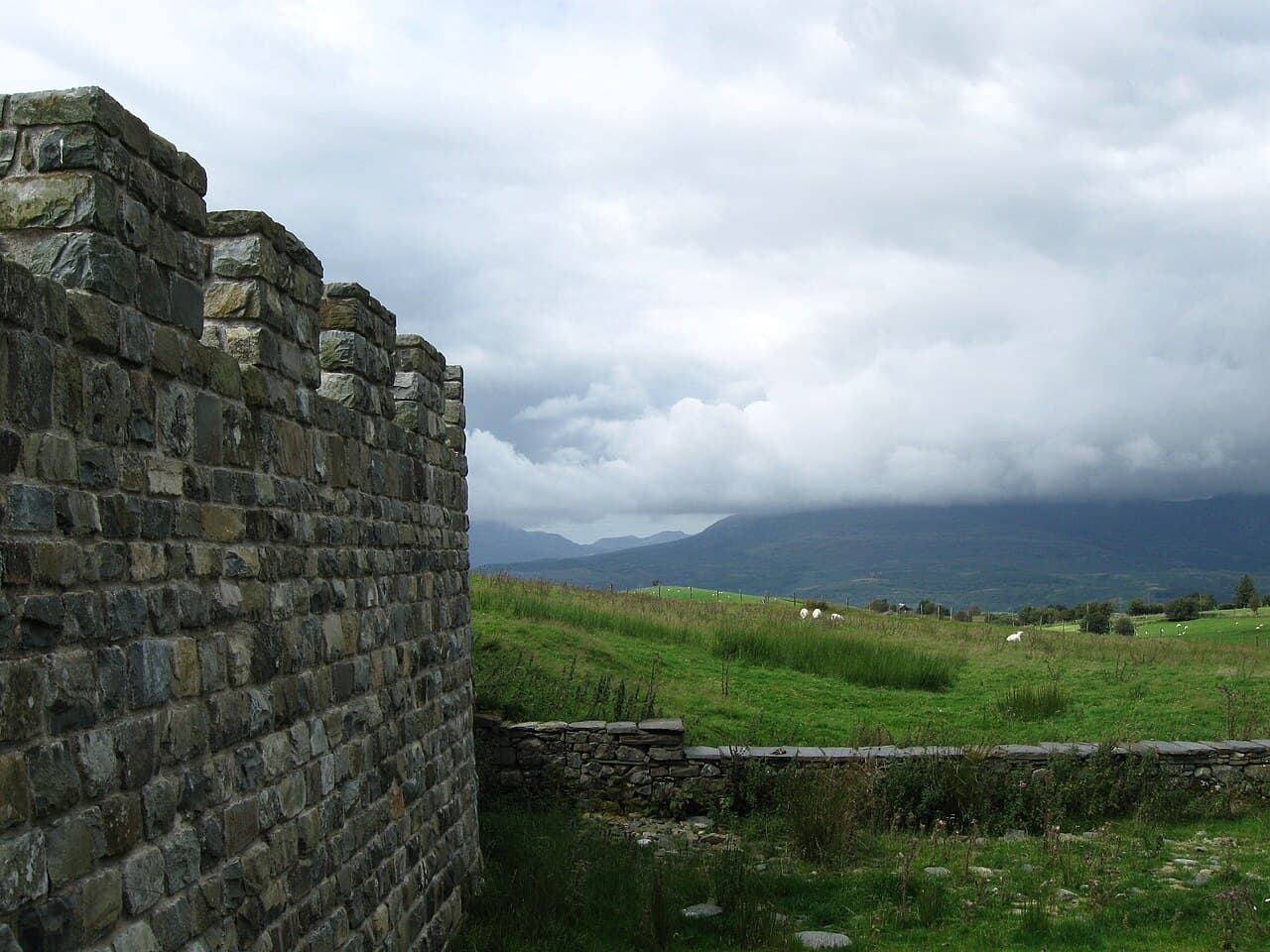
The site offers visitors a unique opportunity to explore a landscape where Roman stone walls have been partially reconstructed to demonstrate original defensive arrangements, alongside the imposing Norman motte. The discovery of burial mounds and early medieval tombstones adds layers of historical depth, reflecting continuous occupation and reverence for the site long after the Roman departure.
Visitor experience and educational value
Today, Tomen y Mur is accessible to the public and serves as an important educational resource for understanding Roman military strategy, Norman castle-building, and Welsh medieval history. Interpretive signage and on-site reconstructions help visitors visualize the fort's original scale and function. The site's integration into the natural beauty of Snowdonia enhances its appeal as a destination for history enthusiasts and hikers alike.
Overall, Tomen y Mur exemplifies the layered history of Britain’s military architecture, from Roman imperial ambitions to Norman consolidation and Welsh medieval heritage. Its well-preserved remains and rich archaeological record make it a key site for appreciating the complex historical narratives that have shaped the region.
Frequently asked questions (FAQ)
- How do I get to Tomen y Mur and what should I expect on arrival?
- Tomen y Mur is located near the village of Trawsfynydd in Gwynedd, Wales. Visitors should prepare for a rural setting with walking paths leading to the site. It is advisable to wear sturdy footwear and bring weather-appropriate clothing as the terrain can be uneven and exposed.
- What is the historical significance of Tomen y Mur?
- Tomen y Mur is significant as a well-preserved Roman military fort that later became a Norman motte-and-bailey castle. It illustrates the military and cultural transitions in North Wales from Roman Britain through the medieval period.
- Can I see the Roman amphitheatre at Tomen y Mur?
- Yes, the site includes the remains of a rare small Roman amphitheatre, which is a unique feature in Britain. While only earthworks remain, interpretive signage helps visitors understand its original function for soldier training and entertainment.
- Is Tomen y Mur accessible year-round?
- The site is generally accessible year-round, but visitors should check local conditions as weather in Snowdonia can be variable. Some paths may be slippery or muddy during wet seasons, so caution is advised.
- Are there guided tours available at Tomen y Mur?
- Guided tours may be available through local heritage organizations or visitor centers in Gwynedd. It is recommended to check in advance for scheduled tours or educational programs to enhance the visit.
Photo gallery

Information
Website
Visit websiteSources & official resources
Verify the information above using these authoritative references.
Loading map...
Visitor reviews
No reviews yet. Been here? Write the first review and help other travelers!
Write the first reviewVisited this castle? Share your experience
Your review helps other travelers and adds first-hand knowledge to our encyclopedia.