Gyantse Dzong
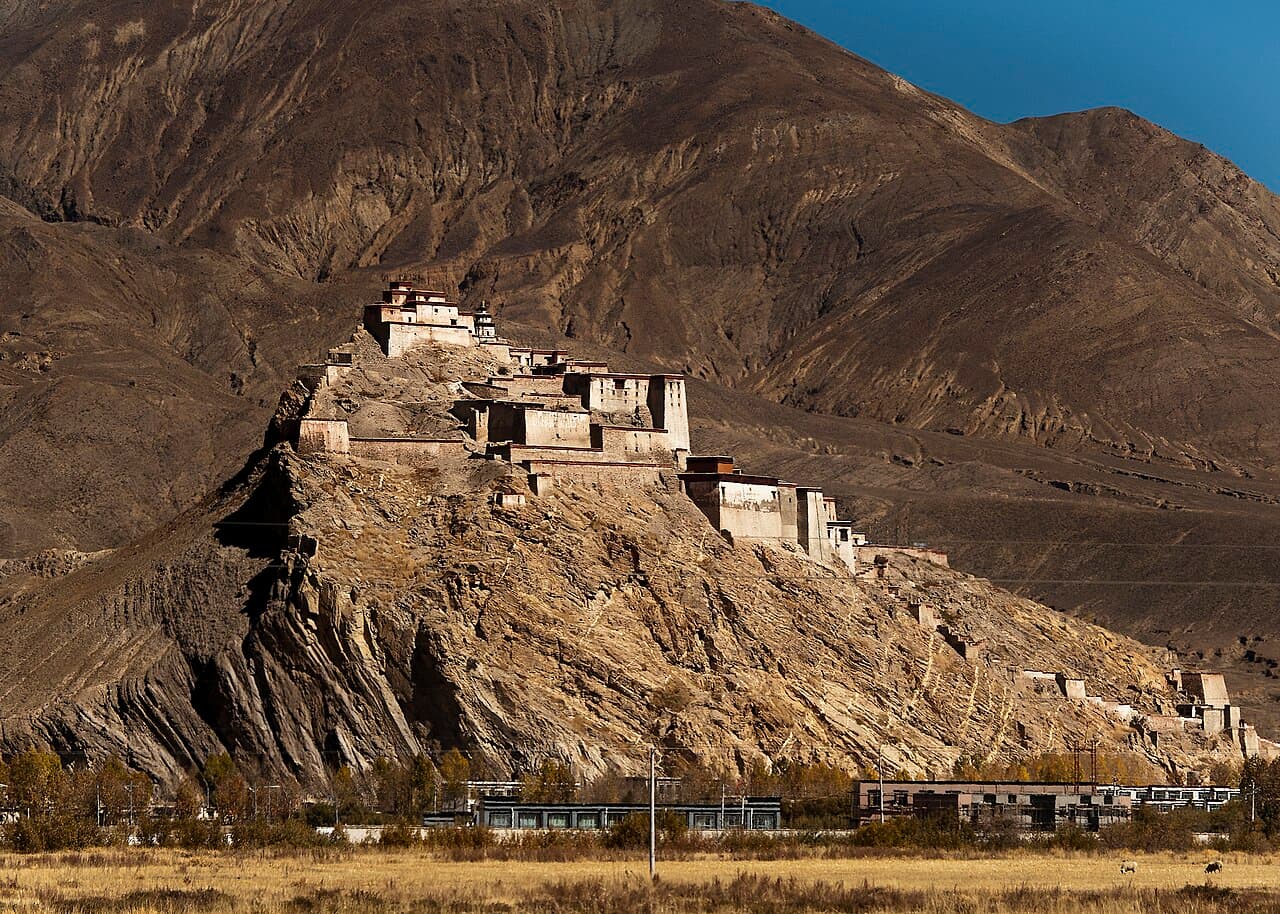
Gyantse Dzong, also known as Gyantse Fortress, stands prominently on a massive spur of grey-brown rock overlooking the town of Gyantse in Tibet. This 14th-century bastioned fortress is among the best preserved dzongs in the region, reflecting the military and administrative architecture of late medieval Tibet. Its strategic location allowed it to control the southern approaches to the Tsangpo Valley and the vital city of Lhasa.
Historical background and strategic importance
The fortress was constructed in 1390, during a period when Tibet was divided into competing regional powers. According to historical accounts, including those by Vitali, Gyantse Dzong was built to serve as a defensive stronghold guarding the southern access routes to the Tsangpo Valley. The fortress played a key role in controlling trade routes and military movements in the area, acting as a bulwark against invasions and local conflicts.
The town of Gyantse itself was fortified with a substantial wall approximately 3 kilometres (1.9 miles) in length, encircling the settlement to provide additional protection. The main entrance to the fortress lies on the eastern side, designed to regulate access and bolster defense against potential attackers.
Architectural features and layout
Gyantse Dzong exemplifies the characteristics of a bastioned fortress, featuring thick defensive walls and bastions that project outward to provide overlapping fields of fire for defenders. The fortress is built on a natural rock outcrop, which enhances its defensive capabilities by creating steep approaches that are difficult for enemies to scale.
The fortress complex includes multiple levels of fortifications, with battlements and watchtowers strategically placed to monitor the surrounding landscape. The use of local stone in construction contributes to the fortress's imposing appearance and durability. Inside, the fortress likely contained barracks, storage rooms, and administrative quarters, although much of the internal layout has been altered or lost over time.
Defensive structures
The bastions are key elements of the fortress's defense, allowing defenders to cover the walls with crossfire and protect the main gate. The eastern entrance is fortified and designed to funnel attackers into a narrow approach, making it easier to defend.
Integration with the town
The fortress overlooks the walled town of Gyantse, which was an important regional center. The town walls formed a continuous barrier around the settlement, complementing the fortress's defensive role. This integration of town and fortress was typical of Tibetan dzongs, which combined military, administrative, and religious functions.
Role in Tibetan history
Gyantse Dzong has witnessed significant historical events, including conflicts during the 17th to 20th centuries. It was a focal point during the British expedition to Tibet in 1904, when it resisted British forces for several weeks. The fortress's resilience during this siege highlighted its strategic and symbolic importance.
Throughout its history, the fortress served not only as a military installation but also as an administrative center for the region. It housed local governors and monks, reflecting the dual military and religious nature of Tibetan dzongs.
Preservation and current condition
Today, Gyantse Dzong remains well preserved compared to many other Tibetan fortresses. Its commanding position and robust construction have helped it withstand the passage of time and natural elements. Visitors can explore the fortress ruins, which offer panoramic views of Gyantse town and the surrounding valleys.
The fortress is an important cultural heritage site, attracting tourists interested in Tibetan history, architecture, and military fortifications. Efforts have been made to maintain and stabilize the structure to prevent further deterioration.
Visiting Gyantse Dzong
Visitors to Gyantse Dzong can experience a remarkable example of Tibetan defensive architecture. The climb to the fortress involves ascending steep paths, rewarding visitors with expansive views and a tangible connection to Tibet's medieval past. The site provides insight into the region's historical military strategies and the lifestyle of its former inhabitants.
Nearby attractions include the town's traditional markets and the Pelkor Chode Monastery, which complements the cultural experience of the fortress visit.
Frequently asked questions (FAQ)
- What is Gyantse Dzong?
- Gyantse Dzong is a historic fortress located in Gyantse, Tibet, China. Built in the 14th century, it served as a strategic military stronghold and is renowned for its impressive architecture and rich history, reflecting the cultural heritage of the region.
- When was Gyantse Dzong built?
- Gyantse Dzong was constructed in the early 14th century, specifically in 1390. This fortress played a crucial role in the defense of the region during various historical conflicts, showcasing the architectural prowess of its time.
- How do I visit Gyantse Dzong?
- To visit Gyantse Dzong, you can travel to Gyantse by bus or taxi from Lhasa, which is approximately 254 kilometers away. Once in Gyantse, the dzong is easily accessible on foot, and local guides are available for hire to enhance your experience.
- What are the opening hours of Gyantse Dzong?
- Gyantse Dzong is typically open to visitors from 8:00 AM to 6:00 PM. However, it's advisable to check for any seasonal changes in opening hours or special closures before your visit.
- Is it possible to take photographs inside Gyantse Dzong?
- Yes, visitors are generally allowed to take photographs inside Gyantse Dzong, but it is important to be respectful of the cultural and religious significance of the site. Some areas may have restrictions, so always follow posted guidelines.
- What is the best time to visit Gyantse Dzong?
- The best time to visit Gyantse Dzong is during the spring (April to June) and autumn (September to October) months when the weather is mild and clear. This allows for comfortable exploration of the fortress and its stunning views of the surrounding landscape.
- Can I find nearby attractions when I visit Gyantse Dzong?
- Yes, there are several nearby attractions, including the Kumbum Stupa and the Pelkor Chode Monastery, both of which are significant cultural sites. These locations complement your visit to Gyantse Dzong and offer deeper insights into the region's history and spirituality.
- What are the ticket prices for Gyantse Dzong?
- As of the latest information, the entrance fee for Gyantse Dzong is approximately 40 Chinese Yuan. It's always a good idea to check for any updates or changes in pricing before your visit.
- How accessible is Gyantse Dzong for visitors with disabilities?
- Gyantse Dzong has limited accessibility for visitors with disabilities due to its steep terrain and historical architecture. However, some areas may be accessible, so it's advisable to contact local tourism offices for assistance and more information on accessibility options.
Photo gallery

Information
Loading map...
Visitor reviews
No reviews yet. Been here? Write the first review and help other travelers!
Write the first reviewVisited this castle? Share your experience
Your review helps other travelers and adds first-hand knowledge to our encyclopedia.