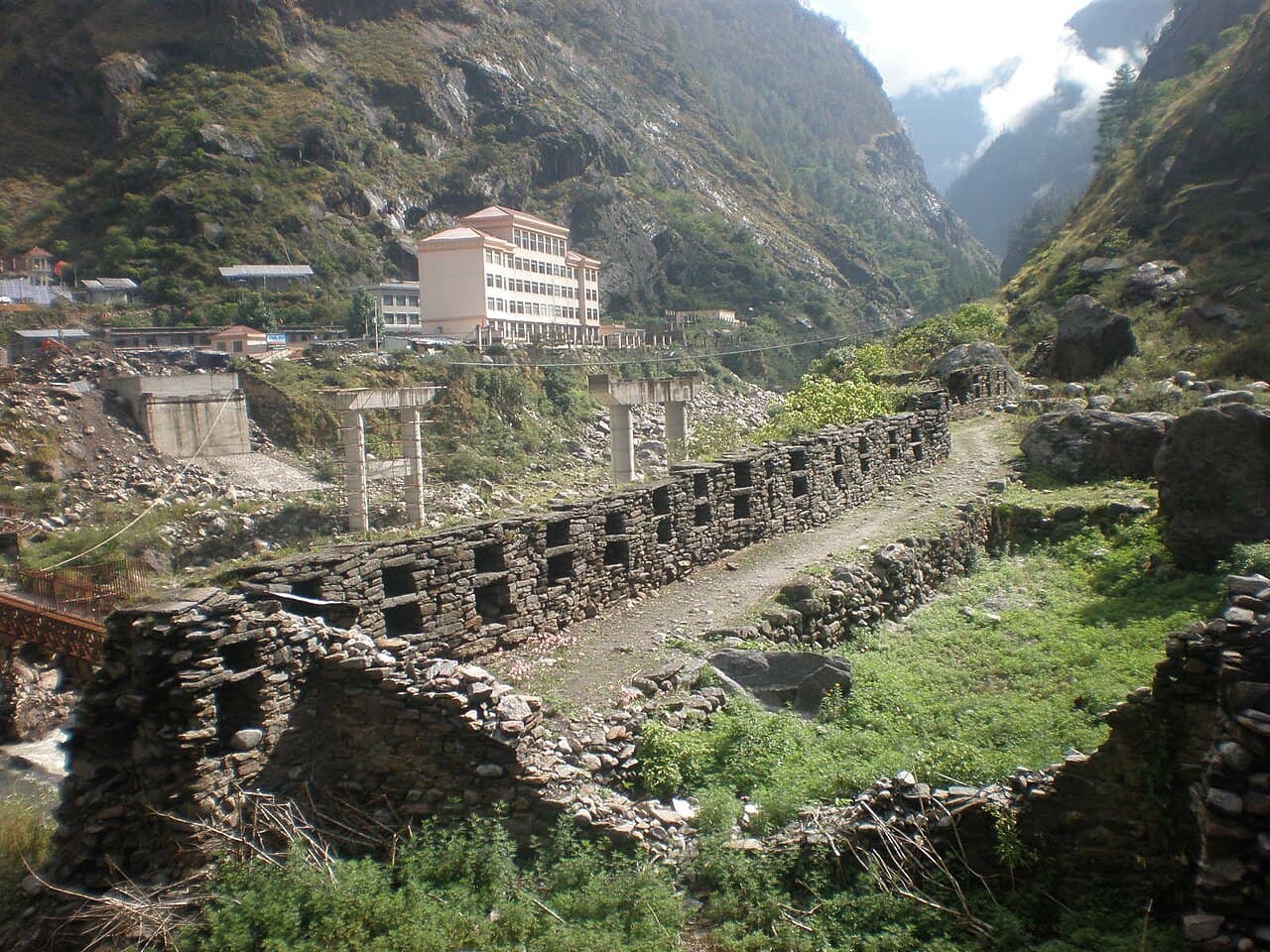
Rasuwa Fort, also known locally as Rasuwa Gadhi (Nepali: रसुवागढी), is a significant 19th-century fortification situated in the Rasuwa District of Nepal. This archaeological ruin lies near the border with Tibet, China, positioned strategically along the Trishuli River. The fort is located approximately 3 kilometres (1.9 miles) north of the Nepalese town of Timure, within the boundaries of Langtang National Park. It is also about 25 kilometres south of the nearest Chinese locality, Gyirong Town.
Historical context and strategic significance
The fort was constructed in the 19th century during a period when Nepal sought to strengthen its northern borders. Its location was chosen for its strategic vantage point overseeing the Trishuli River valley and the trade routes connecting Nepal and Tibet. The fort served as a military outpost to monitor cross-border movements and to assert Nepalese sovereignty in the region.
Rasuwa Fort's proximity to the border made it a critical defensive structure during various regional conflicts and border disputes. Although it is now in a state of ruin, the remains of the fort provide valuable insights into the military architecture and border defense mechanisms employed in the Himalayan region during the modern period.
Architectural features and layout
While much of Rasuwa Fort lies in ruins, archaeological studies and site surveys have revealed aspects of its original construction. The fort was built using locally sourced stone and mortar, typical of Himalayan fortifications of the period. Its design incorporated defensive walls, watchtowers, and a gatehouse facing the river to control access along the valley.
The fort's layout was adapted to the rugged mountainous terrain, with terraced platforms and retaining walls to provide stability. The remnants suggest a compact fortress designed primarily for military use rather than residential comfort. Defensive features likely included battlements and narrow openings for surveillance and archery.
Natural setting and access
Rasuwa Fort is set within the scenic landscape of Langtang National Park, an area known for its dramatic Himalayan vistas and biodiversity. The fort overlooks the Trishuli River, which has historically been an important natural corridor for trade and travel between Nepal and Tibet.
Visitors can reach the site via trekking routes from Timure. A trekking permit obtained in Kathmandu is required to visit the fort and the border area. However, crossing the bridge into Tibet is prohibited for tourists, maintaining the fort's status as a border monument rather than an international crossing point.
Preservation and cultural importance
Today, Rasuwa Fort stands as an archaeological site reflecting Nepal's historical efforts to secure its northern frontier. Its ruins attract historians, trekkers, and those interested in Himalayan military heritage. Conservation efforts focus on preserving the remaining structures and promoting awareness of the fort's role in regional history.
The fort's location within a national park also highlights the intersection of cultural heritage and natural conservation, offering visitors a unique experience combining history and nature.
Visitor information
Tourists interested in exploring Rasuwa Fort should plan for trekking conditions and obtain the necessary permits beforehand. The site is accessible primarily on foot, and visitors should be prepared for high-altitude terrain and variable weather. While the fort itself is in ruins, its historical significance and the surrounding landscape make it a noteworthy destination for cultural tourism in Nepal.
Frequently asked questions (FAQ)
- How do I get to Rasuwa Fort?
- Rasuwa Fort is accessible by trekking from the town of Timure in Nepal. Visitors must obtain a trekking permit in Kathmandu before traveling to the area.
- Can I cross the border into Tibet from Rasuwa Fort?
- No, tourists are not permitted to cross the border bridge into Tibet from Rasuwa Fort. The site serves as a historical border fort but not an international crossing point.
- What is the historical significance of Rasuwa Fort?
- Built in the 19th century, Rasuwa Fort was a strategic military outpost to monitor and defend Nepal's northern border with Tibet during regional conflicts and trade control.
- What remains of the fort can be seen today?
- Visitors can see the ruins of defensive walls, watchtowers, and the gatehouse foundations. The fort's stone construction and terraced platforms are still visible despite its ruined state.
- Is Rasuwa Fort located within a protected area?
- Yes, the fort is situated within Langtang National Park, combining cultural heritage with natural conservation in a scenic Himalayan environment.
Photo gallery

Information
Loading map...
Visitor reviews
No reviews yet. Been here? Write the first review and help other travelers!
Write the first reviewVisited this castle? Share your experience
Your review helps other travelers and adds first-hand knowledge to our encyclopedia.