Buxa Fort
Buxa Fort is a significant historical fortress located at an altitude of 867 metres (2,844 ft) within the Buxa Tiger Reserve in the Kalchini CD block of the Alipurduar subdivision, Alipurduar district, West Bengal, India. Positioned approximately 30 kilometres (19 mi) from the town of Alipurduar, the fort occupies a strategic location near the India-Bhutan border, historically serving as a key military outpost.
Historical significance and strategic role
Constructed in the 19th century, Buxa Fort was built as a bastioned fortress designed to guard the important mountain passes that connected Tibet with India through Bhutan. The fort was commissioned by the King of Bhutan to protect Bhutanese territory and to control the movement along these crucial trade and invasion routes. Its location in the Eastern Himalayas made it vital for regional security and military control during a period of geopolitical tension in the area.
Architectural features and fortifications
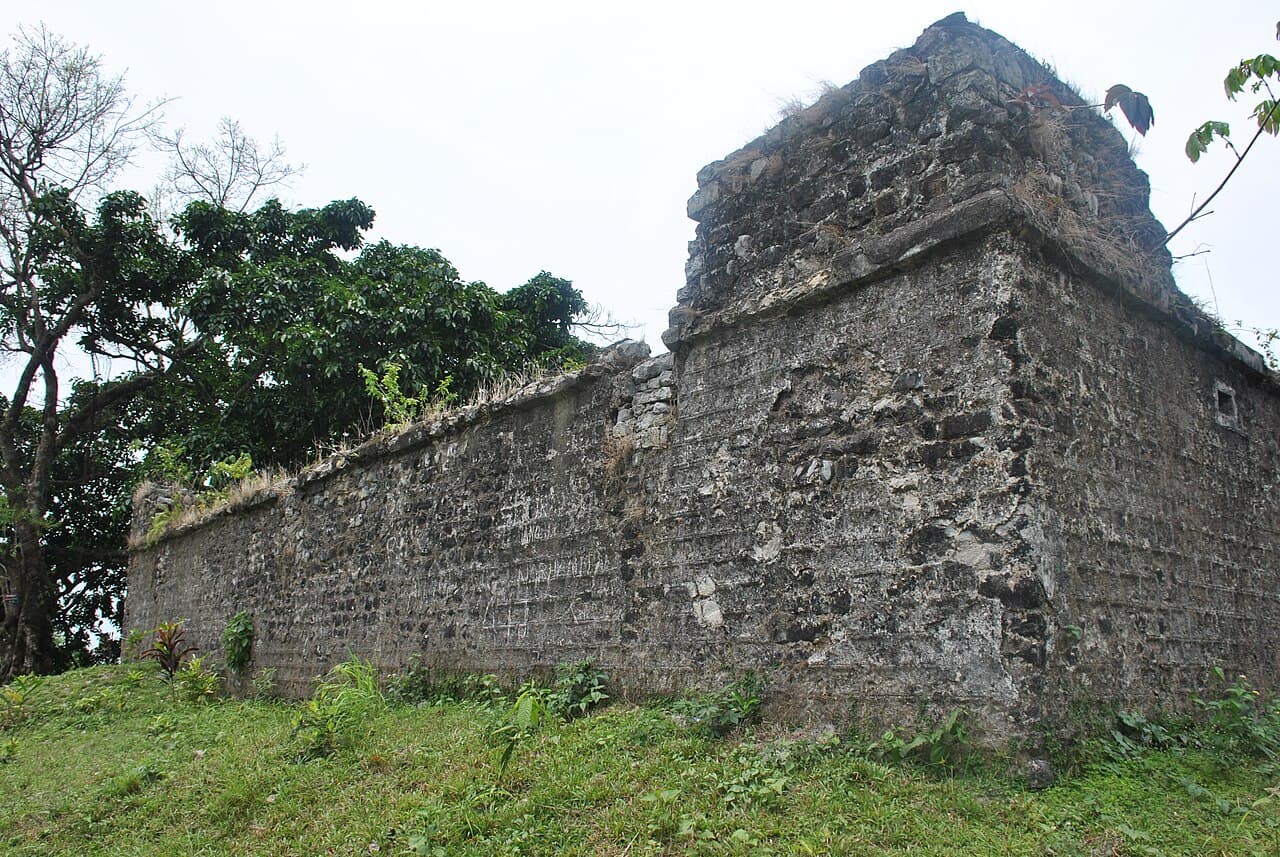
The fort exemplifies 19th-century military architecture with features typical of a bastioned fortress. It includes thick defensive walls and bastions designed to provide overlapping fields of fire against attackers. The elevated position gives commanding views of the surrounding forested hills and valleys, enhancing its defensive capabilities. The fort's construction materials primarily consist of stone and mortar, adapted to the mountainous terrain.
Layout and defensive structures
Buxa Fort includes multiple bastions positioned at strategic points along its perimeter, allowing defenders to cover all approaches effectively. The fort's design incorporates narrow entrances and winding paths to impede enemy advances. Though now partially in ruins, the remnants reveal a complex defensive system including parapets, ramparts, and guard posts.
Role during 20th-century conflicts and refugee shelter
During the mid-20th century, especially following the annexation of Tibet by the People's Republic of China in the 1950s, Buxa Fort gained renewed importance as a refuge. The fort became a shelter for hundreds of displaced Tibetans fleeing political upheaval and military conflict. Its remote location and sturdy construction made it a suitable sanctuary during this turbulent period.
Later historical context
The fort's military importance declined with changes in regional politics and advances in military technology. It was eventually abandoned but remains a site of historical interest and cultural memory related to the Himalayan borderlands.
Geographical and environmental setting
Buxa Fort is situated within the Buxa Tiger Reserve, an area known for its rich biodiversity and dense forests. The reserve provides a natural backdrop of rugged hills and wildlife, adding to the fort's scenic and ecological significance. The altitude and terrain contributed both to the fort's defensive advantages and to the challenges of sustaining a garrison.
Current status and preservation
Today, Buxa Fort stands as a partially preserved monument, with some structural elements still intact despite the passage of time and exposure to natural elements. It attracts visitors interested in military history, Himalayan geography, and the cultural heritage of the India-Bhutan border region. Efforts to preserve and study the site continue, emphasizing its importance as a historical and architectural landmark.
Visiting Buxa Fort
Visitors to Buxa Fort can explore the remains of the fortress while enjoying the natural beauty of the Buxa Tiger Reserve. The site offers opportunities for hiking, wildlife observation, and photography. Due to its location in a protected reserve, visitors should check access regulations and opening hours before planning their trip.
Frequently asked questions (FAQ)
- How do I get to Buxa Fort?
- Buxa Fort is located about 30 kilometres from Alipurduar town in West Bengal. Visitors can reach Alipurduar by train or road and then travel to the fort by local transport or guided tours.
- What is the historical significance of Buxa Fort?
- Buxa Fort was built in the 19th century by the King of Bhutan to guard strategic mountain passes linking Tibet and India. It later served as a refuge for displaced Tibetans during the mid-20th century.
- Can I visit Buxa Fort year-round?
- The fort is accessible throughout the year, but the best time to visit is during the cooler months from October to March when the weather is more pleasant for trekking and exploration.
- Is Buxa Fort well-preserved?
- Buxa Fort is partially preserved with some ruins and structural remains visible. Visitors can explore the site but should be cautious as some areas may be unstable.
- Are there any facilities for tourists at Buxa Fort?
- Facilities are limited at the fort itself due to its remote location within the Buxa Tiger Reserve. Visitors are advised to prepare accordingly and consider guided tours for a better experience.
Photo gallery

Information
Current owner
State museum
Loading map...
Visitor reviews
No reviews yet. Been here? Write the first review and help other travelers!
Write the first reviewVisited this castle? Share your experience
Your review helps other travelers and adds first-hand knowledge to our encyclopedia.