Great Wall of Qi
The Great Wall of Qi (Qí Chángchéng) holds the distinction of being the oldest existing great wall in China. Its origins date back to the 5th century BC, with construction traditionally recorded as beginning in 441 BC during the Early Medieval period. This monumental defensive structure was initiated by the state of Qi as a strategic fortification to protect its territory from incursions by neighboring states such as Jin and Yue. Archaeological evidence suggests that some sections of the wall may predate these records, indicating an even earlier phase of construction.
Historical context and strategic importance
During the Warring States period, the Great Wall of Qi served as a critical military barrier for Qi against hostile states including Ju, Lu, and Chu. The wall's construction spanned several decades, reflecting the turbulent political landscape of ancient China where states frequently engaged in warfare for territorial dominance. By establishing this extensive fortification, Qi aimed to secure its borders and maintain regional power.
Architectural features and construction
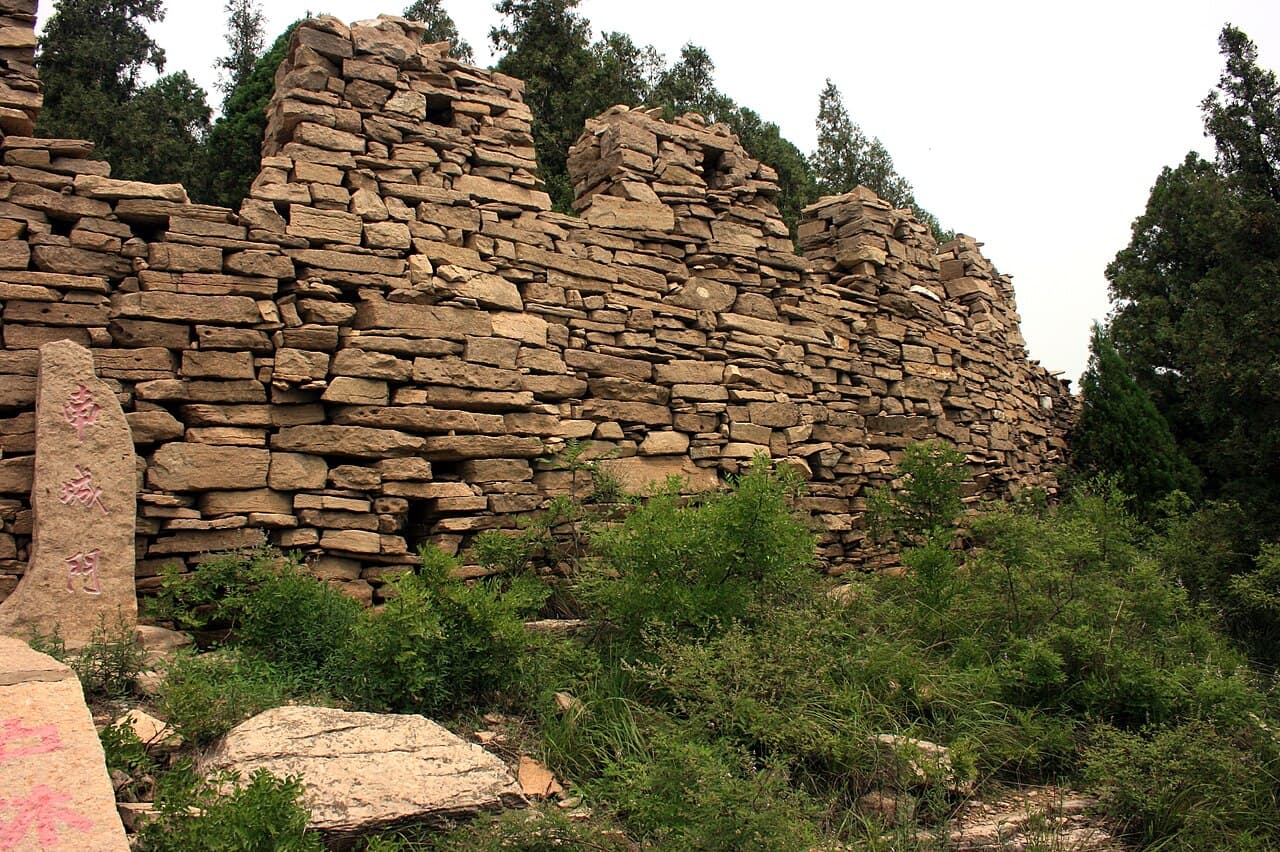
The wall extends approximately 600 kilometers, running from Guangli village in the modern Changqing District of Jinan, across the mountain ridges of central Shandong Province, all the way to the Yellow Sea near present-day Qingdao. Its route strategically follows natural topography, utilizing ridges and elevations to enhance defense capabilities. The construction techniques involved rammed earth and stone, typical of early Chinese fortifications, creating a robust barrier resistant to enemy advances.
Large segments of the wall remain visible today, offering insight into early Chinese military engineering. The wall features bastions and watchtowers at intervals, allowing defenders to monitor and repel attacks effectively. Its design reflects a bastioned fortress style, optimized for both surveillance and defense.
Preservation and cultural significance
Despite its antiquity, many parts of the Great Wall of Qi have survived the ravages of time, making it a valuable cultural and historical monument. It stands as a testament to early Chinese statecraft, military strategy, and architectural ingenuity. Preservation efforts focus on maintaining the remaining sections, which continue to attract scholars and tourists interested in China's ancient history.
The Great Wall of Qi is less known internationally compared to the more famous Ming Dynasty Great Wall, yet it provides crucial understanding of the evolution of Chinese fortifications. It embodies the strategic importance of border defense in ancient China and the sophisticated construction methods developed over two millennia ago.
Location and accessibility
The wall's location in Shandong Province places it within a region rich in Chinese history and culture. Visitors can explore the surviving sections near Jinan and Qingdao, where the wall's integration with the natural landscape is particularly striking. The mountainous terrain offers a scenic backdrop, enhancing the experience of exploring this ancient fortification.
Visiting the wall
Access to various parts of the Great Wall of Qi may vary, with some sections more accessible than others due to preservation status and terrain. Guided tours and local museums provide additional context for visitors, explaining the wall’s historical role and construction techniques. The site is an important destination for those interested in early Chinese history and military architecture.
Frequently asked questions (FAQ)
- When was the Great Wall of Qi built?
- Construction of the Great Wall of Qi began in 441 BC during the Early Medieval period, with some sections possibly older based on archaeological findings.
- What was the purpose of the Great Wall of Qi?
- The wall was built by the state of Qi to defend against invasions from neighboring states such as Jin, Yue, Ju, Lu, and Chu during the Warring States period.
- Where is the Great Wall of Qi located?
- It stretches across central Shandong Province from Guangli village in Changqing District, Jinan, to the Yellow Sea near Qingdao.
- Can visitors see the Great Wall of Qi today?
- Yes, many parts of the wall are still visible and accessible, offering a glimpse into ancient Chinese military architecture.
- What materials were used to build the Great Wall of Qi?
- The wall was primarily constructed using rammed earth and stone, common materials for fortifications in ancient China.
Photo gallery

Information
Loading map...
Visitor reviews
No reviews yet. Been here? Write the first review and help other travelers!
Write the first reviewVisited this castle? Share your experience
Your review helps other travelers and adds first-hand knowledge to our encyclopedia.