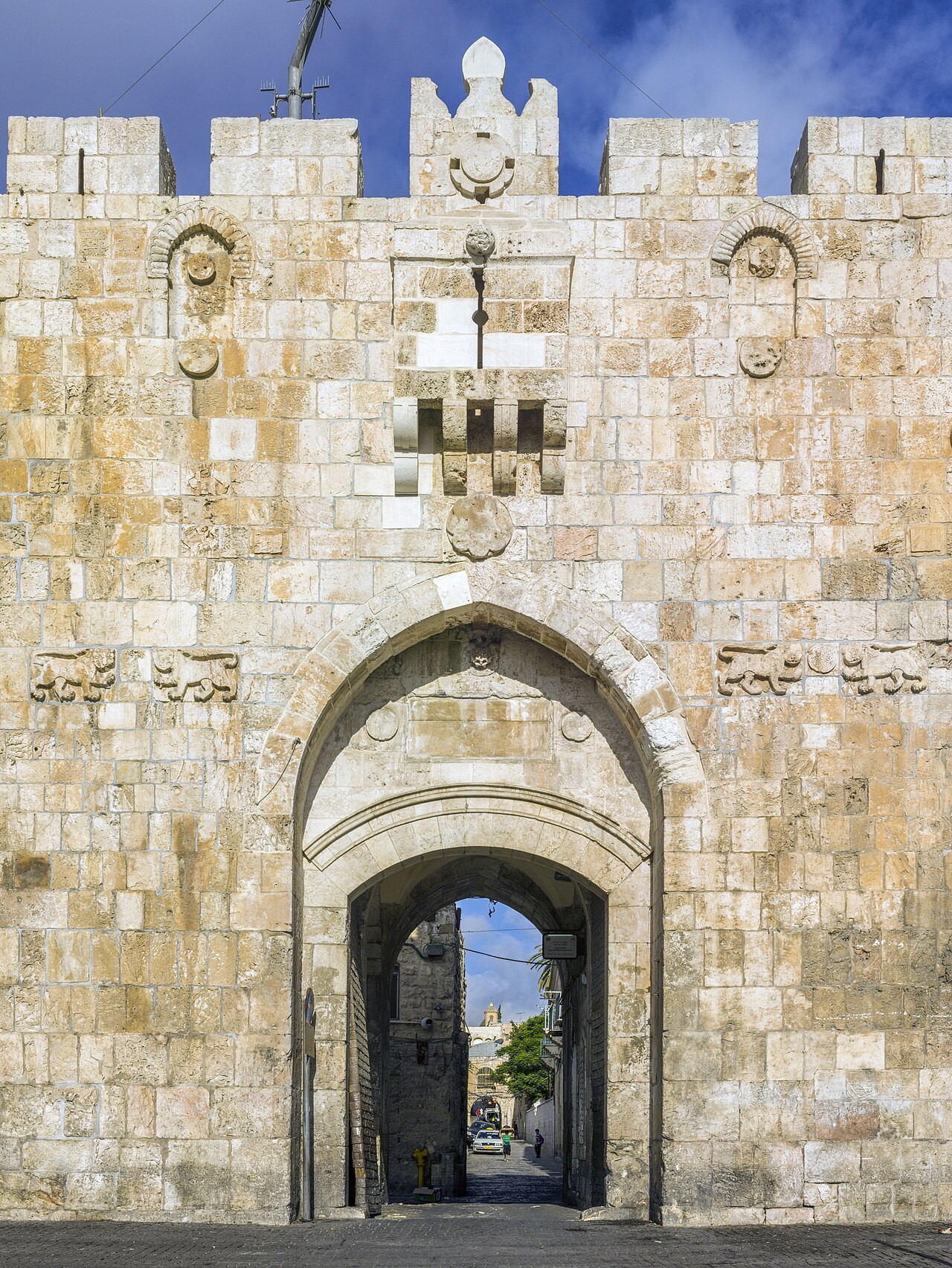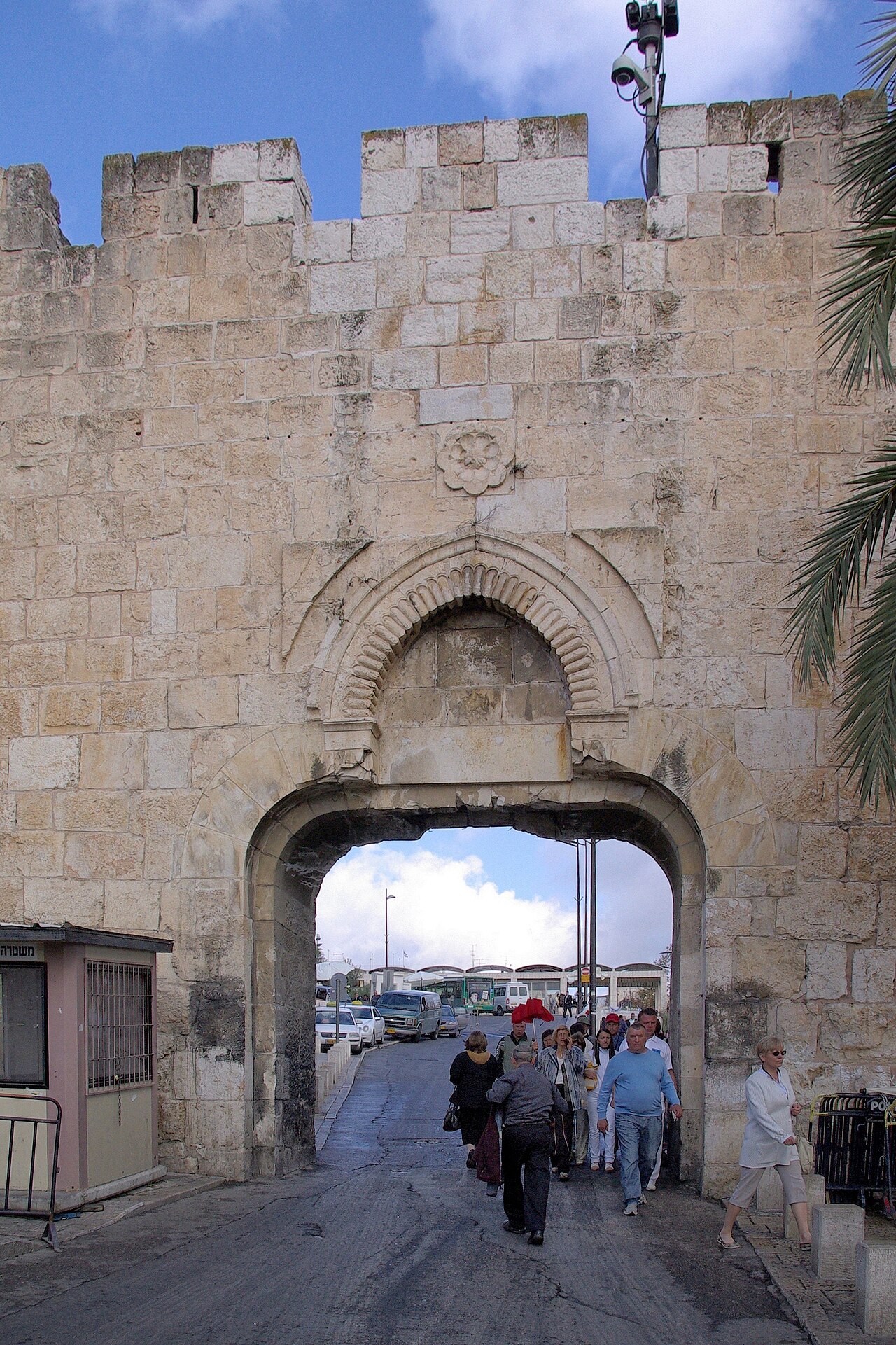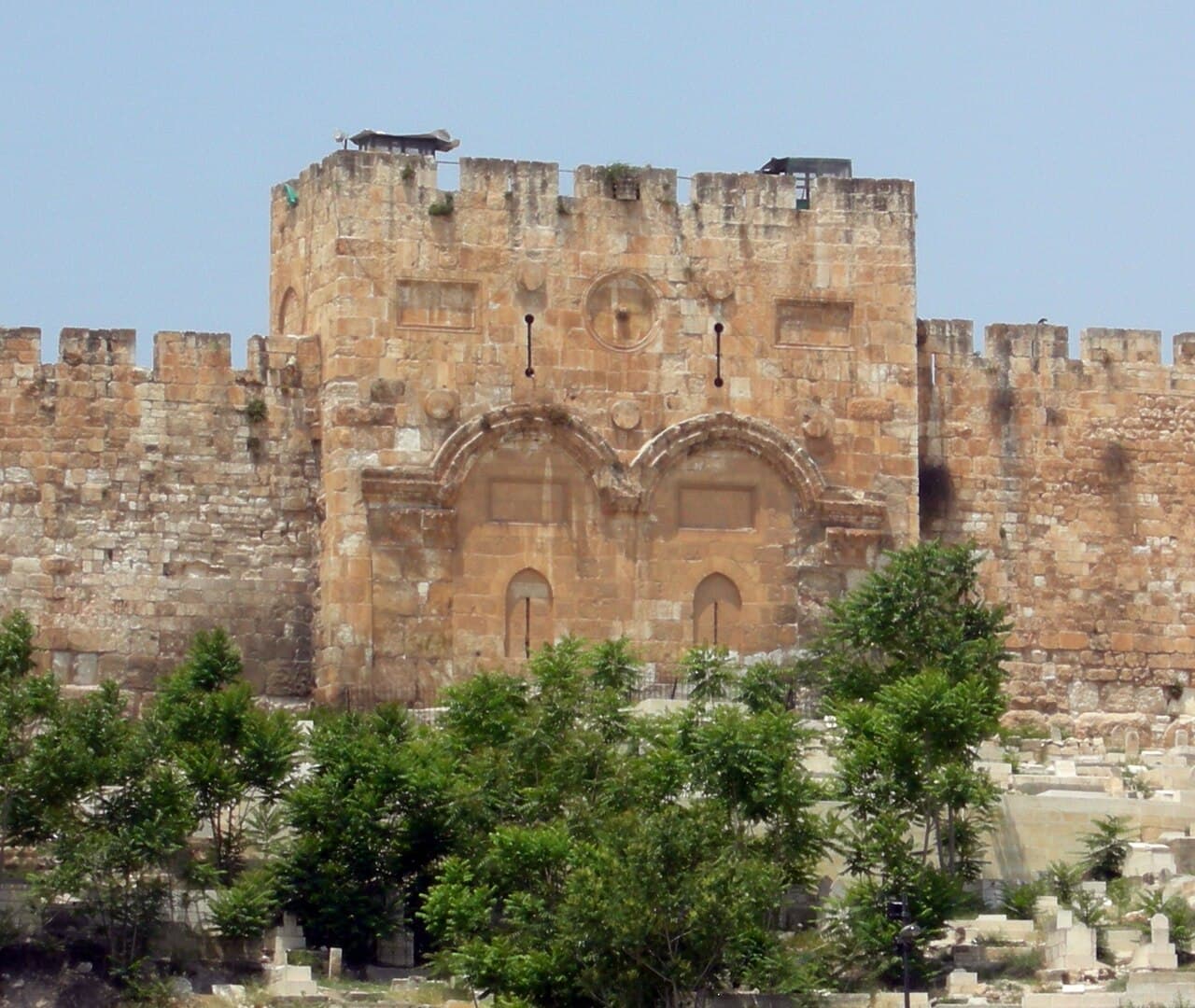
The Golden Gate, also known as the Gate of Mercy (Bab al-Rahma in Arabic and Sha'ar Harahamim in Hebrew), is a significant historical and religious landmark located on the eastern wall of the Temple Mount in Jerusalem. It is one of the two ancient gates providing access to the Old City from the east, the other being the Lion's Gate. This gate has profound importance in Jewish, Christian, and Islamic traditions, making it a focal point of religious reverence and pilgrimage.
Architecturally, the Golden Gate is a double gate set within a massive stone wall, originally constructed during the Early Medieval period. Although the current facade dates mainly from the 7th century, archaeological evidence suggests that the gate's foundations may be older, possibly built upon earlier Byzantine or even Second Temple period structures. The gate's design includes two large arches framed by ornate stonework and flanked by towers, characteristic of fortified city gates of the era.
Historical significance and religious traditions
The Golden Gate has been sealed since 1541, when the Ottoman Sultan Suleiman the Magnificent closed it, reportedly to prevent the prophesied entry of the Jewish Messiah into Jerusalem through this gate. This act of sealing has preserved the gate's structure but also added to its mystique and religious symbolism.
In Jewish tradition, the gate is known as the Gate of Mercy, and it is believed that the Messiah will enter Jerusalem through this gate, coming from the Mount of Olives. This belief underscores the gate's spiritual importance and its role in eschatological expectations.
Christian tradition holds that the Golden Gate is the gate through which Jesus Christ made his Triumphal Entry into Jerusalem on Palm Sunday, an event commemorated annually by Christians worldwide. This association enhances the gate's significance as a symbol of peace and divine arrival.
In Islamic tradition, the gate is also revered, with some accounts linking it to the Day of Judgment and the arrival of important religious figures. The gate's Arabic names, Bab al-Rahma (Gate of Mercy) and Bab al-Dhahabi (Golden Gate), reflect its sanctity and esteemed status.
Architectural features and preservation
The Golden Gate is part of the fortified walls surrounding the Temple Mount, a site of immense religious and historical importance. The gate's bastioned fortress style reflects its defensive purpose, designed to control access to the sacred precincts within.
The gate consists of two large arched entrances, divided by a central pier, and is flanked by towers that once served as lookout points. The stonework exhibits a blend of architectural influences, including Byzantine and early Islamic elements. Over the centuries, the gate has undergone various phases of repair and modification, but its original form remains largely intact despite being sealed.
Access to the gate's interior is possible only from the Temple Mount side, as the exterior entrances are blocked. The sealing of the gate has helped preserve its structure, though it remains a subject of archaeological interest and religious pilgrimage.
Role in Jerusalem's urban fabric and cultural heritage
The Golden Gate is not only a religious symbol but also a key element in the urban layout of Jerusalem. Positioned on the eastern wall of the Old City, it connects the Temple Mount with the Mount of Olives, a site of major religious significance and pilgrimage routes.
Its location and historical context link it to numerous events in Jerusalem's long history, including sieges, reconstructions, and religious ceremonies. The gate stands as a testament to the city's layered history, reflecting the diverse cultural and religious influences that have shaped Jerusalem.
Today, the Golden Gate remains a protected monument under the custodianship of local religious authorities and heritage organizations. It continues to attract visitors, pilgrims, and scholars interested in its complex history and spiritual symbolism.
Archaeological and scholarly perspectives
Scholars have studied the Golden Gate extensively to understand its origins and development. Archaeological investigations suggest that the gate may have been built atop or near earlier structures dating back to the Second Temple period. Some researchers propose that the gate's current form was largely established during the Byzantine era, with significant renovations in the Early Islamic period.
The gate's sealing in the 16th century has limited extensive excavation, but its preservation offers valuable insights into medieval fortification techniques and religious architecture. The gate's symbolic role in religious traditions has also been a subject of theological and historical inquiry.
Visiting the Golden Gate
While the exterior entrances of the Golden Gate are sealed, visitors to the Temple Mount can view the gate from the inside. The site is accessible during certain hours, though access is regulated due to its religious sensitivity and security considerations.
Visitors often come to appreciate the gate's architectural details and its profound place in the history of Jerusalem. Guided tours and educational programs frequently include the Golden Gate as a highlight of the Temple Mount complex.
Frequently asked questions (FAQ)
- What is the historical significance of the Golden Gate?
- The Golden Gate is historically significant as the eastern entrance to Jerusalem's Old City and Temple Mount, with deep religious importance in Jewish, Christian, and Islamic traditions.
- Why is the Golden Gate sealed?
- The gate has been sealed since 1541 by the Ottoman Sultan Suleiman the Magnificent, reportedly to prevent the prophesied arrival of the Jewish Messiah through this gate.
- Can visitors enter through the Golden Gate?
- No, the exterior entrances of the Golden Gate are sealed, but visitors can view the gate from inside the Temple Mount during regulated visiting hours.
- What architectural style characterizes the Golden Gate?
- The gate features early medieval bastioned fortress architecture with Byzantine and early Islamic influences evident in its stonework and structure.
- When was the Golden Gate built?
- The current structure of the Golden Gate dates mainly from the 7th century, although it may be built upon older foundations from the Byzantine or Second Temple periods.
Photo gallery

Photo by Wilson44691•Public domain
Information
Loading map...
Visitor reviews
No reviews yet. Been here? Write the first review and help other travelers!
Write the first reviewVisited this castle? Share your experience
Your review helps other travelers and adds first-hand knowledge to our encyclopedia.