Dajingmen
Dajingmen (simplified Chinese: 大境门; traditional Chinese: 大境門; pinyin: Dàjìngmén), also known as Dajing Gate, is a significant fortified gate along the Great Wall of China, located in the prefecture-level city of Zhangjiakou within Hebei Province, China. Constructed in 1644 during the first year of the reign of the Shunzhi Emperor of the Qing Dynasty, this gate marks an important junction on the wall and exemplifies military architectural design of the early Qing period.
Architectural features and design
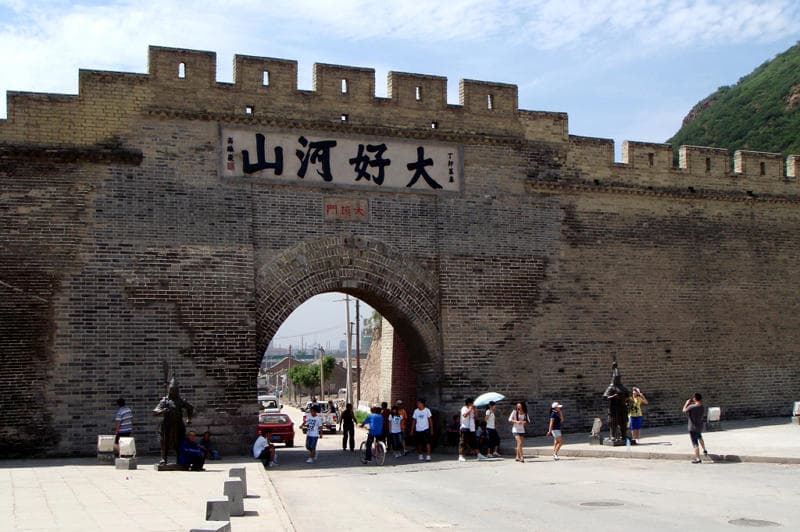
The Dajingmen gate is a robust structure standing 12 metres high, 9 metres wide, and 13 metres deep. It incorporates a defensive terrace above the gate that measures approximately 12 by 7.5 metres, providing a platform for guards and soldiers. The gate is crowned with towers rising 1.7 metres above the wall, flanked by a 0.8-metre-high parapet wall on either side, which served defensive purposes such as protection from projectiles and observation of approaching enemies.
The gate's construction reflects the characteristics of a bastioned fortress, designed to withstand sieges and provide strong defensive capabilities. The thick walls and elevated towers allowed defenders to repel attackers effectively, controlling access through this strategic section of the Great Wall.
Above the lintel of the gate, there is a traditional Han-style inscription bearing the characters 大好河山 ("Magnificent Rivers and Mountains"). This inscription was installed in 1927 through the initiative of Gao Weiyue (高维岳), the then ruler of the former province of Chahar (now part of Inner Mongolia), adding cultural and historical significance to the gate.
Historical context and significance
Dajingmen was built at a time when the Qing Dynasty was consolidating its control over northern China. The gate served both as a military checkpoint and as a symbol of imperial authority over the region. Its location near Zhangjiakou made it a vital point for defense against incursions from the north and west.
The gate's strategic position on the Great Wall underscores the continuing importance of this ancient fortification system well into the early modern period. The Great Wall, originally constructed and expanded over centuries, was adapted and reinforced by successive dynasties, including the Qing, to meet evolving military needs.
Surrounding fortifications and landscape
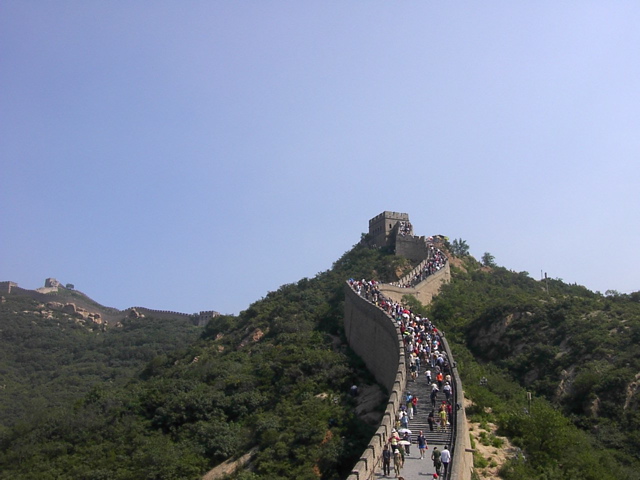
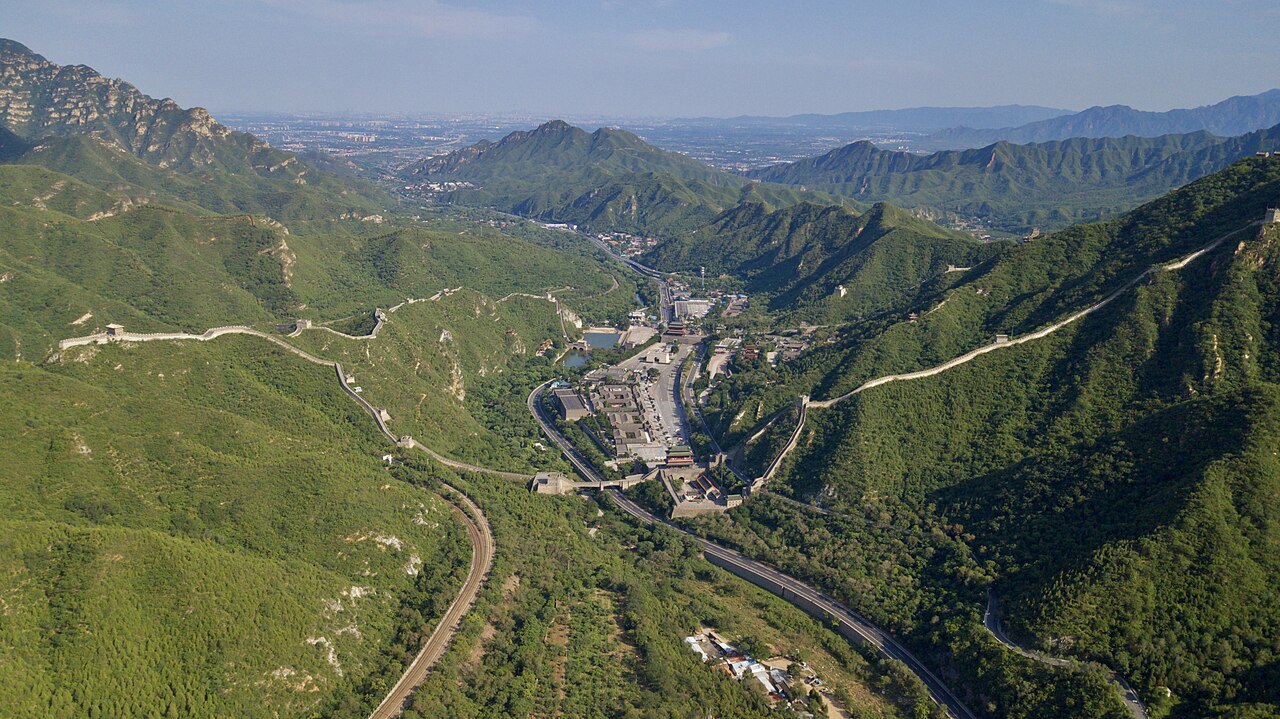
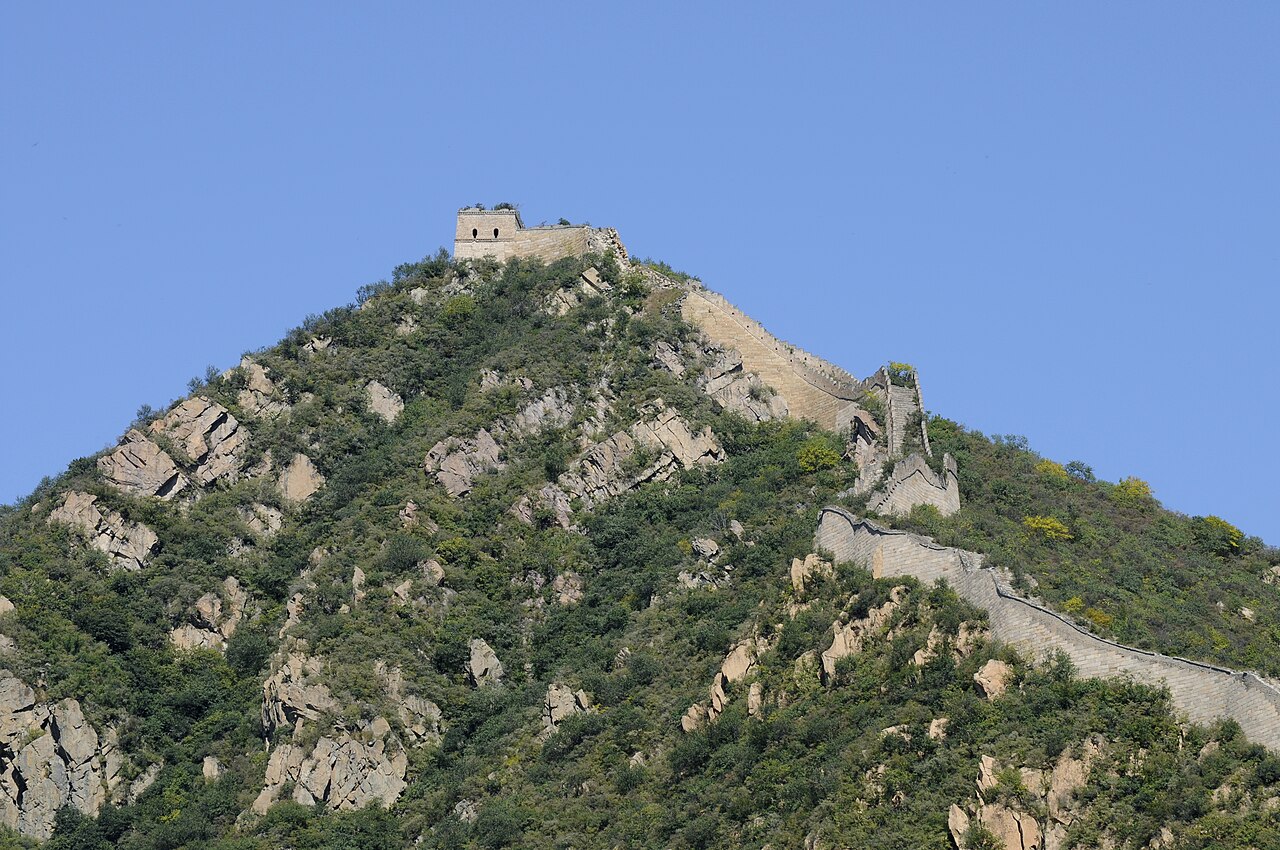
To the west of Dajingmen, the terrain transitions from the city plain to mountainous regions. Here, a section of the wall approximately 100 metres long is faced with brick, showcasing Qing-era masonry techniques. Further west, the Great Wall continues as a well-preserved stretch constructed from hard rock, following the natural contours of the mountains.
This combination of brick-faced and stone-built wall segments illustrates the adaptation of construction materials to local geography and the strategic emphasis on durability and defense.
Preservation and current status
Dajingmen remains a well-preserved example of Qing Dynasty military architecture. Its sturdy bastions and towers have withstood centuries of weathering and human activity. The gate is an important cultural heritage site, attracting visitors interested in the Great Wall's history and architectural evolution.
Efforts have been made to maintain the gate and its adjoining wall sections, ensuring that this historic fortress continues to convey the story of China's defensive strategies and imperial governance during the 17th century and beyond.
Visiting Dajingmen
Visitors to Dajingmen can explore the gate and nearby wall sections, gaining insight into the military engineering of the Qing period. The site offers a tangible connection to the Great Wall's extensive history and the cultural landscape of northern China.
The surrounding region of Zhangjiakou provides additional historical and natural attractions, making Dajingmen a valuable destination for those interested in China's heritage and fortifications.
Frequently asked questions (FAQ)
- When was Dajingmen built and by whom?
- Dajingmen was constructed in 1644 during the first year of the Qing Dynasty under the reign of the Shunzhi Emperor.
- What are the main architectural features of Dajingmen?
- Dajingmen features a 12-metre-high gate with a defensive terrace, towers, and parapet walls, characteristic of a bastioned fortress design.
- Where is Dajingmen located?
- Dajingmen is located in Zhangjiakou city within Hebei Province, China, serving as a key junction of the Great Wall.
- Is Dajingmen accessible to visitors?
- Yes, Dajingmen is open to visitors who wish to explore the gate and adjacent sections of the Great Wall.
- What is the significance of the inscription above the gate?
- The inscription 'Magnificent Rivers and Mountains' was added in 1927 by Gao Weiyue, reflecting cultural pride and historical heritage.
Photo gallery

Information
Current owner
State museum
Loading map...
Visitor reviews
No reviews yet. Been here? Write the first review and help other travelers!
Write the first reviewVisited this castle? Share your experience
Your review helps other travelers and adds first-hand knowledge to our encyclopedia.