Chillingham Castle
Chillingham Castle stands as a remarkable testament to England's medieval heritage, nestled in the village of Chillingham within the county of Northumberland. Originally constructed in the 12th century as a monastic building, it evolved over the centuries into a formidable royal castle with significant military and strategic importance along the Anglo-Scottish border. Its enduring legacy is marked by architectural adaptations reflecting the turbulent history of the region, alongside its unique ecological heritage as the home of one of the last surviving herds of Chillingham wild cattle.
Medieval origins and strategic significance
Chillingham Castle's origins date back to the early medieval period, initially serving as a monastic establishment before being fortified to withstand the frequent border conflicts between England and Scotland. The castle's location was critical, positioned to guard the northern frontier and control key routes. Over time, it was transformed into a hill castle with robust defensive features including thick curtain walls, battlements, and a moat, designed to repel sieges and raids common in the high medieval and late medieval eras.
Architectural evolution
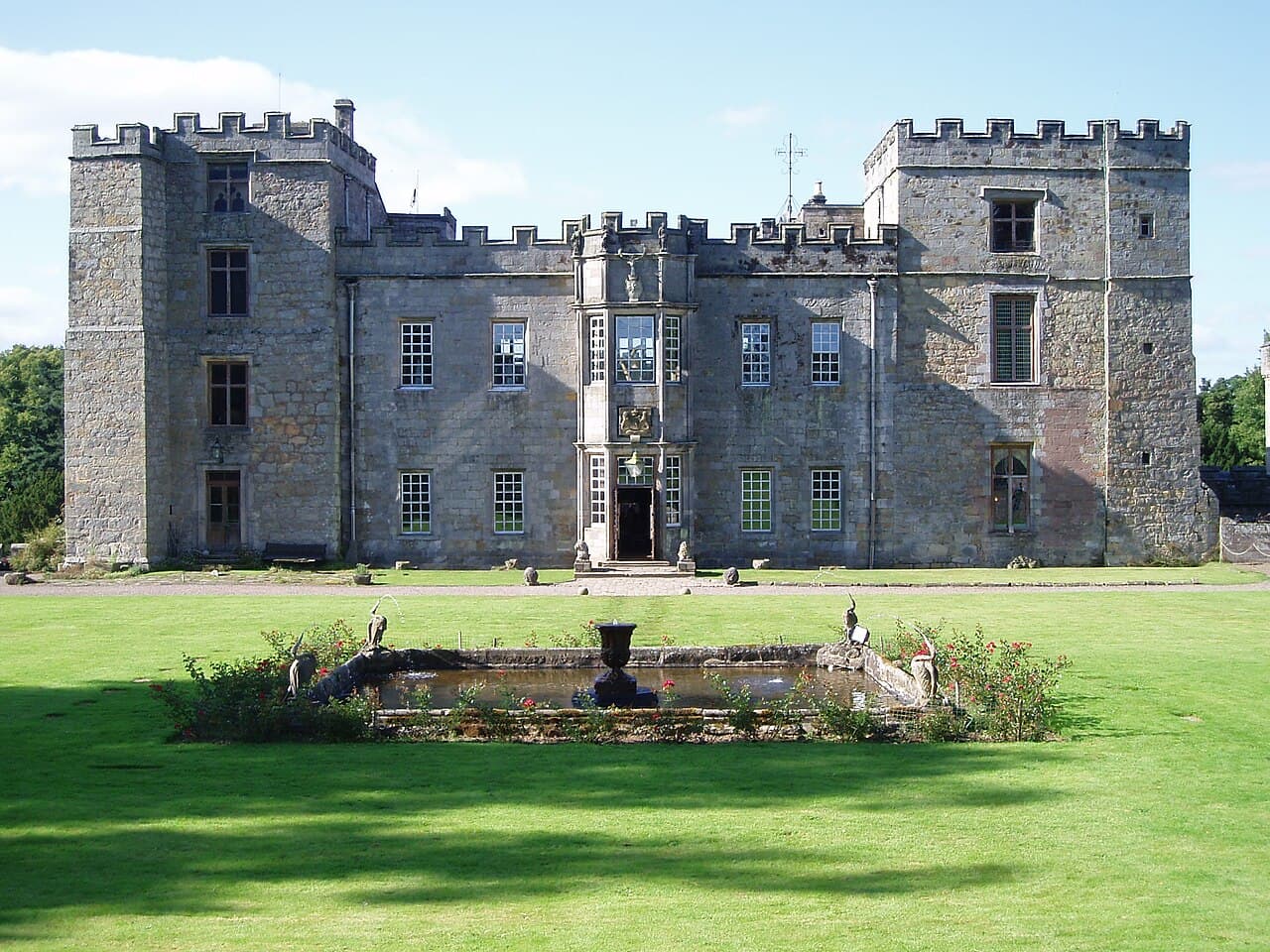
The castle's architecture reflects centuries of adaptation. Initial stonework from the 12th century includes portions of the curtain wall and foundational structures. Subsequent centuries saw the addition of a banquet hall, library, and residential quarters, enhancing the castle's role as both a military stronghold and noble residence. The castle's keep and gatehouse are notable for their robust construction and defensive capabilities, characteristic of medieval fortifications in northern England.
The wild cattle of chillingham park
One of the most distinctive features of Chillingham Castle is its surrounding park, home to a rare and ancient herd of about 90 wild cattle. These animals have roamed the grounds since medieval times, surviving centuries of isolation and inbreeding. The Chillingham wild cattle are considered a living relic of prehistoric British fauna, protected within the castle's parkland. Their continued existence is a unique aspect of the castle's heritage, attracting naturalists and visitors interested in conservation and history alike.
Ecological and cultural importance
The herd's survival is remarkable given their genetic bottleneck, yet they have thrived under careful management that prohibits hunting or interference. This has allowed the cattle to maintain their distinct characteristics and contribute to biodiversity. The presence of these animals adds a rare dimension to the castle grounds, intertwining natural history with the site's architectural and historical significance.
Modern history and restoration efforts
During World War II, Chillingham Castle was requisitioned for military use, serving as barracks for troops. This period marked a significant chapter in the castle's long history, demonstrating its continued strategic value even in modern times. After the war, the castle passed into private ownership when a baronet acquired the estate and undertook extensive restoration work.
Restoration and preservation
The restoration aimed to return Chillingham Castle to its former grandeur, preserving its medieval features while adapting certain areas for contemporary use. Efforts focused on repairing structural damage, restoring interiors, and maintaining the historic fabric of the castle. Today, the castle is well preserved, offering visitors a glimpse into England's feudal past alongside the unique natural heritage of its wild cattle.
Visitor experience and cultural heritage
Chillingham Castle is renowned not only for its architectural and historical significance but also for its reputation as one of England's most haunted castles. While tales of ghosts and supernatural activity abound, the true spirits that inhabit the castle are those of its rich history and the enduring presence of its wild cattle. Visitors can explore the castle's grand halls, battlements, and historic rooms, gaining insight into medieval life and border conflicts.
Access and tourism
The castle grounds and park offer a unique combination of historical exploration and wildlife observation. Guided tours provide detailed accounts of the castle's past, its architectural features, and the fascinating story of the wild cattle herd. The site is a cultural landmark in Northumberland, contributing to the region's tourism and heritage preservation efforts.
Frequently asked questions (FAQ)
- What is the historical significance of Chillingham Castle?
- Chillingham Castle is renowned for its rich history dating back to the 12th century. It has served as a fortress, a royal residence, and a hunting lodge, making it a significant site in the history of England.
- When was Chillingham Castle built?
- Chillingham Castle was constructed in the late 12th century, with significant modifications made in the 14th and 17th centuries. Its architecture reflects the various periods of English history, showcasing elements from medieval to more modern designs.
- How do I get to Chillingham Castle?
- Chillingham Castle is located in Northumberland, approximately 2 miles from the village of Wooler. Visitors can access the castle by car, and there is parking available on-site, or use public transport options that connect to Wooler.
- What are the opening hours for Chillingham Castle?
- Chillingham Castle is typically open to visitors from March to November, with varying hours depending on the season. It is advisable to check the official website for the most current opening hours before planning your visit.
- Can I take guided tours at Chillingham Castle?
- Yes, Chillingham Castle offers guided tours that provide in-depth insights into its history and architecture. These tours are led by knowledgeable guides who share fascinating stories and facts about the castle.
- Is Chillingham Castle accessible for visitors with disabilities?
- Chillingham Castle strives to be accessible for all visitors, but due to its historic nature, some areas may pose challenges. It is recommended to contact the castle in advance to inquire about specific accessibility options and facilities.
- What is the best time to visit Chillingham Castle?
- The best time to visit Chillingham Castle is during the spring and summer months when the weather is milder and the gardens are in full bloom. This period also allows for longer daylight hours, enhancing your overall experience.
- How much are the ticket prices for Chillingham Castle?
- Ticket prices for Chillingham Castle vary depending on age and group size, with discounts often available for families and seniors. It is recommended to check the official website for the latest pricing information and any special offers.
- What nearby attractions can I visit while at Chillingham Castle?
- Nearby attractions include the stunning Northumberland National Park, the historic town of Alnwick, and several other castles such as Alnwick Castle and Bamburgh Castle. These sites offer a wealth of history and natural beauty to explore during your visit.
Photo gallery

Information
Website
Visit websiteFeatured in
Articles on the Castlopedia blog that feature Chillingham Castle.
Sources & official resources
Verify the information above using these authoritative references.
Loading map...
Visitor reviews
No reviews yet. Been here? Write the first review and help other travelers!
Write the first reviewVisited this castle? Share your experience
Your review helps other travelers and adds first-hand knowledge to our encyclopedia.