Blair Castle
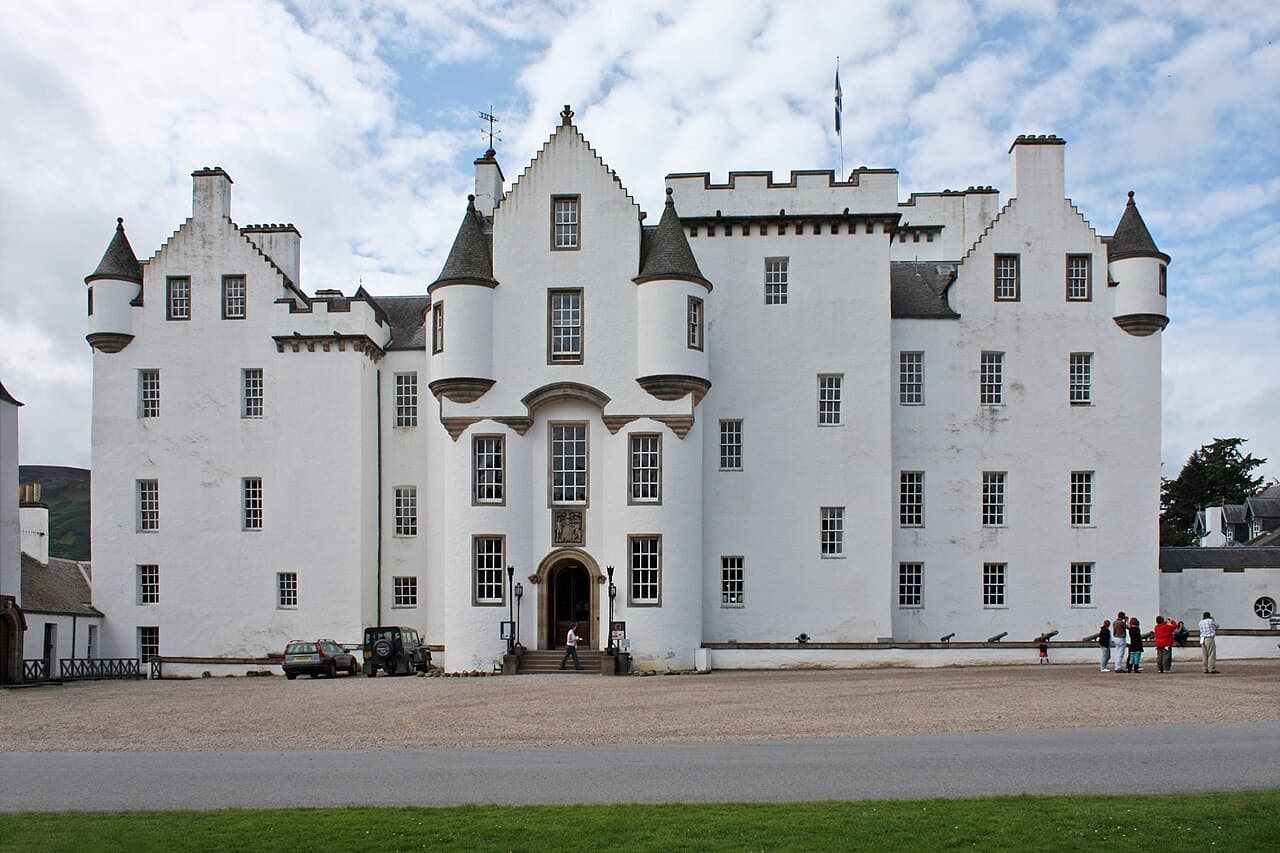
Blair Castle stands majestically near the village of Blair Atholl in Scotland, serving as the ancestral home of the Clan Murray and historically the seat of their chief, the Duke of Atholl. Nestled in Glen Garry, the castle commands a strategic position on the main route through the central Scottish Highlands, at the entrance to the Grampian Mountains. This location was crucial for controlling access northwards towards Inverness, making Blair Castle a key stronghold during turbulent historical periods.
The castle itself is a category A listed building, recognized for its architectural and historical significance, while its grounds are included in the Inventory of Gardens and Designed Landscapes in Scotland, highlighting the importance of its beautifully maintained gardens and parklands.
Architectural evolution and historical significance
The origins of Blair Castle date back to the 13th century, traditionally attributed to John I Comyn, Lord of Badenoch, who is believed to have initiated the construction around 1269. The oldest surviving part of the castle is the Comyn's Tower (also known as the Cummings Tower), a six-storey structure that retains some fabric from the 13th century but was largely rebuilt in the 15th century. This tower exemplifies medieval defensive architecture with its thick stone walls and narrow windows designed for protection.
During the 16th century, significant extensions were added, forming the central part of the castle. These expansions reflected the transition from purely defensive fortifications to more comfortable and stately living quarters, typical of Scottish noble residences of the period.
The 18th century saw further development, particularly the southern apartments designed by architects John Douglas and James Winter, which introduced elements of refinement and domestic comfort. Following a fire in 1814, the south-east range, including the distinctive clock tower, was rebuilt by the architect Archibald Elliot, blending restoration with stylistic updates.
The castle's present form largely results from the extensive remodeling in the 1870s by David Bryce, who transformed Blair Castle into a fine example of the Scots Baronial style. Bryce added the impressive ballroom and enhanced the castle's romantic, castle-like appearance with turrets, battlements, and crow-stepped gables. Later, in 1885, architect James Campbell Walker added a new ballroom wing, further enriching the castle's grandeur.
Historical events and clan heritage
Blair Castle's history is deeply intertwined with the fortunes of the Murray family. The Murrays were elevated when John Murray, son of the second Earl of Tullibardine, was created Earl of Atholl in 1629. The castle served as a symbol of their power and influence in the Highlands.
During the Wars of the Three Kingdoms in the 17th century, the Murrays supported the Royalist cause. This allegiance led to the castle being captured by Oliver Cromwell's forces in 1650 during his invasion of Scotland. Despite such conflicts, the castle remained a key residence and was continually adapted to meet changing needs.
One of the castle's unique aspects is its connection to the Atholl Highlanders, the private army of the Duke of Atholl. This regiment is noted as the only legal private army in Europe, maintaining traditions and ceremonial duties that enrich the castle's cultural heritage.
Interior collections and public access
Blair Castle has been open to the public since 1936, making it one of the earliest private residences in Scotland accessible to visitors. The castle houses extensive collections that reflect the rich history and lifestyle of the Murray family. These include antique furniture, weapons and armor, hunting trophies, costumes, paintings, and needlework. The ethnographic artifacts and souvenirs collected over centuries provide insight into the clan's connections and interests.
The castle's many rooms, including grand halls and intimate chambers, are carefully preserved and presented to visitors. The blend of historical architecture and curated collections offers a comprehensive experience of Scottish noble life through the ages.
Gardens and grounds
The castle's grounds are renowned for their beauty and historic landscaping. Included in the national Inventory of Gardens and Designed Landscapes, the gardens feature a mixture of formal design and natural woodland, enhancing the castle's setting in the Highlands' wild landscape.
Visitors can enjoy walking paths, scenic views, and the peaceful atmosphere of the estate, which complements the architectural grandeur of the castle itself.
Visitor experience and events
Blair Castle offers a wide range of visitor activities and tours designed to appeal to individuals, families, and groups. Themed tours focus on specific aspects of the castle's history, architecture, and collections, making it accessible and engaging for all ages.
The castle also hosts various events, from corporate functions to weddings, leveraging its historic ambiance and scenic surroundings. Its accessibility and diverse offerings make it one of Scotland's most popular heritage attractions.
Family-friendly attractions
With plenty to see and do, Blair Castle is an ideal destination for families. Children and adults alike can explore the castle's rich history through interactive exhibits and guided tours, while the extensive grounds provide ample space for outdoor activities.
Burial site and religious heritage
Adjacent to the castle grounds lie the ruins of St Bride's Kirk, the former parish church of Old Blair. This church fell into disuse after 1823 when the estate village was relocated. The Family Burial Ground near the kirk serves as the resting place for many Dukes of Atholl, linking the castle to its spiritual and ancestral roots.
The kirk ruins and burial ground add a poignant historical layer to the estate, reflecting the long-standing presence of the Murray family in the region.
Architectural style and preservation
Blair Castle exemplifies the Scots Baronial style, a romantic revival of medieval Scottish castle architecture characterized by turrets, battlements, and ornamental stonework. This style was popularized in the 19th century and is evident in the castle's dramatic silhouette and decorative details.
Despite multiple renovations and restorations over the centuries, the castle maintains a well-preserved condition, allowing visitors to appreciate both its medieval origins and Victorian-era enhancements.
Its status as a category A listed building ensures that conservation efforts continue to protect its architectural integrity and historic character for future generations.
Frequently asked questions (FAQ)
- How do I get to Blair Castle?
- Blair Castle is located in Blair Atholl, Scotland, easily accessible by car or public transport. If traveling by car, the castle is situated just off the A9 road, with ample parking available on-site. For those using public transport, regular bus services run from nearby towns, and the closest train station is in Pitlochry, about 10 miles away.
- What is the historical significance of Blair Castle?
- Blair Castle has been the seat of the Atholl family since the 13th century and is one of Scotland's most important historic buildings. It has played a significant role in Scottish history, particularly during the Jacobite risings. The castle is notable for its connections to numerous Scottish monarchs and its rich collection of artifacts.
- When was Blair Castle built?
- The original structure of Blair Castle dates back to the 13th century, but it has undergone numerous renovations and expansions over the centuries. The current architecture reflects styles from the 16th to the 19th centuries. Visitors can see a blend of medieval and Renaissance influences throughout the castle.
- Can I take photos inside Blair Castle?
- Photography is allowed in many areas of Blair Castle, but restrictions may apply in specific rooms or exhibitions. It’s best to check with staff at the entrance for guidance on photography rules during your visit. Outdoor photography is encouraged, especially in the beautiful gardens surrounding the castle.
- Why is Blair Castle a popular tourist attraction?
- Blair Castle attracts visitors due to its stunning architecture, rich history, and beautiful gardens. The castle offers guided tours that bring its fascinating past to life, making it a significant educational experience. Additionally, its picturesque location in the Scottish Highlands adds to its appeal, making it a must-see destination.
- Is it possible to visit Blair Castle year-round?
- Blair Castle is open to visitors throughout the year, although opening hours may vary by season. Typically, the castle is open daily from spring through autumn, with limited hours during the winter months. It’s advisable to check the official website for specific visiting times and any seasonal events.
- What are the ticket prices for Blair Castle?
- Ticket prices for Blair Castle vary depending on the season and the type of visit. Discounts are often available for families, students, and seniors, making it accessible for a wide range of visitors. For the most accurate and updated pricing, it is recommended to visit the official website before planning your trip.
- What is the best time to visit Blair Castle?
- The best time to visit Blair Castle is during the spring and summer months when the gardens are in full bloom and the weather is generally milder. However, autumn also offers beautiful foliage and fewer crowds. Regardless of the season, each time of year presents a unique charm to the castle and its surroundings.
- Are there any nearby attractions to visit?
- Yes, Blair Castle is surrounded by several attractions that enhance your visit to the area. Nearby, you can explore the picturesque village of Blair Atholl, the stunning landscapes of the Cairngorms National Park, and the historic town of Pitlochry. Additionally, several hiking trails and outdoor activities are available for nature enthusiasts.
Photo gallery

Information
Website
Visit websiteFeatured in
Articles on the Castlopedia blog that feature Blair Castle.
Sources & official resources
Verify the information above using these authoritative references.
Loading map...
Visitor reviews
No reviews yet. Been here? Write the first review and help other travelers!
Write the first reviewVisited this castle? Share your experience
Your review helps other travelers and adds first-hand knowledge to our encyclopedia.