Al-Ukhaidir Fortress
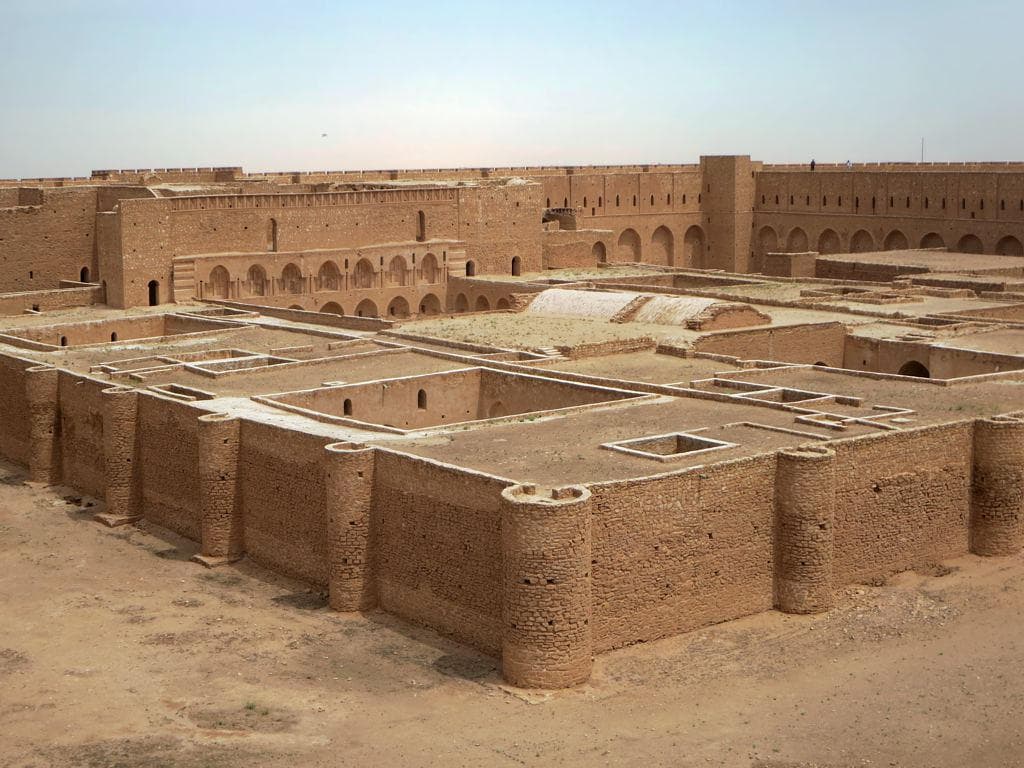
Al-Ukhaidir Fortress (Arabic: حصن الأخيضر), an imposing example of early medieval Abbasid architecture, is situated approximately 50 kilometers south of Karbala in modern-day Iraq. Erected in 775 AD, this large rectangular fortress stands as a significant relic from the 8th century, representing the architectural and cultural ambitions of the Abbasid dynasty during its formative years. Built under the direction of Isa ibn Musa, nephew of the first Abbasid caliph As-Saffah, the fortress combines defensive innovation with residential and ceremonial functions, reflecting the complex social and political dynamics of the period.
Architectural design and layout
The fortress is notable for its distinctive rectangular plan and robust fortifications, which include thick enclosing walls and strategically placed towers. The design integrates a large central courtyard surrounded by various functional spaces, including a primary hall, a grand iwan (a vaulted hall open on one side), a reception hall, and quarters for servants and guards. This arrangement highlights the Abbasid emphasis on both security and hierarchical spatial organization within their palatial complexes.
One of the most remarkable features of Al-Ukhaidir is its defensive style, which combines formidable walls with limited external openings, creating a fortress that is both imposing and difficult to penetrate. The compactness of the living quarters juxtaposed with the grand scale of the halls illustrates the Abbasid approach to power projection: a display of might and authority balanced with practical residential needs.
Historical significance and context
Al-Ukhaidir Fortress served as an important stop along regional trade routes, similar to other contemporary sites like Atshan and Mujdah. Its location facilitated control over movement and commerce in the region, reinforcing Abbasid influence in Iraq during a period of political consolidation and territorial expansion.
The fortress's name is possibly linked to Isma'il ibn Yusuf al-Ukhaidhir of the Banu Ukhaidhir family, who led a rebellion against the Abbasids before becoming governor of Kufa with the backing of the Qarmatians. This connection reflects the complex tribal and political landscape of early Islamic Iraq and the shifting allegiances that characterized the era.
Excavations and archaeological research
In the early 20th century, the British archaeologist and explorer Gertrude Bell conducted significant excavations at Al-Ukhaidir, producing the first detailed reports on the fortress's remains. Her work brought international attention to the site and contributed to the understanding of Abbasid architectural practices and urban planning.
The archaeological findings at Al-Ukhaidir have provided valuable insights into the construction techniques, materials, and aesthetic principles employed by Abbasid builders. The fortress's preservation as ruins allows scholars to study the evolution of Islamic military and residential architecture in Iraq during the early medieval period.
Architectural features reflecting Abbasid culture
The fortress exemplifies the Abbasid dynasty's dual character of despotism and luxury. The grand scale of the halls and reception areas contrasts with the relatively cramped living quarters, suggesting a focus on ceremonial display and control rather than comfort for all inhabitants. This spatial hierarchy within the fortress mirrors the broader social and political order of the Abbasid caliphate.
The inclusion of a mosque within the complex underscores the integration of religious practice with governance and daily life. The architectural style, characterized by the use of vaulted iwans and fortified walls, illustrates the Abbasids' adaptation of earlier Mesopotamian and Islamic architectural traditions into a distinctive form suited to their needs.
Preservation and current status
Today, Al-Ukhaidir Fortress remains a significant archaeological site and a testament to early Islamic architecture in Iraq. Although in a state of ruins, the fortress's structural elements are sufficiently preserved to convey its original grandeur and defensive capabilities. The site attracts scholars and visitors interested in the history of the Abbasid period and Islamic fortification techniques.
Frequently asked questions (FAQ)
- What is the historical significance of Al-Ukhaidir Fortress?
- Al-Ukhaidir Fortress, built in the 8th century, is one of the best-preserved examples of early Islamic architecture in Iraq. It served as a palace and a military stronghold, showcasing the power and influence of the Abbasid Caliphate in the region.
- When was Al-Ukhaidir Fortress constructed?
- The fortress was constructed during the reign of Caliph Al-Mahdi, around the year 778 AD. Its strategic location and robust design highlight the architectural advancements of the time.
- Can I visit Al-Ukhaidir Fortress?
- Yes, Al-Ukhaidir Fortress is open to visitors who wish to explore its historical and architectural marvels. However, it is advisable to check local travel advisories and accessibility options before planning your visit.
- What are the opening hours for Al-Ukhaidir Fortress?
- Al-Ukhaidir Fortress is generally open to visitors from 8 AM to 5 PM daily. It's recommended to confirm the hours before your visit, as they may vary due to seasonal changes or special events.
- Is it possible to access Al-Ukhaidir Fortress by public transportation?
- Accessing Al-Ukhaidir Fortress by public transportation can be challenging, as the fortress is located in a remote area. It is advisable to hire a taxi or join a guided tour for a more convenient experience.
- What is the best time to visit Al-Ukhaidir Fortress?
- The best time to visit Al-Ukhaidir Fortress is during the spring and autumn months when temperatures are milder. Visiting during these seasons allows for a more comfortable experience while exploring the site.
- Are there any nearby attractions to visit?
- Yes, there are several nearby attractions, including the ancient city of Kufa and the historical sites in Najaf. These locations offer additional insights into Iraq's rich history and culture.
- What are the ticket prices for visiting Al-Ukhaidir Fortress?
- Ticket prices for Al-Ukhaidir Fortress are typically very affordable, with entrance fees being around 1,000 Iraqi Dinars. Be sure to check for any changes in pricing or additional fees for guided tours.
Photo gallery

Information
Loading map...
Visitor reviews
No reviews yet. Been here? Write the first review and help other travelers!
Write the first reviewVisited this castle? Share your experience
Your review helps other travelers and adds first-hand knowledge to our encyclopedia.