Zleby Castle
Žleby Castle stands as a remarkable example of a hill castle in the Czech Republic, nestled strategically on a promontory surrounded by the Doubrava River. Its origins date back to the 13th century, with the earliest written reference appearing in 1289. Initially constructed by the noble Lichtenburg family, the castle was built in the Gothic style typical of the High Medieval period. Over centuries, it has undergone significant transformations reflecting the shifting architectural tastes and political realities of Bohemia.
The castle's early history is closely tied to the Lichtenburg lineage, with figures such as Smil of Lichtenburg and his son Jindřich playing a pivotal role in its establishment. The family adopted the surname Žlebští, derived from the castle's name, underscoring the fortress's importance as a familial seat. In 1356, the castle was acquired by Charles IV, the Roman Emperor and King of Bohemia, marking its transition to royal property. During this period, Žleby Castle was frequently pledged to various aristocratic tenants, highlighting its role as a significant stronghold in the region.
Medieval origins and early history
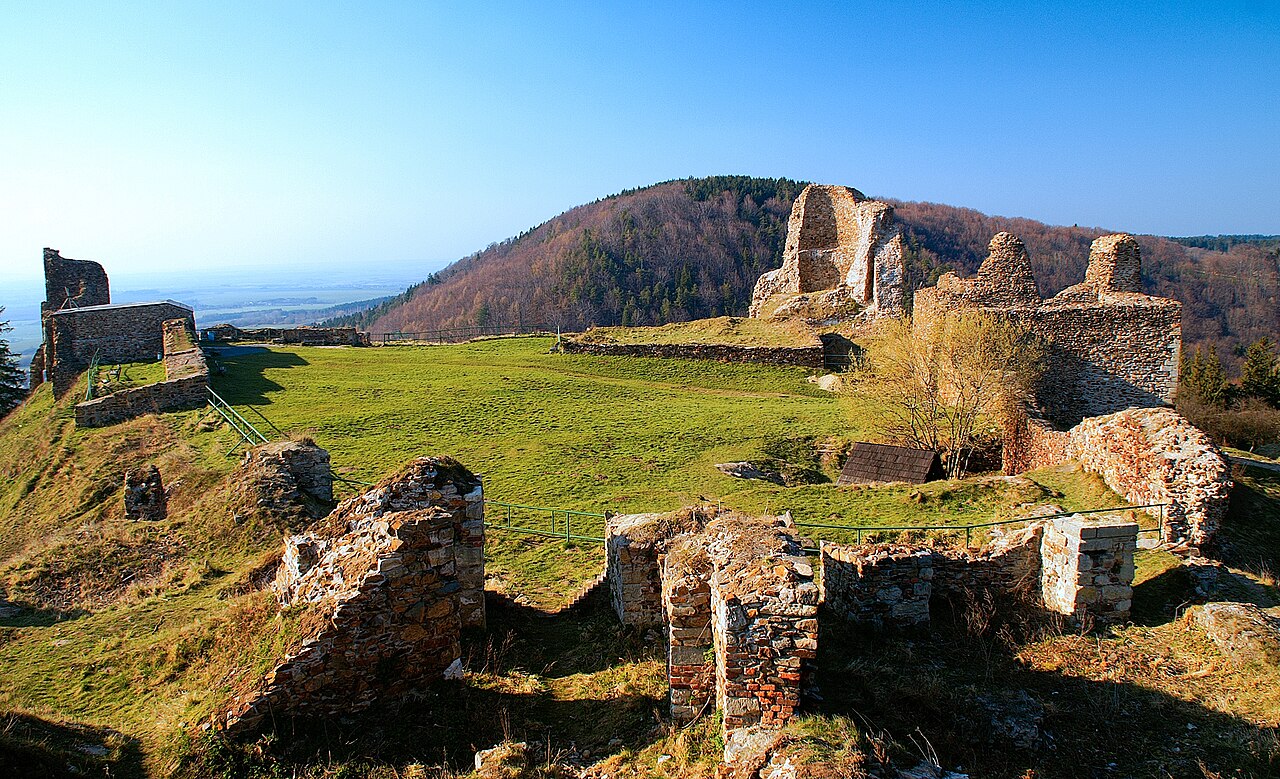
The castle's medieval phase was marked by both military and political significance. During the Hussite Wars in the early 15th century, Žleby Castle was besieged and captured by Hussite forces in 1427, suffering partial destruction through burning and dismantling. This turbulent period necessitated reconstruction efforts, which were undertaken in the mid-15th century by John of Vízmburk. These renovations introduced late Gothic architectural features, reinforcing the castle's defensive and residential functions.
Renaissance transformation and ownership changes
In the 16th century, the castle evolved from a medieval fortress into a more refined Renaissance chateau. This transformation included the construction of a four-winged structure with an arcaded courtyard, reflecting the era's emphasis on symmetry, proportion, and comfort over pure fortification. Key owners during this period included the Hodkov family and Václav Chotouchovský of Nebovidy, who played instrumental roles in the castle's Renaissance remodeling.
Throughout the Thirty Years' War, the castle changed hands multiple times, with owners such as Hermann Czernin and Rudolf Trčka. Later noble families, including the Kaisersteins, Schönfelds, and Auerspergs, continued to shape the castle's architectural legacy. The Auersperg family, who acquired Žleby in 1754, were particularly influential, overseeing a Baroque-style renovation that added fashionable risalites to the main facade and expanded the courtyard and farm buildings.
Romantic neo-gothic reconstruction
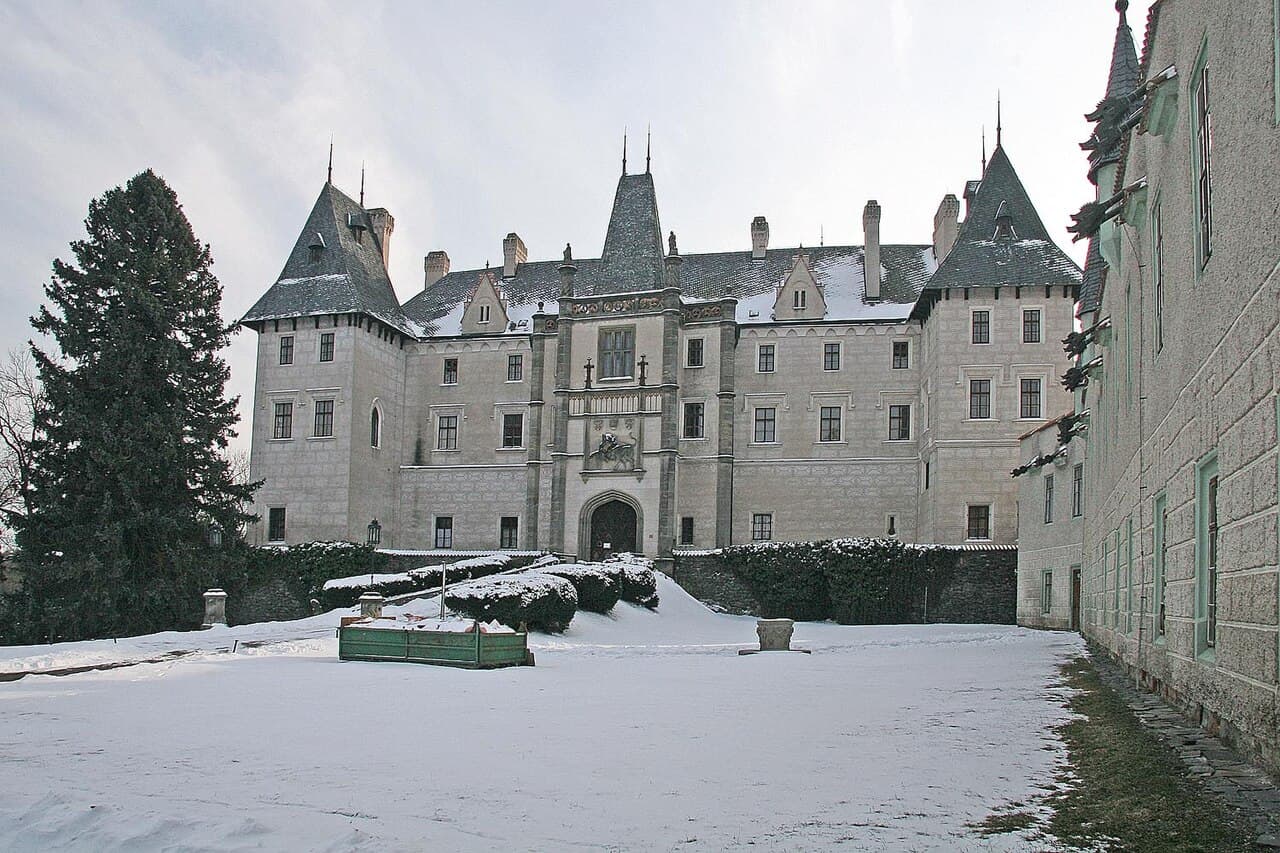
The most visually striking phase of Žleby Castle's architectural evolution occurred in the 19th century under the direction of the Auersperg family. Between 1849 and 1868, the castle underwent an extensive Neo-Gothic Romantic reconstruction inspired by medieval aesthetics and the Elizabethan Renaissance style. Architects František Schmoranze senior and Benedikt Škwora contributed to this transformation, which introduced ramparts with towers and spires, a chapel, and a series of fortified gates.
This reconstruction aimed to evoke the grandeur and romanticism of the medieval period while incorporating modern comforts and decorative elements. The castle's northern facade was redesigned with Elizabethan Renaissance influences, and the interiors were lavishly decorated with collections of weapons, furniture, stained glass, manuscripts, and luxurious kitchenware. The eastern wing, now a public tour area, retains much of this historic ambiance.
Architectural features and layout
Žleby Castle's layout reflects its layered history. The original medieval fortress comprised a trapezoidal core with thick Gothic walls, parts of which survive today in the southern and northern wings. The Renaissance period introduced residential buildings arranged around an arcaded courtyard, featuring vaulted ceilings and sgraffito wall decorations. The 19th-century Neo-Gothic additions include three cylindrical towers, a clock tower, and the Holubová and Veliká towers, each incorporating defensive gates and elaborate forecourts.
The castle is surrounded by a vast park expanded to 90 hectares, including an English-style landscaped garden with exotic trees, rhododendrons, and a game reserve preserving white and fallow deer. Notable artistic elements include a portal with a bison relief by sculptor Emanuel Max and a fountain by Anton Dionys Fernkorn depicting an Auersperg ancestor battling a bison, symbolizing the family's heraldry.
Modern ownership and public access
Following the death of the last Auersperg owner in the early 20th century and the upheavals of World War II, Žleby Castle was nationalized in 1945. It is currently owned and managed by the National Heritage Institute of the Czech Republic. Since the mid-20th century, the castle has been open to the public, offering extensive tours of its historic interiors, including private chambers, a theatre, and a tower with a cellar.
Visitors today can explore the castle's rich architectural tapestry, from its medieval foundations through its Renaissance elegance to its Neo-Gothic romantic revival. The surrounding park and game reserve add to the cultural and natural appeal of this historic site, making Žleby Castle a significant destination for those interested in Czech history, architecture, and heritage.
Frequently asked questions (FAQ)
- When was Žleby Castle originally built?
- Žleby Castle was originally built in the 13th century, with the first written mention dating to 1289.
- What architectural styles are present at Žleby Castle?
- The castle features a mix of Gothic, Renaissance, Baroque, and Neo-Gothic styles due to various reconstructions over centuries.
- Who were the notable owners of Žleby Castle?
- Notable owners include the Lichtenburg family, Charles IV, the Hodkov family, the Auersperg family, and others.
- Is Žleby Castle open to the public?
- Yes, Žleby Castle is open to the public and managed by the National Heritage Institute, offering tours of its historic interiors.
- What are some key features of the Neo-Gothic reconstruction?
- Key features include ramparts with towers and spires, a chapel, fortified gates, and richly decorated interiors inspired by medieval and Elizabethan Renaissance styles.

Information
Sources & official resources
Verify the information above using these authoritative references.
Loading map...
Visitor reviews
No reviews yet. Been here? Write the first review and help other travelers!
Write the first reviewVisited this castle? Share your experience
Your review helps other travelers and adds first-hand knowledge to our encyclopedia.