Zhovkva Castle
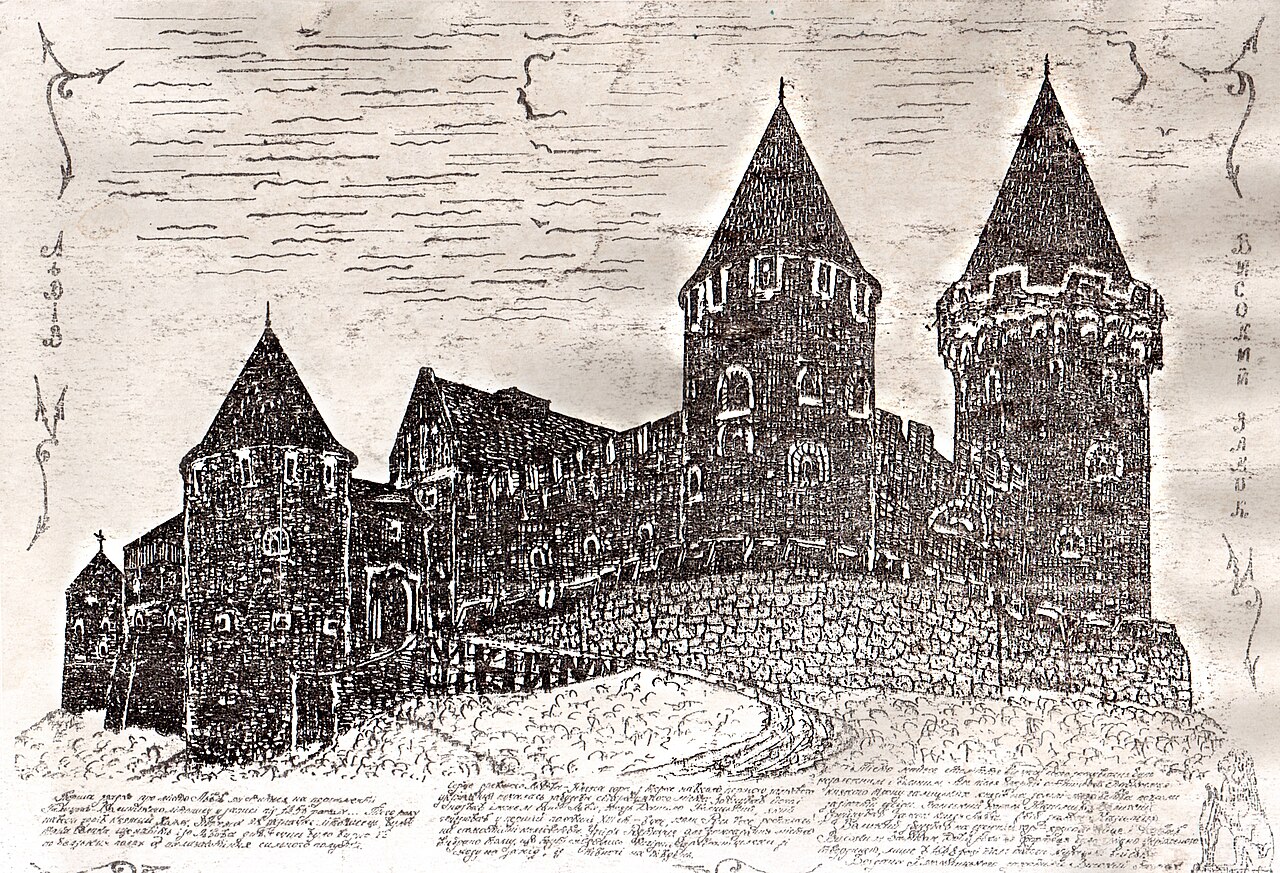
Zhovkva Castle stands as a remarkable example of Renaissance military architecture combined with noble residential design, located in the historic town of Zhovkva, Ukraine. Founded at the close of the 16th century by the distinguished Polish military commander and hetman Stanisław Żółkiewski, the castle reflects the strategic and aesthetic ambitions of the Polish–Lithuanian Commonwealth. Constructed between 1594 and 1606, it was designed not only as a fortress to defend the region but also as a grand residence symbolizing noble power and prestige.
The castle's location on a raised site by the river Svynia was chosen for its natural defensive advantages and its integration within the town’s fortifications. The complex was designed by architect Paweł Szczęśliwy with contributions from notable figures including Ambroży Nutclauss, Paweł Rzymianin, and Piotr Beber. Its construction utilized brick and stone, forming a roughly square layout about 100 meters on each side, surrounded by a broad water-filled moat up to 17 meters wide that enhanced its defensive capabilities. The castle was directly connected to the town walls on its northern and eastern sides, reinforcing its role within the urban defense system.
Architectural design and features
Fortifications and towers
The castle originally featured four rectangular corner towers, three of which survive today, each redesigned with pentagonal bases and steep roofs. During the late 17th century, under the ownership of King Jan III Sobieski, the roofs of the northern, eastern, and southern towers were replaced with distinctive domes clad in gilded copper, adding an elegant and unique visual character to the fortress. The western tower remains in ruins but has been a focus of modern restoration efforts.
Main entrance and defensive walls
The castle’s main entrance is located on the northeastern side, featuring a four-story gate tower with a decorative portal carved from white stone. This portal is an outstanding example of the Mannerist style, characterized by intricate heraldic motifs and Latin inscriptions, including a foundation plaque acknowledging Stanisław Żółkiewski’s role. The fortress walls connect seamlessly with the town’s defensive walls, emphasizing the castle’s strategic integration.
Courtyard and residential wings
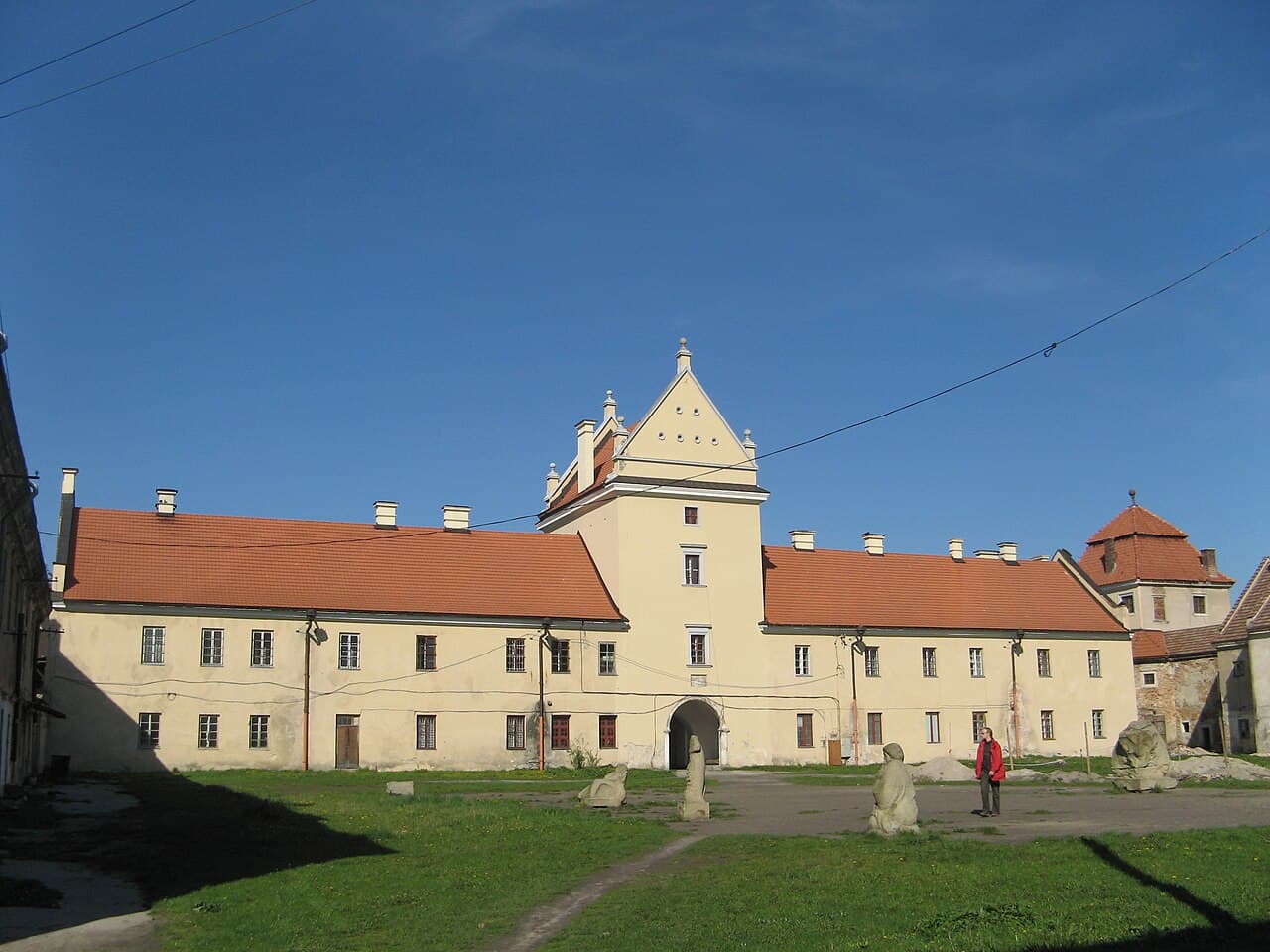
Inside, the castle is arranged around a central courtyard enclosed by four wings, each consisting of two floors above ground and cellar spaces below. These wings are linked by covered galleries featuring battlements with arched loopholes, originally used for defensive purposes. The southwestern wing served as the main palace, containing private chambers, a treasury, and official reception halls. A chapel built in 1640 adjoined this wing, highlighting the religious functions within the noble residence.
The galleries include a striking two-story open walkway supported by classical columns: Tuscan order columns on the lower level and Ionic columns above. These galleries were once adorned with statues representing the castle’s first four noble owners: the Żółkiewski, Daniłowicz, Sobieski, and Radziwiłł families.
Supporting structures and amenities
Additional buildings within the courtyard supported daily life and defense, including an arsenal for arms storage, stables with a carriage yard, a smithy for metalwork, kitchens, bakeries, and various storage rooms. A sophisticated wooden aqueduct system transported spring water across the site to a trough before the western wing, demonstrating advanced water management techniques for the period.
Historical significance and ownership
Founding and early history
Zhovkva Castle was established by Stanisław Żółkiewski as a fortified noble residence within the Polish–Lithuanian Commonwealth. Its construction in the late 16th and early 17th centuries coincided with a period of military and political consolidation in the region. The castle’s strategic location and robust defenses made it an important stronghold, particularly during the turbulent mid-17th century when it endured a siege by Cossack forces in 1655.
Royal residence and renovations
In the later 17th century, the castle became a royal residence for King Jan III Sobieski, famed for his military leadership and victory at the Battle of Vienna in 1683. Sobieski invested in significant renovations, including the replacement of tower roofs with gilded copper domes and enhancements to the interior spaces, reflecting his status and the castle’s role as a seat of power and celebration.
Noble ownership and decline
Following Sobieski, the castle passed through several noble Polish families, including the Daniłowicz and Radziwiłł clans. The Radziwiłł family commissioned expansions and decorative improvements in the 18th century, with architect Antonio Castello contributing to remodeling efforts that aligned with contemporary aesthetic trends.
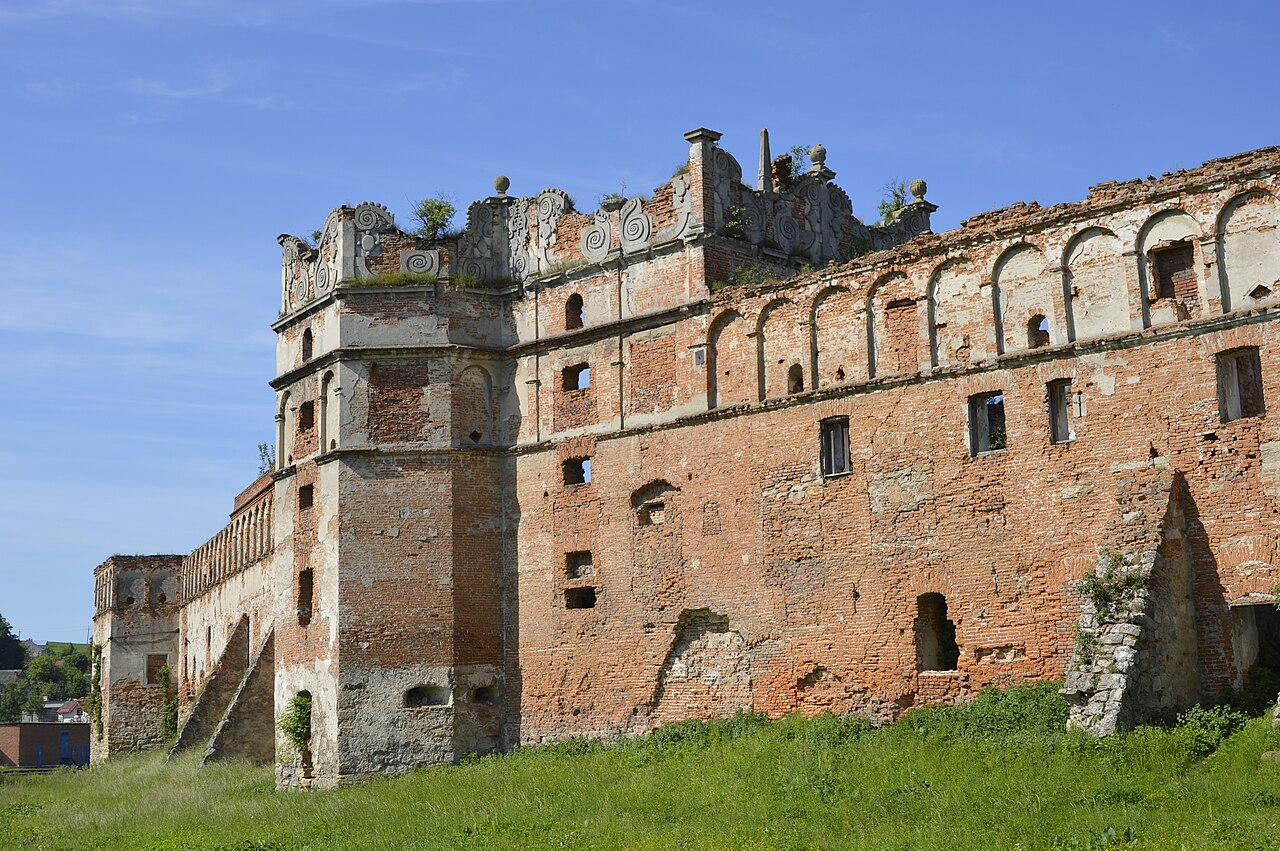
However, political upheavals such as the First Partition of Poland in 1772 led to the castle’s sale at auction. During the 19th century, the site gradually declined, with parts dismantled or lost, including the destruction of the western tower, chapel, grand staircases, and sections of the covered galleries. The entire structure has also subsided approximately six to seven meters over time.
20th-century challenges and restoration efforts
Damage and repurposing
The castle suffered significant damage during World War I in 1915 when Russian troops set it ablaze. Partial restorations were undertaken between the wars, but the turmoil of World War II and subsequent Soviet control led to the castle’s use as a prison and site of NKVD executions. After the war, parts of the castle were converted into residential spaces, a function that continued into the early 21st century.
Modern restoration and cultural use
From the late 20th century onward, renewed efforts have focused on restoring and preserving Zhovkva Castle. The site now houses a museum and several cultural and administrative institutions. Since 2015, active reconstruction has included repairing roofs, restoring towers, and revitalizing interior spaces. The eastern tower has been renovated to accommodate museum exhibits, including a smithy with period tools, a hall dedicated to the hetman’s legacy, and an exhibit exploring the concept of an ideal Renaissance city.
Landscape and surroundings
Originally, the castle was complemented by a landscaped park and game reserve created in 1606. This park featured terraces and flower beds arranged in heraldic patterns, marble fountains, ornamental pavilions, and bathhouses built on wooden piles over a pond. These elements enhanced the castle’s environment and reflected the noble lifestyle and aesthetic values of the time. Although much of this landscape has not survived intact, it remains an important aspect of the castle’s historical context.
Preservation and cultural heritage
Zhovkva Castle today represents a richly layered historical site that embodies centuries of architectural innovation, military importance, and noble heritage. Despite centuries of conflict, decline, and repurposing, ongoing restoration efforts strive to preserve its unique Renaissance character and architectural details. The castle’s integration of fortification and residential functions, its association with prominent historical figures, and its role within the urban fabric of Zhovkva make it a significant cultural and heritage landmark in Ukraine.
Frequently asked questions (FAQ)
- What is the historical significance of Zhovkva Castle?
- Zhovkva Castle, constructed in the late 16th century, is a prime example of Renaissance architecture in Ukraine. It served as a stronghold and residence for the noble families and played a crucial role in the defense against invasions, reflecting the turbulent history of the region.
- When was Zhovkva Castle built?
- The construction of Zhovkva Castle began in 1600 and was completed in 1634. It was built under the direction of the Polish nobleman Stanisław Żółkiewski, making it a symbol of power and prestige during that era.
- Can I visit Zhovkva Castle?
- Yes, Zhovkva Castle is open to visitors, and exploring its grounds can provide a fascinating glimpse into its storied past. Guided tours are available, offering insights into its history and architecture.
- What are the opening hours for Zhovkva Castle?
- Zhovkva Castle is generally open to visitors from 9 AM to 6 PM, but it's advisable to check for any seasonal variations or special events that may affect these hours. Plan your visit accordingly to make the most of your experience.
- Is it possible to access Zhovkva Castle by public transport?
- Yes, Zhovkva Castle can be reached by public transport, with regular bus services connecting it to major cities in the region. Once in Zhovkva, the castle is within walking distance from the bus station.
- What is the best time to visit Zhovkva Castle?
- The best time to visit Zhovkva Castle is during the spring and early autumn months when the weather is mild and suitable for outdoor exploration. Additionally, these seasons offer picturesque views of the surrounding landscape.
- Are there any nearby attractions to visit while in Zhovkva?
- Yes, while in Zhovkva, you can also explore the nearby Church of St. Lawrence, a UNESCO World Heritage site, and the picturesque Old Town area. These attractions complement the visit to Zhovkva Castle, providing a rich cultural experience.
- What are the ticket prices for Zhovkva Castle?
- Ticket prices for Zhovkva Castle are quite reasonable, typically ranging from 50 to 100 UAH for adults, with discounts available for students and children. It's a great value for the rich historical experience it offers.
Photo gallery

Photo by This file was created and uploaded by User:Szater Ten plik został stworzony i dodany przez Wikipedystę:Szater Szater Wikimedia Commons Polska Wikipedia•Public domain
Information
Website
Visit websiteSources & official resources
Verify the information above using these authoritative references.
Loading map...
Visitor reviews
No reviews yet. Been here? Write the first review and help other travelers!
Write the first reviewVisited this castle? Share your experience
Your review helps other travelers and adds first-hand knowledge to our encyclopedia.