Svirzh Castle
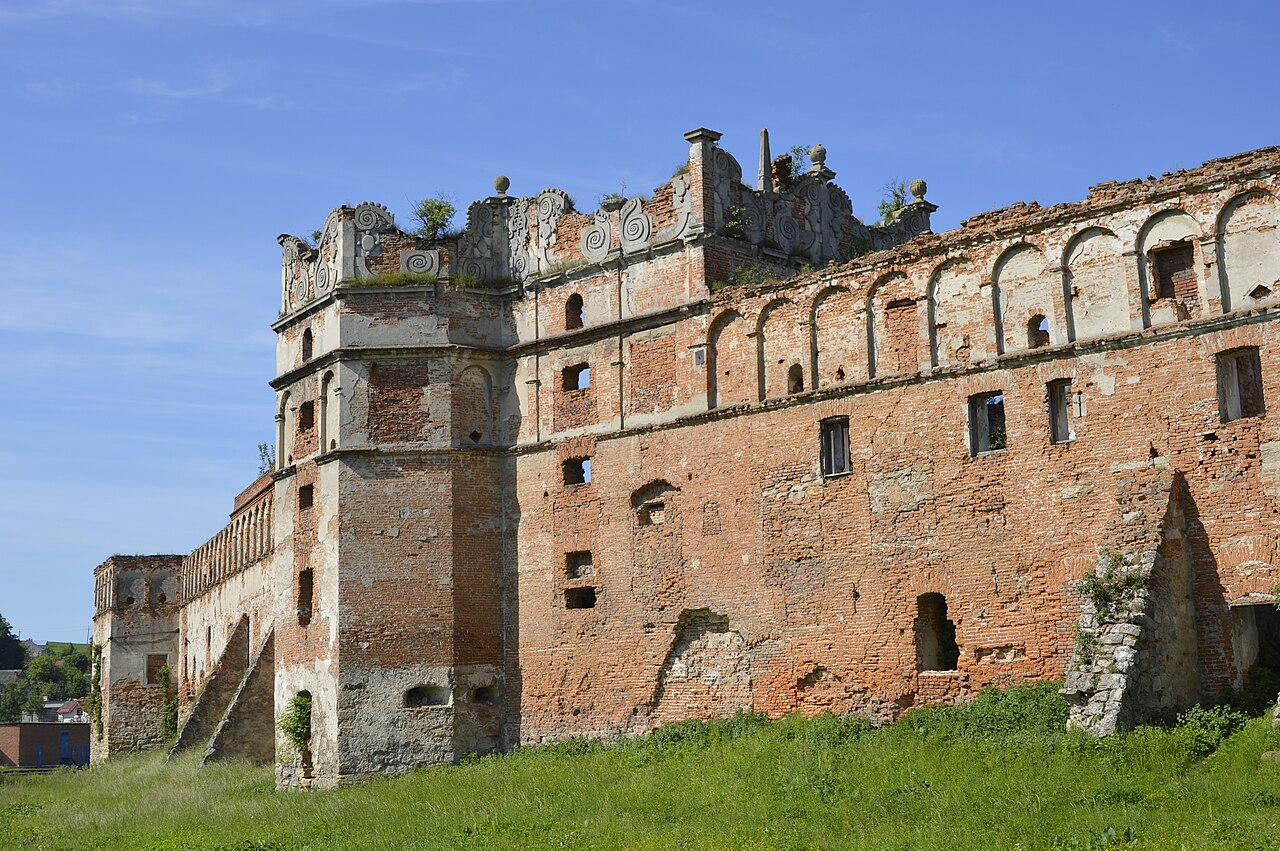
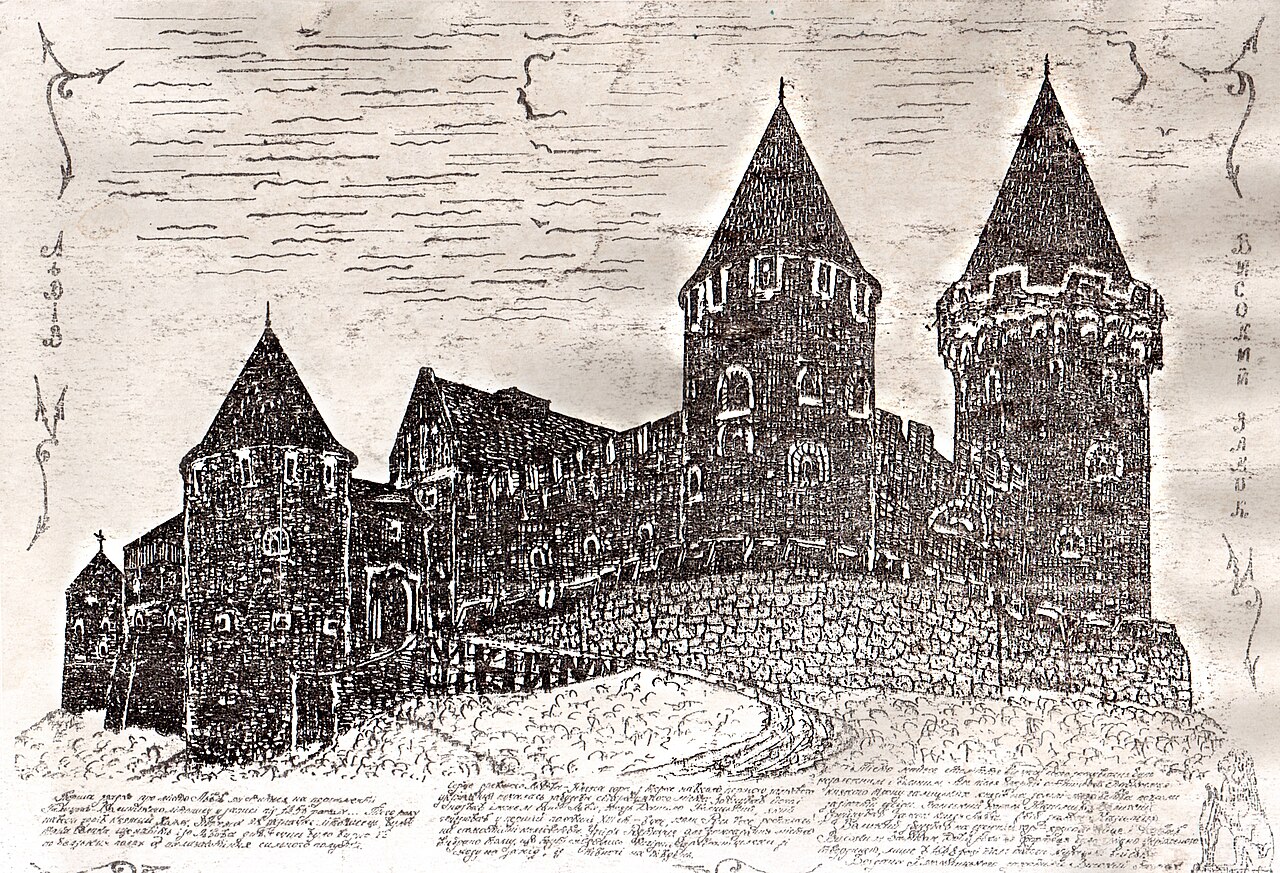
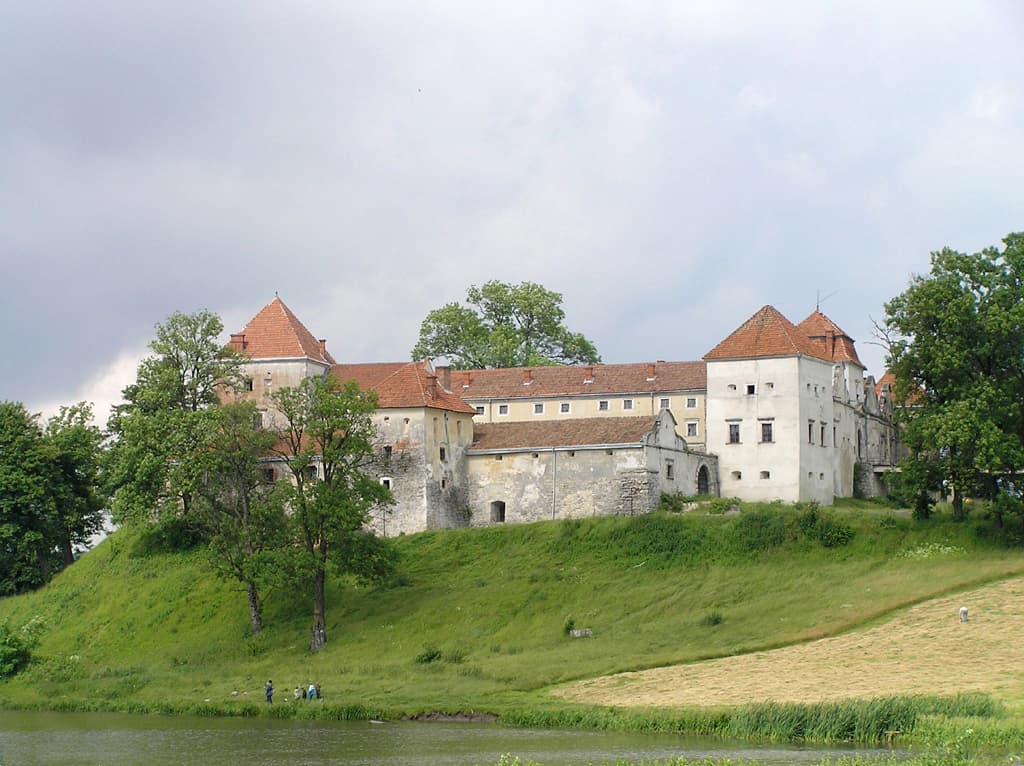
Svirzh Castle stands as a remarkable example of a 15th-century hill castle located in the Lvivska oblast of Ukraine. Founded by the noble Svirzhsky family, it was first documented in 1484, marking its significance as a defensive stronghold and noble residence. The castle's strategic position on Mount Belz, surrounded by natural defenses such as swamps, ponds, and moats, underscores its military importance during the turbulent medieval and early modern periods.
Architectural features and layout
The castle's original design was a square defensive brick structure, typical of high medieval fortifications, with two main courtyards: an upper formal courtyard and a lower service courtyard connected by a staircase. The southern wing features the main entrance through a prominent gate tower, historically adorned with the coat of arms of the Cetner family and the emblem of Hanna Zamoyska. Two rectangular corner towers equipped with loopholes provided defensive firing positions.
A significant construction milestone is marked by the carved date "1530" above the inner central gate, indicating a phase of renovation or expansion. The castle's walls and fortifications reflect a blend of military and residential functions, evolving over centuries from a purely defensive fortress to a palace-like residence.
Within the castle grounds lies a Renaissance-style stone Catholic chapel dating from 1541, built atop an earlier wooden church from 1481. The chapel retains remnants of the noble family's coat of arms above its entrance. An underground passage once connected the castle to the chapel, parts of which remain visible near the moat and drawbridge.
Historical evolution and significance
The castle's history is closely tied to the noble families of the region. Initially held by the Svirzhsky family, it was sold in 1641 to Alexander Cetner, who undertook substantial rebuilding and fortification efforts. These works may have involved the expertise of Pavel Grodzitsky, a noted artillery general and fortifier responsible for significant military constructions in Lviv.
Despite its formidable defenses, Svirzh Castle experienced multiple sieges and occupations during the 17th century. It was burned by Tatar forces in 1648 during the Khmelnytsky Uprising and endured sieges by Turkish troops in 1672 and 1675. During the latter, it served as a refuge for defenders from Pomoriany Castle through a secret underground passage, highlighting the castle's strategic and humanitarian role in regional conflicts.
By the late 17th century, the castle transitioned from a military fortress to a residential palace, reflecting broader shifts in the region's political and social landscape. Restoration efforts repaired wartime damages, and the castle became a symbol of noble prestige rather than purely martial strength.
19th and 20th-century transformations
The castle's fortunes declined in the 19th century due to frequent changes in ownership and lack of consistent maintenance, leading to partial ruin by the late 1800s. In 1907, Robert Lamezan de Salins, an Austrian army officer, acquired the castle and invested heavily in its restoration, transforming it into a luxurious residence with richly decorated interiors.
World War I brought devastation when retreating Russian troops set the castle ablaze in 1914. However, restoration was completed by 1917, as commemorated by a Latin inscription over the main gate reading: "HAEC DOMUS TEMPORE BELLI COMBUSTA ANNO DOMINI MCMXVII REEDIFICATA" (This house, burned during the time of war, rebuilt in the year of our Lord 1917). From the 1930s, the castle was home to Lamezan's daughter and her husband, Tadeusz Bór-Komorowski, a notable military leader.
Following Soviet nationalization in 1939, the castle's function shifted dramatically. It was briefly used as a tractor-driving school and later managed by the Union of Architects of the USSR from 1978. Since Ukraine's independence, the castle has been a site for cultural events, exhibitions, and educational activities, reflecting its ongoing heritage value.
Artistic and cultural heritage
The castle chapel contains notable Renaissance architectural elements and once housed frescoes discovered in 1956 depicting a kneeling nude woman with long hair, possibly Saint Mary of Egypt. Though the current condition of these frescoes is unknown, their existence adds a layer of artistic and religious significance to the site.
Svirzh Castle's well-preserved exterior walls, towers, and roofs provide a vivid glimpse into the region's architectural evolution from the high medieval to the post-Renaissance periods. Its interiors have been adapted over time but retain elements of the luxurious residential style introduced in the early 20th century.
Moreover, the castle has served as a filming location, notably for the 1978 movie "D’Artagnan and Three Musketeers," showcasing its versatile and evocative spaces.
Current condition and visitor experience
Today, Svirzh Castle is partially preserved, with its external fortifications largely intact, though interior modifications have altered original room layouts. Visitors can explore the castle's courtyards, towers, and the chapel, as well as observe the large well historically used during sieges.
The castle's location amidst natural water defenses and its rich history of sieges and restorations make it a compelling destination for enthusiasts of medieval architecture, Eastern European history, and Renaissance art. Cultural events and festivals held on the grounds continue to celebrate its heritage, ensuring that Svirzh Castle remains a vibrant part of Ukraine's historical landscape.
Frequently asked questions (FAQ)
- How do I get to Svirzh Castle?
- Svirzh Castle is located in the village of Svirzh, Ukraine, approximately 30 kilometers from Lviv. You can reach the castle by car or take public transportation from Lviv, making it a convenient day trip for visitors.
- What is the historical significance of Svirzh Castle?
- Svirzh Castle dates back to the 16th century and is a prime example of Renaissance architecture in Ukraine. It served as a fortress and residence for noble families, reflecting the region's rich history and strategic importance during various conflicts.
- When was Svirzh Castle built?
- Svirzh Castle was constructed in the late 16th century, specifically around 1540. It was built by the noble family of the Svirzh and has since become a symbol of the local heritage.
- Can I take guided tours of Svirzh Castle?
- Yes, guided tours are available at Svirzh Castle, providing visitors with insights into its history, architecture, and the stories of its former inhabitants. It is recommended to check in advance for tour availability and schedules.
- Why is Svirzh Castle a popular tourist destination?
- Svirzh Castle is popular due to its stunning architecture, beautiful scenery, and historical significance. Visitors are drawn to its picturesque surroundings and the opportunity to explore a well-preserved example of Ukrainian heritage.
- Is it possible to visit Svirzh Castle year-round?
- Yes, Svirzh Castle is open to visitors year-round, although hours may vary based on the season. It's advisable to check the official website or contact the castle for the most current visiting hours and any seasonal events.
- What are the ticket prices for Svirzh Castle?
- Ticket prices for Svirzh Castle are generally modest, making it accessible for a wide range of visitors. Discounts may be available for students and groups, so it’s beneficial to inquire when purchasing tickets.
- What is the best time to visit Svirzh Castle?
- The best time to visit Svirzh Castle is during the spring and fall when the weather is mild and the surrounding landscape is particularly beautiful. Summer is also a great option, but it can be quite busy with tourists.
- Are there any nearby attractions to see while visiting Svirzh Castle?
- Yes, nearby attractions include the picturesque village of Svirzh and the stunning landscapes of the surrounding countryside. Additionally, Lviv, with its rich cultural offerings, is just a short drive away, making it easy to combine your visit to the castle with other sightseeing opportunities.
Photo gallery

Information
Website
Visit websiteSources & official resources
Verify the information above using these authoritative references.
Loading map...
Visitor reviews
No reviews yet. Been here? Write the first review and help other travelers!
Write the first reviewVisited this castle? Share your experience
Your review helps other travelers and adds first-hand knowledge to our encyclopedia.