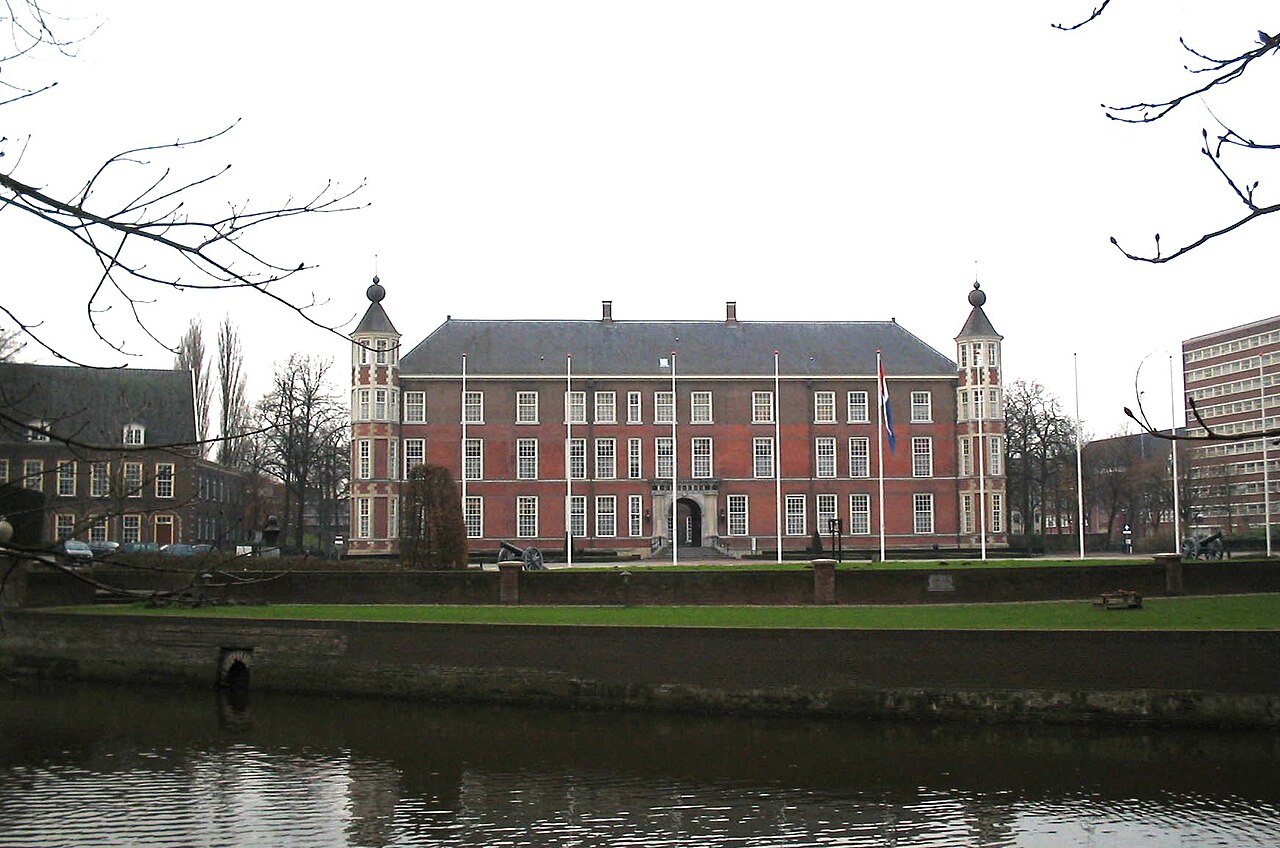
Zevenbergen Castle
Zevenbergen Castle was a historic moated fortress located in the town of Zevenbergen in the province of North Brabant, Netherlands. Though no physical remains exist today, the castle played a significant role in regional conflicts and defense from the late 13th century through the 17th century. It exemplified the evolution of medieval to Renaissance fortification architecture in the Low Countries.
Early history and medieval origins
The castle was originally constructed around 1290 by the Counts of Holland during a period of territorial disputes with Jan II, Duke of Brabant. It was strategically positioned within the walled town of Zevenbergen, serving both as a noble residence for the Lords of Zevenbergen and as a defensive bulwark. The castle's design included a rectangular layout surrounded by a moat, featuring at least one round corner tower and a prominent large square keep known as the Lobbekens Tower.
Damage, sieges, and reconstruction
In 1421, the castle suffered significant damage during the St. Elizabeth's Flood, one of the most devastating floods in Dutch history. Despite the destruction, the keep survived the flooding. Several years later, in 1427, during the Hook and Cod Wars, the castle and town endured a prolonged siege lasting four months before being captured by Philip the Good, Duke of Brabant. Following this siege, the castle underwent rebuilding efforts to restore its defensive capabilities.
The 80 years' war and decline
Between 1572 and 1590, the castle was a contested site during the 80 Years' War, frequently changing hands between Spanish and Dutch forces. The castle's strategic importance made it a target for occupation and military action. To prevent its further use by Spanish troops, Dutch forces set fire to the castle. The exact date of this destruction is debated, with sources citing either 1573 or 1590. Despite being burned, the castle was rebuilt afterward but gradually fell into disrepair.
Later use and final demolition
By 1606, Zevenbergen Castle was already in a dilapidated state. Ownership transferred to the House of Orange-Nassau in 1648. In the late 17th century, the castle briefly served as a prison. However, the medieval structure no longer met the needs of the era.
In 1728, the Nassau Domain Council decided to demolish Zevenbergen Castle. Over the following four years, the castle was dismantled, and its stones were repurposed to reinforce coastal defenses along the Western Scheldt river near Walsoorden. This marked the complete loss of the castle's physical presence.
Architectural features and legacy
Historical depictions reveal Zevenbergen Castle as a rectangular moated castle with a combination of round and square defensive towers, including the notable Lobbekens Tower keep. Its transformation from a medieval fortress to a Renaissance-era castle reflects the changing military and residential needs of the region over several centuries.
Today, no visible remains of Zevenbergen Castle exist, but its history remains an important chapter in the medieval and early modern fortifications of North Brabant. The castle's story illustrates the turbulent history of the Low Countries, marked by floods, wars, and shifting political powers.
Frequently asked questions (FAQ)
- What is the historical significance of Zevenbergen Castle?
- Zevenbergen Castle played a key role in regional defense and noble residence from the late 13th century through the 17th century, witnessing major events like the Hook and Cod Wars and the 80 Years' War.
- Can I visit any remains of Zevenbergen Castle today?
- No physical remains of Zevenbergen Castle exist today as it was completely dismantled in the 18th century, with stones reused for coastal defenses.
- When was Zevenbergen Castle originally built?
- The castle was originally built around 1290 by the Counts of Holland during territorial conflicts with the Duke of Brabant.
- Why was Zevenbergen Castle demolished?
- The Nassau Domain Council ordered the demolition in 1728 to reuse the castle's stones for strengthening coastal defenses along the Western Scheldt river.
- What architectural features characterized Zevenbergen Castle?
- It was a rectangular moated castle with at least one round corner tower and a large square keep called the Lobbekens Tower.
Information
Address
Kasteelweg, Zevenbergen, Netherlands
Loading map...
Visitor reviews
No reviews yet. Been here? Write the first review and help other travelers!
Write the first reviewVisited this castle? Share your experience
Your review helps other travelers and adds first-hand knowledge to our encyclopedia.